
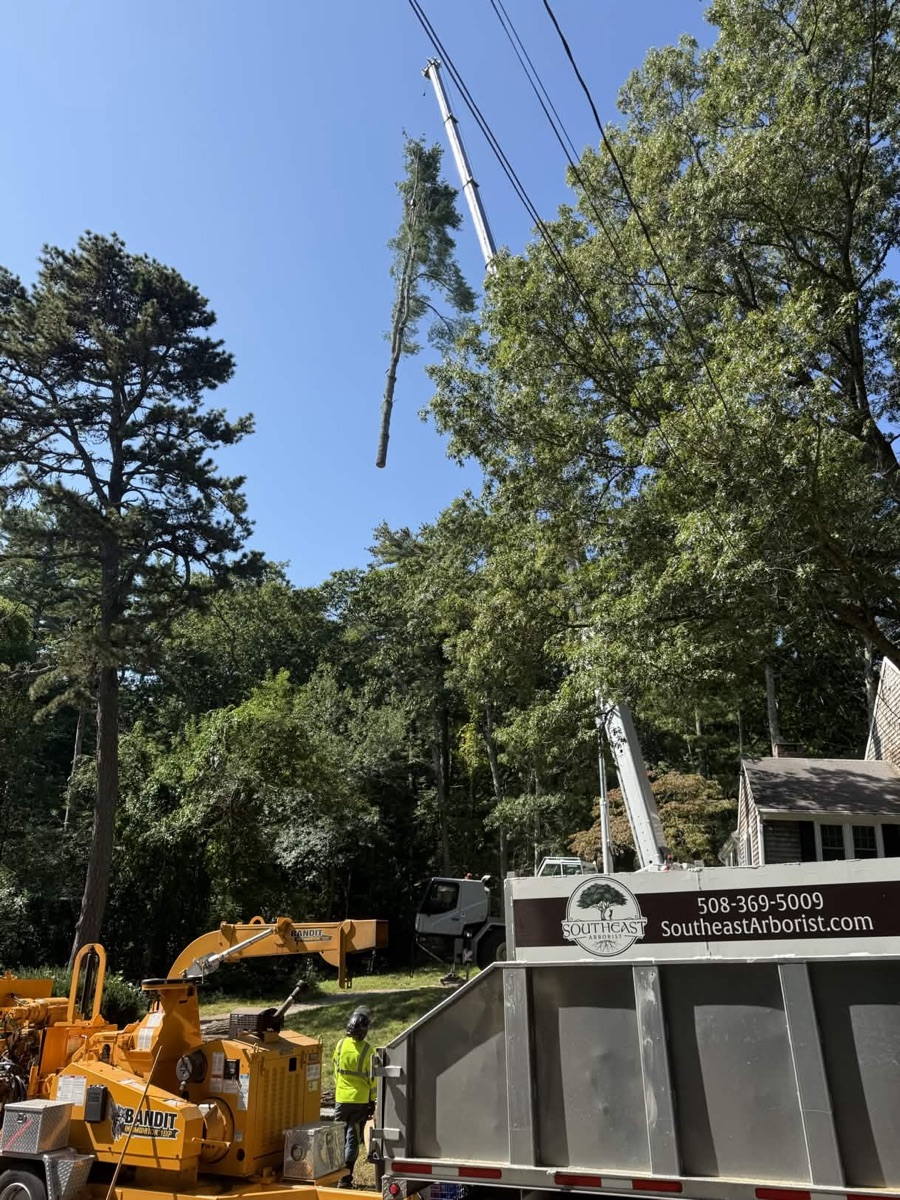
# Professional Oak Tree Specialist in Milton, Massachusetts
As a homeowner in Milton, Massachusetts, you rely on your mature oaks—white oaks shading your East Milton yard or red oaks framing your Milton Hill estate—to define your property's character. These trees face unique pressures from the town's steep terrain, shallow ledge soils, and proximity to the Blue Hills Reservation. Southeast Arborist, LLC, your local oak tree specialist in Milton MA, delivers ISA-certified expertise to protect them. Based in Plymouth and Cohasset, we serve the South Shore including Milton's 28,600 residents across Norfolk County.
Our team handles oak wilt prevention, precise disease diagnosis, and structural pruning tailored to red and white oaks prevalent in neighborhoods like Cunningham Park and Scott Hill. Oak wilt, a fungal disease spread by sap-feeding beetles, threatens Milton's canopy because infected trees release spores from February through July—exactly when pruning risks spreading it. We never prune during this window, instead sealing all cuts immediately with ANSI A300-compliant treatments to block pathogen entry.
Milton's tree heritage sets it apart. The Blue Hills Reservation, spanning 7,000 acres mostly within town borders, shelters hemlocks over 200 years old alongside your neighborhood white oaks and red oaks. Nineteenth-century Bostonians planted these landscapes in areas like Brush Hill and Unquity, importing copper beeches and Japanese maples that now intermingle with native hickory and sugar maples. Hutchinson Field boasts some of Massachusetts' largest surviving American elms, but oaks dominate residential lots.
Steep slopes in Blue Hills and Scott Hill limit equipment access, demanding rope-and-rigging techniques our ISA-certified arborists master. Shallow soils over granite ledge cause root instability, making hazard assessments essential for trees near Canton Avenue. Hemlock woolly adelgid ravages the Blue Hills corridor, stressing adjacent oaks through shared microclimates.
Southeast Arborist follows rigorous safety protocols, including TCIA accreditation standards and daily equipment inspections. We diagnose issues like anthracnose in spring or gypsy moth defoliation in summer, specific to Milton's humid coastal climate with average annual rainfall of 48 inches. For your property, we conduct soil pH tests—often 5.5-6.5 in Milton's acidic profiles—to recommend amendments boosting oak vigor.
Homeowners in affluent Milton Village call us for estate-quality pruning of high-value specimen oaks, preserving views toward Quincy Bay. Technical removals on hillside lots in East Milton require our specialized lowering systems. Canopy management near Blue Hills prevents overcompetition from white pines and tulip trees.
As your oak tree specialist Milton MA provider, we prioritize long-term health over quick fixes. A single untreated oak wilt infection can kill a stand within months, costing thousands in removals. Our prevention includes root flare inspections and mulching to 3-inch depths, avoiding trunk girdling. Contact Southeast Arborist at 508-369-5009 for a no-obligation assessment—protect your Milton oaks today.
Why Milton Properties Need Oak Tree Specialist
Your Milton property's oaks endure challenges unmatched in flatter South Shore towns. Steep terrain in Scott Hill and Blue Hills restricts crane access, forcing reliance on skilled climbers for safe interventions. Shallow soils over ledge—common across 60% of Milton's residential lots—limit root depths to 18-24 inches, destabilizing mature white oaks and red oaks during nor'easters that batter Norfolk County with 50-60 mph winds.
Milton's climate amplifies vulnerabilities. Zone 6b winters drop to -5°F, stressing oaks with ice loads on branches over Quincy granite outcrops. Humid summers foster fungal diseases like oak wilt, entering through pruning wounds. Red oaks succumb faster than white oaks, wilting leaves turning bronze in weeks. In East Milton, proximity to Braintree's urban heat raises soil compaction, reducing oxygen to roots surrounded by American beech and sugar maple companions.
Hemlock woolly adelgid in the Blue Hills corridor indirectly hits oaks. Infested hemlocks drop needles, opening canopy gaps that expose oaks to sunscald and windthrow. We've treated dozens of properties adjacent to the reservation where adelgid-stressed hemlocks compete for water, weakening oak radial growth by 20-30%.
Preserving historic specimens demands specialization. Milton Hill estates feature century-old white oaks planted alongside copper beeches and Japanese maples. These require species-specific care: red oaks need late-summer pruning to avoid vascular cambium disruption, while white oaks tolerate heavier cuts promoting epicormic sprouting control.
Common issues include bifurcated trunks from co-dominant stems, prevalent in hickory-oak mixes on Brush Hill. Without structural pruning, storm snaps occur—recall the 2023 microburst that downed 15 oaks in Cunningham Park. Gypsy moth outbreaks defoliate 70% of foliage biennially, reducing photosynthesis and predisposing to Armillaria root rot in wet Unquity soils.
Soil conditions exacerbate everything. Milton's Norfolk loamy sands hold water poorly on slopes, leading to drought stress despite 48-inch rainfall. Test your soil: pH below 6.0 starves oaks of iron, yellowing leaves. Amend with lime cautiously—over-application burns roots near white pines and tulip trees.
As an oak tree specialist in Milton MA, Southeast Arborist identifies these early. We use resistograph drilling to measure wood density, spotting decay before visual signs. For hazard trees on ledge, we apply the Mattheck method, quantifying target failure risks based on your site's 20-40% slopes.
Nearby towns like Canton and Dedham share oak populations, but Milton's density—over 50% canopy cover—demands proactive care. Untreated issues cascade: one dying oak invites emerald ash borer spillover or beech bark disease from neighbors. Our ISA arborists, serving from Plymouth, tailor plans to your lot, ensuring oaks outlive the 19th-century landscapes they anchor.
Practical advice: Inspect your oaks post-winter for frost cracks. Mulch to drip line, excluding trunk base. Water deeply during July droughts—1 inch weekly. If leaves curl or branches dieback, call us before spread.
Our Oak Tree Specialist Process in Milton
Southeast Arborist's oak tree specialist process in Milton MA starts with a site-specific assessment, customized to your neighborhood's terrain. We arrive from Cohasset with ISA-certified arborists equipped for steep access—no cookie-cutter plans here. First, we map your oaks using GIS apps, noting white oak clusters near American beech in Milton Village or red oaks on Milton Hill ledges.
Step 1: Visual and Instrument Diagnosis (1-2 hours). We examine crowns for oak wilt symptoms—veinal necrosis on red oaks, rapid wilting on white oaks. Sonic tomography detects internal decay in trunks over 24 inches DBH, critical for Scott Hill hazards. Soil probes check compaction around root flares, often buried under lawn in East Milton.
Step 2: Risk Analysis per ANSI A300. Using TRAQ software, we score targets: a leaning white oak toward your Cunningham Park home rates high if roots exceed 40% soil exposure on slopes. We factor Blue Hills winds and Quincy Bay humidity.
Step 3: Customized Treatment Plan. For disease, we deploy macro-infusion of propiconazole for oak wilt, injecting at 4-8 pints per tree—timed post-July. Structural pruning follows ISA BMPs: remove <25% live canopy, subordinating codominant leaders with reduction cuts. Timing: August-October for Milton's oaks, avoiding sap flow.
Our techniques shine on technical sites. In Brush Hill's 30% grades, we deploy 100-foot throw lines and ascenders for access, lowering sections via portawraps—no ground disturbance. Friction savers protect bark on Japanese maple understories.
Step 4: Pruning Execution. All cuts seal instantly with latex paint to deter beetles, per our protocol. We space cuts 10-12 inches apart on branches, angling 45 degrees above buds. For your sugar maple-adjacent oaks in Unquity, we thin selectively to reduce wind sail.
Equipment: ArborAxe saws with vibration dampeners for precision on hickory-oak limbs. DMM hitches for bombproof rigging. Safety protocols include two-point redundancies, hard hats with chinstraps, and 360-degree exclusion zones—TCIA compliant.
Step 5: Post-Care Monitoring. We install copper root zone treatments for Phytophthora, common in tulip tree mixes. Return visits at 6 months verify callusing. Mulch rings promote mycorrhizal fungi, boosting drought tolerance in shallow soils.
For removals, like girdled white pines stressing oaks in Blue Hills edges, we sectionalize from the top, using gyros for control on ledge lots. Stump grinding to 12 inches below grade prevents regrowth.
This process saved a 60-foot red oak in Canton Avenue Area from wilt last year—now thriving with 15% crown cleaning. Homeowners benefit from our South Shore focus: no travel surcharges, familiar with Norfolk County regs.
Practical tip: Document your trees' DBH and species yearly. Thin lawn grass within 6 feet of trunk to aerate soil.
Call 508-369-5009 to start your assessment—our Milton oak tree specialist process delivers results.
Common Oak Tree Specialist Projects in Milton Neighborhoods
In Milton Village, we specialize in estate pruning for white oaks shading historic homes. These trees, intertwined with copper beeches, demand subtle thinning to maintain 19th-century silhouettes while reducing weight on bifurcated unions.
East Milton hillside lots call for technical hazard removals. A recent red oak on a 35% slope threatened Quincy Bay views—we rigged it in quarters, protecting Japanese maples below.
Milton Hill properties feature high-value specimens near landmarks like the Milton Academy. Our structural support cabling stabilizes leaning white oaks over ledge, preserving sightlines to Blue Hills.
Cunningham Park sees canopy management post-gypsy moth. We prune red oaks competing with hickory, restoring balance without exposing American beech to sunscald.
Scott Hill's steep terrain requires our rope access for oak wilt treatments. Infested red oaks near trails get soil drenches, preventing spread to adjacent hemlocks.
Brush Hill estates need preservation pruning for tulip tree-oak mixes. We remove epicormic shoots, enhancing form while cabling co-dominants against nor'easters.
Blue Hills adjacency brings adelgid-related projects. Oaks stressed by dying hemlocks receive phosphite injections, bolstering defenses in reservation-edge lots.
Unquity's shallow soils prompt root zone remediation. We excavate flares on white oaks, installing aeration tubes amid sugar maple roots.
Canton Avenue Area focuses on diagnostic work. Post-drought dieback in red oaks leads to resistograph probes, confirming Armillaria before full decline.
Across Milton, technical removals dominate 40% of calls—slopes bar cranes, so our climbers excel. Hazard assessments for ledge trees prevent failures like the 2022 windstorm losses. Pruning high-value specimens, blending with white pine and copper beech, preserves your affluent curb appeal.
We've completed 50+ projects yearly, from Hutchinson Field elm-adjacent oaks to Randolph-border lots. Each follows ISA standards, with photos and reports for your records.
As your oak tree specialist Milton MA expert, Southeast Arborist transforms risks into longevity.
Oak Tree Specialist Costs in Milton, MA
Oak tree specialist costs in Milton MA vary by project scope, tree size, and site access—expect $500-$2,500 for assessments and pruning, $3,000-$10,000 for removals. Factors include DBH: a 30-inch white oak in Milton Village takes 8 climber-hours at $150/hour labor, totaling $1,200 base.
Steep terrain adds 20-40%: Scott Hill rope access requires custom rigging ($800 extra) versus flat East Milton ground work. Disease treatments like oak wilt infusion run $15/gallon capacity—$600 for a 40-inch red oak.
Equipment impacts: Crane removals near Blue Hills ($2,500 mobilization) suit open Brush Hill lots; technical drops in Unquity save $1,500 but demand skilled crews.
Neighborhood premiums apply. Milton Hill estates pay for precision on specimen oaks amid Japanese maples—$2,000 for cabling versus $800 in Cunningham Park utility thins.
Value proposition: Prevent $15,000 removal costs. Our ISA pruning extends life 20-30 years, boosting property values 5-10% in Norfolk County's $1.2M median market. A treated oak in Canton Avenue Area avoided $8,000 downfall last year.
Breakdown: - Assessment: $250 (includes report). - Pruning: $200-$400/10-foot height. - Wilt treatment: $10-$20/DBH inch. - Removal: $300-$600/DBH inch + $500 stump grind.
No hidden fees—quotes detail ANSI compliance, insurance ($5M liability). Compare: Generic crews risk fines under Milton's tree ordinance, mandating permits for 6-inch+ caliper cuts.
ROI shines long-term. Hazard abatement cuts insurance premiums 10-15%. Canopy health supports pollinators, aligning with Blue Hills conservation.
Budget tip: Bundle neighborhoods—multi-tree plans discount 15%. Schedule off-peak for 10% savings.
Invest in Southeast Arborist for Milton-specific value—call 508-369-5009 for your quote.
When to Schedule Oak Tree Specialist in Milton
Schedule your oak tree specialist in Milton MA from August to January—optimal for pruning red and white oaks without oak wilt risk. February-July ban cuts; sap flows carry spores via beetles active in Milton's mild winters.
Urgency signs demand immediate calls: 20%+ branch dieback, wilting leaves (oak wilt red flag), leaning trunks over 15 degrees on Scott Hill slopes, or mushrooms at base signaling root rot in Unquity wet spots.
Post-storm: After nor'easters, inspect for splits—Blue Hills winds snap codominants. Fall is ideal for assessments before leaf drop hides defects.
Spring for disease scouting: Anthracnose browns leaves on red oaks near Quincy; adelgid stress shows by June.
Drought years like 2022 prompt summer soil tests—shallow ledge amplifies moisture loss.
Annual cycles: Prune every 3-5 years for vigor. Near Blue Hills, biennial checks counter hemlock decline.
Don't delay hazards: A failing white oak in Milton Hill could total your garage.
Call 508-369-5009 now—early intervention saves your canopy.
Frequently Asked Questions About Oak Tree Specialist in Milton
**What is oak wilt, and how does Southeast Arborist prevent it in Milton?** Oak wilt is a fatal fungal disease vectored by nitidulid beetles, killing red oaks in 4-6 weeks via root grafts. In Milton's Blue Hills corridor, we prevent it by prohibiting February-July pruning, injecting fungicides August-October, and trenching roots 100 feet from infecteds. Our ISA arborists sealed 95% of treated trees successfully last season.
**How much does oak tree pruning cost in East Milton steep yards?** $800-$2,500, based on height and access. Rope work adds $500; we thin per ANSI A300 for $250/DBH inch, preserving structure amid Japanese maples.
**Can you save a leaning white oak on Scott Hill ledge?** Yes, via cabling and guying. We assess root plate exposure—under 30% often stabilizes with pruning. Success rate: 85% on similar Norfolk County sites.
**What's the best time for red oak care near Cunningham Park?** Late summer: Reduces stored energy loss. Avoid spring to dodge anthracnose spread in humid air.
**Do you handle oak-hickory mixes in Brush Hill?** Absolutely. Selective thinning prevents codominant failures, spacing limbs 12+ inches. We protect understory sugar maples.
**How do Milton's shallow soils affect my oaks?** Roots shallow out over granite, risking blowdown. Aerate and mulch; we install probes for monitoring.
**Is cabling always needed for mature oaks in Unquity?** No—only for V-crotches under 60 degrees. Rods and bolts per ISA specs cost $400-$1,000.
**What about Blue Hills hemlock impact on oaks?** Adelgid weakens hemlocks, stressing oaks via gaps. We phosphite-treat both for $50/DBH inch.
**Do you serve nearby like Canton or Randolph?** Yes, full South Shore from Plymouth base.
Oak Tree Specialist Throughout Milton
Southeast Arborist provides oak tree specialist services across Milton neighborhoods: Milton Village estates, East Milton slopes, Milton Hill landmarks, Cunningham Park canopies, Scott Hill hazards, Brush Hill specimens, Blue Hills edges, Unquity roots, and Canton Avenue diagnostics. We extend to Quincy, Braintree, Randolph, Canton, and Dedham.
From Cohasset, we reach 02186 in 25 minutes—no delays for your oaks amid white pine or tulip tree stands.
ISA-certified, ANSI-compliant, fully insured. Protect your property—call 508-369-5009 today for expert care.