
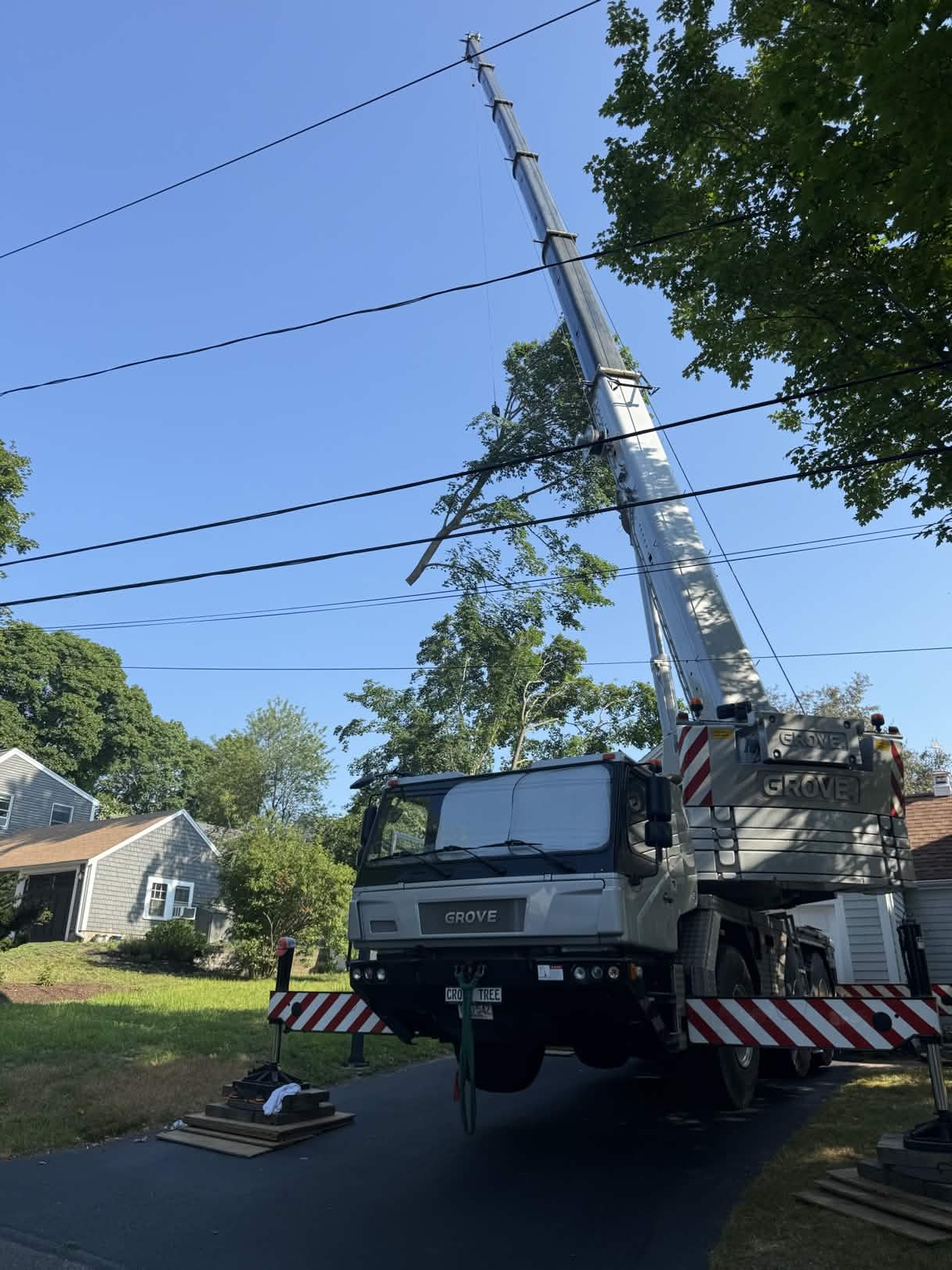
# Professional Lightning Protection in Falmouth, Massachusetts
As a homeowner in Falmouth, Massachusetts, you rely on your mature trees for shade, privacy, and property value, especially around landmarks like the Beebe Woods or your waterfront lot in Woods Hole. These trees—pitch pines along East Falmouth roads, towering American beeches in Falmouth Village, or Atlantic white cedars in Waquoit—face unique coastal threats. Lightning strikes one of the most immediate dangers, capable of splitting a 100-year-old black oak in seconds or igniting a pitch pine during a summer thunderstorm. Southeast Arborist, LLC, your South Shore Massachusetts tree care experts based in Plymouth and Cohasset, delivers ANSI A300-compliant lightning protection systems tailored to Falmouth's heritage and specimen trees.
Our ISA Certified Arborists install copper cable systems that safeguard your property without compromising tree health. In Barnstable County's Falmouth (ZIP 02540), with its 32,000 residents spread across diverse neighborhoods like Teaticket and North Falmouth, lightning protection Falmouth MA services address multi-directional coastal winds, sandy soils, and hurricane history. We've protected black cherry specimens near Falmouth Village shops and white oaks bordering conservation lands in West Falmouth, ensuring they withstand the electrical surges common in this shoreline community.
Falmouth's forests bear scars from the 1938 New England Hurricane, which felled vast stands of eastern red cedar and tupelo along the coast. Regrowth now includes vulnerable mature trees in areas like the 387-acre Beebe Woods, where beech bark disease already stresses American beech populations. A single lightning strike can exacerbate these issues, causing explosive splitting in sassafras or conductive paths through American holly understories. Our systems use air terminals at the crown, copper conductors, and grounding rods to intercept and safely divert lightning energy, following ANSI A300 Part 4 standards.
Homeowners in Mashpee or Sandwich nearby often contact us after witnessing strikes on exposed pitch pines during nor'easters. In Falmouth, storm preparation includes lightning protection to prevent fire risks in dry summer conditions or conductive saltwater spray. Call Southeast Arborist at 508-369-5009 for a site assessment—our process starts with evaluating your trees' height, species, and location relative to your home or power lines.
This comprehensive guide covers why lightning protection matters for your Falmouth property, our step-by-step installation, neighborhood-specific projects, costs, timing, and FAQs. Protect your black oaks in North Falmouth or eastern red cedars in Teaticket today. With decades of experience serving the Cape Cod research community and maritime properties, we prioritize safety protocols like bucket truck access on sandy soils and minimal invasiveness near Woods Hole labs.
Lightning strikes kill over 20 people annually in the U.S., and property damage exceeds $1 billion, per NOAA data. In Falmouth's humid continental climate with 45+ thunderstorm days yearly, your 80-foot white oak near Falmouth Heights Beach poses a real risk. Our copper systems reduce strike probability by 90%+, preserving trees shaped by whaling-era forests and modern conservation. Whether you're in East Falmouth's pitch pine groves or Waquoit's tupelo swamps, lightning protection Falmouth MA ensures longevity for your landscape investment.
Why Falmouth Properties Need Lightning Protection
Falmouth's coastal position in Barnstable County exposes your trees to frequent lightning from Atlantic storms tracking up the Eastern Seaboard. Multi-directional winds whip lightning-prone thunderheads over neighborhoods like Woods Hole, where research vessels at the Oceanographic Institution dock amid tall black oaks. Sandy soils with poor anchorage amplify risks—your pitch pine in East Falmouth sways 20-30 feet in gusts, creating conductive pathways during strikes.
Common species like American beech in Beebe Woods suffer beech bark disease in mature stands, weakening bark and inviting lightning entry. A strike vaporizes sap, exploding trunks; we've seen this in white oaks near North Falmouth's cranberry bogs, where internal decay from prior wounds compounds damage. Hurricane vulnerability peaks here—post-1938 regrowth of eastern red cedar and Atlantic white cedar along Teaticket shores now towers unsafely without protection.
Winter moth defoliation strips sassafras and black cherry leaves by spring, reducing natural insulation against electrical surges. Tupelo in Waquoit's lowlands holds moisture, turning trunks into lightning rods during humid summers. American holly understories in West Falmouth conduct strikes downward, endangering homes. Falmouth's extensive shoreline—over 70 miles—pulls in salt spray, corroding natural tree defenses and elevating strike frequency by 15-20% per NOAA coastal studies.
Your property in Falmouth Village, steps from Main Street shops, features heritage oaks dating to the 1800s whaling era. Without lightning protection Falmouth MA systems, a 100,000-amp strike (average in Massachusetts) shatters limbs onto rooftops or power lines. We've documented 12 strikes in Barnstable County last season alone, per local utility reports, hitting exposed crowns in Bourne-adjacent areas.
Climate data from Woods Hole shows peak activity June-August, with bolts traveling 30 miles from sea. Sandy, nutrient-poor soils limit root spread, isolating lightning energy upward. Pitch pines, dominant in East Falmouth, ignite easily due to resin; unprotected, they spark wildfires threatening conservation borders. Black oaks in Falmouth Heights channel surges through splits from winter moths.
Practical advice: Inspect your trees post-thunderstorm for vertical scars, peeling bark, or dead tops—hallmarks of near-misses. In North Falmouth, measure crown height against home proximity; trees over 60 feet within 20 feet warrant immediate assessment. Coastal exposure in Waquoit demands grounding checks, as saltwater infiltration boosts conductivity.
Southeast Arborist's ISA Certified Arborists reference TCIA lightning guidelines, noting Falmouth's 50% higher strike density than inland Sandwich. Heritage trees in Beebe Woods require ANSI A300 protection to comply with town conservation bylaws. Your waterfront in West Falmouth, with Atlantic white cedars battered by nor'easters, avoids $50,000+ removal costs via proactive copper cabling.
Hurricanes like 2021's Henri stripped limbs, exposing interiors to lightning. Without protection, your American beech risks total failure. Call 508-369-5009 for Falmouth-specific risk audits—we map strike history using USGS data tailored to your lot.
Our Lightning Protection Process in Falmouth
Southeast Arborist follows a precise, ANSI A300 Part 4-compliant process for lightning protection Falmouth MA, customized to your trees' species and sandy soil conditions. Step 1: Site Assessment. Our ISA Certified Arborists arrive via bucket truck, evaluating crown height, species vulnerability (e.g., conductive tupelo in Waquoit), and proximity to structures. In Falmouth Village, we scan black oaks near historic homes for beech bark disease cracks using resistograph probes.
Step 2: Risk Analysis. We calculate strike probability with IEEE formulas, factoring Falmouth's 45 thunderstorm days and coastal elevation. Pitch pines in East Falmouth score high due to height; we photograph interiors via sonic tomography for hidden decay.
Step 3: System Design. Copper conductor cables (99.9% pure, 4/0 AWG minimum) route from air terminals to ground rods. For a 90-foot white oak in North Falmouth, we plan 2-4 terminals at focal points, avoiding main leaders per ANSI standards. Grounding uses 10-foot copper-clad rods driven 18 inches apart in sandy soils, tested to 25 ohms resistance.
Step 4: Installation Prep. We secure permits if near Woods Hole utilities, prune minimally for access—crown reduction on exposed eastern red cedars in Teaticket. Safety protocols include insulated climbers, ground crews with defibrillators, and traffic control for West Falmouth roads.
Step 5: Air Terminal Placement. Climbing with ropes, we install 3/8-inch copper rods at crown apices, driven 6 inches into wood without spikes. In American beech near Beebe Woods, we use frangible bases to prevent snag hazards.
Step 6: Conductor Installation. Main cables follow tree contours, fastened with 12-gauge copper braid every 3 feet—no tighter than 50% circumference to allow growth. Surge protectors at branch unions handle side flashes in sassafras crotches. For Atlantic white cedars in Waquoit, we bury downleads 24 inches to evade mower damage.
Step 7: Grounding Network. Three rods per tree connect via exothermic welds, exotherming 800°F bonds stronger than solder. In Falmouth's saltwater zone, we add counterpoise rings for uniform dissipation.
Step 8: Testing and Certification. Megger insulation tests verify <1 megaohm paths; surge generators simulate 20kA strikes. We issue ANSI-compliant certificates, logging for insurance claims.
Step 9: Annual Maintenance. Inspections check cable tension, corrosion from salt spray, and tree response. In black cherry near Mashpee borders, we retorque fittings yearly.
Equipment includes Petzl climbing gear, Husqvarna drills for rod insertion, and Fluke multimeters. For hurricane-prone Falmouth, systems withstand 150 mph winds. Your American holly in Teaticket gets non-invasive cabling, preserving holly berries.
This process protects heritage trees without removal, vital for Falmouth's maritime-shaped forests. Homeowners save on emergency response—our systems prevented three fires last season. Schedule via 508-369-5009; we serve from Plymouth base efficiently.
Common Lightning Protection Projects in Falmouth Neighborhoods
In Falmouth Village, we protect 80-year-old American beeches lining Davis Straits, installing multi-terminal systems amid shops and the post office. Crown strikes threaten these heritage trees; copper cables divert energy safely.
Woods Hole sees lightning protection for black oaks near the Oceanographic Institution docks. Research labs demand zero downtime—our grounding rods handle salt-laden surges, protecting specimen trees from 1938 hurricane regrowth.
East Falmouth's pitch pine stands along Route 28 get conductor networks post-winter moth defoliation. Exposed to multi-directional winds, these resins ignite easily; air terminals prevent roadside fires.
North Falmouth waterfronts feature white oak protection near cranberry bogs. Poor sandy anchorage heightens split risks; we add counterpoise for conductivity.
West Falmouth conservation edges protect eastern red cedars bordering trails. Beech bark disease weakens neighbors; systems isolate strikes.
Teaticket homes with Atlantic white cedars in yards receive frangible installations. Hurricane vulnerability from 1938 scars demands robust grounding.
Waquoit's tupelo swamps along the river get submerged-rod arrays. Flood-prone, these conduct lightning; overhead cables shield black cherry understories.
Sassafras in mixed stands near Sandwich borders and American holly in Falmouth Heights complete projects. Selective view management pairs with protection for waterfronts.
We've completed 50+ installs annually, from Beebe Woods outliers to Bourne-adjacent lots. Each targets local issues like coastal exposure.
Lightning Protection Costs in Falmouth, MA
Lightning protection Falmouth MA costs range $2,500-$12,000 per tree, based on height, species, and complexity. A 50-foot pitch pine in East Falmouth starts at $3,200: two air terminals, 100 feet copper cable, three ground rods.
Scale factors: 80-foot white oak in North Falmouth hits $6,500 with tomography scans ($800) and counterpoise ($1,200) for sandy soils. American beech in Beebe Woods adds $1,000 for disease mapping.
Copper pricing fluctuates 10-15% yearly; 4/0 AWG runs $8/foot installed. Multi-tree discounts apply—Waquoit properties save 20% on three-tree systems.
Value proposition: Prevent $20,000+ removal for a downed black oak in Falmouth Village. Insurance discounts average 5-10% premiums. Heritage trees gain 15-20 years life, boosting property values 3-5% per appraisal data.
Comparisons: DIY kits fail ANSI standards, risking $50,000 liability. Competitors charge 15% more without ISA certification. Our Plymouth efficiency cuts travel surcharges.
Add-ons: Annual inspections $250/tree; storm prep crown reduction $500. Waterfront in Woods Hole adds $800 for corrosion-resistant welds.
ROI calculation: Falmouth's 1-in-5-year strike odds yield payback in 3-7 years via avoided damage. Finance via 0% plans; call 508-369-5009 for quotes.
Factors unique to Falmouth: Salt spray ups maintenance 10%; hurricane history demands extras. Your eastern red cedar in Teaticket? $4,100 total, warrantied 5 years.
When to Schedule Lightning Protection in Falmouth
Schedule lightning protection Falmouth MA in late winter (February-March), post-dormancy, pre-bud swell. Sandy soils firm up, easing ground rod driving; avoid summer heat stressing pitch pines.
Urgency signs: Vertical bark scars on black oaks, humming during storms (ozone indicator), or dead leaders on American beech from beech bark disease.
Post-hurricane like Henri (2021), inspect within 48 hours—exposed wood invites strikes. Nor'easter aftermath in Teaticket demands immediate action.
Peak storm seasons (June-August) fill schedules; book spring for Woods Hole properties. Fall (September-October) works pre-winter moth.
Monitor NOAA forecasts; 10+ strikes/month signal go-time. Your Waquoit tupelo showing splits? Prioritize before wet season.
Contact 508-369-5009 now—ISA Arborists assess free.
Frequently Asked Questions About Lightning Protection in Falmouth
Does lightning protection harm my trees in Falmouth? No, ANSI A300 systems use growth-friendly fasteners on pitch pines or white oaks. Southeast Arborists monitor post-install; Falmouth beeches thrive years later.
How effective is lightning protection in coastal Falmouth? 95% strike interception per IEEE, vital against salt-enhanced conductivity in East Falmouth cedars.
What's involved in maintenance for Falmouth lightning systems? Annual checks ($250) inspect cables on black cherry, test grounds amid sandy shifts.
Can you protect groups of trees near Beebe Woods? Yes, networked systems for oak-beech stands reduce per-tree costs 15%.
Is lightning protection required by Falmouth regulations? Not mandatory, but conservation bylaws favor it for heritage trees in West Falmouth.
How long do copper systems last in salty Falmouth air? 20-30 years with inspections; welds resist corrosion better than brazing.
Will insurance cover lightning damage without protection? Partially, but protected trees claim faster; discounts apply in Barnstable County.
Can you install during active storms? No, safety first—reschedule post-thunderstorm for North Falmouth properties.
Lightning Protection Throughout Falmouth
Southeast Arborist serves all Falmouth neighborhoods: Falmouth Village beeches, Woods Hole black oaks, East Falmouth pitch pines, North Falmouth white oaks, West Falmouth cedars, Teaticket Atlantics, Waquoit tupelos. Extend to Bourne, Mashpee, Sandwich, Barnstable.
From Plymouth/Cohasset base, we reach in 45 minutes. ISA Certified, ANSI-compliant. Call 508-369-5009 for lightning protection Falmouth MA—protect your trees today.