
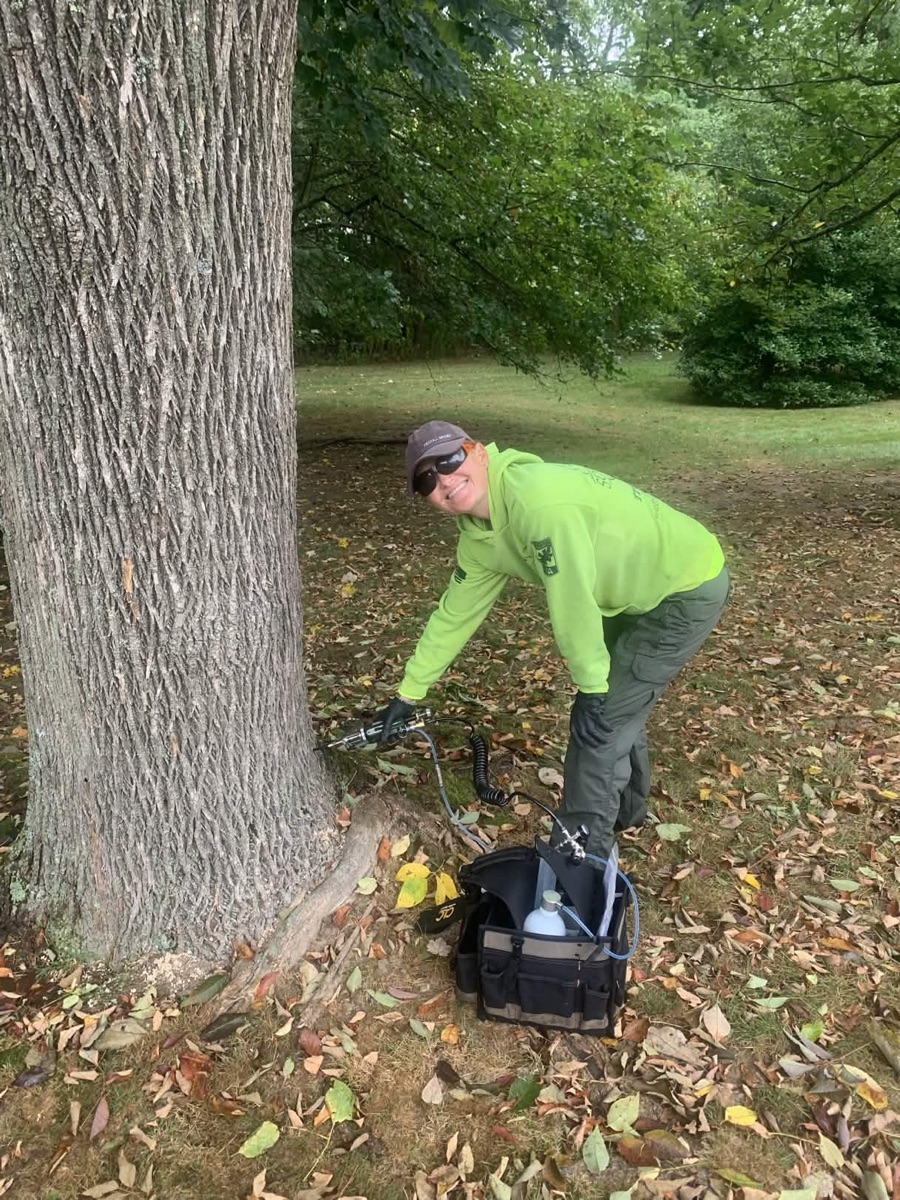
# Professional Arborist Consultation in Sandwich, Massachusetts
As a homeowner in Sandwich, Massachusetts, your property likely features mature trees that define its character, from the towering American beeches shading historic homes in Sandwich Village to the pitch pines lining properties near Sandy Neck. These trees face unique pressures in Barnstable County's oldest town, where 400 years of settlement have shaped a landscape of heritage specimens, second-growth forests, and coastal exposures. Southeast Arborist, LLC, based in Plymouth and Cohasset, delivers ISA Certified arborist consultations tailored to Sandwich's 02563 ZIP code, addressing everything from heritage tree preservation to wildfire risks in Forestdale.
An arborist consultation in Sandwich MA starts with a thorough on-site evaluation by our ISA Certified Arborists, who inspect tree health, structural integrity, and environmental stressors specific to Cape Cod's sandy soils and salt-laden winds. We provide written reports compliant with ANSI A300 standards, ideal for insurance claims, legal disputes, or pre-purchase inspections. Whether you're in East Sandwich dealing with winter moth infestations on oaks or near Scorton Creek managing flood-prone black cherry stands, our consultations prioritize your trees' longevity and your property's safety.
Sandwich's 21,000 residents rely on us for risk assessments that identify hazards like pine bark beetle damage in pitch pine-dominated areas or cabling needs for 19th-century red oaks near Shawme Pond. Our service area spans the South Shore, but we specialize in Sandwich's challenges: preserving specimen trees tied to the town's glass-making heritage, thinning dense scrub oak stands in Spring Hill for fire safety, and pruning eastern red cedar for wind resistance along Sandy Neck. Call Southeast Arborist at 508-369-5009 for an arborist consultation in Sandwich MA that delivers actionable recommendations, not guesswork.
Homeowners often overlook subtle signs of decline until storms hit—think the nor'easters that batter Atlantic white cedar in coastal zones or ice loads cracking sassafras limbs in Forestdale. Our consultations prevent costly emergencies by evaluating root zones in Sandwich's nutrient-poor, acidic sands, assessing soil compaction from nearby Route 6A traffic, and forecasting impacts from the town's humid maritime climate. We use advanced tools like resistographs and sonic tomographs for precise internal decay detection, ensuring reports support prioritized maintenance plans.
In Sandwich Village, consultations frequently involve heritage trees adjacent to Hoxie House or the Dexter Grist Mill, where preservation pruning maintains historic sightlines while mitigating branch failure risks. For modern developments in East Sandwich, we focus on pre-construction assessments to protect mature white pines during expansions. Southeast Arborist's commitment to safety protocols, including PPE and traffic control, guarantees consultations proceed without disrupting your daily life. Schedule your arborist consultation in Sandwich MA today—our ISA certification means you receive expert guidance backed by international standards.
This service extends beyond diagnostics: we recommend species-appropriate care, like fungicide applications for beech bark disease prevalent in the village center or mulching techniques for black oaks stressed by drought near Mashpee borders. Properties in the Scorton Creek Area benefit from consultations evaluating tidal influences on root health, while Spring Hill lots see evaluations for invasive vine overload on red oaks. With rising insurance premiums tied to tree-related claims, our detailed reports provide the documentation you need. Contact us at 508-369-5009 to protect your Sandwich landscape.
Why Sandwich Properties Need Arborist Consultation
Sandwich, MA's landscape reflects its status as Cape Cod's first European settlement, with trees bearing scars from four centuries of farming, glassworks, and conservation efforts. Your pitch pines in Forestdale, scrub oaks on Spring Hill, or American beeches in Sandwich Village contend with sandy, well-drained soils low in nutrients and high in acidity (pH 4.5-6.0 typical), which stunt root growth and amplify drought stress during summer dry spells. Maritime winds from Cape Cod Bay carry salt spray to Sandy Neck and Scorton Creek Area properties, defoliating eastern red cedar and browning Atlantic white cedar needles.
Heritage tree preservation dominates consultations in Sandwich Village, where 18th-century black oaks and red oaks near the historic district face structural overload from epicormic growth spurred by past pruning errors. These specimens, linked to the town's 1828 glass factory era, require risk evaluations to prevent limb drops onto Route 6A or village greens. Winter moth caterpillars, active from late fall to early spring, skeletonize oak leaves in East Sandwich, weakening trees already pressured by the town's 45-inch annual rainfall concentrated in hurricanes. Our ISA Certified arborists quantify defoliation percentages and recommend BTK sprays compliant with local regs.
Pine bark beetle outbreaks threaten pitch pine and white pine stands around Shawme Pond State Forest, especially after mild winters fail to kill larvae. In Forestdale's second-growth forests on ex-military land, dense canopies create ladder fuels, elevating wildfire risk amid Barnstable County's dry summers. Consultations here assess beetle galleries via bark sampling and prescribe thinning to 40-50% canopy cover per ANSI A300 guidelines. Sandy Neck's salt marshes expose trees to chloride toxicity—your sassafras or black cherry may show marginal necrosis—necessitating windbreak pruning to reduce exposure by 30%.
Soil conditions exacerbate issues: Sandwich's glacial outwash sands drain too quickly, leaving roots parched despite irrigation, while compaction from foot traffic near Hoxie Pond compacts topsoil around beeches. Flooding in Scorton Creek Area waterlogs black oak roots during nor'easters, inviting Armillaria root rot detectable only via consultation digs. Spring Hill's upland sites suffer from emerald ash borer precursors in stressed ashes (though less common), but more critically, oak decline from repeated droughts. Practical advice: Test your soil pH annually with a Barnstable County extension kit; apply lime only if below 5.0, as over-liming harms pitch pines.
Climate shifts compound problems—warmer winters boost overwintering pests like winter moth, while increased storm intensity (e.g., 2023's winter storm wounds) cracks red oak crotches. Properties near Bourne or Barnstable borders share these traits, but Sandwich's conservation lands amplify habitat for gypsy moth on scrub oaks. Without arborist consultation in Sandwich MA, you risk fines from town bylaws protecting heritage trees or denied insurance for unassessed hazards. Southeast Arborist's reports detail species-specific vulnerabilities: pitch pine to southern pine beetle, beeches to Neonectria, cedars to Cytospora canker.
Homeowners in Mashpee-adjacent areas face similar salt issues, but Sandwich's historic overlay demands documented preservation plans. Our consultations reveal hidden defects—30% of mature oaks show internal decay invisible externally—saving you removal costs averaging $2,500 per tree. Monitor for urgency signs: lean >15 degrees, heaving roots, or >25% crown dieback. Proactive consultation preserves property values in this 21,000-population town where tree-canopied homes command 10-15% premiums.
Our Arborist Consultation Process in Sandwich
Southeast Arborist's arborist consultation in Sandwich MA follows a rigorous, step-by-step protocol led by ISA Certified Arborists adhering to ANSI A300 tree risk assessment standards. Step 1: Initial site arrival and property walk-through. We meet you at your Sandwich Village home or Forestdale lot, equipped with climbing gear, hard hats, and first-aid kits per OSHA safety protocols. Using a clipboard and tablet for real-time notes, we map your trees via GPS, noting species like pitch pine near Shawme Pond or red oaks in East Sandwich.
Step 2: Visual tree assessment (VTA). Our arborists circle each target tree—up to 20 per consultation—scoring targets (people, structures) within falling distance using the TRAQ method. For American beech in Sandwich Village, we check for buttress flares compromised by sidewalk pavement; in Sandy Neck, we evaluate salt scorch on Atlantic white cedar foliage. Drones capture canopy views of tall white pines, identifying co-dominant stems prone to splitting in 50+ mph gusts.
Step 3: Advanced diagnostics. We deploy resistographs to bore increment cores from scrub oak trunks in Spring Hill, measuring wood density loss (e.g., >20% indicates hazard). Sonic tomographs sound black cherry limbs in Scorton Creek Area for hollows, while air spades excavate root zones without damage, revealing girdling roots on sassafras stressed by sandy soils. Soil probes test moisture and compaction around eastern red cedar windbreaks.
Step 4: Pest and disease sampling. In Forestdale pitch pine stands, we peel bark for beetle larvae confirmation, submitting samples to UMass Extension for ID. Oak leaves from winter moth hits in East Sandwich get taped for egg mass counts. We photograph everything for your report, cross-referencing with Sandwich's climate data: 20-30 mph prevailing winds, 50°F average lows stressing beeches.
Step 5: Risk rating and recommendations. Each tree receives a Level 1-3 risk score (low to imminent failure). For heritage red oaks near Hoxie House, we specify cabling points and preservation pruning cuts per ANSI Z133 safety standards. Prioritized plans include timelines: thin pitch pines within 6 months for fire mitigation. Construction impact assessments for Spring Hill builds flag no-dig zones around mature black oaks.
Step 6: Written report delivery. Within 48 hours, you receive a 10-20 page PDF with photos, diagrams, and cost estimates. Reports suit insurance (e.g., post-storm claims), town permits for Sandwich Village heritage work, or real estate disclosures. We use Level 2 analysis for high-value trees, factoring site modifiers like proximity to Bourne town line soil types.
Safety defines our process: two-person crews maintain 360° awareness, with spotters for traffic on busy 6A. Equipment calibration follows manufacturer specs—resistographs accurate to 0.1mm density. Practical tip for your property: Before our visit, flag concern trees with orange tape and note recent changes like branch drops.
This Sandwich-specific process accounts for local factors: tidal surges affecting Scorton Creek roots or wildfire smoke history from nearby Barnstable blazes. Plymouth-based, we arrive in under 30 minutes for urgent calls. Our ISA certification ensures objective, science-based advice—no upselling removals unless warranted.
Common Arborist Consultation Projects in Sandwich Neighborhoods
In Sandwich Village, arborist consultations center on heritage tree care for 19th-century oaks and beeches shading historic sites like the Sandwich Glass Museum. We assess cabling needs for split crotches on red oaks, providing reports for town historic commission approval, and recommend structural pruning to reduce wind sail on black oaks near the grist mill.
East Sandwich properties trigger consultations for winter moth management on mature oaks, where we quantify larval damage and advise spring soil drenches around root zones. Pitch pine thinning here prevents beetle spread, with selective removal of suppressed trees to improve vigor in sandy uplands.
Forestdale's dense second-growth forests demand fire mitigation consultations, evaluating pitch pine ladder fuels and prescribing 20-foot clearance strips per state forest guidelines. Scrub oak assessments address oak decline from soil compaction on ex-ag lands.
Sandy Neck consultations focus on salt and wind-exposed Atlantic white cedar and eastern red cedar, recommending shear pruning to thicken lower branches and resist 40 mph gales. Pre-purchase inspections reveal hidden decay in sassafras windbreaks.
Scorton Creek Area projects evaluate flood impacts on black cherry and white pine roots, using air spades to check for rot post-nor'easters. We provide construction plans protecting beeches during dock expansions.
Spring Hill homeowners seek consultations for storm-damaged red oaks, with risk ratings guiding bracing installations. Invasive management targets vines overloading black oaks, preserving views toward Mashpee.
These neighborhood-specific projects leverage our South Shore expertise, from Bourne-adjacent wildfire parallels to Plymouth soil matches. Each delivers tailored reports boosting your property's resilience.
Arborist Consultation Costs in Sandwich, MA
Arborist consultation costs in Sandwich MA range from $250-$750, depending on property size, tree count, and diagnostics depth. A basic visual assessment for 5-10 trees on a Sandwich Village lot starts at $250, including site visit and verbal summary. Add $150 for a written report compliant with insurance needs.
Factors driving costs: Neighborhood access—Sandy Neck's dirt roads add $50 travel; tree height over 50 feet requires $100 drone fees. Advanced tools like resistographs ($200) detect pitch pine beetle damage invisible otherwise. High-risk heritage beeches in the village center demand Level 3 TRAQ analysis at $500+, factoring historic value.
Your property's scale matters: Forestdale's 1-acre wooded lots with 20+ pitch pines hit $600; East Sandwich quarter-acre with 8 oaks runs $350. Pre-purchase inspections for Scorton Creek homes add $100 for flood risk modeling. Construction assessments near Spring Hill builds include root protection plans at $450.
Value proposition: Our $400 consultation prevented a $5,000 red oak removal in Sandwich Village by spotting cabling opportunities. Reports save on premiums—insurers discount 10-20% with documented low-risk trees. Compared to emergency removals ($1,500-$4,000 per tree), consultations yield 5-10x ROI.
Seasonal pricing holds steady, but urgency post-storm adds $100 rush fee. ISA certification justifies premiums over handymen—our ANSI-compliant plans ensure town permit success. Bundle with follow-up pruning for 10% discount. Call 508-369-5009 for a fixed-quote estimate tailored to your Sandwich trees.
Payment via check, card, or financing; reports remain yours indefinitely. In Barnstable County, this investment safeguards against rising claims from climate-driven storms.
When to Schedule Arborist Consultation in Sandwich
Schedule arborist consultation in Sandwich MA in early spring (March-April) before bud break reveals winter moth eggs on oaks, or fall (September-October) for pre-winter risk checks on pitch pines. Avoid peak summer heat stressing crews and trees.
Urgency signs demand immediate booking: >20% crown thinning in red oaks, heaving soil at beech bases, or cracks in black cherry trunks post-wind. Leaning pitch pines >10 degrees toward structures signal Level 2 hazards.
Post-storm: Nor'easters hitting Sandy Neck warrant next-day consults for wind-snapped cedars. Forestdale fire seasons (May-June dry spells) prioritize thinning evals.
Pre-purchase or build: Time for East Sandwich closings or Spring Hill permits 4-6 weeks ahead. Call 508-369-5009 now if beeches show tar spots or sassafras wilts.
Frequently Asked Questions About Arborist Consultation in Sandwich
**What does an arborist consultation in Sandwich MA involve?** Our ISA Certified Arborists conduct visual inspections, diagnostic testing, and risk assessments for your trees, delivering a written report with maintenance priorities tailored to Sandwich's species like pitch pine and oaks.
**How long does a consultation take on my Sandwich property?** 1-3 hours for most lots; larger Forestdale forests extend to 4 hours. We focus on your flagged trees first.
**Do you provide reports for insurance in Sandwich Village?** Yes, detailed ANSI A300 reports document hazards like heritage beech defects, supporting claims or premium reductions.
**Can you assess trees before buying a home in East Sandwich?** Absolutely—pre-purchase consultations evaluate oak health, root issues, and wildfire risks, alerting to $10k+ liabilities.
**What if my Sandy Neck cedars show salt damage?** We measure scorch extent, recommend pruning, and suggest salt-tolerant plantings per coastal soil conditions.
**How do I prepare for a Scorton Creek consultation?** Clear paths to trees, note concerns, and provide site maps. No prep needed for our non-invasive tools.
**Are consultations safe for Spring Hill heritage trees?** We follow Z133 protocols, using low-impact tools to preserve specimens without accelerant damage.
**What's the difference from a general tree service?** ISA certification ensures objective science; we advise, don't just prune—preventing Forestdale beetle spreads.
Arborist Consultation Throughout Sandwich
Southeast Arborist provides arborist consultation in Sandwich neighborhoods: Sandwich Village heritage care, East Sandwich oak pest checks, Forestdale fire thinning, Sandy Neck salt pruning, Scorton Creek flood evals, Spring Hill storm assessments. We serve nearby Bourne, Barnstable, Mashpee, Plymouth from our Plymouth/Cohasset base.
Call 508-369-5009 for prompt South Shore service. Protect your trees today.