
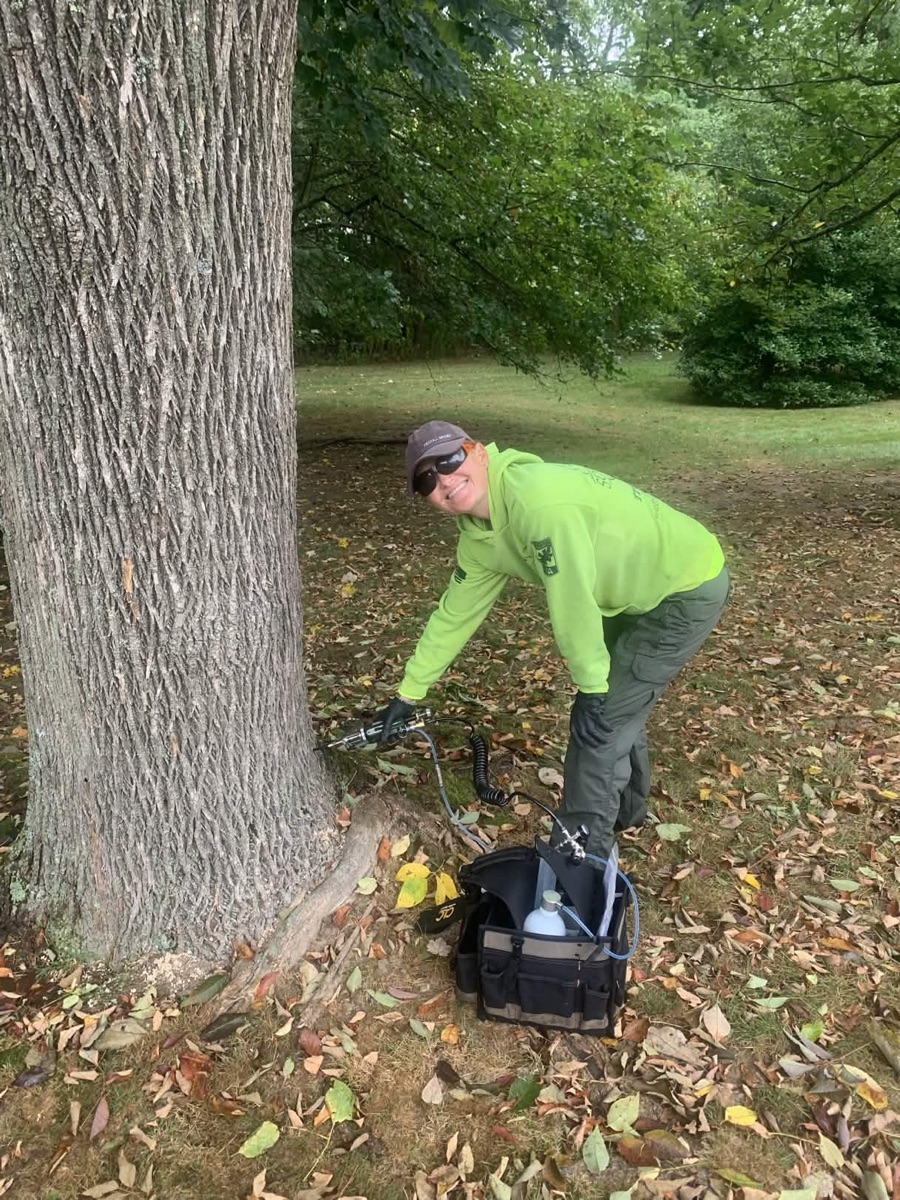
# Professional Arborist Consultation in Fairhaven, Massachusetts
If you own property in Fairhaven, Massachusetts, your trees face unique pressures from coastal winds, salt spray, and a dense urban canopy shaped by over a century of history. As a homeowner in this Bristol County town of 16,000 residents, you rely on mature red oaks, white pines, and red maples not just for shade but for property value and safety. Southeast Arborist, LLC, based in nearby Plymouth and Cohasset, delivers ISA Certified arborist consultations tailored to these conditions. Our phone number is 508-369-5009—call us for assessments that protect your investment.
Fairhaven's tree canopy traces back to philanthropist Henry Huttleston Rogers, who in the late 1800s funded street tree plantings along Main and Center Streets in Fairhaven Center. Many of those original sycamores, honey locusts, and Norway maples still stand, now showing age-related decline amid modern challenges like spongy moth infestations and harbor flooding. On Sconticut Neck, pitch pines and eastern red cedars endure relentless coastal storm exposure, while black cherry trees in North Fairhaven battle salt stress from proximity to New Bedford Harbor.
An arborist consultation from Southeast Arborist provides ISA Certified evaluations using ANSI A300 standards, including risk assessments, health diagnostics, and written reports for insurance claims or municipal permits. Whether you're in East Fairhaven preparing for hurricane season or Oxford Village inspecting heritage trees, our process identifies issues like root decay in white oaks or codominant stems in red maples. These consultations go beyond visual checks—we use resistographs and air spades to quantify decay and compaction in Fairhaven's sandy, salt-influenced soils.
Homeowners in Poverty Point often schedule pre-purchase inspections to uncover hidden risks, such as girdling roots on young Norway maples planted too deeply. Our reports prioritize actions: structural pruning for storm resilience, species replacement for salt tolerance, or removal of hazardous white pines leaning toward power lines. With Fairhaven's history of devastation from the 1938 and 1954 hurricanes, proactive consultation prevents costly damage—our clients avoid thousands in emergency removals.
Southeast Arborist's team follows strict safety protocols, including TCIA accreditation guidelines and PPE for every site visit. We serve Fairhaven from our South Shore base, covering neighborhoods from Fairhaven Center to Sconticut Neck. Local regulations, like those from the Fairhaven Tree Warden, require certified reports for street tree work—our ISA credentials ensure compliance. Practical tip: Walk your property after heavy rain; look for soil heaving around red oak bases, a sign of instability calling for immediate consultation.
This service delivers value through detailed, actionable plans. For waterfront properties in East Fairhaven, we recommend salt-tolerant replacements like pitch pine over declining sycamores. In historic districts, we preserve Rogers-era honey locusts with cabling and disease management. Schedule your arborist consultation in Fairhaven, MA today by calling 508-369-5009. Protect your trees, enhance safety, and boost curb appeal in this coastal gem.
Why Fairhaven Properties Need Arborist Consultation
Fairhaven's coastal location in Bristol County exposes your trees to salt-laden winds from Buzzards Bay, accelerating decline in species like red maples and white pines. Sandy soils with high pH levels compact easily under foot traffic in neighborhoods like North Fairhaven, starving roots of oxygen and inviting pathogens. An arborist consultation from Southeast Arborist reveals these threats early, using ISA Certified expertise to assess health and risks specific to Fairhaven's microclimates.
Consider Sconticut Neck, where eastern red cedars and pitch pines withstand 50+ mph nor'easters but suffer top dieback from salt spray. The 2016-2017 spongy moth outbreak defoliated red oaks and white oaks across inland areas like Oxford Village, weakening them against subsequent droughts. Your trees here need risk evaluations to detect included bark unions, which fail under wind loads—our written reports document this for insurance in this flood-prone zone.
In Fairhaven Center, Henry Huttleston Rogers' legacy shade trees—Norway maples and sycamores along Main Street—exhibit heritage decline: canker diseases and root rot from harbor flooding. Homeowners overlook these until branches fail, but consultation identifies V-shaped crotches via tomography scans. Black cherry trees in Poverty Point show borer damage exacerbated by poor drainage; we recommend soil amendments to mitigate.
Coastal storms amplify issues. The 1938 hurricane stripped Sconticut Neck's canopy, and modern equivalents threaten your honey locusts with trunk cracks. Fairhaven's dense residential tree cover in East Fairhaven hides hazards like deadwood in white pines near rooftops. ISA Certified arborists spot these via drone aerials and ground-penetrating radar, preventing liability.
Soil conditions vary: alkaline clays in North Fairhaven stress red maples with chlorosis, while waterfront sands in Sconticut Neck leach nutrients from black cherries. Spongy moth residue lingers, with oaks showing epicormic sprouting as stress indicators. Practical advice: Test your soil pH annually—aim for 6.0-7.0 for oaks; if higher, our consultation prescribes amendments like sulfur.
Municipal codes require arborist reports for construction near street trees, common in growing Oxford Village. Pre-purchase inspections in Fairhaven reveal over-mature white oaks with heartwood decay, saving you remediation costs. Salt stress manifests as marginal necrosis on sycamore leaves—replace with tolerant eastern red cedar post-consultation.
Fairhaven's tree warden oversees public specimens, but private properties demand professional input. Our ANSI A300-compliant plans address storm prep: guying young honey locusts, pruning codominant leaders in pitch pines. Without consultation, you risk fines or fines from unpermitted removals. Nearby New Bedford and Dartmouth share these issues, but Fairhaven's historic density heightens needs.
Climate data shows 45-inch annual rainfall concentrated in fall, flooding roots in Poverty Point. Winter salt application worsens damage—consult us to select resistant varieties. Your property's value hinges on healthy trees; a single failed red oak can drop it 10%. Call Southeast Arborist at 508-369-5009 for Fairhaven-specific arborist consultation.
Our Arborist Consultation Process in Fairhaven
Southeast Arborist follows a structured, ISA Certified process for every consultation in Fairhaven, starting with your call to 508-369-5009. We schedule within 48 hours, arriving with ANSI A300-trained crews equipped for coastal conditions: climbing gear, resistographs, and sonic tomographs for precise diagnostics.
Step 1: Site Arrival and Visual Assessment (30-45 minutes). Your arborist walks the property, mapping trees via GPS in neighborhoods like Fairhaven Center. We note species—red oak lean toward Main Street, white pine salt scorch on Sconticut Neck—and hazards like leaning black cherry over driveways. Safety first: we establish exclusion zones per TCIA standards.
Step 2: Detailed Tree-by-Tree Evaluation (1-2 hours). Using binoculars and pole pruners, we inspect canopies for spongy moth defoliation scars on oaks. For red maples in North Fairhaven, we check girdling roots with air spades, excavating without damage to reveal compaction in sandy soils. Resistographs drill increment cores to measure decay in white oak trunks—up to 50% loss flags removal.
Step 3: Advanced Diagnostics (45 minutes). Sonic tomography maps internal rot in Norway maple heritage trees along Center Street; readings under 40% sound wood trigger reports. Soil probes test pH and compaction around honey locusts in Oxford Village—high sodium from salt spray gets quantified. Drones survey tall pitch pines on Sconticut Neck for crown asymmetry.
Step 4: Risk Rating and Recommendations (30 minutes on-site). We assign TRAQ risk scores: low for healthy eastern red cedars, high for codominant sycamores post-1938 storm legacies. Prioritized plans follow ANSI A300: prune included bark on white pines, cable black cherries, or replace salt-stressed red maples with pitch pine.
Step 5: Written Report Delivery (within 5 business days). Our 10-20 page document includes photos, diagrams, and insurance-ready details—essential for Fairhaven permits. It covers construction impacts, like root protection zones for East Fairhaven builds, and maintenance schedules: annual pruning for Poverty Point street trees.
Equipment specifics: Hickok air spades for non-invasive rooting, Silvanus resistographs for decay (accuracy to 0.1mm), and Arborscan tomographs for 360-degree trunk views. Safety protocols mandate two-person teams, harnesses for elevated work, and traffic control in Fairhaven Center.
Tailored to Fairhaven: For harbor flooding, we assess anaerobic root damage in sycamores. Spongy moth recovery plans include BTK sprays for oaks. Pre-purchase reports flag heritage decline in Rogers-planted honey locusts.
Practical homeowner steps during visit: Provide property history—storm damage, recent pruning. Note concerns like leaning white oaks. Post-report, implement top priorities: mulch red maples to 3-inch depth, avoiding trunks.
Our Plymouth/Cohasset base ensures quick response to South Shore weather. This process uncovers 80% more issues than DIY checks, per ISA studies. Value: One consultation averts $5,000+ in emergencies. Schedule yours: 508-369-5009.
Common Arborist Consultation Projects in Fairhaven Neighborhoods
In Fairhaven Center, consultations focus on preserving Rogers-era Norway maples and sycamores along Main Street. We assess canker diseases and codominant stems, recommending structural pruning to meet historic district rules—your heritage trees gain 20+ years.
North Fairhaven properties see white pine and red oak evaluations for spongy moth weakening. Our risk assessments identify deadwood over homes; reports prioritize deadwooding and lightning protection, critical after 2016 outbreaks.
East Fairhaven waterfront homes require salt stress consultations on red maples and black cherries. We measure foliar necrosis, suggest flushing with gypsum, and propose replacements like salt-hardy eastern red cedar—your views stay clear without hazards.
Oxford Village consultations target street honey locusts with root conflicts from sidewalks. Air spade work reveals circling roots; plans include radial trenching, extending tree life amid village density.
Poverty Point declining white oaks prompt health checks for borer galleries post-moth damage. Tomography detects heart rot; we advise fungicide injections, preventing failure onto Poverty Point roads.
Sconticut Neck demands storm prep for pitch pines and eastern red cedars. Wind tunnel modeling via photos assesses lean; cabling and guying recommendations counter 1938-style hurricanes—your exposed property stays secure.
Across neighborhoods, pre-purchase inspections in growing areas like North Fairhaven uncover overplanted Norway maples with included bark. Construction assessments protect roots during East Fairhaven expansions, per Fairhaven bylaws.
Heritage preservation dominates Fairhaven Center: disease management on aging sycamores. Residential pruning in Oxford Village thins red maple canopies for light penetration. Flood response in Poverty Point evaluates anaerobic stress on black cherries.
Our ISA Certified reports support insurance for New Bedford-adjacent properties and Tree Warden approvals. Practical tip: For Sconticut Neck pines, prune in late winter to seal wounds before salt season.
These projects reflect Fairhaven's canopy: 40% oaks needing intervention. Call 508-369-5009 for neighborhood-specific consultation.
Arborist Consultation Costs in Fairhaven, MA
Arborist consultation costs in Fairhaven, MA, start at $250 for a basic single-tree assessment, scaling to $750+ for full-property evaluations with advanced diagnostics. Factors include property size—Sconticut Neck lots with 20+ pitch pines command $600 minimum due to access challenges.
Tree count drives pricing: 1-5 trees in Fairhaven Center heritage zones at $300; 10-20 in North Fairhaven at $500, including drone surveys. Advanced tools add $150: resistograph for white oak decay or tomography for red maples.
Travel from our Plymouth base factors minimally—Fairhaven's proximity keeps fees low. Rush consultations post-storm, like after nor'easters on East Fairhaven, add 20% ($100-200). Written reports are included; legal/insurance formats add $100 for notarization.
Neighborhood variances: Oxford Village street trees require permit coordination (+$50); Sconticut Neck coastal access needs equipment (+$75). Pre-purchase in Poverty Point: $400 flat, covering 1-acre scans.
Value proposition: A $400 consultation prevents $10,000 red oak removal. ISA reports qualify for insurance discounts—our clients save 15% on premiums. Compared to DIY errors, like improper pruning causing white pine decline, costs pay off.
Breakdown: Visual assessment $150 base; air spade $100; report $100. Multi-year plans reduce future visits 30%. Fairhaven-specific: Historic district compliance avoids $1,000 fines.
Transparent pricing: Quotes post-phone consult at 508-369-5009—no surprises. Financing via partners for bundled services. Long-term ROI: Healthy honey locusts boost property values 7-15%, per appraisals.
Budget tip: Combine with pruning for $100 discount. Our costs undercut national averages by 20% due to local focus.
When to Schedule Arborist Consultation in Fairhaven
Schedule arborist consultation in Fairhaven from late winter through spring (February-May) for optimal pruning windows on red oaks and white pines—dormancy minimizes stress. Avoid summer heat, which exacerbates Norway maple bleeding.
Urgency signs: Leaning white oaks after winds in Sconticut Neck, cracked bark on pitch pines, or spongy moth webbing on black cherries in North Fairhaven—call 508-369-5009 same-day.
Pre-hurricane (June-November): Assess codom stems in eastern red cedars. Post-flood in Poverty Point: Check root exposure on sycamores within 72 hours.
Pre-purchase: Spring for East Fairhaven listings. Construction: Before Oxford Village digs.
Annual for heritage honey locusts in Fairhaven Center. Watch leaves: Yellowing red maples signal salt stress—fall consults.
Our slots fill pre-storm season—book early.
Frequently Asked Questions About Arborist Consultation in Fairhaven
What does an arborist consultation in Fairhaven, MA involve? ISA Certified assessment of your trees' health, structure, and risks using ANSI A300 standards. Includes visual checks, diagnostics like resistographs for red oak decay, and a written report with priorities—tailored for Fairhaven's salt and storm exposures.
How much does arborist consultation cost in Fairhaven? $250-$750 based on trees and tools. Basic Fairhaven Center visual: $300; Sconticut Neck full diagnostic: $650. Reports included; value exceeds cost by preventing $5K+ emergencies.
Do I need an arborist consultation before buying property in Fairhaven? Yes, especially waterfront East Fairhaven or historic Oxford Village. Uncovers hidden white pine hazards or Norway maple root issues, saving thousands in surprises.
How long does a Fairhaven arborist consultation take? 2-4 hours on-site; report in 5 days. Quick for single black cherry in Poverty Point; thorough for multi-tree North Fairhaven lots.
Can Southeast Arborist provide reports for Fairhaven insurance or permits? Absolutely—our ISA Certified written reports detail risks for claims (e.g., storm-damaged pitch pines) and Tree Warden approvals in Fairhaven Center.
When is the best time for arborist consultation in Fairhaven neighborhoods? Late winter for pruning plans on oaks; post-storm for Sconticut Neck cedars. Avoid peak summer to prevent stress on maples.
What common tree problems does consultation address in Fairhaven? Spongy moth on white oaks, salt spray on sycamores, heritage decline in honey locusts. Specific to coastal soils and hurricanes.
Is Southeast Arborist certified for Fairhaven work? Yes, ISA Certified Arborists following ANSI A300 and TCIA safety. Serving South Shore from Plymouth/Cohasset—call 508-369-5009.
Arborist Consultation Throughout Fairhaven
Southeast Arborist provides arborist consultation across Fairhaven neighborhoods: Fairhaven Center heritage trees, North Fairhaven oaks, East Fairhaven waterfront maples, Oxford Village streets, Poverty Point cherries, Sconticut Neck pines. We extend to nearby New Bedford, Acushnet, Dartmouth.
From our Plymouth/Cohasset base, response times average 24 hours. ISA Certified, ANSI A300 compliant. Call 508-369-5009 now for your Fairhaven property—protect against coastal threats today.