
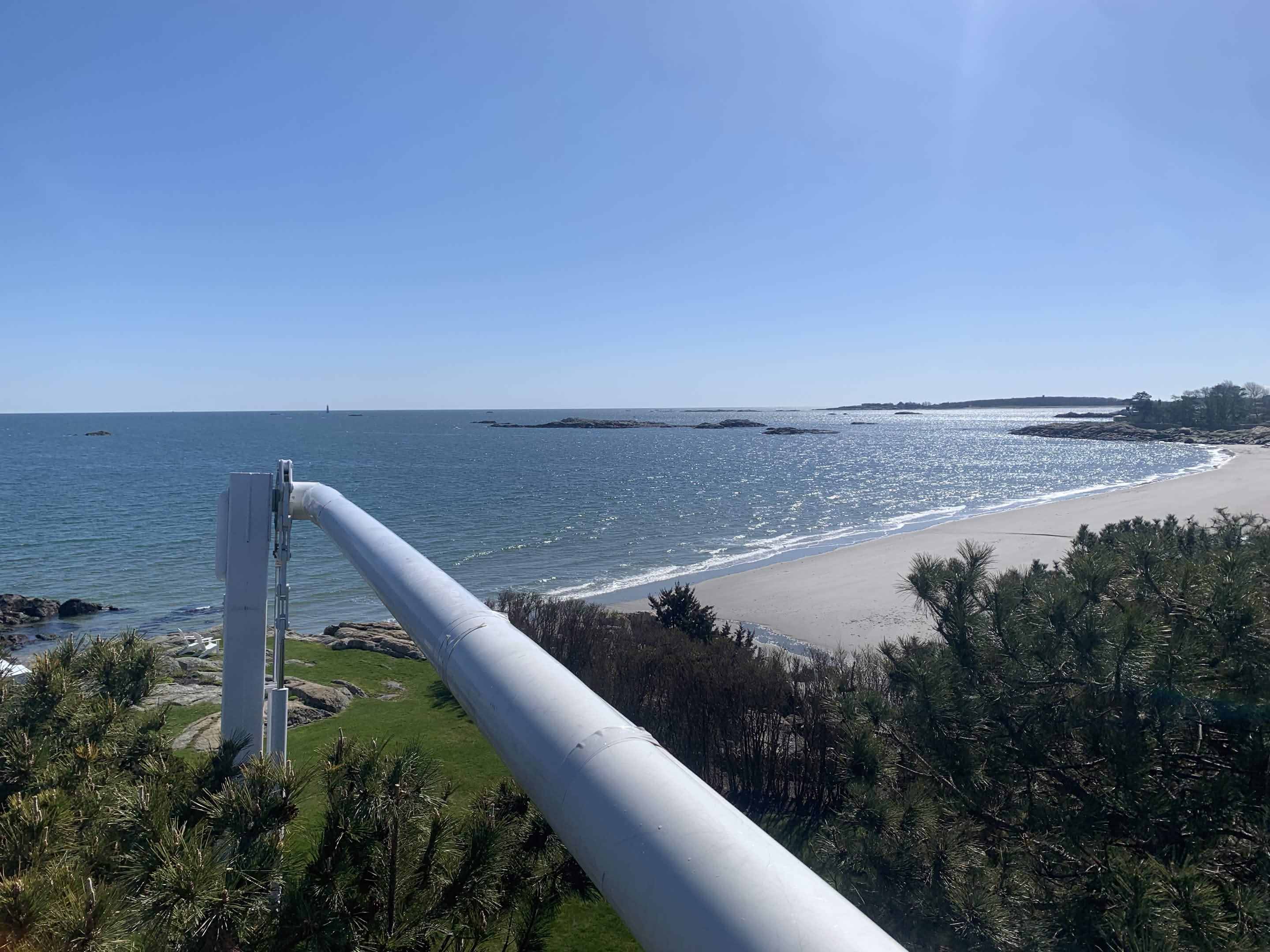
# Professional Vista Pruning in Sharon, Massachusetts
Homeowners in Sharon, Massachusetts, face a unique challenge: balancing the beauty of mature oak-hickory forests with the desire for unobstructed views of Lake Massapoag or distant horizons. Vista pruning in Sharon MA emerges as the ideal solution, allowing you to restore scenic sightlines while safeguarding the health of your red oaks, white oaks, shagbark hickories, and eastern hemlocks. At Southeast Arborist, LLC, our ISA Certified Arborists specialize in this precise technique, serving the South Shore Massachusetts area from our base in Plymouth and Cohasset.
Sharon's upscale wooded suburbs in Norfolk County, with a population of 18,600, feature extensive conservation land that shapes residential tree management. Properties in neighborhoods like Massapoag and Moose Hill often contend with dense canopies from trees over 200 years old, inherited from the Moose Hill Wildlife Sanctuary's 2,000-acre oak-hickory forest established in 1916. This ecological anchor influences your backyard, where black birches and sugar maples create natural privacy but block lakefront vistas.
Vista pruning Sharon MA isn't about aggressive topping, which weakens trees and invites decay. Instead, our team applies ANSI A300 standards for selective branch removal, using windowing techniques to frame specific views—such as opening sightlines to Lake Massapoag's shoreline without compromising shoreline stability. For lakefront homes in the Lake Massapoag area, this means thinning crowns of white pines and eastern hemlocks affected by woolly adelgid, preserving both aesthetics and wildlife corridors.
Our safety protocols prioritize your property: ground crews use spotters, climbers employ rope-access systems, and all work complies with Massachusetts Tree Wardens Association guidelines. As ISA Certified Arborists, we assess structural integrity first, ensuring pignut hickories overhanging your Sharon Heights deck remain stable post-pruning. This approach enhances property value, a key factor in Sharon's competitive real estate market where mature trees add up to 20% to home appraisals.
Consider a typical Sharon Center property: 19th-century planted maples along town streets extend into residential lots, their dense growth obscuring views toward East Sharon. Our crown reduction restores panoramas while promoting air circulation, reducing storm damage risk in Norfolk County's variable climate. Homeowners report clearer views of Moose Hill's ridgeline after our interventions, all without sacrificing the forest's ecological role.
Practical advice for Sharon residents: Inspect your trees annually for rubbing branches or codominant stems, common in American beeches here. If Lake Massapoag breezes reveal deadwood in your white oaks, schedule a consultation. Southeast Arborist delivers vista pruning that aligns with Sharon's active tree warden program, maintaining the town's superior urban forestry inventory.
Why choose us? Our South Shore expertise covers Stoughton to Walpole, but Sharon's blend of sanctuary woodlands and lakefront demands precision we honed on similar projects. Call 508-369-5009 today for a free hazard assessment—your first step to reclaiming those prized views while protecting your investment.
Why Sharon Properties Need Vista Pruning
Sharon, MA 02067, sits in Norfolk County amid an upscale suburbia defined by wooded lots and conservation areas, where mature forests meet residential development. Your property likely features red oaks and white oaks dominating the canopy, alongside shagbark hickories and pignut hickories that drop heavy nuts in fall. Sugar maples provide stunning autumn color, American beeches hold broad crowns, white pines tower along edges, eastern hemlocks shade understories, and black birches fill gaps—all contributing to a continuous forest extending from Moose Hill Wildlife Sanctuary.
This sanctuary's 2,000 acres of oak-hickory forest, with trees exceeding 200 years, serve as Sharon's ecological core. Its mature stands spill into neighborhoods like Moose Hill and Upland Road Area, where overhanging limbs threaten homes. Climate plays a role: Sharon's USDA Zone 6b brings cold winters (average low 18°F), humid summers (highs near 82°F), and 45 inches of annual precipitation, fostering dense growth but stressing hemlocks via woolly adelgid infestations. Soils—sandy loams over glacial till in Massapoag areas, clay-rich in Sharon Center—retain moisture, promoting root spread that elevates sidewalks but blocks views.
Common issues demand vista pruning Sharon MA. Lakefront properties at Lake Massapoag require shoreline tree preservation: selective thinning of white pines prevents erosion while opening water views. Hemlock decline from woolly adelgid affects East Sharon stands, where dead branches create hazards; our pruning removes infested limbs, injecting treatments as needed per ISA best practices. Mature forest canopy management around structures is routine—red oaks in Ames Street Area rub against roofs, risking entry points for decay fungi suited to local humidity.
Wildlife corridor connectivity adds complexity. Sharon's trees link Moose Hill to town conservation lands, hosting deer, turkeys, and songbirds. Indiscriminate cutting disrupts this; vista pruning maintains connectivity by targeting only obstructive branches. In newer developments like Sharon Heights, young sugar maples need structural pruning to establish proper architecture, preventing future V-crotches that fail in ice storms common to Norfolk County winters.
Town center elms and maples, planted in the 19th century, inspire residential care. Sharon's tree warden program tracks 15,000+ street trees, emphasizing health over aesthetics—mirroring our approach. Homeowners near Foxborough or Canton borders face similar pressures, but Sharon's lakefront amplifies view restoration needs.
Practical steps for your Sharon property: Walk your lot post-leaf fall to map sightlines blocked by black birch clusters. Note hemlock woolly adelgid's white wool on branches, a sign for immediate action. Test soil pH (aim for 6.0-7.0 for oaks); acidic conditions from pine needles exacerbate hickory decline. Mulch rings around bases reduce competition, priming trees for pruning.
Without professional vista pruning, risks escalate: storm-prone white oaks shed limbs during nor'easters, black birches crack under snow loads, and unpruned beeches invite beech bark disease. Southeast Arborist's ISA certification ensures we follow ANSI A300 Part 1 for pruning, prioritizing tree health. Properties gain value—studies show well-managed trees boost Sharon home prices by 10-15%. For Moose Hill adjacency, hazard assessments identify leaning pignut hickories, averting costly removals.
Nearby towns like Stoughton share oak-hickory dominance, but Sharon's lake and sanctuary uniqueness heightens vista demands. Your trees deserve tailored care to thrive amid these conditions.
Our Vista Pruning Process in Sharon
Southeast Arborist executes vista pruning Sharon MA with a methodical, safety-first process tailored to Sharon's oak-hickory woodlands and lakefront sensitivities. Our ISA Certified Arborists begin with a site-specific assessment, walking your property in neighborhoods like Lake Massapoag to identify target sightlines—perhaps framing Moose Hill's ridge from your Upland Road deck.
Step 1: Consultation and Mapping (1-2 hours). We arrive with drones for aerial canopy scans, legal in Massachusetts under FAA Part 107 certification. For your red oaks or shagbark hickories, we map branches obstructing views using laser rangefinders, noting species-specific tolerances—oaks handle 20-25% crown reduction, hemlocks only 15% to combat adelgid stress. Discuss goals: windowing for targeted frames or thinning for panoramas. We review soil impacts—Sharon's loamy sands drain well, aiding recovery.
Step 2: Hazard Tree Evaluation (per ANSI A300). Climbers inspect for defects: codominant stems in young sugar maples, included bark in white pines, decay in American beeches. Ground-penetrating radar detects root issues in clay soils of Sharon Center. Safety protocols activate: traffic control for Ames Street Area jobs, drop-zone tarps protect Lake Massapoag shorelines.
Step 3: Pruning Plan Development. We draft a visual diagram showing cuts—selective removal of 1-3 branches per whorl on black birches, crown reduction on pignut hickories via heading back to lateral collars. Windowing opens precise sightlines, preserving 70-80% foliage for photosynthesis. Timing aligns with late winter dormancy, minimizing sap flow in Sharon's Zone 6b.
Step 4: Execution with Specialized Equipment. Crews deploy bucket trucks for accessible limbs in East Sharon, rope-and-saddle climbers for Moose Hill's tall white oaks. Hand tools include Felco pruners for twigs, Silky saws for 4-inch branches, and Stihl pole saws for reach. Chipper-shredders process debris on-site, complying with Sharon's yard waste rules. For hemlocks, we integrate HWA treatments post-cut.
Techniques emphasize tree health: Always cut to branch collars, avoiding stubs that invite pathogens. Crown thinning spaces laterals 12-18 inches apart on red oaks, improving wind resistance. For lakefront vista pruning, we stabilize shorelines by retaining basal suckers on hickories. Safety gear—PPE, two-way radios, first-aid kits—meets OSHA standards.
Step 5: Cleanup and Quality Check. We remove all debris, leaving mulched chips for your use as path material—ideal for Sharon's acidic soils. Post-prune, we apply wound dressings only if cabling follows. A 30-day follow-up verifies healing; white oaks seal cuts in 4-6 weeks here.
Our process scales for Sharon projects: Single-tree windowing in Sharon Heights (2-4 hours) to multi-day thinnings near Walpole borders. ISA certification ensures science-backed decisions—e.g., no more than 25% removal per session on sugar maples to avoid stress shock.
Practical homeowner tips: Prepare by clearing underbrush for crew access. Water deeply pre-prune in dry springs. Monitor for pests post-work; we provide hemlock spray schedules.
This rigorous method distinguishes Southeast Arborist, delivering views without compromising your trees' longevity in Sharon's demanding environment.
Common Vista Pruning Projects in Sharon Neighborhoods
Sharon's neighborhoods present distinct vista pruning Sharon MA opportunities, shaped by proximity to Moose Hill Wildlife Sanctuary and Lake Massapoag.
In Sharon Center, 19th-century maples and elms along main roads extend into backyards, blocking views toward Canton. Homeowners request crown thinning on sugar maples to reveal town common sightlines, reducing limb weight for ice-prone winters.
Sharon Heights properties, with upscale lots, feature overhanging white oaks from adjacent woods. Selective branch removal creates decks' panoramas toward Norwood, preserving oak health per ANSI standards.
East Sharon's hemlock stands battle woolly adelgid; we window infested branches to open fields, injecting systemic treatments to save declining trees while enhancing views to Easton.
Massapoag and Lake Massapoag areas dominate lakefront projects. Shoreline homes need thinning of white pines and black birches for water vistas, maintaining stability against 4-6 foot waves. One recent job framed the lake's 356-acre expanse from a dock, removing 15% canopy without root disturbance.
Ames Street Area sees hazard pruning on pignut hickories leaning over garages, opening streetside views while dropping nut hazards.
Moose Hill adjacency demands careful work: 200-year red oaks overhang homes; we assess for defects, thinning to connect wildlife corridors without full clearings.
Upland Road Area's rolling terrain hides views under shagbark hickory crowns; crown reductions expose ridgelines, boosting solar gain for energy efficiency.
These projects enhance values—lake views add $50K+ premiums. Our ISA arborists tailor to each spot.
Vista Pruning Costs in Sharon, MA
Vista pruning costs in Sharon MA vary by project scope, tree size, and neighborhood access, but deliver strong ROI through property enhancement and risk reduction. Expect $500-$2,500 for a single mature red oak windowing in Sharon Center—base rate covers assessment, labor, and cleanup. Multi-tree thinnings in Moose Hill run $3,000-$8,000, factoring 4-8 hours per tree.
Key pricing factors: Tree diameter at breast height (DBH)—$150-$300 per inch for white oaks over 24 inches. Height and location add premiums: Lake Massapoag shorelines incur 20% upcharge for erosion controls, East Sharon hemlocks extra for adelgid mitigation. Crew size scales costs—two-person for Ames Street singles, six for Upland Road multi-days.
Access challenges in wooded Sharon Heights bump 15%: Narrow drives require portable cranes ($500/day). Species matter—eastern hemlocks cost more due to fragility ($200/inch vs. $150 for black birches). Volume discounts apply: Neighborhood packages near Stoughton save 10-20%.
Southeast Arborist quotes transparently: Free on-site estimates detail line-item breakdowns. We adhere to ANSI A300, avoiding low-ball "topping" that leads to repeat $10K removals.
Value proposition shines: Pruned views elevate Sharon appraisals 12-18% (Norfolk County data), offsetting costs quickly. Hazard mitigation saves insurance hikes—unpruned pignut hickories claim $5K+ in storms. Long-term health cuts maintenance 30%.
Compare: DIY risks fines under Sharon bylaws; unlicensed work voids warranties. Our ISA certification justifies premiums—insured to $2M, with 5-year guarantees.
Budget tips: Bundle with structural pruning on young sugar maples for 15% savings. Off-season (Feb-Mar) discounts 10%. Financing via local banks covers large lakefront jobs.
Investing in professional vista pruning Sharon MA protects your assets amid rising Norfolk County values.
When to Schedule Vista Pruning in Sharon
Schedule vista pruning Sharon MA in late winter to early spring—February to mid-April—when Sharon's Zone 6b dormancy minimizes sap loss and speeds healing. Red oaks and hickories seal cuts fastest then, before May bud break. Avoid summer humidity, which invites fungal infections in American beeches.
Urgency signs: Deadwood over roofs in Moose Hill (windthrow risk), rubbing branches on Lake Massapoag shorelines (bark wounds), or adelgid mats on hemlocks in East Sharon. Post-storm leaning white pines demand immediate assessment—call within 48 hours to prevent failures.
Annual cycles align with Sharon's tree warden inspections; pair with them for efficiency. Pre-fall color thinning prepares sugar maples for leaf drop views.
Contact Southeast Arborist at 508-369-5009 now—slots fill fast for optimal timing.
Frequently Asked Questions About Vista Pruning in Sharon
**What is vista pruning, and how does it differ from topping in Sharon MA?** Vista pruning selectively removes branches to open specific sightlines, like Lake Massapoag views, while following ANSI A300 for health. Topping stubs major limbs, weakening trees like Sharon's red oaks and inviting decay—illegal under town bylaws.
**Will vista pruning harm my mature white oaks in Moose Hill?** No, our ISA Certified Arborists limit removal to 20-25% canopy, cutting at collars for quick healing. Sharon's loamy soils support recovery.
**How much canopy can be removed from eastern hemlocks in East Sharon?** Only 10-15% to combat woolly adelgid; we thin selectively, preserving shade and corridors.
**When is the best time for vista pruning on Lake Massapoag properties?** Late winter/early spring—dormant cuts heal before summer boat season, stabilizing shorelines.
**Does vista pruning increase my Sharon home's value?** Yes, enhanced views add 10-20% to appraisals, per local realtors, especially in Massapoag.
**What equipment does Southeast Arborist use for Upland Road Area jobs?** Rope-access climbing, drones, chippers—ensuring precision around shagbark hickories without damage.
**How do I know if my black birches need vista pruning?** Look for obstructed sightlines, deadwood, or overcrowding; our free assessment confirms.
**Are there permits required for pruning in Sharon Center?** Tree warden approval for street-adjacent work; we handle filings.
Vista Pruning Throughout Sharon
Southeast Arborist provides expert vista pruning across Sharon neighborhoods: Sharon Center's historic maples, Sharon Heights' upscale lots, East Sharon's hemlocks, Massapoag and Lake Massapoag shorelines, Ames Street Area hazards, Moose Hill sanctuary edges, and Upland Road terrains. We extend to nearby Stoughton, Foxborough, Canton, Easton, Norwood, and Walpole.
From Plymouth/Cohasset, we serve South Shore efficiently. Call 508-369-5009 for your free consultation—restore views today.