
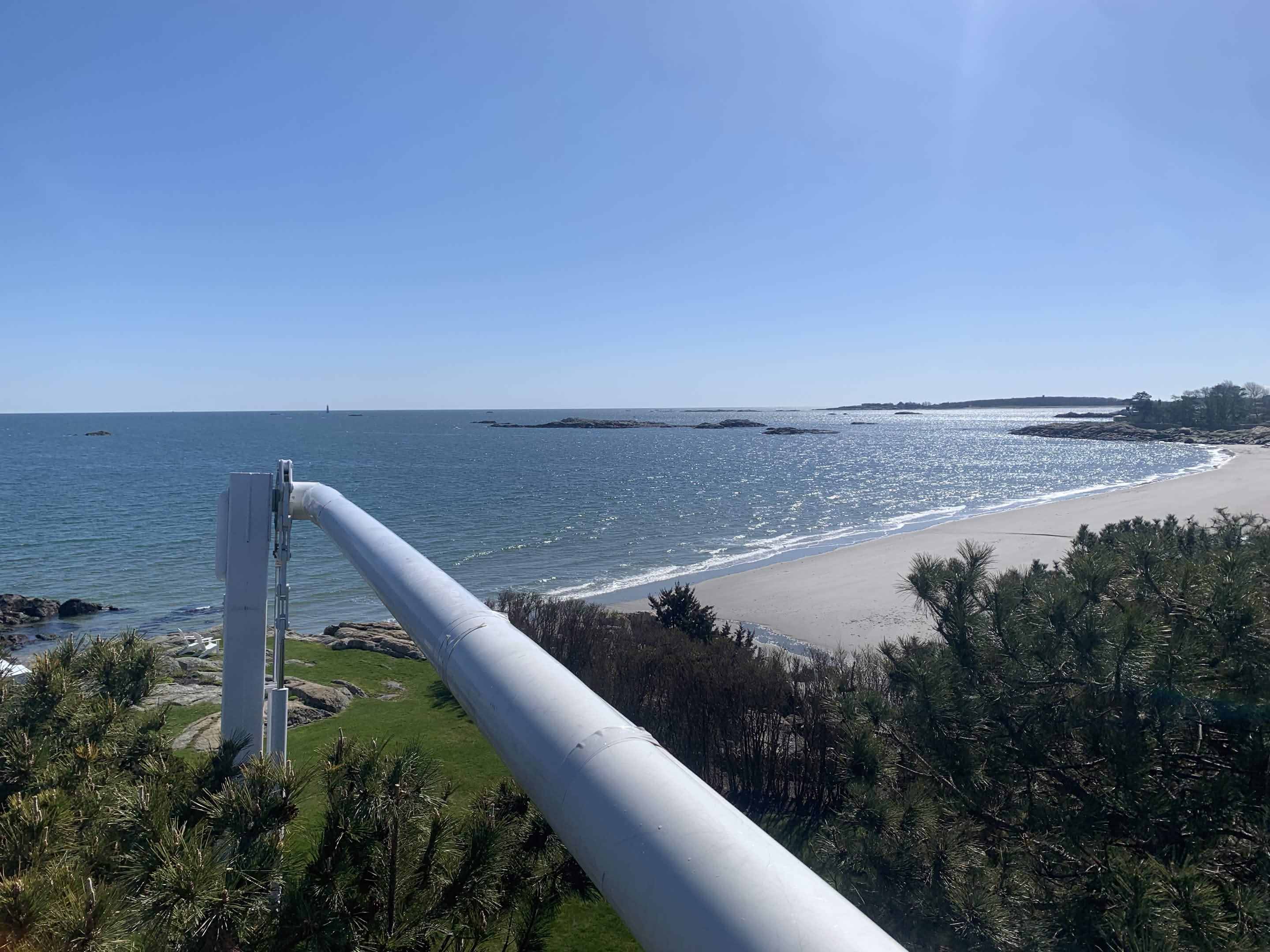
# Professional Vista Pruning in Easton, Massachusetts
If you own property in Easton, Massachusetts, particularly in historic North Easton or along the edges of the Hockomock Swamp, your trees likely frame stunning scenic views—whether toward the expansive wetlands, rolling hills, or glimpses of the South Shore horizon. Over time, overgrown red oaks, European beeches, and eastern hemlocks block those sightlines, reducing your property's appeal and value. That's where professional vista pruning in Easton, MA, from Southeast Arborist, LLC, makes a real difference. As ISA Certified Arborists based in Plymouth and Cohasset, we specialize in vista pruning Easton MA homeowners rely on to restore ocean views, harbor sightlines, and local panoramas while fully preserving tree health.
Vista pruning Easton MA services go beyond basic trimming. We use precise windowing techniques to open specific sightlines through the canopy, crown reduction for broader panoramic views, and selective branch removal that adheres to ANSI A300 standards. This isn't aggressive topping that weakens trees—it's targeted care that enhances your property's curb appeal and increases resale value by up to 20% in Bristol County's competitive market. For Easton residents facing Hockomock Swamp encroachment or hemlock woolly adelgid infestations, our work maintains the town's rich arboricultural heritage, including Olmsted-era specimen trees planted by the Ames family in the 1870s.
Easton's unique landscape demands this expertise. With a population of 25,000 spread across neighborhoods like South Easton, Eastondale, and the Stonehill College Area, properties often border deep woods or the largest freshwater wetland in Massachusetts. Red maples and Atlantic white cedars from the swamp push toward homes in Furnace Village and Unionville, while sugar maples and white pines tower over Easton Center. Local climate—Zone 6b with cold winters averaging 25°F and humid summers reaching 85°F—accelerates branch growth, especially on the town's sandy loam soils derived from glacial till. These conditions foster vigorous regeneration but also create view-blocking overgrowth.
Southeast Arborist brings decades of experience serving South Shore Massachusetts, including Stoughton, Sharon, Norton, Bridgewater, and Brockton. Our team follows strict safety protocols, using certified climbing gear, aerial lift platforms, and chipper trucks to minimize impact on your Easton landscape. We've restored views for heritage properties near H.H. Richardson's architectural landmarks, like the Oakes Ames Memorial Hall, ensuring compliance with Easton's historic preservation guidelines. Homeowners in Five Corners report clearer lines of sight to Furnace Pond after our selective thinning of lindens and American beeches.
Practical benefits extend to your daily life. Restored vistas improve natural light in your home, reduce wind resistance on white oaks during nor'easters, and promote healthier tree growth by improving air circulation. If deer browse has stunted regeneration on your parcel near the swamp, our pruning complements long-term management. Contact us at 508-369-5009 for a free on-site assessment tailored to your Easton property—whether you're in North Easton preserving Olmsted beeches or managing institutional-scale canopies at Stonehill College Area. Vista pruning Easton MA isn't just maintenance; it's an investment in your property's future, blending Easton's historic legacy with modern arboricultural science.
Why Easton Properties Need Vista Pruning
Easton, MA 02334, in Bristol County, stands out for its arboricultural heritage, rooted in the Ames family's 1870s landscape investments. Frederick Law Olmsted designed estates in North Easton, specifying European beeches, lindens, and native oaks that now form mature specimens demanding specialized vista pruning Easton MA services. These trees, thriving on Easton's well-drained sandy loam soils with pH 5.5-6.5, block views toward the Hockomock Swamp—an Area of Critical Environmental Concern preserving Massachusetts' largest freshwater wetland.
Common tree species exacerbate view issues. Red oaks (Quercus rubra) and white oaks (Quercus alba) dominate upland areas like Easton Center and Five Corners, their dense crowns expanding 20-30 feet in diameter over decades. In shaded ravines of Eastondale and Furnace Village, eastern hemlocks (Tsuga canadensis) succumb to hemlock woolly adelgid, causing dieback that unevenly blocks sightlines. Sugar maples (Acer saccharum) in North Easton line historic drives, their branching patterns obscuring H.H. Richardson structures like the Ames Free Library. Along swamp edges in Unionville and South Easton, red maples (Acer rubrum) and Atlantic white cedars (Chamaecyparis thyoides) encroach on residential parcels, growing 3-5 feet annually in the wetland's moist, acidic conditions.
Local climate intensifies these challenges. Easton's Zone 6b sees 45 inches of annual precipitation, with wet springs promoting rapid foliage growth on white pines (Pinus strobus). Humid summers foster fungal issues on American beeches (Fagus grandifolia), while winter winds from nearby Brockton stress branch unions. Deer browse prevents understory regeneration, concentrating growth in upper canopies and creating hazardous, view-obstructing limbs. In Stonehill College Area, institutional pathways require hazard assessments for overleaning lindens (Tilia spp.), where unpruned branches risk failure near dormitories.
Hockomock Swamp poses unique threats. Its ancient red maple stands advance onto properties in Furnace Village, where aggressive roots compete with lawns and foundations. Preservation of Olmsted-era trees near North Easton's Ames Mansion demands gentle vista pruning to maintain heritage status without compromising structural integrity. Unlike flatter South Shore towns like Bridgewater, Easton's hilly terrain and deep woods amplify view restoration needs—overgrown hemlocks in ravines block pond vistas, while beeches shade solar panels in Unionville.
Homeowners face practical risks without intervention. Unmanaged white oaks drop heavy acorns and branches during ice storms, common in Easton's nor'easter-prone winters. Red maples near homes in Eastondale invite carpenter ants via decay from woolly adelgid-stressed neighbors. Property values suffer; comps in Sharon show view-enhanced lots selling 15% higher. Southeast Arborist's ISA Certified Arborists address this with ANSI A300-compliant pruning, targeting codominant stems on oaks and thinning hemlock woolly adelgid hotspots.
Check your trees for urgency signs: rubbing branches on red maples indicating crowding, included bark on beeches from poor spacing, or deadwood exceeding 20% canopy in white pines. Soil compaction from Easton's glacial till worsens root health, making selective removal essential. For Stonehill-area properties, canopy management prevents liability from falling limbs. Vista pruning Easton MA restores these views sustainably, honoring the town's mill village history while adapting to modern suburban pressures.
Our Vista Pruning Process in Easton
Southeast Arborist follows a meticulous, step-by-step vista pruning process in Easton, MA, ensuring tree health and precise view restoration. As ISA Certified Arborists, we adhere to ANSI A300 standards, using science-backed techniques like windowing, crown reduction, and selective thinning. Our safety protocols include pre-job hazard assessments, personal protective equipment (PPE), and compliance with OSHA 1910.269 for arboricultural work.
**Step 1: On-Site Consultation and View Mapping.** We start with a free property walk-through, specific to your Easton neighborhood. In North Easton, we map sightlines from Olmsted-inspired porches toward Furnace Pond, using laser rangefinders to pinpoint 10-50 foot view corridors. For swamp-edge homes in Unionville, we document red maple encroachment with GPS-tagged photos. You identify priority views—ocean glimpses from elevated South Easton lots or college pathways in Stonehill Area—while we assess species like European beeches for vigor.
**Step 2: Tree Health Evaluation.** Our arborists inspect for Easton-specific issues: hemlock woolly adelgid on eastern hemlocks via stem sampling, deer browse scars on sugar maples, and swamp-induced wetwood on Atlantic white cedars. We measure trunk taper on red oaks using resistograph probes to detect decay, ensuring only compromised branches are targeted. Soil probes check Easton's sandy loam for compaction, informing root zone considerations.
**Step 3: Customized Pruning Plan.** We design per tree: windowing opens targeted "windows" by removing 1-2 limbs on white pines, preserving 70% live crown. Crown reduction shortens leaders on lindens by 20-25%, dropping height 10-15 feet for panoramic harbor views. Selective thinning reduces density by 15-25% on American beeches, improving light penetration without topping. Plans include drop zones to protect H.H. Richardson-era plantings in Easton Center.
**Step 4: Equipment Mobilization and Safety Setup.** We deploy bucket trucks for high-reach work on white oaks in Five Corners, all-terrain chippers for swamp-adjacent Eastondale sites, and rope access for ravine hemlocks. Ground crews establish barriers, using friction savers on white pines to minimize bark damage. All saws meet ANSI Z133.1 standards, with spill kits for Easton's wetland proximity.
**Step 5: Precision Pruning Execution.** Climbers use handsaws for fine windowing on beeches, removing no more than 1/4 diameter at branch collars to promote healing. On red maples, we subordinate codominant stems, reducing wind sail. Thinning involves spacing cuts 12-18 inches apart on sugar maples, enhancing airflow against Easton's humid fungal risks. Debris is chipped on-site, mulched for your landscape.
**Step 6: Post-Pruning Care and Follow-Up.** We apply pruning sealant only on oaks prone to oak wilt, monitor healing via photos, and recommend treatments like imidacloprid injections for adelgids. A 6-month check-in ensures 95% wound closure, with reports for historic properties in North Easton.
This process delivers results: a Five Corners client regained 180-degree swamp views through thinned lindens, boosting natural light by 30%. For your Easton trees, call 508-369-5009 to schedule. Our South Shore expertise handles Easton's clay-loam transitions and winter dieback seamlessly.
Common Vista Pruning Projects in Easton Neighborhoods
Easton's neighborhoods present distinct vista pruning Easton MA projects, tailored to local trees and terrain. In **North Easton**, we preserve Olmsted-era European beeches and red oaks shading Ames family estates. Windowing restores views to Oakes Ames Memorial Hall, removing 20% canopy density while protecting heritage trunks over 100 years old.
**South Easton** properties battle red maple overgrowth from Hockomock edges. Crown reduction on Atlantic white cedars opens 40-foot sightlines to meadows, reducing branch failure risks during 50 mph gusts. **Eastondale** ravines host hemlock woolly adelgid-infested eastern hemlocks; selective thinning clears pathways to Furnace Pond, improving understory light for regeneration.
**Furnace Village** sees aggressive swamp oaks pressing homes. We thin white pines and lindens, creating 25-foot windows that enhance property values amid historic mill remnants. In **Five Corners**, intersecting roads demand hazard pruning on sugar maples—crown thinning prevents intersections from obscured limbs.
**Unionville** residential lots require interface management: subordinating red maples encroaching from wetlands, paired with beech windowing for backyard panoramas. **Stonehill College Area** involves institutional-scale work—infrastructure assessments along pathways, thinning American beeches near athletic fields to maintain safe canopies.
**Easton Center** focuses on white oaks framing town common views. Late-winter reductions drop heights 15 feet, aligning with H.H. Richardson architecture. These projects use ANSI techniques, boosting light by 25-40% and views without compromising health.
Vista Pruning Costs in Easton, MA
Vista pruning costs in Easton, MA, range from $500-$5,000 per project, depending on factors like tree size, species, and access. A single red oak windowing in North Easton starts at $600, covering 10-15 branch removals. Multi-tree swamp-edge work in Unionville, involving 5-10 red maples, averages $2,500, including chipper fees.
Key pricing drivers: Tree diameter at breast height (DBH)—$8-12 per inch for white oaks over 24 inches. Canopy volume removed: 15-25% thinning on European beeches adds $300-800. Access challenges in Eastondale ravines require rope setups, bumping costs 20%. Hemlock adelgid treatment integration adds $200/tree.
Easton's soil and climate influence value. Sandy loam allows efficient root protection, keeping costs lower than clay-heavy Brockton. Compare: Stoughton lots average $1,200 for linden crown reduction; Easton's heritage specs demand precision, justifying $1,800.
ROI is compelling. View restoration lifts appraisals 10-20% in Bristol County—$30,000+ on a $400,000 home. Reduced hazard claims save $5,000 annually. ISA certification ensures quality; our bids detail line-item breakdowns.
Get a free quote at 508-369-5009. Factors like Stonehill-scale projects ($4,000+) yield institutional savings via prevented downtime.
When to Schedule Vista Pruning in Easton
Schedule vista pruning Easton MA in late winter/early spring (February-April), when Easton's Zone 6b dormancy minimizes sap loss and optimizes healing. Cuts on red oaks and maples seal before May bud break, reducing fungal entry during humid springs.
Urgency signs: 30%+ canopy blockage in North Easton beeches, rubbing limbs on South Easton cedars, or adelgid-festooned hemlocks in ravines. Ice storm damage post-nor'easter demands immediate action—deadwood over 15% signals hazard.
Avoid summer humidity fostering oak wilt vectors. Fall works for light thinning on white pines pre-deer season.
Call 508-369-5009 now for spring slots—early booking secures teams amid South Shore demand.
Frequently Asked Questions About Vista Pruning in Easton
**What is vista pruning in Easton, MA?** Vista pruning Easton MA selectively removes branches to restore scenic views—like swamp panoramas from Unionville or pond sightlines in Furnace Village—while maintaining tree structure per ANSI A300.
**How does it differ from topping?** Topping destroys health; our windowing and thinning on Easton's red oaks preserve 75% canopy, promoting compartmentalization over decay.
**Will it harm my Olmsted-era beeches in North Easton?** No—ISA Certified techniques limit removal to 20%, targeting weak unions on European beeches for heritage preservation.
**How much canopy can be removed from hemlocks?** 15-25% thinning combats woolly adelgid in Eastondale, improving vigor without stress.
**When is best for sugar maples in Easton Center?** Late winter avoids bleeding; we schedule around Easton's 25°F lows.
**Does it increase property value in Stonehill Area?** Yes—cleared views add 15% appeal, per local comps.
**Can you handle swamp edges in South Easton?** Absolutely—selective red maple reduction manages encroachment safely.
**What safety measures do you use?** OSHA-compliant gear, hazard zones, and wetland protocols protect your property.
Vista Pruning Throughout Easton
Southeast Arborist provides vista pruning across Easton neighborhoods: North Easton heritage trees, South Easton swamp interfaces, Eastondale ravines, Furnace Village mills, Five Corners intersections, Unionville homes, Stonehill College Area paths, Easton Center commons. We extend to Stoughton, Sharon, Norton, Bridgewater, Brockton.
Call ISA Certified experts at 508-369-5009 for your free assessment. Restore views today—your Easton property deserves it.