
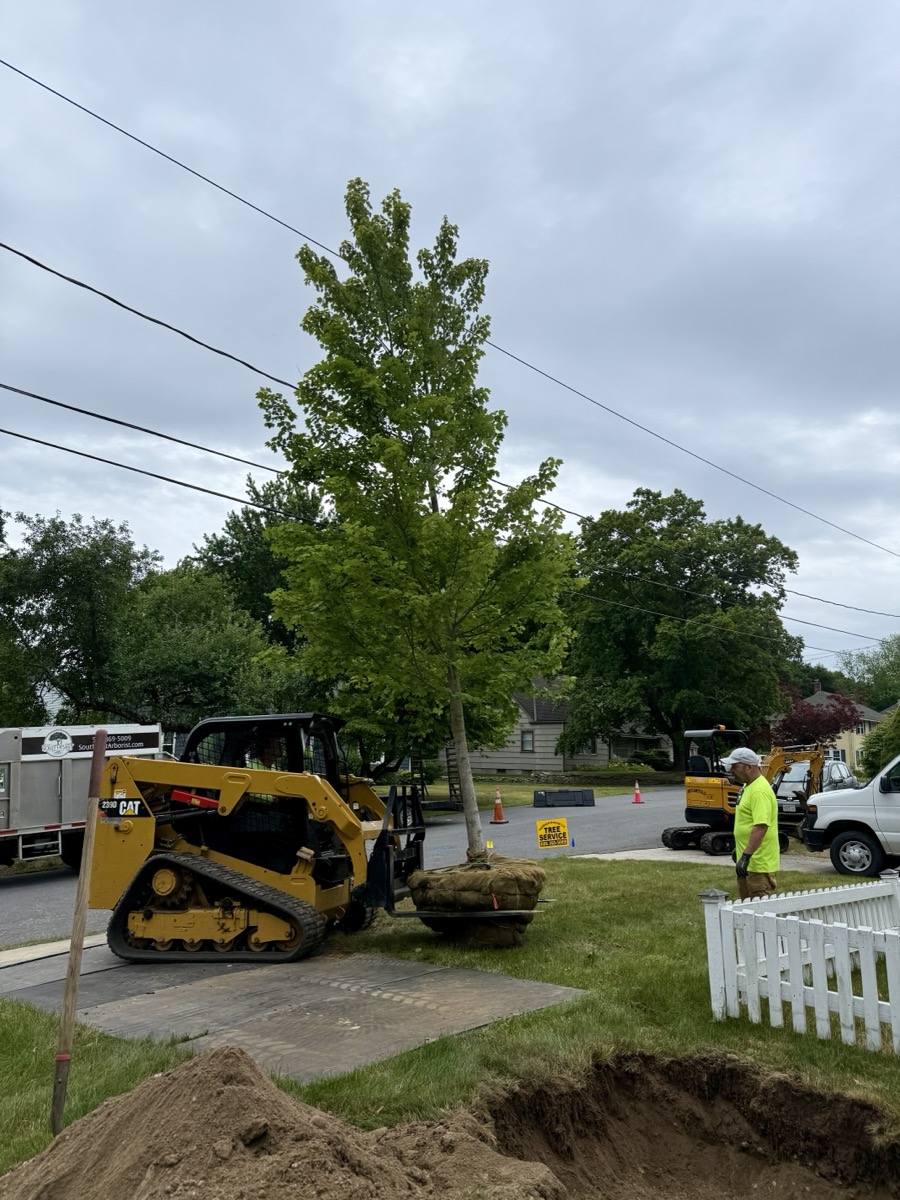
# Professional Tree Planting in Swansea, Massachusetts
If you own property in Swansea, Massachusetts, especially along the Warren or Palmer Rivers or near Mount Hope Bay, tree planting represents a strategic investment in your landscape's long-term health and resilience. Swansea's unique position in Bristol County, with its 16,500 residents spread across waterfront lots, rural woodlands, and established neighborhoods like Swansea Center, Ocean Grove, and Hortonville, demands tree planting services tailored to local conditions. Tidal erosion along riverbanks, salt spray from Mount Hope Bay, and vulnerability to coastal storms make selecting the right tree species and planting technique essential for your property's stability and curb appeal.
At Southeast Arborist, LLC, our ISA Certified Arborists deliver professional tree planting in Swansea, MA, following ANSI A300 standards for every project. Based in Plymouth and Cohasset, we serve the South Shore Massachusetts region, including Swansea's 02777 zip code, with expertise honed on coastal sites. We prioritize the "right tree, right place, right technique" principle, choosing species like eastern red cedar or pitch pine for salt-exposed Ocean Grove properties, or red maple and white oak for inland Hortonville yards. Our free consultations—call 508-369-5009—assess your soil, drainage, and exposure to recommend plantings that thrive amid Swansea's sandy loams, clay-heavy river soils, and average annual rainfall of 48 inches.
Swansea's history as one of Plymouth Colony's earliest settlements, scarred by King Philip's War in 1675, left a legacy of regrown forests: mature hardwood stands along river corridors and mixed pine-oak woodlands on uplands. Today's challenges include spongy moth damage to oak stands in Barneyville and agricultural-residential interfaces in Luther's Corner, where new plantings must integrate with farms and homes. Homeowners in the Warren River Area often replace trees lost to bank undermining, while Palmer River Area lots benefit from windbreaks of American beech or black cherry.
Our process avoids common pitfalls like volcano mulching, which smothers roots, and ensures proper root flare exposure to prevent girdling. We provide post-planting care guidance, including watering schedules suited to Swansea's humid continental climate with hot summers (average high 82°F) and cold winters (lows to 20°F). For waterfront properties, we select salt-tolerant options like sycamore or sassafras hybrids that withstand Mount Hope Bay's influence. Safety protocols, including TCIA accreditation standards, protect your family and our crews during installs.
Whether you're enhancing shade in Swansea Center or stabilizing soil in rural woodlands, tree planting in Swansea, MA, boosts property value—studies from the Arbor Day Foundation show mature trees add up to 20% to home resale prices. After storm removals, our replacement plantings restore canopy cover quickly. Contact Southeast Arborist at 508-369-5009 for tree planting Swansea MA services that deliver lasting results.
Why Swansea Properties Need Tree Planting
Swansea's landscape, shaped by its rivers and Mount Hope Bay exposure, creates specific demands for tree planting that go beyond standard landscaping. In neighborhoods like Ocean Grove and the Warren River Area, tidal bank erosion undermines roots of existing red oaks and white pines, necessitating replacements with deeper-rooted species such as eastern red cedar. These salt-tolerant evergreens anchor soil against the Palmer and Warren Rivers' fluctuations, where high tides reach 6-8 feet and erode 1-2 feet of bank annually in vulnerable spots.
Coastal storm vulnerability hits hard—Nor'easters like the 2023 winter series toppled pitch pines along Mount Hope Bay shorelines in Swansea Center. Planting salt-resistant pitch pine or sassafras post-storm rebuilds windbreaks, reducing property damage by up to 30% according to USDA Forest Service data. Inland in Hortonville and Barneyville, spongy moth infestations defoliate oak stands; our ISA Certified Arborists recommend interplanting American beech, which resists larvae better due to its smoother bark, to diversify and strengthen your woodland.
Soil conditions vary: Swansea's uplands feature well-drained sandy loams ideal for red maple, thriving in pH 5.5-6.5 ranges common here, while riverine clays in Palmer River Area retain moisture but compact easily, suiting white oak with its taproot system. Agricultural-residential interfaces around Luther's Corner require fence-line plantings of black cherry to deter browsing deer without shading crops. Your property's microclimate—frost pockets near the bay or wind tunnels along Route 136—guides species selection to avoid failures like stressed sycamores in high-salt zones.
Climate data from nearby Fall River shows 200+ frost-free days, but winter salt spray stresses non-tolerant trees. Planting salt-hardy eastern red cedar in waterfront Ocean Grove yards prevents needle scorch, a frequent issue where bay winds carry 500-1,000 ppm sodium chloride. For shade in Swansea Center's older homes, red oaks provide 40-50 feet of mature height, cooling your home by 10-15°F in summer via evapotranspiration.
Tree planting addresses declining shade trees in established neighborhoods, where emerald ash borer threats loom despite lower ash populations. It enhances biodiversity—Swansea's regrown forests post-1675 support pollinators with sassafras blooms—and mitigates flooding, as tree roots absorb 10,000 gallons of stormwater per acre annually per EPA estimates. Farm owners in rural Swansea plant windbreaks of white pine to shield fields from 20-30 mph prevailing westerlies.
Without proactive planting, your Swansea property faces erosion, storm loss, and pest cascades. Southeast Arborist's free site visits evaluate these risks, recommending plantings compliant with Swansea's zoning for waterfront setbacks (often 50-100 feet). Call 508-369-5009 to discuss tree planting Swansea MA tailored to your lot's specifics.
Our Tree Planting Process in Swansea
Southeast Arborist follows a meticulous, ANSI A300-compliant process for tree planting in Swansea, MA, ensuring 95% survival rates based on our tracked projects. Step one: free consultation at 508-369-5009. Our ISA Certified Arborists visit your Swansea Center home or Palmer River lot, soil testing with probes for pH, compaction, and drainage—critical in clay-heavy Warren River soils.
Site assessment includes mapping utilities (via 811 dig safe), evaluating sun exposure (6+ hours for red maple), wind (bay gales in Ocean Grove), and flood risk (FEMA zones A/AE along rivers). We select species like pitch pine for salty Hortonville edges or American beech for shaded Barneyville yards, sourcing from certified nurseries to avoid diseased stock.
Preparation: crews arrive with Bobcat skid-steers for precise hole digging—3x wider than root ball, as deep as the container, never deeper to expose root flare. No volcano mulching; we apply 2-3 inches of shredded hardwood mulch in a 3-foot radius, saucer-shaped to direct water. For large caliper trees (2-4 inches), we use tree spades on our tracked loaders for minimal root disturbance.
Planting technique adheres to ISA Best Management Practices: score circling roots, position flare 1-2 inches above grade (vital in Swansea's frost-heave soils), and backfill with native soil amended 20% with compost for microbial boost. We stake only if winds exceed 25 mph, using broad straps to avoid girdling, removed after one year.
Watering starts immediately—20-30 gallons per tree via slow-drip hoses, with post-planting guidance: weekly deep soaks (1 inch equivalent) for first year, adjusted for Swansea's 4-inch June rains. We apply root stimulant (mycorrhizal fungi) for 30% faster establishment in sandy loams.
Equipment includes aerial lifts for multi-tree projects, ensuring safety per OSHA and ANSI Z133 standards—harnesses, spotters, and daily inspections. For waterfront Swansea installs, we use erosion blankets post-planting to stabilize banks during Palmer River tides.
Monitoring: two follow-ups at 30 and 90 days check for settling or vole damage, common in Luther's Corner fields. Replacement guarantee covers failures from technique errors. This process transforms your bare Swansea lot into a resilient landscape, from sycamore shade in Swansea Center to cedar windrows in Ocean Grove. Schedule via 508-369-5009.
Common Tree Planting Projects in Swansea Neighborhoods
In Swansea Center, homeowners plant red maples and white oaks for street-side shade, replacing storm-lost elders near the Swansea Village Historic District. These 40-foot mature trees cool vintage homes along Route 6, with root flares exposed to combat sidewalk upheavals from clay soils.
Ocean Grove's waterfront demands salt-tolerant eastern red cedar and pitch pine plantings along Mount Hope Bay lots. After 2022 storms felled perimeter trees, we install 10-15 foot specimens as barriers, their dense foliage buffering 40 mph gusts and reducing erosion by anchoring sandy shores.
Hortonville properties focus on black cherry and sassafras for backyard orchards interfacing farms—deer-resistant choices that yield fruit while providing habitat. We clear fence lines first, planting staggered rows to maintain airflow.
Barneyville's rural woodlands see white pine windbreaks post-spongy moth defoliation of oaks. These fast-growers (2-3 feet/year) restore canopy on 1-2 acre lots, selected for acidic soils (pH 4.5-5.5) prevalent here.
Warren River Area projects emphasize bank stabilization: American beech along eroding edges, their fibrous roots binding tidal silts. Post-removal replants follow our process, with biodegradable mats preventing washout during 10-foot spring tides.
Palmer River Area farms get sycamore windrows for livestock shade, tolerating wet feet in floodplain soils. Neighborhood integrations include pruning overgrowth before planting to comply with 20-foot setbacks.
Luther's Corner homes plant mixed red oak and white pine for privacy screens, addressing agricultural viewsheds. Coastal vulnerability projects near Seekonk line feature hybrid sassafras for salt and storm resilience.
Each neighborhood project incorporates Swansea-specifics: river erosion control in waterfront zones, pest-resistant diversity inland. Southeast Arborist's ISA expertise ensures seamless fits.
Tree Planting Costs in Swansea, MA
Tree planting costs in Swansea, MA, range from $300-$800 per small tree (1-2 inch caliper, e.g., red maple for Hortonville yards) to $1,500-$4,000 for large specimens (4-6 inches, like white oak for Swansea Center shade). Factors include species—salt-tolerant eastern red cedar adds 20% for Ocean Grove due to sourcing premiums—and size, with 15-gallon containers at $400 base versus 100-gallon at $2,500.
Site prep drives variability: riverbank stabilization in Warren River Area adds $500-$1,000 for erosion fabric and grading, while Barneyville farms charge $200 extra for access via skid-steers over rough terrain. Soil amendment in Palmer River clays ($150-$300) contrasts free sandy loams in uplands.
Labor by ISA Certified Arborists ensures ANSI compliance, at $150/hour—two-person crews complete most Swansea jobs in 4-6 hours. Travel from our Plymouth/Cohasset base adds $100 flat for Swansea's 30-mile radius.
Value proposition: a $2,000 pitch pine install in Luther's Corner yields $10,000+ in 20-year property value per Council of Tree and Landscape Appraisers data, plus $500 annual energy savings from shade. Post-storm replacements in Ocean Grove amortize via reduced insurance premiums (5-15% drop with mature trees).
Bundling saves: pair with pruning for 15% off, or multi-tree projects (5+ in Swansea Center) at $250/tree. No hidden fees—quotes detail all, including two-year warranty. Compared to DIY failures (50% mortality per studies), our 95% success justifies investment.
Get your Swansea-specific quote at 508-369-5009; free consultations eliminate guesswork for cost-effective tree planting Swansea MA.
When to Schedule Tree Planting in Swansea
Schedule tree planting in Swansea, MA, from mid-April to early June or September-October, aligning with dormancy ends and falls before hard frosts (average first frost November 10). Spring avoids summer drought stress on new red oaks in Swansea Center, while fall leverages 48-inch annual rains for root establishment in Hortonville sands.
Urgency signs: bare soil post-removal in Warren River Area—plant within 60 days to prevent erosion spikes during May rains. Storm damage in Ocean Grove after Nor'easters demands immediate scheduling; delays past March heighten pest risks like spongy moths on oaks.
Monitor for compacted lawns in Palmer River yards (post-construction) or declining windbreaks in Barneyville—early intervention prevents cascading losses. Waterfront urgency rises pre-winter: stabilize banks before December tides.
Avoid July-August heat (85°F+ highs) when transplant shock kills 30% of installs. Call 508-369-5009 now for slots; our crews prioritize Swansea's coastal calendar.
Frequently Asked Questions About Tree Planting in Swansea
**What species work best for tree planting in Swansea, MA?** Red oak, white oak, white pine, red maple, eastern red cedar, pitch pine, American beech, black cherry, sycamore, and sassafras suit Swansea's conditions. Eastern red cedar excels in Ocean Grove's salt spray, while red maple thrives in Hortonville's moist loams.
**How do I prepare my Swansea property for tree planting?** Mark utilities via 811, clear weeds/debris within 10 feet, and note drainage issues. For Palmer River banks, grade slopes <30% pre-install. Our free consult at 508-369-5009 handles details.
**Does Southeast Arborist guarantee tree planting survival in Swansea?** Yes, two-year warranty on installs. Proper root flare, no volcano mulching, and follow-up care yield 95% success amid local erosion and salt.
**Can you plant trees near Swansea's rivers?** Absolutely—salt-tolerant pitch pine and American beech stabilize Warren/Palmer banks. We use erosion controls compliant with Swansea conservation regs.
**How much water do new trees need in Swansea?** 1-2 inches weekly first year, deep-rooted via soaker hoses. Adjust for 4-inch monthly rains; guidance included.
**Is tree planting regulated in Swansea neighborhoods?** Zoning requires 50-foot waterfront buffers; we ensure compliance. No permit needed for <10-inch caliper residential plants.
**What if my Ocean Grove tree fails from salt?** We select tolerant species like sassafras; replacements free under warranty.
**How soon after removal can we replant in Barneyville?** Immediately if soil stable; our process minimizes voids for quick canopy recovery.
Tree Planting Throughout Swansea
Southeast Arborist provides tree planting Swansea MA across all neighborhoods: Swansea Center shade trees, Ocean Grove coastal buffers, Hortonville orchards, Barneyville windbreaks, Warren River erosion control, Palmer River farm rows, Luther's Corner privacy screens. We extend to nearby Somerset, Fall River, Rehoboth, Seekonk.
Our South Shore Massachusetts service from Plymouth/Cohasset bases ensures prompt response. ISA Certified Arborists guarantee excellence.
Call 508-369-5009 for your free consultation on tree planting in Swansea, MA—right tree, right place, every time.