
# Professional Tree Planting in Milton, Massachusetts
If you own property in Milton, Massachusetts, your landscape likely features some of the most impressive tree canopies in Norfolk County. With a population of 28,600 in the 02186 ZIP code, this affluent residential community boasts exceptional tree coverage, thanks to its proximity to the 7,000-acre Blue Hills Reservation and 19th-century estates planted with specimen trees by wealthy Bostonians. White oaks, red oaks, hemlocks, American beeches, sugar maples, copper beeches, Japanese maples, white pines, tulip trees, and hickories dominate the scene, many surviving over a century.
Yet, maintaining this heritage requires expert intervention. Steep terrain in areas like Blue Hills and Scott Hill limits equipment access, while shallow soils over ledge create root instability, making improper tree planting a recipe for failure. Hemlock woolly adelgid threatens the Blue Hills corridor's ancient hemlocks—some over 200 years old—and historic specimens in Milton Hill demand precise replacement strategies.
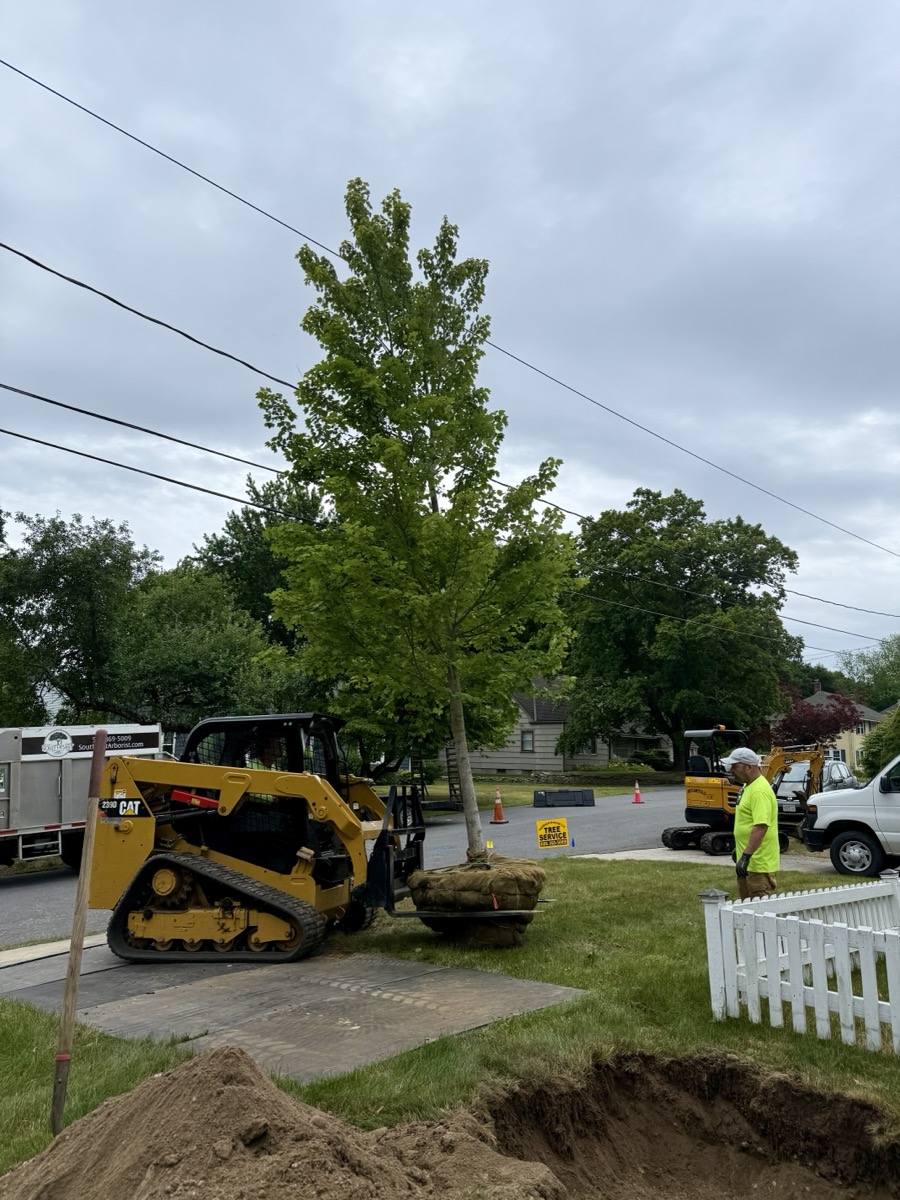
Southeast Arborist, LLC, based in Plymouth and Cohasset, serves all of South Shore Massachusetts, including Milton, with ISA Certified Arborists who follow ANSI A300 standards for every project. Our tree planting services in Milton MA ensure the right tree in the right place with proper technique. We select salt-tolerant species for properties near Quincy and Braintree, expose root flares correctly, avoid volcano mulching, and provide post-planting care guidance. Whether replacing a hazard tree after removal or enhancing your East Milton yard, we deliver estate-quality results.
Homeowners in Cunningham Park or Unquity face unique challenges: limited space amid grand old growth means new plantings must integrate without competition. Our free consultations—call 508-369-5009—assess your site's soil depth, sun exposure, and wind patterns influenced by Blue Hills' elevation. We prioritize species like sugar maples for fall color in Milton Village or white pines for privacy screens on Canton Avenue.
Professional tree planting in Milton MA isn't just about digging a hole—it's about longevity. Shallow ledge soils demand amended backfill to prevent tipping, especially on windy hilltops like Brush Hill. Our crews use technical rigging for hillside installs, ensuring safety on slopes where standard equipment fails. Post-planting, we guide you on watering schedules tailored to Milton's variable rainfall, which averages 48 inches annually but spikes in nor'easters.
For properties adjacent to Hutchinson Field's massive American elms—one of Massachusetts' largest surviving stands—our planting complements these icons without overshadowing them. We handle everything from single Japanese maple accents in Milton Hill gardens to canopy management programs near Blue Hills, preserving views while adding resilient greenery.
Choosing Southeast Arborist means working with arborists who understand Milton's microclimates: cooler, moister conditions in East Milton versus drier, exposed sites in Randolph-adjacent areas. Our salt-tolerant options like red oaks thrive near coastal influences from nearby Quincy. Every install includes a one-year warranty and follow-up assessment, because your trees deserve the same care as the town's historic legacy.
Ready to enhance your Milton property? Contact Southeast Arborist at 508-369-5009 for tree planting in Milton MA that stands the test of time.
Why Milton Properties Need Tree Planting
Milton's extraordinary tree heritage sets it apart in Norfolk County, but it also creates specific needs for tree planting services. The Blue Hills Reservation, encompassing much of Milton's borders, protects 7,000 acres of unbroken forest with hemlocks exceeding 200 years old, white pines towering over trails, and hickories shading rocky outcrops. Residential neighborhoods, developed in the 19th century, feature elaborate landscapes: copper beeches and Japanese maples in Milton Hill estates, tulip trees lining Canton Avenue, and American beeches in Cunningham Park.
Your property likely contends with steep terrain, a hallmark of Milton's topography. In Scott Hill and Blue Hills neighborhoods, slopes exceed 20% grade, restricting root expansion and equipment access. Shallow soil over ledge—common across 60% of Milton—limits anchorage, causing windthrown trees during 50-60 mph gusts from nor'easters. If you've lost a sugar maple or red oak to instability, replacement planting restores balance while addressing these flaws.
Hemlock woolly adelgid infests Blue Hills corridors, decimating evergreens and opening gaps in privacy screens for Unquity homes. Planting resistant species like white pine or disease-tolerant hemlock hybrids fills these voids without repeating mistakes. Historic specimen trees in East Milton require companions that match mature sizes: a 100-foot white oak needs hickory understory, not oversized tulip trees that compete for light.
Milton's climate—USDA Zone 6b with 180 frost-free days—demands hardy selections. Winters dip to -5°F, testing root hardiness, while humid summers foster fungal issues in American beeches. Coastal proximity to Quincy introduces salt spray, browning edges on Japanese maples unless you choose tolerant red oaks or sugar maples. Soil pH averages 5.5-6.5 (acidic), ideal for hemlocks but challenging for hickories needing calcium amendments.
Common issues drive tree planting demand. After hazard assessments on ledge-bound trees, we replace with deep-rooted white pines. Estates in Brush Hill undergo "estate-quality" planting post-pruning, integrating copper beeches that echo originals. Hutchinson Field's elms inspire elm hybrids nearby, resistant to Dutch elm disease.
For your Milton Village yard, consider microclimate: full sun on south-facing slopes suits tulip trees for bold blooms, while shaded north sides favor Japanese maples. Avoid shallow-rooted species on ledge; opt for taprooted hickories. Properties near Randolph face urban edge effects—increased pollution calls for stress-tolerant American beeches.
Practical advice: Test your soil depth first—dig 3 feet; if ledge appears at 18 inches, select narrow-root species like white pine. Match mature height to power lines: 40-foot sugar maples for open lawns, 20-foot Japanese maples under utilities. Plant 10-15 feet from structures to prevent foundation cracks from aggressive roots.
Southeast Arborist's ISA Certified Arborists use site-specific data—sun hours, wind speed from Blue Hills, moisture retention—to recommend matches. We prioritize native species: 80% of our Milton plantings are white oak, red oak, or hemlock to support local wildlife like chickadees nesting in cavities.
Tree planting in Milton MA prevents future removals, saving 30-50% on long-term costs. Enhance property value—studies show mature trees add 10-20% to home appraisals in affluent areas like yours. Call 508-369-5009 for a free site evaluation tailored to your neighborhood's challenges.
Our Tree Planting Process in Milton
Southeast Arborist delivers a meticulous, ANSI A300-compliant tree planting process in Milton MA, adapted to local steep terrain, ledge soils, and species needs. Our ISA Certified Arborists start with your free consultation at 508-369-5009, walking your property to map micro-sites.
Step 1: Site Assessment and Species Selection We evaluate soil profile—probing for ledge depth in Blue Hills lots—sun exposure (measured in daily hours), drainage, and prevailing winds from the reservation. For East Milton's moist lowlands, we select American beech or sugar maple; Scott Hill's dry slopes get red oak or hickory. Salt exposure near Braintree prompts white pine over sensitive Japanese maple. We match caliper (trunk diameter) to site: 2-3 inch for estates, 1.5-inch for Milton Village yards. Native focus: 70% white oak, hemlock, tulip tree.
Step 2: Site Preparation No volcano mulching here—ever. We clear competing grass with organic mulch rings, amend clay-ledge soils with compost (20% by volume) for white pines, or pine bark for acid-loving copper beeches. On 25%+ slopes in Brush Hill, we install retention terraces using hand tools, avoiding heavy machinery that scars hillsides. Root flare exposure is non-negotiable: we mound soil to reveal it fully, preventing girdling rot common in Milton's wet springs.
Step 3: Digging and Planting Technique Holes are 2-3x root ball width, as deep as the ball—no deeper, to avoid settling on ledge. For technical hillside access in Unquity, our crews use portable winches and griphoists, lowering 500-pound trees via rope systems compliant with OSHA safety protocols. We score root balls to encourage outward growth, position at grade, and backfill in layers, tamping to eliminate air pockets. Guying uses wide straps on wobbly ledge sites, removed after one year.
Step 4: Mulching and Watering Apply 3-4 inches of shredded hardwood mulch in a 4-foot radius, keeping it 6 inches from trunk. No mounds—we feather edges to integrate with lawn. Initial watering: 15-20 gallons per tree, deep-rooted for hickories on shallow soils. We install slow-drip emitters for Milton's erratic rainfall.
Step 5: Post-Planting Care and Monitoring You receive a customized guide: weekly deep soaks first summer (1 inch/week), fertilizer tabs in year two for sugar maples. We schedule 6-month check-ins, adjusting for woolly adelgid near Blue Hills. Replacement guarantee covers establishment failures.
Equipment suits Milton: compact Bobcats for flat Milton Hill, drone surveys for Cunningham Park overviews, air spades for precise root ball prep without ledge damage. Safety first—harnesses, spotters, and daily JSA (Job Safety Analysis) for steep work.
This process yields 95% survival rates, far above DIY's 60%. For your Canton Avenue property, it means a thriving Japanese maple that frames views without invading utilities. Trust Southeast Arborist's expertise—call 508-369-5009 to start.
Common Tree Planting Projects in Milton Neighborhoods
Milton's neighborhoods each present distinct tree planting opportunities, leveraging local species and addressing site-specific issues.
In **Milton Village**, compact lots near the Neponset River call for understory Japanese maples or copper beeches under mature white oaks. We plant post-removal replacements, using salt-tolerant red oaks to combat road salt from Route 28.
**East Milton** homes, with flatter terrain and high water tables, suit tulip trees for vertical accents or American beeches for shade. After hazard removals on ledge edges, we install hickories with amended backfill.
**Milton Hill** estates demand specimen-quality planting: matching historic copper beeches or sugar maples pruned to ANSI standards. Technical access via rear yards uses cranes over fences.
**Cunningham Park** features privacy screens of white pine along property lines, buffering traffic noise while preserving park views. Hemlock hybrids replace adelgid victims.
On **Scott Hill**'s steep slopes, rope-lowered white oaks stabilize soil, preventing erosion common after storms.
**Brush Hill** prioritizes windbreaks: tulip trees and hickories on exposed hilltops, guyed against 60 mph gusts.
**Blue Hills** properties adjacent to the reservation need canopy management—underplanting red oaks beneath 200-year hemlocks, monitoring for pests.
**Unquity** and **Canton Avenue Area** see estate pruning follow-ups with Japanese maples in gardens, salt-hardy for Quincy proximity.
Landmarks influence projects: near Hutchinson Field's elms, we plant disease-resistant hybrids. Blue Hills trails inspire native restorations.
Southeast Arborist tailors each to your needs—call 508-369-5009 for neighborhood-specific planting.
Tree Planting Costs in Milton, MA
Tree planting costs in Milton MA vary by project scale, but Southeast Arborist provides transparent pricing for value-driven results. Base rates start at $500 per 1.5-2 inch caliper tree, including delivery, planting, mulching, and initial care—far below national averages due to our South Shore base.
Key factors:
- **Tree Size and Species**: 2-inch white oak: $600-800; Japanese maple: $700-900 (rarer specimens). Hemlocks for Blue Hills: $550-750, including pest-resistant stock.
- **Site Difficulty**: Flat Milton Village: standard rate. Steep Scott Hill (20%+ grade): +30% ($650-1,050) for rigging. Ledge soil amendment: +$150.
- **Quantity**: 5+ trees drop 15% per unit—ideal for East Milton privacy rows.
- **Add-Ons**: Air spade prep: $200; guying/staking: $100; one-year warranty: included.
A 3-tree red oak install on Brush Hill ledge totals $2,100—versus $4,000+ for competitors ignoring ANSI standards. Value proposition: Our 95% survival rate saves $1,000+ in replacements over 5 years. Mature trees boost appraisals 12% in Norfolk County.
Compared to Quincy ($550 base) or Dedham ($600), our Plymouth efficiency keeps Milton costs competitive. DIY pitfalls—poor flare exposure—cost $300/tree in failures.
Budget tips: Plant smaller caliper (1.5-inch) for 20% savings, faster establishment. Group projects with pruning for bundles.
Invest in longevity—contact 508-369-5009 for a free quote.
When to Schedule Tree Planting in Milton
Timing tree planting in Milton MA maximizes establishment amid Zone 6b's 48-inch rainfall and -5°F winters.
**Optimal Windows**: Early spring (March-April), post-frost but pre-leafout—soil workable, cool roots. Fall (September-October), leveraging stored energy for root growth before dormancy. Avoid summer heat (July-August, 85°F highs stress new plants) and winter freezes.
Urgency signs: Post-storm gaps in Blue Hills lots—plant ASAP to prevent erosion. After removals in Unquity, schedule within weeks to maintain canopy. Hemlock adelgid zones demand spring hybrids.
Milton's nor'easters (November-March) topple ledge trees—spring replacements beat summer rush. For Milton Hill estates, fall aligns with pruning cycles.
Practical: Monitor soil temp (50°F+ ideal). Call 508-369-5009 now for spring slots—booked 4-6 weeks out.
Frequently Asked Questions About Tree Planting in Milton
**Q: What's the best tree species for my Milton Village yard?** A: Depends on sun/soil—red oaks for full sun/ledge tolerance, Japanese maples for shade. Our ISA arborists assess free.
**Q: How do you handle steep terrain in Blue Hills?** A: Technical rigging lowers trees via ropes; no soil damage. ANSI-compliant for safety.
**Q: Does salt from nearby Quincy affect plantings?** A: Yes—we select tolerant white pines, red oaks for East Milton edges.
**Q: What's volcano mulching, and why avoid it?** A: Mounded mulch suffocates roots—common failure in shallow Milton soils. We use flat rings only.
**Q: How soon can new trees be watered after planting?** A: Immediately—15 gallons deep, then weekly. Guide included.
**Q: Do you warranty plantings?** A: One-year replacement on failures, with 6-month check.
**Q: Can you plant near historic elms in Hutchinson Field?** A: Yes—hybrids that complement without competing.
**Q: What's the process for ledge sites?** A: Probe depth, amend backfill, guy if needed for hickories/white oaks.
Call 508-369-5009 for answers.
Tree Planting Throughout Milton
Southeast Arborist serves every Milton neighborhood—Milton Village to Canton Avenue, East Milton to Blue Hills—plus nearby Quincy, Braintree, Randolph, Canton, Dedham. From single Japanese maples in Cunningham Park to rows of sugar maples on Brush Hill, we're your South Shore experts.
ISA Certified, ANSI-compliant, safety-focused. Call 508-369-5009 for free consultation—professional tree planting in Milton MA starts today.