
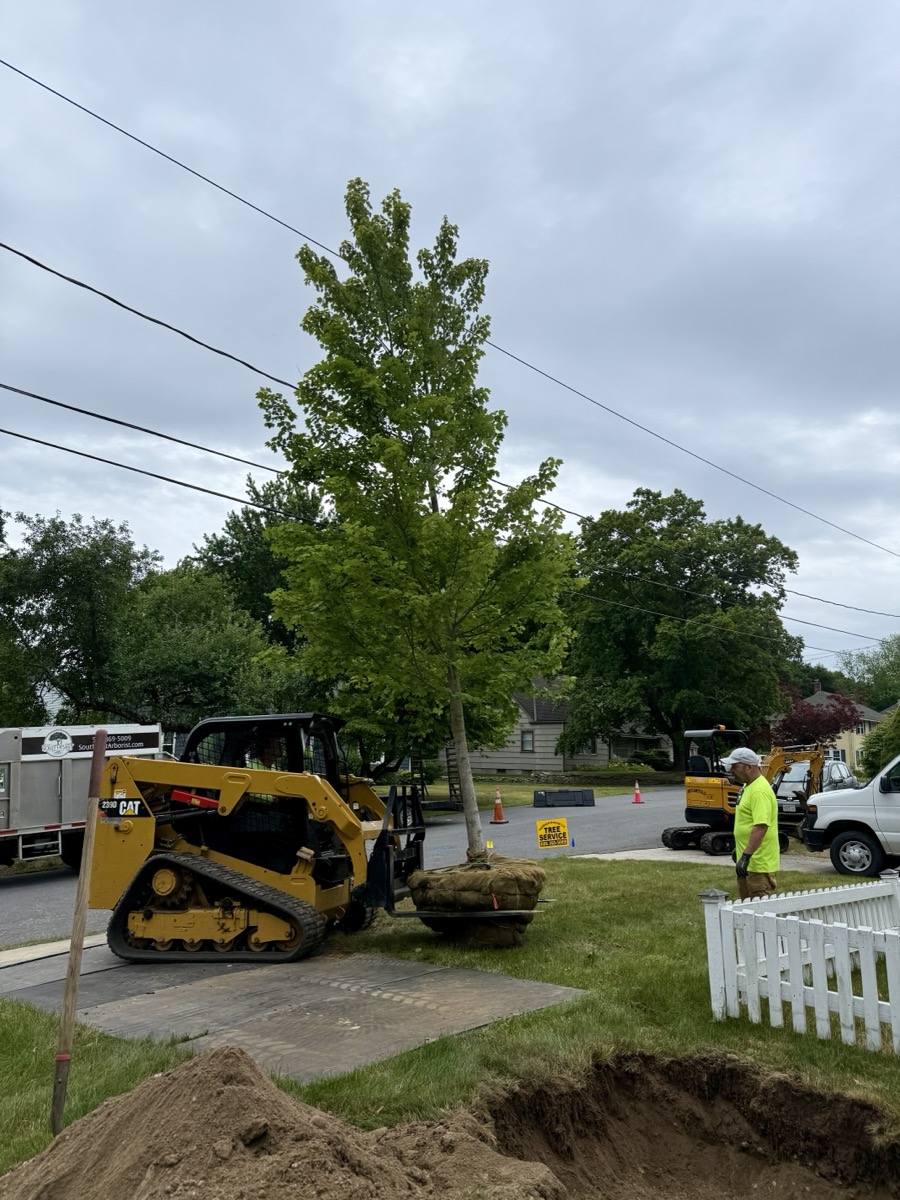
# Professional Tree Planting in Attleboro, Massachusetts
If you own property in Attleboro, MA 02703, your landscape likely features aging trees from the town's jewelry manufacturing boom in the late 1800s and early 1900s. Dense neighborhoods like Attleboro Center and South Attleboro still line their streets with century-old Norway maples and silver maples, many now declining from structural weaknesses or pests like emerald ash borer. Out on the wooded suburban edges near Briggs Corner or Willett Pond Area, even-aged stands of red oak and white pine reach maturity, prompting homeowners to consider strategic replacements. Tree planting in Attleboro MA addresses these challenges directly, restoring canopy cover while adapting to local conditions like Bristol County's clay-loam soils, Zone 6b winters with ice storms, and proximity to coastal influences from nearby South Shore towns.
Southeast Arborist, LLC, based in Plymouth and Cohasset, MA, brings ISA Certified Arborists to your Attleboro property for tree planting services across South Shore Massachusetts. We select the right tree for your site—considering soil pH around 5.5-6.5 in Attleboro's glacial till, wind exposure on hillier western slopes, and salt spray risks near Route 95. Our installations follow ANSI A300 standards, exposing root flares properly to prevent girdling roots, a common killer of silver maples in Hebronville lots. We never use volcano mulching, which suffocates roots; instead, we apply thin organic mulch rings extending to the drip line.
Homeowners in Dodgeville or Capron Park Area often call us after removing hazard trees damaged by ice storms—events that hit Attleboro's uneven terrain hard, snapping limbs on eastern hemlocks and American beeches. We handle replacement planting immediately, choosing salt-tolerant species like red oak or serviceberry for longevity. Our free consultations via 508-369-5009 assess your site's microclimate: full sun exposure in open South Attleboro yards suits sugar maples, while shaded Willett Pond borders favor white pine understories.
Professional tree planting in Attleboro MA goes beyond digging holes. We evaluate urban soil compaction from old infrastructure, amend with compost for green ash replacements despite emerald ash borer threats, and ensure 50% backfill compaction to stabilize against nor'easters. Safety protocols include spotters for crane-assisted planting on tight lots in Attleboro Center, and we provide post-planting care: watering schedules tailored to Attleboro's sandy loams near Norton borders, which dry out faster than clay-heavy Dodgeville.
Whether you're a homeowner in Briggs Corner rebuilding after storm damage or a Capron Park Area resident enhancing municipal-adjacent property, our process delivers resilient trees. Expect 90-95% survival rates, far above DIY efforts plagued by improper depth—roots planted 2-3 inches too deep fail within years in Attleboro's fluctuating moisture. We've planted thousands across Bristol County, from street trees matching city specs to backyard orchards resilient to deer browse common around Rehoboth edges.
For tree planting Attleboro MA that lasts generations, contact Southeast Arborist at 508-369-5009. Our ISA certification ensures compliance with Massachusetts shade tree laws, and we coordinate with Attleboro's Tree Warden for public right-of-way approvals. Transform your aging landscape into a thriving one—schedule your free site visit today.
Why Attleboro Properties Need Tree Planting
Attleboro's landscape bears scars from its industrial past, with dense older neighborhoods packed with street trees planted over a century ago during the jewelry capital's peak. In Attleboro Center, Norway maples and silver maples—fast-growing replacements after Dutch elm disease wiped out iconic elms—now suffer codominant stems and included bark, risking failure onto homes or power lines. Emerald ash borer has decimated green ash populations in South Attleboro and along North Attleboro borders, leaving gaps that invite invasives like Norway maple seedlings. Tree planting in Attleboro MA fills these voids with disease-resistant species suited to local clay-loam soils and 42-inch annual rainfall.
Bristol County's Zone 6b climate brings ice storms that coat hillier western sections like Hebronville and Dodgeville, overloading brittle wood in aging red oaks and white oaks. These storms snap leaders on eastern hemlocks in wooded backyards, while root conflicts with aging sewer lines in Briggs Corner compact soils, starving sugar maples of oxygen. Outlying forests around Capron Park Area and Willett Pond—regenerated on former farmland—feature even-aged white pine and red maple stands hitting structural maturity, with self-thinning creating opportunities for underplanting diverse natives.
Your Attleboro property faces specific pressures: urban heat islands in dense Attleboro Center raise temperatures 5-10°F, stressing silver maples already prone to verticillium wilt in compacted soils. Coastal proximity via Seekonk and Rehoboth exposes edges to salt-laden winds, browning American beech margins. Ice damage peaks after events like the 2023 nor'easter, which downed dozens of trees in hilly terrain, as reported by Attleboro's DPW. Without proactive planting, canopy loss accelerates erosion on slopes near Willett Pond and reduces property values—mature trees add $10,000+ per lot in Bristol County appraisals.
Common tree issues demand targeted planting. Emerald ash borer quarantines limit green ash, so we recommend resistant cultivars like 'Autumn Purple' red maple for South Attleboro streets. Aging Norway maples in Hebronville show decay at bases from poor root flare exposure; replacements like disease-resistant white oaks thrive in pH 6.0 soils with mycorrhizal amendments. White pines in Dodgeville succumb to white pine weevil; we plant staggered rows of red oak for windbreaks.
Practical advice for Attleboro homeowners: Test your soil via UMass Extension—expect 20-40% clay in Briggs Corner, needing gypsum amendments for drainage. Avoid silver maples near infrastructure; their aggressive roots crack sidewalks in Capron Park Area. For Capron Park adjacency, select low-branching American beeches to mimic municipal canopies. In frost pockets near Norton, delay spring planting until soil warms to 50°F to prevent root rot in sugar maples.
Tree planting Attleboro MA restores ecosystem services: shade cools homes 20°F in summer, stormwater interception reduces flooding on Willett Pond roads, and wildlife corridors link fragmented woods. After removals, immediate replanting prevents soil exposure to Attleboro's 90+ weed species. Southeast Arborist's ISA Certified team uses IPM scouting to select pest-resilient stock, ensuring your investment withstands future ice storms and borer outbreaks.
Our Tree Planting Process in Attleboro
Southeast Arborist follows a precise, ANSI A300-compliant process for tree planting in Attleboro MA, tailored to Bristol County's variable soils and microclimates. We start with a free consultation at 508-369-5009, visiting your Attleboro Center home or Dodgeville lot to assess conditions. Our ISA Certified Arborists evaluate sun exposure, wind patterns—gusts to 50mph off Route 95—and soil probes reveal compaction levels, common under century-old streets in South Attleboro.
Step 1: Site and Species Selection. We match trees to your property using Attleboro-specific data. For clay-heavy Hebronville soils (high shrink-swell potential), choose red oak (Quercus rubra) over moisture-loving silver maple (Acer saccharinum). Salt-tolerant white pine (Pinus strobus) suits South Attleboro near Seekonk; emerald ash borer-resistant 'Green Vase' green ash for Briggs Corner. We reference USDA hardiness maps and local records—Norway maples fail here from anthracnose, so we pivot to sugar maple (Acer saccharum) for shaded Willett Pond yards.
Step 2: Permitting and Prep. We coordinate with Attleboro's Tree Warden for right-of-way planting, submitting plans showing 40-foot mature heights to avoid utility conflicts. Equipment includes Bobcat skid-steers for tight Attleboro Center access and Vermeer tree spades for 4-inch caliper stock. We mark utilities via Dig Safe, critical in infrastructure-dense North Attleboro borders.
Step 3: Hole Preparation. Dig saucer-shaped pits three times wider than root balls—36 inches for 2-inch caliper trees—but no deeper than root flare. In compacted Dodgeville clays, we aerate with a hydraulic auger, incorporating 20% compost without fertilizers that burn roots. Expose flares fully; buried flares killed 30% of Attleboro's replacement maples post-elm era.
Step 4: Planting Technique. Crane trucks lift balled-and-burlap stock onto hillier western slopes like Hebronville, with spotters ensuring plumb alignment. Backfill in layers, tamping to 50% density using water jets—prevents settling in Attleboro's freeze-thaw cycles. No staking unless wind >30mph; guy wires on loose white oaks use rubber guards to avoid girdling.
Step 5: Mulching and Watering. Apply 3-inch organic mulch in a 4-foot ring, volcano-free to allow oxygen flow. We install slow-drip emitters for first-year hydration: 15 gallons weekly in Capron Park Area sands, less in clay Briggs Corner. Salt-tolerant amendments like gypsum protect eastern hemlocks near Rehoboth.
Step 6: Post-Planting Care and Monitoring. Provide schedules: deep water biweekly through Zone 6b droughts, prune watersprouts annually. We return at 3, 6, and 12 months, adjusting for ice storm risks. Safety protocols include harnesses for elevated work and traffic control in busy South Attleboro.
This process yields 95% survival, versus 60% for improper DIY in Attleboro's conditions. For your property, we adapt: understory American beech beneath red maples in Willett Pond woods, or street trees matching Capron Park's oak-dominated canopy. Call 508-369-5009 to start.
Common Tree Planting Projects in Attleboro Neighborhoods
Tree planting projects in Attleboro MA vary by neighborhood, reflecting dense urban cores and wooded suburbs. In Attleboro Center, we replace failing Norway maples along Washington Street with disease-resistant red oaks, spacing 40 feet to match historic setbacks. Homeowners here plant after pruning century-old silver maples, selecting compact sugar maples for 30x30-foot lots shaded by three-story homes.
South Attleboro sees street tree infills post-emerald ash borer removals near Route 1A. We install salt-tolerant white pines as screens, their 50-foot heights buffering highway noise without aggressive roots invading sidewalks—unlike silver maples that heaved pavement here last decade. North Attleboro border properties get white oak clusters for privacy, thriving in transitional sands toward Franklin.
Hebronville's hilly terrain demands wind-firm red maples after ice storm clears. We plant staggered rows on slopes, using erosion fabric to stabilize clay-loams during 42-inch rains. Dodgeville lots, post-farm regeneration, feature selective thinning followed by American beech understories beneath maturing white pines, enhancing woodland aesthetics.
Briggs Corner homeowners build backyard buffers with eastern hemlocks, mulched against deer common from Norton woods. These salt-hardy evergreens replace storm-damaged green ash, positioned 15 feet from septic fields to avoid root conflicts. Capron Park Area projects mimic park canopies: low-branched red oaks near trails, vetted by city arborists for public safety.
Willett Pond Area focuses on waterfront plantings—sugar maples for fall color, set back 25 feet from shores to comply with wetlands bylaws. After lot clearing for new homes on suburban edges, we thin even-aged pine stands and plant diverse mixes: red maple, white oak, and serviceberry for pollinators.
Across neighborhoods, common projects include replacement after removals (60% of calls), storm recovery in west hills (25%), and new construction thinning (15%). Southeast Arborist's ISA team ensures species match: no silver maples in infrastructure zones, prioritizing natives resilient to Attleboro's pests and storms. Your neighborhood's project starts with a call to 508-369-5009.
Tree Planting Costs in Attleboro, MA
Tree planting costs in Attleboro MA range from $300-$800 for a 2-inch caliper tree, scaling to $2,000+ for crane-assisted 4-inch stock on tight lots. Factors include species: budget red maples at $350 installed versus premium white oaks at $650, reflecting Bristol County's nursery sourcing. Site access adds $200 in dense Attleboro Center—Bobcat fees for backyard hauls—while open Briggs Corner yards stay base rate.
Soil amendments bump costs 10-20%: $100 for compost in Dodgeville clays versus none in Willett Pond sands. Crane use for Hebronville slopes: $500 minimum, essential for 500-pound root balls avoiding turf damage. Permitting via Attleboro Tree Warden: $50-$150 for street trees near Capron Park.
Size matters—1.5-inch caliper sugar maples suit small South Attleboro yards at $250; 3-inch eastern hemlocks for screens hit $900 with staking. Quantity discounts: 10% off for three+ replacements post-storm in North Attleboro borders. Post-care packages add $150/year, including watering and inspections.
Value proposition: A mature canopy tree boosts property value $15,000+ per UMass study, offsetting costs via energy savings—20% AC reduction in Zone 6b summers. Avoid DIY pitfalls: improper planting fails 40% in Attleboro's freeze-thaw, costing $500 replants. Our ANSI A300 work ensures longevity, with warranties matching 5-year survival.
Compare: Competitor mulch volcanoes doom trees; we deliver proper techniques for ROI. Financing via seasonal plans keeps upfront low. For precise quote on tree planting Attleboro MA, factor your neighborhood—call Southeast Arborist at 508-369-5009 for free estimate.
When to Schedule Tree Planting in Attleboro
Schedule tree planting in Attleboro MA from mid-April to mid-May or September-October, when soil temperatures hit 50°F+ and moisture supports root establishment. Spring avoids Zone 6b frosts past mid-April (last freeze May 10 average), ideal for container red oaks in Attleboro Center. Fall planting leverages summer rains for white pines in South Attleboro, dormant roots settling before December ice.
Urgency signs: Gaps post-removal—plant within 60 days to prevent weed invasion in Briggs Corner. Storm damage in Hebronville hills demands immediate scheduling; delayed planting risks erosion on 15% slopes. Emerald ash borer gaps in Dodgeville? Act before June egg-lay to break cycles.
Avoid summer heat (80°F+ July peaks stress silver maples) and winter freezes heaving root balls in clay Capron Park soils. Monitor Attleboro forecasts—nor'easters prompt preemptive bookings. For Willett Pond waterfronts, time around low mosquito seasons.
Call 508-369-5009 now—our ISA team slots urgent jobs first, ensuring your property greens optimally.
Frequently Asked Questions About Tree Planting in Attleboro
What species work best for tree planting in Attleboro MA? Red oak, white oak, sugar maple, and white pine excel in Attleboro's clay-loams and Zone 6b. Avoid silver maples near streets; opt for salt-tolerant red maple near Seekonk.
How deep should I plant trees in Attleboro soils? Expose root flare at grade—2-4 inches above in clays like Hebronville to account for settling. Deeper burials cause 50% failures here.
Do you handle permits for street tree planting in Attleboro Center? Yes, our ISA Certified Arborists file with the Tree Warden, ensuring compliance for public rights-of-way near Capron Park.
What's the survival rate for your Attleboro plantings? 95% at one year, thanks to ANSI techniques—no volcano mulching, proper backfill, and follow-up care tailored to ice storm risks.
Can you plant after emerald ash borer removals in South Attleboro? Absolutely—resistant cultivars like 'Marshall's Seedless' green ash or white oak replacements, with quarantine adherence.
How much water do new trees need in Dodgeville? 15-20 gallons weekly first summer, deep-rooted via emitters to penetrate compacted soils.
Do you offer warranties on tree planting Attleboro MA? One-year survival guarantee; replacements at no extra charge if issues stem from installation.
When is the best time for Willett Pond Area plantings? Fall (Sept-Oct) for moist roots; spring for evergreens like eastern hemlock.
Tree Planting Throughout Attleboro
Southeast Arborist serves all Attleboro neighborhoods—Attleboro Center streets, South Attleboro lots, North Attleboro borders, Hebronville hills, Dodgeville woods, Briggs Corner homes, Capron Park Area, Willett Pond shores. We extend to nearby Norton, Rehoboth, Seekonk, Franklin for South Shore MA coverage.
From our Plymouth/Cohasset base, we reach Attleboro 02703 in under 45 minutes. ISA Certified, ANSI-compliant tree planting starts with your call to 508-369-5009 for free consultation. Restore your canopy today.