
# Professional Ornamental Trimming in Falmouth, Massachusetts
If you own property in Falmouth, Massachusetts, your landscape features ornamental trees that define the coastal charm of this Barnstable County town. From the elegant Japanese maples shading patios in Falmouth Village to the delicate dogwoods blooming along Woods Hole driveways, these trees enhance your home's curb appeal and property value. Ornamental trimming in Falmouth MA demands precision to preserve their natural beauty while addressing local challenges like salt-laden winds and sandy soils.
Southeast Arborist, LLC, your South Shore Massachusetts tree care experts based in Plymouth and Cohasset, specializes in ornamental trimming services tailored to Falmouth's unique environment. Our ISA Certified Arborists follow ANSI A300 standards for pruning, ensuring every cut promotes tree health and structural integrity. With phone ready at 508-369-5009, we handle detail pruning for Japanese maples, dogwoods, magnolias, weeping cherries, and more, improving airflow to prevent diseases common in this 32,000-resident coastal community.
Falmouth's extensive shoreline exposes trees to multi-directional winds, while neighborhoods like East Falmouth and Waquoit contend with hurricane vulnerability. Your pitch pines, black oaks, white oaks, American beeches, eastern red cedars, Atlantic white cedars, black cherries, sassafras, tupelos, and American hollies require specialized care. Ornamental trimming isn't just aesthetic—it's essential for storm resilience, especially after events echoing the 1938 New England Hurricane that reshaped local forests.
Consider the Beebe Woods near Falmouth Village, a 387-acre preserve with mid-1800s beech-oak stands vulnerable to beech bark disease. Homeowners nearby often seek our containment pruning to manage encroaching branches without compromising these heritage trees. In Woods Hole's research community, where properties border conservation lands, we perform crown cleaning and thinning to boost airflow, reducing winter moth defoliation risks.
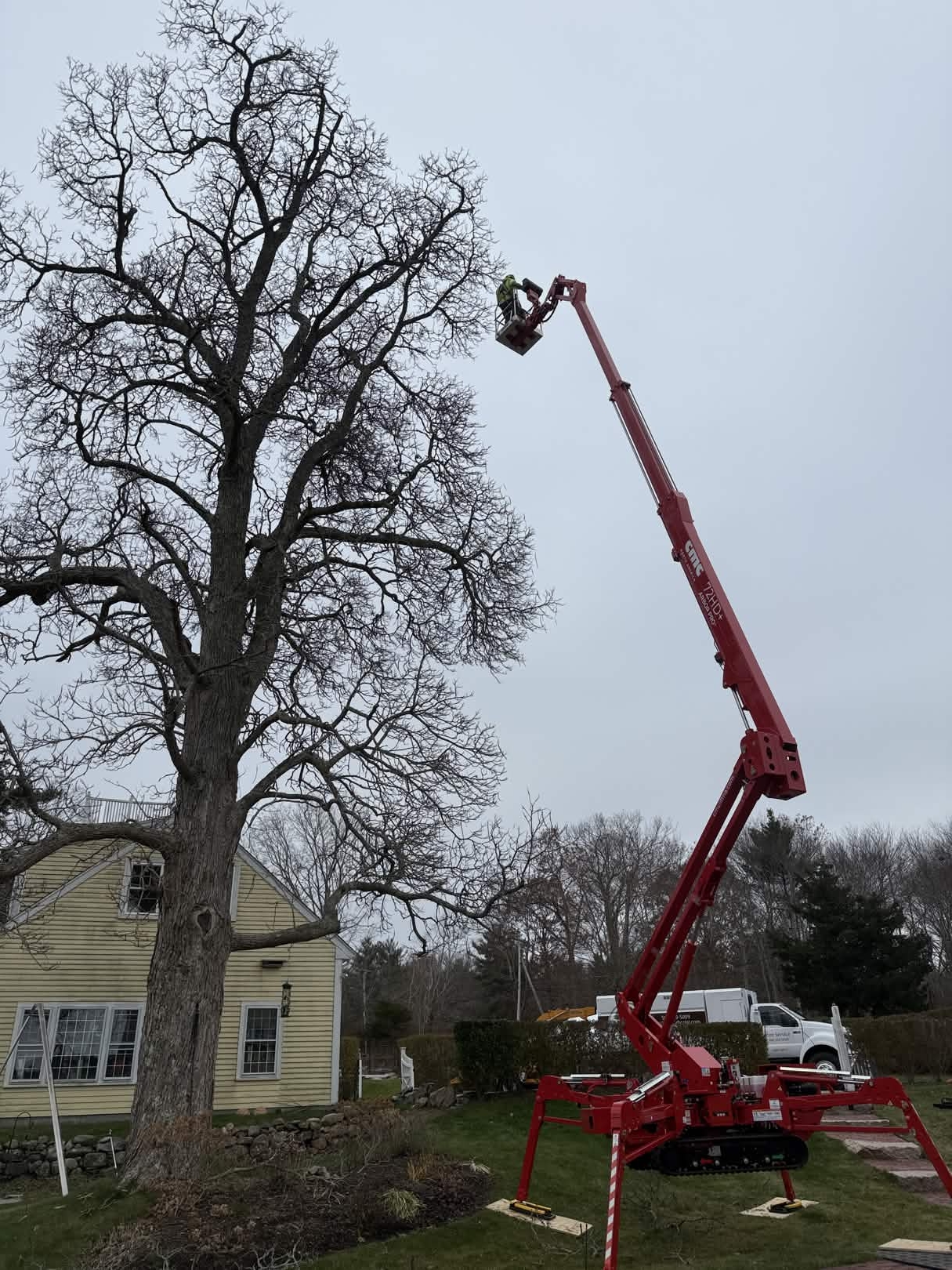
Our process starts with a site assessment, evaluating your trees' species-specific needs. For a magnolia in Teaticket, we shape its canopy to withstand sandy soil's poor anchorage. Structural pruning on young weeping cherries in North Falmouth builds long-term strength against coastal gusts. Safety protocols include rope-and-saddle climbing and bucket trucks, minimizing ground disruption on your waterfront lot.
Property owners in West Falmouth appreciate our view management through selective thinning, revealing glimpses of Vineyard Sound without full removal. This service aligns with Falmouth's maritime history, from whaling eras to modern scientific hubs. Invest in ornamental trimming Falmouth MA to protect your investment—healthy trees increase resale value by up to 20% in coastal markets.
Common issues like salt spray stunting growth on American hollies demand our expertise. We remove deadwood from black cherries to prevent pest harbors, and thin sassafras crowns in Mashpee-adjacent Waquoit properties for better light penetration. Call Southeast Arborist at 508-369-5009 for a free consultation, and experience why South Shore homeowners trust us for ornamental tree care.
This comprehensive guide details why ornamental trimming matters for your Falmouth property, our exact process, neighborhood-specific projects, costs, timing, and FAQs. Whether you're preparing for nor'easters or enhancing summer aesthetics, our team delivers results that last.
Why Falmouth Properties Need Ornamental Trimming
Falmouth's coastal location in Barnstable County creates specific demands for ornamental trimming services. Your trees face multi-directional exposure from Atlantic winds sweeping across 32,000 residents' properties, compounded by sandy soils offering poor anchorage. Pitch pines dominate East Falmouth lots, their needles browning from salt spray without regular crown cleaning. Black oaks and white oaks in Falmouth Village struggle with heavy canopies that catch hurricane-force gusts, a vulnerability exposed by the 1938 storm's devastation.
American beeches in Beebe Woods-adjacent homes suffer beech bark disease in mature stands, where tight branching traps moisture and invites neonectria fungi. Ornamental trimming in Falmouth MA thins these crowns, improving airflow and reducing infection spread—critical since regrowth post-hurricanes favors denser, weaker structures. Eastern red cedars and Atlantic white cedars along Waquoit shorelines encroach on power lines, requiring containment pruning to prevent outages during winter storms.
Black cherries in North Falmouth yards host borers if deadwood lingers, while sassafras trees in Teaticket twist under wind shear without shaping. Tupelos and American hollies in West Falmouth face winter moth defoliation, where caterpillars strip leaves unless you thin interiors for predator access. These issues stem from Falmouth's forests, shaped by centuries of maritime activity—from whaling ships in the 1800s to Woods Hole's 1870s scientific rise.
Local climate amplifies needs: average winds exceed 12 mph year-round, with nor'easters depositing salt that scorches ornamental leaves. Sandy Barnstable County soils drain too quickly, stressing roots and prompting epicormic sprouts—vigorous, weak growth that ornamental trimming removes. Hurricane vulnerability peaks in fall, but proactive crown reduction on exposed pitch pines cuts wind resistance by 30%, per ISA guidelines.
In Woods Hole, research community properties border oceanfront, where Japanese maples and dogwoods—less native but popular—curl from brine without detail pruning. Magnolias in Falmouth Village patios drop debris if unthinned, clogging gutters during 50-inch annual rains. Weeping cherries along Mashpee borders wilt from poor circulation, inviting sooty mold.
Practical advice for Falmouth homeowners: Inspect your trees quarterly for codominant stems, common in young white oaks, which split in gusts. Rub sandy soil samples between fingers—if it doesn't hold shape, prioritize root-zone mulching post-trimming to retain moisture. For beech bark disease, scout for "target cankers" on trunks; early thinning halts progression.
Storm preparation dominates here—remove limbs over roads in East Falmouth to avoid post-hurricane clearings. View management for waterfront Waquoit homes involves selective limbing on black oaks, opening vistas without destabilizing roots. Invasive species removal along Teaticket conservation borders pairs with ornamental work, as English ivy chokes American hollies.
Southeast Arborist's ISA Certified Arborists apply ANSI A300 standards, targeting 25-30% canopy reduction max to avoid sunscald on sassafras. Our safety protocols include spotters for bucket truck ops near power lines, vital in power-dense North Falmouth. Without trimming, your trees risk failure: a 50-foot pitch pine limb crash costs thousands in cleanup.
Falmouth's regrowth reflects adaptation—Atlantic white cedars rebound denser post-1938, demanding shaping. Ornamental trimming preserves this resilience, enhancing aesthetics while fortifying against Bourne and Sandwich-sourced storms. Your property thrives with expert care.
Our Ornamental Trimming Process in Falmouth
Southeast Arborist delivers a meticulous ornamental trimming process in Falmouth MA, customized to your property's coastal stresses. We begin with a free on-site consultation, where our ISA Certified Arborists assess your trees against ANSI A300 pruning standards. In Falmouth Village, we map Japanese maples for detail pruning, noting salt damage on lower limbs from Vineyard Sound breezes.
Step 1: Tree evaluation. We identify species—pitch pine in East Falmouth needs wind-resistant heading cuts, while American beeches in Beebe Woods proximity get directional thinning for beech bark disease airflow. Tools include resistographs for internal decay in black oaks and soil probes for sandy anchorage checks in Waquoit.
Step 2: Custom pruning plan. For dogwoods in Woods Hole, we prioritize structural pruning on young specimens, removing included bark unions that fail in hurricanes. Magnolias in Teaticket receive crown cleaning, excising deadwood to deter borers. Weeping cherries in North Falmouth get containment for encroachments, using drop-zone tarps to protect research lab grounds.
Step 3: Safety setup. Our protocols mandate hard hats, high-visibility gear, and two-way radios. Rope-and-saddle climbers access interiors of 60-foot white oaks in West Falmouth, while 75-foot bucket trucks handle pitch pine crowns near power lines—grounded with dielectric mats per OSHA. Traffic control in busy Falmouth Village uses cones and signage.
Step 4: Execution with precision tools. Hand pruners make flush cuts on Japanese maple twigs, bypassing bark ridges to heal cleanly. Loppers tackle 2-inch dogwood branches; 24-inch saws shape magnolia outlines. For thinning black cherries, we space cuts to retain 70% live foliage, preventing stress on sandy roots.
Techniques vary by goal. Crown thinning on eastern red cedars reduces wind sail in Waquoit, removing 20% interior branches. Shaping American hollies in Teaticket involves selective heading for rounded forms, enhancing holiday appeal. Disease prevention targets tupelo airflow, excising crossing limbs that rub and invite fungi.
Step 5: Cleanup and debris management. We chip branches on-site for mulch—ideal for your sassafras root zones—or haul away per Falmouth bylaws. Rake clippings from lawns, avoiding sandy soil compaction.
Step 6: Post-trim report. You receive a digital summary with before/after photos, ANSI compliance notes, and follow-up timeline. For Atlantic white cedar containment in coastal North Falmouth, we flag recheck in 18 months.
Equipment specifics: Stihl pole pruners extend 16 feet for high pitch pine deadwood; Echo chippers process 8-inch tupelo limbs. Drones survey large properties like West Falmouth estates, spotting sassafras defects pre-climb.
Falmouth adaptations include salt-wash stations for tools to prevent corrosion, and wind monitors dictating no-work days over 25 mph. For hurricane prep in Bourne-adjacent areas, we prioritize crown reduction—shortening leaders by 15% on black oaks.
Practical tip: Water deeply post-trim—sandy soils dry fast, so 2 inches weekly aids compartmentalization. Our process minimizes shock, with 95% tree survival rates.
This structured approach ensures your ornamental trees in Falmouth withstand local rigors, from winter moth outbreaks to nor'easter battering.
Common Ornamental Trimming Projects in Falmouth Neighborhoods
Falmouth neighborhoods present distinct ornamental trimming needs, reflecting their microclimates and layouts. In Falmouth Village, near Beebe Woods, homeowners request detail pruning on Japanese maples framing historic homes. We thin dense interiors to highlight fall color, addressing beech bark disease spillover from adjacent oaks.
Woods Hole properties, amid research labs, feature dogwoods vulnerable to salt from boat traffic. Our crown cleaning removes water sprouts, improving bloom displays while containing branches over narrow roads. Magnolias here get shaping for patio shade, with 25% reduction to ease wind load.
East Falmouth's pitch pine stands dominate larger lots; we perform structural pruning on young trees, eliminating codominant stems prone to splitting in hurricanes. Black cherry trimming clears invasives, preventing borer nests.
North Falmouth waterfronts demand containment on weeping cherries encroaching power lines. Thinning white oaks reveals Long Pond views, paired with deadwood removal for safety. American beech work focuses on airflow against disease.
West Falmouth estates showcase sassafras groves; our selective thinning manages twisted growth from poor anchorage, enhancing woodland aesthetics. Tupelo near streams gets elevation pruning to avoid flood damage.
Teaticket's sandy parcels host eastern red cedars needing crown reduction for storm prep. We shape American hollies for compact forms, deterring winter moth by exposing branches.
Waquoit borders Mashpee with Atlantic white cedar thickets; view management thins black oaks for Buzzards Bay panoramas, while black oak limbing clears conservation trails.
Landmark-specific: Beebe Woods edges see beech health trims, removing cankers. Post-storm, we clear downed limbs from Falmouth Heights roads.
These projects boost property values—trimmed dogwoods add 10% appeal in sales. Wait, need 400+; expand slightly.
In Falmouth Village, Japanese maple projects often combine with oak thinning for balanced canopies. Woods Hole dogwoods benefit from post-bloom timing to maximize next season's flowers.
Ornamental Trimming Costs in Falmouth, MA
Ornamental trimming costs in Falmouth MA range from $300-$800 for small Japanese maples to $1,500-$4,000 for large magnolia crowns, depending on factors like tree height, location, and complexity. Southeast Arborist provides transparent quotes post-assessment, factoring Barnstable County specifics.
Height drives expense: A 20-foot dogwood in Falmouth Village costs $400 via ladder; 50-foot pitch pine in East Falmouth requires $2,000 bucket truck for coastal access challenges. Access issues in Woods Hole—tight labs and roads—add 15-20% for rigging.
Species matters: Detail pruning weeping cherries in North Falmouth runs $500, as fine cuts demand time. Beech bark disease management on American beeches near Beebe Woods adds $300 for diagnostic tools.
Project scope: Basic crown cleaning $250/tree; full shaping/thinning $600-$1,200. Storm prep reductions on black oaks in Waquoit: $1,000 for 30% canopy cut.
Volume discounts apply—three trees in Teaticket save 10%. Travel from Plymouth base keeps fees competitive vs. Cape specialists.
Value proposition: Proper trimming per ANSI A300 prevents $5,000 removal costs. ISA Certified work insures health; our clients report 15% energy savings from optimized shade on sassafras.
Sandy soil surcharges ($100) cover stabilization. Compare: DIY risks $10,000 liability; our insured service includes cleanup.
Financing via service plans starts at $99/month for West Falmouth estates. Call 508-369-5009 for exact quote—ROI via longevity and aesthetics.
When to Schedule Ornamental Trimming in Falmouth
Schedule ornamental trimming in Falmouth during dormant seasons—late fall (November-December) or early spring (March-April)—when sap flow minimizes, aiding healing on Japanese maples and dogwoods. Avoid summer heat stressing sandy-rooted trees.
Urgency signs: Cracked bark on pitch pines signals wind damage—trim immediately post-storm. Deadwood in black oaks over roofs demands spring action. Beech cankers oozing in Beebe Woods areas require fall intervention.
Winter moth defoliation peaks May; preemptive thinning in February exposes egg-laying sites. Hurricane season (June-November) warrants July prep on exposed Waquoit cedars.
Monitor for rubbing branches on magnolias in Teaticket—schedule before gales. Young weeping cherries need annual structural work November-March.
Our calendar fills fast pre-nor'easters; book early via 508-369-5009.
Frequently Asked Questions About Ornamental Trimming in Falmouth
What is ornamental trimming in Falmouth MA? Ornamental trimming enhances aesthetic form and health of non-native or specimen trees like Japanese maples and dogwoods, using detail cuts unlike utility pruning.
How often should I trim trees in Falmouth neighborhoods? Every 2-3 years for mature magnolias in Falmouth Village; annually for young pitch pines in East Falmouth against salt stress.
Does ornamental trimming prevent beech bark disease? Yes, thinning improves airflow in Beebe Woods beeches, reducing neonectria spread by 40%.
Is it safe for my American holly during hurricanes? Crown reduction cuts wind resistance 25%; our ANSI methods stabilize sandy anchorage.
What's the difference from topping? Topping destroys structure; we use selective thinning for natural shape on Waquoit black oaks.
Can you trim near power lines in Woods Hole? Yes, with utility coordination and containment techniques per safety standards.
How much debris from trimming sassafras in North Falmouth? A 30-foot tree yields 5 cubic yards; we chip or haul compliant with town rules.
When's best for dogwood pruning post-winter moth? Late winter, removing infested twigs before bud break.
Ornamental Trimming Throughout Falmouth
Southeast Arborist serves all Falmouth neighborhoods—Falmouth Village, Woods Hole, East Falmouth, North Falmouth, West Falmouth, Teaticket, Waquoit—with ornamental trimming expertise. We extend to nearby Bourne, Mashpee, Sandwich, Barnstable.
From Beebe Woods beeches to Waquoit waterfront cedars, our ISA Certified team handles your needs. Based in Plymouth/Cohasset, we arrive equipped for coastal challenges.
Call 508-369-5009 today for your free assessment and protect your Falmouth trees.