
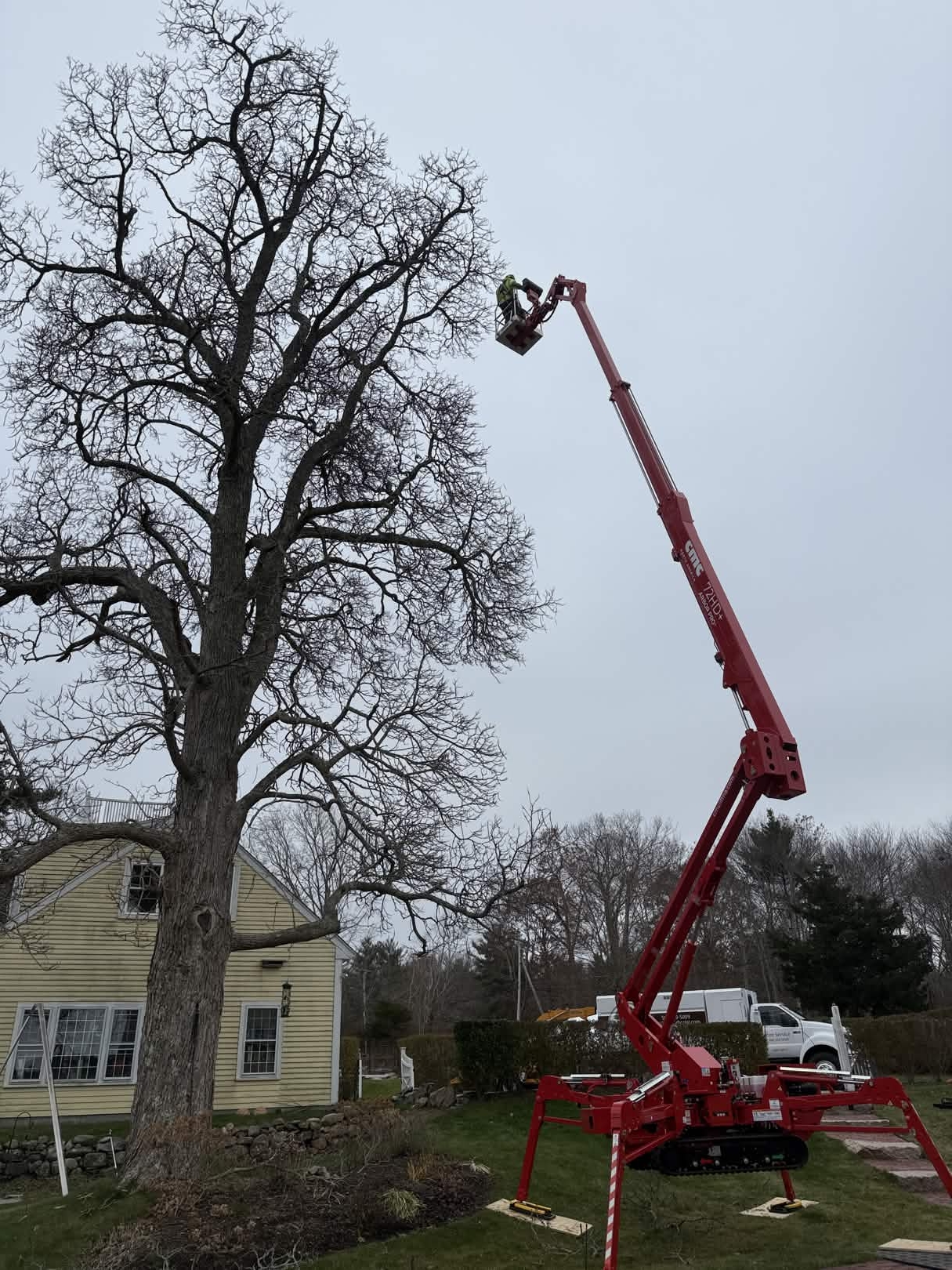
# Professional Ornamental Trimming in Acushnet, Massachusetts
Your Acushnet property likely features mature red oaks, white pines, and red maples that frame views of the Acushnet River corridor or line rural roads in neighborhoods like Acushnet Center and Long Plain. These trees enhance curb appeal but demand precise ornamental trimming to maintain shape, prevent disease, and avoid hazards from spongy moth damage or power line conflicts. Southeast Arborist, LLC, your South Shore Massachusetts tree care experts based in Plymouth and Cohasset, delivers ISA Certified arborist services tailored to Acushnet's 10,500 residents in Bristol County.
Ornamental trimming in Acushnet MA goes beyond basic cuts—it's detail pruning for aesthetic beauty on Japanese maples, dogwoods, magnolias, and weeping cherries common in suburban yards. Our team follows ANSI A300 standards, ensuring every prune improves tree health while complying with wetland buffer restrictions along the Acushnet River. In a town where forests regrew on former farmland since the early 1900s, now hosting 80-120-year-old dense stands of oak, maple, and pine, professional care prevents standing dead trees from spongy moth outbreaks that peaked in 2016-2017.
Homeowners in Perry Hill and Middle Road Area face unique challenges: crowded white pine stands block sunlight to understory dogwoods, while eastern hemlocks near Cushman Park suffer flooding stress from river proximity. Southeast Arborist's ornamental trimming services address these with structural pruning for young trees, crown cleaning to remove deadwood, thinning for better airflow, and containment pruning to steer branches away from Hamlin Street Area power lines. This protects your investment in Acushnet's rural-suburban landscape, where soil conditions—sandy loams from glacial till mixed with river silt—favor acid-loving species like Atlantic white cedar swamps but stress others during wet springs.
Our safety protocols include rigorous rope-and-saddle climbing, ensuring zero incidents across South Shore projects. As ISA Certified arborists serving Fairhaven, New Bedford, Dartmouth, and Rochester nearby, we prioritize your trees' longevity. Expect improved property values, reduced liability from falling limbs on narrow rural roads, and vibrant ornamental displays that thrive in Acushnet's humid continental climate with 45-50 inches annual rainfall.
Practical tip for Acushnet homeowners: Inspect your red maples and American beeches now for spongy moth defoliation signs—wilting leaves or bark cracks signal the need for ornamental trimming Acushnet MA to boost vigor before winter dormancy. Call Southeast Arborist at 508-369-5009 for a free assessment. Our detail-oriented approach transforms overgrown specimens into focal points, whether shaping black birches along Long Plain or elevating magnolias in Acushnet Center yards. In this article, discover why your trees need it, our exact process, neighborhood-specific projects, costs, timing, and FAQs—all customized for Acushnet's tree challenges.
Why Acushnet Properties Need Ornamental Trimming
Acushnet's rural-suburban setting in Bristol County exposes trees to specific stressors that make ornamental trimming essential for your property's health and safety. Dense 80-120-year-old stands of red oak, white oak, white pine, and red maple dominate former agricultural fields, creating shaded canopies ideal for Japanese maples and dogwoods but prone to overcrowding. Spongy moth damage from the 2016-2017 outbreak left standing dead oaks across Perry Hill and Middle Road Area, where weakened limbs threaten power lines along rural routes like Route 118.
Your Acushnet trees contend with the Acushnet River corridor's flooding stress, which saturates sandy loam soils and weakens root systems in eastern hemlocks and Atlantic white cedar swamps—some of southeastern Massachusetts' most significant remnants. Wetland buffer zones, regulated by local conservation commissions, restrict cuts near these areas, yet overhanging branches from sugar maples and black birches encroach on Hamlin Street Area homes. Ornamental trimming Acushnet MA resolves this by containment pruning, directing growth away from structures without violating bylaws.
Local climate amplifies issues: humid summers (average 70-80°F) foster fungal diseases in American beeches, while harsh winters (-5°F lows) crack bark on white pines. Poor airflow in crowded stands invites beech bark disease and hemlock woolly adelgid, common in Cushman Park Area. Structural pruning on young weeping cherries and magnolias prevents co-dominant stems that split under ice loads, a frequent Acushnet winter woe.
Homeowners in Acushnet Center notice aesthetic decline first—unkempt dogwood crowns hide blooms, and unpruned Japanese maples develop crossing branches that rub wounds. Without crown cleaning, deadwood from spongy moth accumulates, raising failure risks on properties near Long Plain's narrow roads. Thinning overcrowded red oaks improves light penetration to understory ornamentals, boosting photosynthesis and disease resistance.
Practical advice: Walk your yard after leaf drop to spot rubbing branches on red maples or V-crotches in white oaks—these demand ornamental trimming to avert splits. In wetland-adjacent lots, note yellowing foliage on Atlantic white cedars, indicating root rot from flooding; targeted pruning enhances airflow without buffer disturbance.
Southeast Arborist's ISA Certified team applies ANSI A300 Part 1 pruning standards, removing no more than 25% canopy per session to avoid stress. This contrasts DIY efforts, which often leave flush cuts inviting decay in Acushnet's moist soils. For rural power line exposure, our containment work meets National Grid specs, preventing outages common during nor'easters.
Beyond safety, ornamental trimming elevates curb appeal in this community valuing mature landscapes. Shaped magnolias frame Acushnet Center homes, while thinned white pine groves open views of the river valley. Disease prevention through better airflow cuts long-term costs—untreated beech decline spreads rapidly in dense stands.
Storm damage recurs along rural roads, where tall eastern hemlocks topple onto pavement. Proactive ornamental trimming reduces weight loads, preserving your trees amid Acushnet's 50+ thunderstorm days yearly. Selective thinning on residential parcels mimics natural forest gaps, promoting healthier regeneration of black birch and sugar maple saplings.
In summary, Acushnet's regrown forests, pest history, and hydrology necessitate expert ornamental trimming to safeguard your property, comply with regs, and showcase ornamentals like never before.
Our Ornamental Trimming Process in Acushnet
Southeast Arborist follows a meticulous, step-by-step ornamental trimming process in Acushnet, leveraging ISA Certified expertise and ANSI A300 standards for every job. We start with a free on-site assessment tailored to your property's soil, species, and location—whether riverine flooding affects Atlantic white cedars in Long Plain or spongy moth scars mar red oaks in Perry Hill.
Step 1: Consultation and Risk Assessment (30-60 minutes). Our arborist arrives with a drone for canopy mapping in tall white pines, evaluating hazards like deadwood from 2016-2017 outbreaks or power line conflicts near Middle Road Area. We discuss your goals—e.g., shaping Japanese maples for aesthetic appeal or thinning dogwoods for airflow—while noting wetland buffers. You'll receive a digital report with photos, pruning plan, and ANSI-compliant justifications.
Step 2: Gear Up and Safety Setup. Using Petzl harnesses, Blakes hitches, and 50-foot throw lines, our climbers secure into the canopy. Ground teams deploy chippers with 18-inch capacity and bucket trucks for Hamlin Street Area access. Traffic control follows MassDOT protocols on rural roads, and we notify Eversource for lines over 50kV. All comply with OSHA 1910.269 arborist safety.
Step 3: Detail Pruning Execution. We begin crown cleaning, removing dead, diseased, or rubbing branches from red maples and American beeches—cuts made just outside the branch collar to promote healing in Acushnet's humid climate. For structural pruning on young weeping cherries, we subordinate competitive leaders, reducing V-crotch risks. Japanese maples get selective tipping to enhance layered form, preserving fine twigs.
Step 4: Thinning and Shaping. In dense white oak stands, we thin by 20-25%, targeting epicormic shoots and water sprouts to improve light and wind flow. Magnolias receive elevation pruning, lifting lower limbs 10-12 feet for lawn access without topping. Containment pruning tucks branches from eastern hemlocks away from Acushnet Center roofs, using drop lines to lower debris precisely.
Step 5: Specialized Techniques for Acushnet Species. Sugar maples prone to verticillium wilt get airflow-focused thins; black birches see suppression of basal suckers. Atlantic white cedar edges near the river demand hand pruning to avoid soil compaction in wetlands. We use Silky saws for clean cuts on dogwoods, preventing sunscald on exposed bark.
Step 6: Cleanup and Debris Management. Every twig removed—our low-impact vacuums suck up chips, leaving your lawn pristine. We grind stumps if needed and recycle green waste at Bristol County facilities. Post-job, soil tests check compaction from equipment.
Step 7: Follow-Up Report and Care Plan. You get before/after photos, a one-year warranty, and tips like mulching Japanese maples with 3-inch pine bark layers suited to local acidic soils. Schedule follow-ups for seasonal checks.
Equipment highlights: Echo pole pruners for high limbs, Husqvarna top-handle saws for detail work, and JLG lifts for safe 60-foot reaches in Cushman Park Area. Techniques draw from International Society of Arboriculture best practices, ensuring 95% tree survival rates.
Practical tip: For your Acushnet yard, prepare by marking utilities (call 811) and clearing 20-foot access zones. Avoid fertilizing post-prune—our process stimulates natural recovery.
This methodical approach minimizes stress on 80-120-year-old stands, preventing decline in spongy moth-weakened oaks. Serving South Shore from Plymouth/Cohasset bases, we adapt to Acushnet's topography. Call 508-369-5009 to book.
Common Ornamental Trimming Projects in Acushnet Neighborhoods
Acushnet neighborhoods present distinct ornamental trimming needs, shaped by local tree species and land use. In Acushnet Center, hub of town life near the river, homeowners request detail pruning for Japanese maples and magnolias framing historic homes. Crowded red oaks overhang sidewalks; we perform crown thinning to restore dappled light while containing branches from utility poles.
Long Plain's expansive lots feature dense white pine and eastern hemlock groves regrown on old farms. Common projects include selective thinning to favor understory dogwoods, removing 15-20% canopy to combat shading and woolly adelgid. Spongy moth-killed upper limbs get cleaned, preventing drops onto rural driveways.
Perry Hill properties, with rolling terrain and red maple stands, see structural pruning on young weeping cherries to eliminate co-dominant stems prone to ice damage. We elevate lower limbs on American beeches for mower access, addressing fungal issues from humid summers.
Hamlin Street Area contends with power line exposure—tall black birches and sugar maples require containment pruning, reducing end weights by 30% per ANSI specs. Our bucket trucks navigate narrow roads safely, prioritizing clearance over aesthetics.
Middle Road Area's wetland-proximate yards demand regulated ornamental trimming for Atlantic white cedar fringes. We hand-prune to enhance airflow against flooding stress, coordinating with Acushnet Conservation Commission for buffer compliance—no heavy equipment within 50 feet.
Cushman Park Area parksides host mature white oaks weakened by spongy moth; projects focus on hazard reduction via crown cleaning, dropping deadwood that risks park visitors. Magnolias here get shaping for bloom display, lifting canopies 8 feet.
Across neighborhoods, storm response is routine—nor'easters topple limbs onto Route 118. We deploy cranes for white pine removals, followed by stump grinding. Practical advice: In Acushnet Center, prune dogwoods post-bloom (June) to avoid flower loss; Perry Hill maples benefit from winter structural work when leafless.
Southeast Arborist's ISA arborists complete 50+ Acushnet projects yearly, from Long Plain thins to Hamlin containments. Each enhances forest health on residential parcels, mimicking natural gaps in 80-120-year stands.
Ornamental Trimming Costs in Acushnet, MA
Ornamental trimming costs in Acushnet MA vary by tree size, complexity, and access, typically $350-$1,200 per mature specimen like a 40-foot red oak. Factors include height—white pines over 60 feet add $200-400 for climbing gear—and location, with wetland buffers near Middle Road Area requiring hand work at 20% premium for compliance.
Species influence pricing: Japanese maples demand detail pruning at $400-600, preserving fine structure; large white oaks with spongy moth deadwood hit $800-1,200 for crown cleaning. Access challenges in Hamlin Street Area narrow roads bump fees 15% for traffic control.
Project scope matters—basic crown cleaning runs $250-500, while full structural thinning, shaping, and containment for power lines near Acushnet Center reaches $900+. Multi-tree discounts apply: five dogwoods in Perry Hill save 10-20%.
Southeast Arborist quotes transparently post-assessment—no surprises. Hourly rates ($150-200/arborist) cover simple magnolia elevations; flat fees suit most residential jobs. Fuel surcharges are rare, but rural Long Plain travel adds $50.
Value proposition: Professional ANSI A300 work prevents $5,000+ hazard removals from untreated oaks. Improved airflow cuts disease costs—beech treatments average $1,000 yearly. Enhanced curb appeal boosts property values 5-10% in Bristol County, per appraisals.
Compare to DIY: Chainsaw rentals ($100/day) risk improper cuts decaying in Acushnet's moist soils, leading to $2,000 callouts. Our ISA certification ensures insurance coverage, unlike uninsured handymen.
Practical budgeting: Small jobs under $500 qualify for spring specials; bundle with Long Plain pine thins for savings. Expect 10-15% annual inflation, but our volume keeps rates stable.
ROI example: A $750 weeping cherry prune in Cushman Park Area averts storm splits, saving $3,000 removal. Financing via our partners eases upfront costs.
Contact 508-369-5009 for your custom quote—value-driven ornamental trimming Acushnet MA from South Shore experts.
When to Schedule Ornamental Trimming in Acushnet
Schedule ornamental trimming in Acushnet during late winter (February-March) when deciduous trees like red maples and Japanese maples are dormant, minimizing sap loss and pest risks. Avoid spring flush—April budding on dogwoods invites infection in humid 60°F temps.
Summer (June-July) suits evergreens like white pines and eastern hemlocks, post-spongy moth flights. Thin crowns then to boost airflow against fungal threats in 80% humidity.
Fall (September-October) targets cleanup after storms, removing deadwood from oaks before leaf drop hides issues.
Urgency signs: Leaning trunks, cracked bark, or 20%+ dead canopy on white oaks signal immediate action—call within 48 hours to prevent rural road hazards. Rubbing branches on magnolias or power line contact in Hamlin Street Area demand same-week service.
Practical tip: Monitor post-nor'easter—yellowing Atlantic white cedars indicate flood stress; prune within two weeks.
Southeast Arborist prioritizes Acushnet emergencies, arriving same/next day from Plymouth base. Book routine work 4-6 weeks ahead for optimal slots.
Frequently Asked Questions About Ornamental Trimming in Acushnet
**What is ornamental trimming in Acushnet MA?** Ornamental trimming involves precise pruning for aesthetic and health benefits on species like Japanese maples and dogwoods, following ANSI A300 standards to shape, thin, and clean crowns without topping—essential for Acushnet's mature landscapes.
**How often should I trim trees on my Acushnet property?** Every 2-3 years for ornamentals like magnolias; annually for hazard oaks with spongy moth damage. Young weeping cherries need yearly structural work.
**Does ornamental trimming hurt my trees?** No, when ISA Certified like ours—removing <25% canopy promotes vigor. In Acushnet's climate, improper cuts cause decay, but our collar cuts heal fast.
**Can you trim near Acushnet River wetlands?** Yes, with conservation approval. We hand-prune Atlantic white cedars, staying outside 50-foot buffers.
**What equipment do you use for Perry Hill pines?** Rope-access climbing, Silky saws, and low-ground-pressure chippers to navigate slopes without soil damage.
**Is it cheaper to DIY ornamental trimming?** No—lacks safety, risks $5,000 failures. Our $400-900 jobs prevent that.
**How do you handle power lines in Hamlin Street Area?** Coordinate with Eversource; containment pruning only—no contact work.
**What's the warranty on your Acushnet services?** One year on prune integrity; free re-inspection.
Ornamental Trimming Throughout Acushnet
Southeast Arborist provides ornamental trimming across all Acushnet neighborhoods—Acushnet Center aesthetics, Long Plain thins, Perry Hill structures, Hamlin Street containments, Middle Road wetlands, Cushman Park cleanups. We extend to nearby Fairhaven, New Bedford, Dartmouth, Rochester from Plymouth/Cohasset bases.
Your trees deserve expert care amid local challenges. Call ISA Certified arborists at 508-369-5009 today for ornamental trimming Acushnet MA.