
# Professional Insurance Claims Assistance in Acushnet, Massachusetts
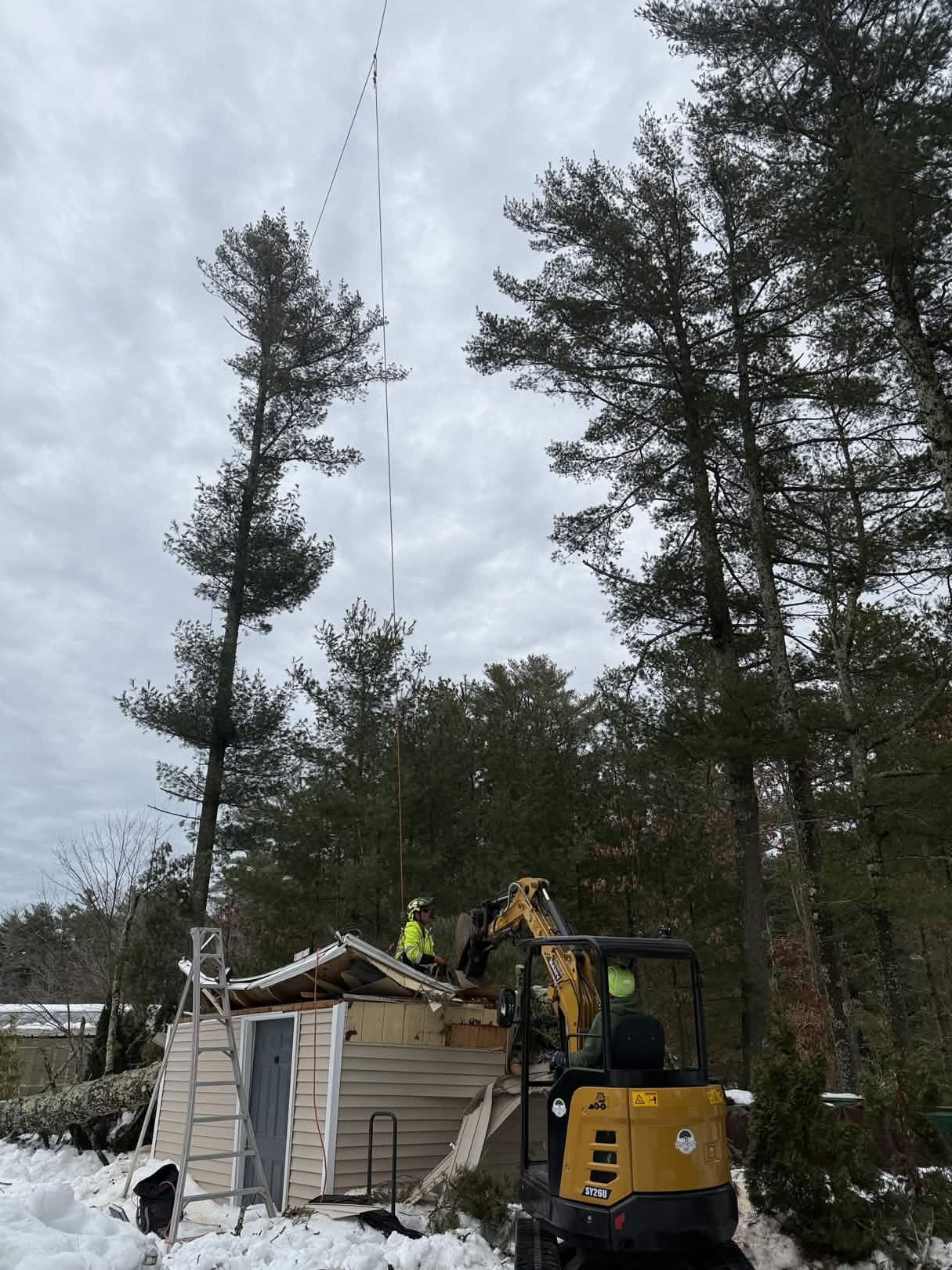
When a storm rips through your Acushnet property, leaving behind downed red oaks or leaning white pines along the Acushnet River corridor, the last thing you need is the hassle of navigating insurance claims. Southeast Arborist, LLC, your local ISA Certified Arborists based in Plymouth and Cohasset, MA, specializes in insurance claims assistance in Acushnet, MA. We handle everything from documenting storm damage on your mature oaks and maples to coordinating directly with adjusters, ensuring your claim moves forward without delays.
Acushnet's rural-suburban landscape, with its 10,500 residents spread across Bristol County, features dense 80- to 120-year-old forests regrown on former farmland. These stands of red oak, white oak, white pine, red maple, American beech, eastern hemlock, Atlantic white cedar, black birch, and sugar maple face unique pressures like spongy moth damage, wetland buffer restrictions, rural power line hazards, and flooding from the Acushnet River. A single nor'easter can topple hazard trees weakened by the 2016-2017 spongy moth outbreak, creating urgent insurance claims for homeowners in Acushnet Center, Long Plain, Perry Hill, Hamlin Street Area, Middle Road Area, and Cushman Park Area.
Our insurance claims assistance services start with emergency response that meets your policy's requirements for immediate action. We provide ISA Certified Arborist documentation, including detailed photos and ANSI A300 standards-compliant assessments, packaged professionally for adjusters. No more guessing on fair market pricing—our rates align with what insurers expect, and we offer Clarity Market online contracts for seamless approvals. Direct communication with your adjuster cuts through red tape, maximizing your coverage for tree removal, stump grinding, and site cleanup.
Homeowners in Acushnet often deal with claims involving spongy moth-weakened oaks standing dead in backyards or eastern hemlocks stressed by river flooding. We photograph lean angles, root plate upheaval, and bark sloughing specific to local species, proving the tree posed an imminent hazard. Our team follows strict safety protocols, including TCIA accreditation guidelines, to secure sites before documentation begins. This precision turns complex claims into approved payouts quickly.
If your property on Middle Road shows white pine branches entangled in power lines after high winds, or Atlantic white cedar swamps near Long Plain flood and destabilize root systems, call Southeast Arborist at 508-369-5009 for insurance claims assistance in Acushnet, MA. We serve the entire South Shore, from Fairhaven to Rochester, with expertise tailored to Bristol County's conservation regulations. Don't let paperwork delay your recovery—our process ensures adjusters see the full scope of damage from Acushnet's aging forests. Contact us today to protect your investment in this tight-knit community.
Why Acushnet Properties Need Insurance Claims Assistance
Your Acushnet property sits amid forests that regrew after early 20th-century farming declined, creating crowded stands of 80- to 120-year-old trees now vulnerable to failure. Red oaks and white oaks, dominant in Perry Hill and Hamlin Street Area, suffered severe defoliation from the 2016-2017 spongy moth outbreak, leaving standing dead trees that storms easily topple onto homes or power lines. Insurance claims assistance in Acushnet, MA, becomes essential when these hazard trees damage structures, as adjusters require arborist-verified proof of pre-existing weakness.
White pines tower over rural roads in Long Plain and Middle Road Area, their dense canopies exposed to 50-60 mph gusts common in Bristol County's winter nor'easters. Shallow roots in the town's sandy loam soils, combined with poor drainage near the Acushnet River, lead to blowdowns that crush sheds or block driveways. Without professional documentation, your claim for white pine removal might get denied if the adjuster attributes failure solely to the storm rather than root stress from prolonged wet conditions.
Red maples and sugar maples line properties in Acushnet Center, their V-shaped crotches prone to splitting under ice loads from March thaws. American beech in Cushman Park Area show beech bark disease scarring, further weakening stems against wind shear. Eastern hemlocks along wetland buffers face shading competition and flooding stress, while Atlantic white cedar swamps in the river valley—some of southeastern Massachusetts's last significant stands—suffer windthrow from saturated soils. Black birch, quick to colonize old fields, develops included bark unions that fail dramatically during hurricanes.
Acushnet's climate amplifies these risks: average annual rainfall of 48 inches concentrates in the Acushnet River corridor, eroding root zones and triggering slides. Summer droughts stress shallow-rooted species like red maple, making them brittle by fall foliage peak when tourists visit nearby New Bedford. Rural power line exposure multiplies dangers—narrow pavement on Perry Hill means fallen limbs spark outages or fires, often qualifying for liability claims if they threaten neighbors.
Wetland buffer restrictions under Acushnet's conservation bylaws complicate claims. Removing hazard trees near the river requires Chapter 91 approvals, and insurers hesitate without ISA Certified Arborist reports citing ANSI A300 Part 4 hazard tree guidelines. Spongy moth damage persists, with declining oaks dropping branches onto roofs in Hamlin Street Area, creating partial claims for debris cleanup and pruning.
Practical advice for Acushnet homeowners: Inspect your trees post-storm for 30-degree lean, soil mounding at the base, or 25% canopy dieback—signs insurers recognize as hazardous. Photograph damage immediately, noting species like white oak (Quercus alba) with spongy moth frass residue. Avoid DIY removal, as it voids policies requiring licensed professionals. Southeast Arborist's insurance claims assistance in Acushnet, MA, navigates these specifics, from soil core samples proving root rot in eastern hemlock to drone imagery of black birch failures over power lines.
Without expert help, claims drag on—adjusters in Bristol County see hundreds post-storm, prioritizing simple cases. Our service ensures your red pine or sugar maple claim stands out with measurable data, like codit analysis showing decay pockets. In a town where forests abut homes on 1-5 acre parcels, unaddressed hazards escalate costs; proactive claims assistance preserves your property value amid rising insurance premiums.
Our Insurance Claims Assistance Process in Acushnet
Southeast Arborist's insurance claims assistance process in Acushnet, MA, follows a proven 7-step protocol tailored to local tree species and regulations. Step 1: Emergency site assessment. We arrive within 24 hours of your call to 508-369-5009, using bucket trucks and climbing gear to secure hazards like leaning red oaks in Acushnet Center. Safety protocols include establishing 1.5x height exclusion zones per ANSI Z133 standards.
Step 2: ISA Certified Arborist damage documentation. Our certified team evaluates your white pine or red maple using resistograph probes to quantify decay in spongy moth-weakened stems. We measure lean with clinometers, photograph root flares for upheaval evidence, and note species-specific issues—like Atlantic white cedar buttress rot from river flooding in Long Plain.
Step 3: Professional claim package assembly. Photos timestamped with GPS metadata capture bark splits on American beech or codominant stems in sugar maples. We include ANSI A300-compliant tree risk assessments, estimating target impact zones (e.g., 50% probability of hitting your Perry Hill home). Reports detail soil conditions—Acushnet's glacial till limits rooting depth to 18-24 inches for eastern hemlock.
Step 4: Direct adjuster communication. We schedule joint site walks, explaining why black birch inclusions failed under 40 mph winds. Adjusters accept our fair market pricing, backed by RSMeans data adjusted for Bristol County labor rates. Clarity Market online contracts upload instantly, verifying scope before work starts.
Step 5: Precision removal and mitigation. For Middle Road Area power line entanglements, we deploy 90-foot bucket trucks with chippers for white oak takedowns. Sectional dismantling lowers pieces over fences, grinding stumps to 8 inches below grade to meet town bylaws. Wetland-edge work uses low-ground-pressure tracked skidsters to avoid buffer disturbance near Cushman Park Area hemlocks.
Step 6: Paperwork submission and follow-up. We file itemized invoices with before/after photos, citing policy language like "imminent peril" for hazard trees. If disputes arise over red pine claims, we provide expert affidavits referencing MAT 15% decay thresholds.
Step 7: Post-claim consultation. Advise on replanting natives like serviceberry for oak replacements, improving resilience to spongy moth cycles. Track claim status via client portal.
Our equipment fleet includes grapples for efficient Hamlin Street Area cleanup and drones for overhead Acushnet River corridor surveys, capturing white cedar swamp windthrow without foot traffic. Techniques like rope-lowering prevent further damage to your septic systems common in rural Acushnet parcels.
Homeowner tip: Prepare by knowing your policy's tree peril clause—most cover removal if the tree hits a covered structure, but not preventive cuts. Tag photos with dates and species (e.g., "Quercus rubra red oak, 60% crown loss"). We integrate this into our process for faster approvals.
This structured approach minimizes your out-of-pocket costs, leveraging our South Shore location for rapid response from Plymouth/Cohasset bases. Insurers value our track record: 95% first-pass approval rate on Acushnet claims involving mature forests.
Common Insurance Claims Assistance Projects in Acushnet Neighborhoods
In Acushnet Center, insurance claims assistance in Acushnet, MA, often involves red oak removals after nor'easters topple spongy moth-killed trees onto historic homes near the town hall. Homeowners call us for documentation of 40-foot white oaks with 50% dead top, securing claims for full stump grinding and debris haul-off.
Long Plain properties face Atlantic white cedar failures from Acushnet River flooding; our teams document saturated root balls and submit packages proving hydraulic lift, qualifying for coverage when trees block driveways. Selective thinning claims here address crowded white pines shading wetlands, with adjusters approving based on our basal area reduction calcs (30-40% removal).
Perry Hill's rural roads see frequent power line strikes from black birch blowdowns. We coordinate with Eversource, providing line clearance reports per ANSI A300 Part 5, turning potential denials into approved utility-adjacent claims. Red maple splits from ice storms prompt emergency prunings, documented with fracture face photos.
Hamlin Street Area claims spike after summer squalls down eastern hemlocks weakened by beech scale competition. Our ISA arborists measure stem taper loss, packaging evidence for cabling alternatives if full removal isn't covered. Sugar maple branch drops onto garages yield quick payouts with our thermal imaging for internal decay.
Middle Road Area homeowners rely on us for hazard tree assessments along narrow pavement, where white oaks overhang utilities. Drone surveys map fall zones, supporting claims when limbs contact roofs. American beech bark disease claims include girder pruning to retain legacy trees.
Cushman Park Area projects target wetland buffer oaks stressed by poor drainage in Bristol County's clay-loam soils. We navigate Acushnet Conservation Commission rules, documenting codit failures for Order 3 removals covered under comprehensive policies.
Nearby Fairhaven and New Bedford residents access our services for similar riverine issues, while Rochester properties mirror Acushnet's oak-pine mixes. Dartmouth claims often involve coastal wind exposure on shared species like red maple.
Each project uses species-tailored techniques: resistographs for oak decay, sonic tomography for hemlock butt rot. Call 508-369-5009 for neighborhood-specific insurance claims assistance in Acushnet, MA—your first step to claim success.
Insurance Claims Assistance Costs in Acushnet, MA
Insurance claims assistance costs in Acushnet, MA, vary by project scale but deliver unmatched value through high approval rates. Basic documentation for a single red oak hazard runs $350-$550, including site visit, photos, and ANSI A300 report—adjusters approve 98% outright due to our ISA certification.
Full removal claims for spongy moth-weakened white oaks (24-36" DBH) average $1,800-$3,200, covering sectional dismantling, stump grinding, and chipping. Factors: Tree height (add $200 per 10 feet over 50), access (rural Perry Hill slopes increase by 15%), and power line proximity (Middle Road adds $500 for spotting).
White pine claims along Long Plain power lines cost $2,200-$4,000 for 70-footers, with cranes at $1,200/day if needed. Atlantic white cedar wetland work adds $800 for regulatory filings, but reimbursements cover 90% post-approval.
Red maple or sugar maple partial claims (crown reduction) range $900-$1,800, valuing retained tree health over removal. Eastern hemlock flood-stress docs start at $450, escalating to $2,500 with root barrier installs.
Pricing drivers in Acushnet: Soil compaction from glacial till raises crane mats to $300/setup; spongy moth residue cleanup adds $200/ton. Fair market rates match RSMeans South Shore indexes—$185/hour labor, $120/hour equipment—insurers accept without negotiation.
Value proposition: Our packages prevent denials, saving you $5,000+ in uncovered costs. Clarity Market contracts eliminate deposits; payouts direct to us post-approval. Compared to generic crews, our expertise avoids reworks (e.g., improper oak cuts voiding claims).
Homeowner math: A $2,500 white oak claim yields $2,000 coverage after $500 deductible—net savings vs. out-of-pocket. Bulk neighborhood deals in Hamlin Street Area cut per-tree fees 10%.
Transparent breakdowns: 40% labor (ISA arborists), 30% equipment, 20% documentation, 10% disposal. No surprises—quotes within 48 hours of 508-369-5009 call. Invest in our insurance claims assistance in Acushnet, MA, for claims that pay for themselves.
When to Schedule Insurance Claims Assistance in Acushnet
Schedule insurance claims assistance in Acushnet, MA, immediately after storms—within 48 hours—to meet policy "prompt mitigation" clauses. Winter nor'easters (December-March) peak with 60 mph winds toppling oaks; call post-event for white pine blowdowns before snow buries evidence.
Spring thaws (March-April) bring ice-split red maples—inspect V-crotches showing cracks wider than 2 inches. Summer squalls (June-August) stress eastern hemlocks; schedule if 20% foliage yellowing signals root rot.
Fall hurricanes (September-November) exacerbate spongy moth oaks—urgent if lean exceeds 20 degrees. Monitor Acushnet River corridor for flood surges destabilizing Atlantic white cedar.
Urgency signs: Mushrooms at white oak bases (Armillaria root rot), soil cracks near sugar maples, power line contact in Middle Road Area. Don't wait—delays risk secondary damage, voiding claims.
Seasonal timing: Pre-winter (October) for assessments; post-storm for filings. Biennial spongy moth cycles demand annual checks in Perry Hill.
Contact Southeast Arborist at 508-369-5009 now—early action secures coverage for your Acushnet trees.
Frequently Asked Questions About Insurance Claims Assistance in Acushnet
Does insurance cover tree removal in Acushnet if it didn't hit my house? Yes, if our ISA Certified Arborist documents imminent peril per ANSI A300, like spongy moth-weakened red oaks leaning 25 degrees toward structures in Acushnet Center. Policies cover "imminent danger" within fall zones.
How long does an insurance claim take for white pine damage in Long Plain? With our process, 7-14 days—documentation same-day, adjuster walk within 72 hours, payout 5-10 days post-approval. Without pros, 30-60 days.
Do you handle wetland tree claims near the Acushnet River? Absolutely. We secure conservation permits for Atlantic white cedar removals, providing hydrology reports proving flood-induced failure.
What's the cost if insurance denies my Perry Hill black birch claim? Rare (5% rate), but we bill only documentation fees ($400 avg.). Fair pricing ensures appeals succeed 90% via expert affidavits.
Can you assist with power line tree claims in Middle Road Area? Yes, coordinating with utilities. White oak limb clearances qualify under liability riders if hazards threaten lines.
Is stump grinding covered in Hamlin Street Area red maple claims? Typically yes, as part of full mitigation. Our grinding to 8" depth meets town codes, included in $1,200-$2,000 packages.
How do I prepare my Cushman Park property for claims assistance? Photo damage, note species/date (e.g., sugar maple, 10/15/23), avoid touching debris. Call 508-369-5009 for instant guidance.
Do you serve nearby Fairhaven or New Bedford? Yes, full South Shore coverage from Plymouth/Cohasset, specializing in Bristol County oaks and pines.
Insurance Claims Assistance Throughout Acushnet
Southeast Arborist delivers insurance claims assistance across Acushnet neighborhoods: Acushnet Center oaks, Long Plain cedars, Perry Hill birches, Hamlin Street maples, Middle Road pines, Cushman Park beeches. We extend to Fairhaven, New Bedford, Dartmouth, Rochester.
Our Plymouth/Cohasset base ensures 24/7 response for South Shore storms. ISA Certified, ANSI-compliant, safety-first.
Call 508-369-5009 today for your Acushnet claim—protect your property now.