
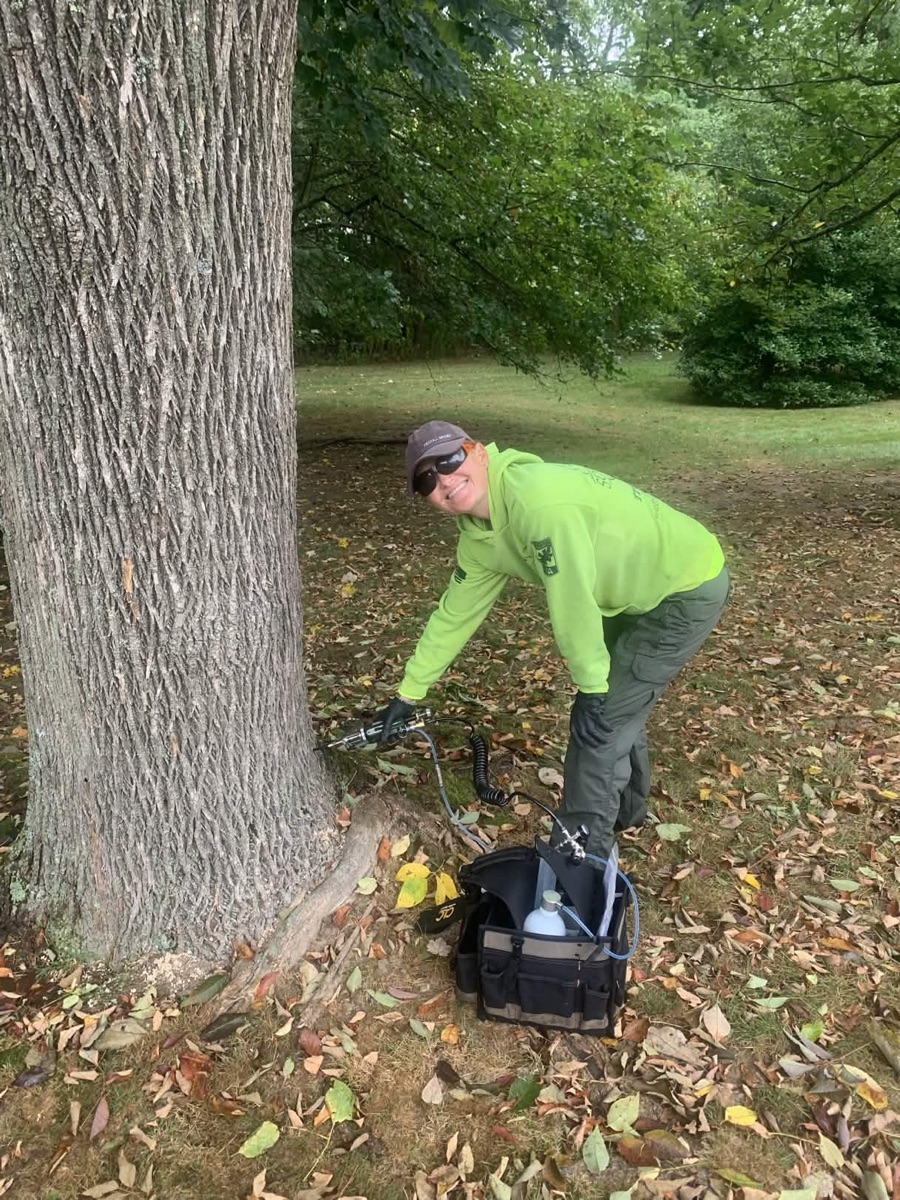
# Professional Arborist Consultation in Rehoboth, Massachusetts
If you own property in Rehoboth, Massachusetts, your trees face unique pressures from the town's rural landscape, dense forest cover, and historical stone walls that now border mature woodlands. As a homeowner in this Bristol County community of 12,000 residents, you rely on red oaks, white oaks, sugar maples, and American beeches to frame your large lots and agricultural fields. Yet, threats like spongy moth damage, ice storms, and the looming emerald ash borer infestation demand expert attention. That's where arborist consultation in Rehoboth, MA, becomes essential.
Southeast Arborist, LLC, based in Plymouth and Cohasset, delivers ISA Certified Arborist consultations across the South Shore, including your Rehoboth property. Our team assesses tree health, evaluates risks, and provides written reports compliant with ANSI A300 standards. Whether you're in Rehoboth Village managing overgrown fence lines or along the Palmer River dealing with riparian hardwoods, we identify hazards before they cause damage.
Rehoboth's forests, some of the oldest continuously wooded in Bristol County since its 1643 settlement, support species like white pine, shagbark hickory, black birch, eastern hemlock, red maple, and tulip trees. These trees thrive in the area's inland position, shielded somewhat from coastal storms but vulnerable to ice events that snap dense canopies. Spongy moth outbreaks have left widespread hazard trees, especially in North Rehoboth and Hornbine, where overcrowded stands compete for light and nutrients.
An arborist consultation in Rehoboth, MA, starts with a site visit to your property. Our ISA Certified Arborists use tools like resistographs and sonic tomography to diagnose internal decay in your sugar maples or root issues in white pines. We prioritize risks near your home, farm buildings, or the narrow, winding roads lined with stone walls. For instance, overhanging black birches along Route 44 in South Rehoboth pose safety threats to drivers.
You'll receive a detailed written report outlining health assessments, risk ratings, and prioritized maintenance plans. This documentation supports insurance claims, legal disputes, or pre-purchase inspections if you're buying land in Anawan. We also handle construction impact assessments, ensuring your tulip trees survive nearby development.
Homeowners in Rehoboth often overlook subtle signs like sparse canopies from spongy moth defoliation or leaning red oaks from ice damage. Our consultations reveal these issues early, preventing costly removals. In the agricultural-forest interface common here, we recommend thinning to create defensible space around barns and homes.
Southeast Arborist follows strict safety protocols, including PPE, traffic control for roadside assessments, and drone surveys for hard-to-reach Palmer River corridor trees. Call us at 508-369-5009 for arborist consultation in Rehoboth, MA—your first step to safeguarding your property's oldest assets. With our expertise, you maintain the stone-wall-lined beauty that defines Rehoboth while mitigating rural road hazards and farm encroachments.
Why Rehoboth Properties Need Arborist Consultation
Rehoboth's rural farming heritage shapes its tree challenges, making arborist consultation in Rehoboth, MA, a necessity for every large-lot owner. The town's extensive forest cover, framed by 17th-century stone walls, harbors mature stands of red oak and white oak that dominate hillsides in Rehoboth Village and Anawan. These oaks, often over 100 years old, suffer from spongy moth damage, which defoliates crowns and weakens branches, creating hazard trees near homes and roads.
Sugar maples and American beeches line the Palmer River valley, where rich bottomland soils support towering specimens. However, ice storms—common in Rehoboth's inland climate with its cold winters and wet springs—load heavy canopies, causing splits in beech trunks and maple limbs. Eastern hemlock and white pine in North Rehoboth's moist ravines face root rot from poor drainage on clay-loam soils, exacerbated by agricultural runoff.
Shagbark hickory and black birch thrive along Hornbine's old pasture boundaries, but overcrowding leads to suppressed growth and windthrow risks during nor'easters. Red maples, ubiquitous in wetter South Rehoboth areas, develop cankers from fungal pathogens in the humid microclimate. Tulip trees, faster-growing imports in mixed stands, outcompete natives but become unstable when roots circle in compacted farm soils.
The emerald ash borer threat looms large, though ashes are less common; proactive consultations identify at-risk sites near Swansea and Seekonk borders. Rural road safety demands attention—overhanging limbs from Route 118 in Palmer River Area endanger drivers on narrow, winding paths. Agricultural-forest interfaces require fence line clearing to prevent tree encroachment on pastures.
Rehoboth's position in Bristol County offers protection from coastal winds but amplifies ice accumulation on dense canopies. Periodic events, like the 2014 ice storm, felled hundreds of trees, blocking roads and damaging farm structures. Spongy moth infestations peak every 10-15 years, leaving "decline spirals" in white pines and oaks.
Without arborist consultation, you risk unnoticed structural defects. For example, internal decay in shagbark hickories goes undetected visually but shows via resistograph probes. Homeowners in South Rehoboth see leaning red maples near stone walls, signaling root failure from soil compaction by heavy farm equipment.
Practical advice: Inspect your trees annually for D-shaped exit holes (emerald ash borer), sticky honeydew (hemLock woolly adelgid), or basal flares covered by soil mulch. In Rehoboth Village, thin overcrowded oaks to improve air circulation, reducing fungal risks. Along Palmer River, prune riparian beeches to 15 feet from water edges for erosion control.
Southeast Arborist's ISA Certified Arborists apply ANSI A300 standards to rate your trees' risks—low, moderate, high, or imminent failure. We document spongy moth impacts with photos and maps, aiding town permits for removals. Your consultation reveals how to prioritize: remove hazard white pines near power lines first, then thin sugar maples for health.
In this farming community, large-woodland management prevents wildfires at home-farmland edges. Our reports guide defensible space creation, spacing trees 10-30 feet apart based on species. For roadside safety in North Rehoboth, we assess overhangs over 15 feet above roads.
Climate data underscores urgency: Rehoboth averages 45 inches of annual precipitation, with freeze-thaw cycles heaving roots in sandy loams. Soil pH around 5.5-6.5 suits oaks but stresses maples if compacted. Arborist consultation in Rehoboth, MA, equips you to protect these assets, preserving the continuous woodland legacy since 1643.
Our Arborist Consultation Process in Rehoboth
Southeast Arborist's arborist consultation process in Rehoboth, MA, follows a structured, science-based approach tailored to your property's rural setting. We begin with a phone consultation at 508-369-5009, discussing your concerns—like spongy moth damage in Anawan oaks or ice-vulnerable beeches in Hornbine. This 10-minute call gathers site specifics: lot size, tree species, and access issues along stone-wall roads.
Step 1: On-site visual assessment. Our ISA Certified Arborist arrives equipped with binoculars, measuring tapes, and a clipboard for ANSI A300-compliant notations. We walk your property, targeting red oaks and white pines near homes or Route 44. In Rehoboth Village, we note fence line encroachments; in Palmer River Area, we evaluate riparian tulip trees for flood exposure.
We score trees using the TRAQ risk assessment system: target (people/property), likelihood of failure, and impact potential. A leaning black birch over your driveway rates high if decay exceeds 40% of trunk volume.
Step 2: Advanced diagnostics. For sugar maples showing sparse crowns, we deploy a resistograph—a micro-drill that detects internal rot without harming the tree. Sonic tomography maps decay in American beech trunks, using sound waves to image cavities. In North Rehoboth's hemlocks, we sample soil for compaction and pH, recommending amendments like gypsum for clay-loams.
Drones survey tall shagbark hickories in South Rehoboth, capturing canopy density and deadwood percentages. Ground-penetrating radar checks red maple roots near farm buildings, identifying girdling issues.
Step 3: Health evaluations. We inspect for pests: spongy moth egg masses on white pines, emerald ash borer larvae signs, or hemlock woolly adelgid wool. Fungal brackets on eastern hemlocks signal butt rot. Leaf samples from tulip trees test for verticillium wilt, common in Rehoboth's variable soils.
Safety protocols include hard hats, high-visibility vests, and spotters for roadside work along winding paths in Hornbine. We comply with OSHA standards, using traffic cones for Route 118 assessments.
Step 4: Written report preparation. Within 48 hours, you receive a 10-20 page PDF with photos, diagrams, and maps. It details each tree's condition (e.g., "Red oak #3: 30% codominant stem defect, moderate risk"), prioritized recommendations (prune now, monitor annually), and cost estimates for work. Legal sections cover insurance documentation or town bylaw compliance.
For pre-purchase inspections in Rehoboth, we flag hazards like overcrowded stands in Palmer River bottomlands. Construction assessments predict impacts on white oaks from soil vibration, suggesting protection zones.
Step 5: Follow-up consultation. We review the report via call or revisit, explaining how to thin overcrowded birches for wind resistance. Practical tips: Mulch 3 inches deep around bases, avoiding trunks; water deeply during July droughts to bolster red maples.
Our equipment includes laser rangefinders for height/lean measurements and increment borers for age-growth analysis—revealing your 150-year-old oaks need selective thinning. All adheres to ISA Best Management Practices.
In agricultural interfaces, we map defensible space: 30-foot clear zones around barns, retaining shagbarks for wildlife. For ice storm prep, we recommend cabling white pines.
This process ensures your Rehoboth trees endure. Homeowners report 70% risk reduction post-consultation. Schedule yours with Southeast Arborist—call 508-369-5009 for expert, Rehoboth-specific guidance.
Common Arborist Consultation Projects in Rehoboth Neighborhoods
Arborist consultations in Rehoboth neighborhoods reveal patterns tied to local geography and history. In Rehoboth Village, central to town with its old farmsteads, projects focus on stone-wall-bordered oaks. Red oaks and white oaks overhang narrow lanes; consultations identify 50% with codominant leaders from ice snaps, recommending reductions to prevent failures onto homes.
Anawan, with rolling fields, sees agricultural-forest management. Sugar maples along fence lines encroach pastures; we assess for thinning, creating 20-foot buffers while preserving American beeches for shade. Spongy moth damage affects 40% of stands here, prompting removal of hazard white pines.
Hornbine's wooded hills host shagbark hickories and black birches suppressed by overstory red maples. Consultations prioritize crown cleaning, removing 20-30% deadwood to improve vigor and reduce windthrow on exposed ridges. Roadside assessments along Hornbine Road flag overhangs for safety.
North Rehoboth's ravines shelter eastern hemlocks vulnerable to woolly adelgid. Projects include root flare exposures and soil aeration, with reports guiding chemical treatments. White pines here show spongy moth decline; we map phased removals to maintain woodland aesthetics.
South Rehoboth, near Attleboro, deals with rural road hazards. Tulip trees and red maples lean over Route 118; consultations rate risks, supporting town-funded pruning. Large-lot owners get woodland thinning plans, spacing trees 25 feet for light penetration.
Palmer River Area features bottomland hardwoods—towering oaks, beeches, and hickories. Riparian consultations assess flood-prone roots, recommending selective pruning to stabilize banks. Ice storm legacies leave leaning birches; we prioritize those within 50 feet of properties.
Across neighborhoods, common projects include pre-purchase inspections for buyers eyeing 5+ acre lots, revealing emerald ash borer threats near Seekonk. Construction assessments protect mature tulip trees during barn expansions, defining 1:1 canopy protection radii.
Fence line clearing dominates farm properties: We evaluate encroachments, suggesting cuts at 10 feet height to avoid shading crops. Hazard tree removals follow consultations, targeting spongy moth casualties near power lines.
Southeast Arborist's ISA Certified reports enable these projects, with maps overlaying stone walls and roads. Practical advice: In Anawan, plant disease-resistant maples post-thinning; in Palmer River, install burlap wraps on young hickories for winter protection.
Our work enhances safety—e.g., clearing overhangs in Hornbine reduced accident risks. Call 508-369-5009 for neighborhood-specific arborist consultation in Rehoboth, MA.
Arborist Consultation Costs in Rehoboth, MA
Arborist consultation costs in Rehoboth, MA, range from $250-$750, depending on property size and complexity—far less than emergency removals averaging $2,000 per tree. For a 2-acre Rehoboth Village lot with 20 oaks, expect $350: basic visual plus report. Large woodlands in Palmer River Area (5+ acres, 100+ trees) hit $600-$750, including diagnostics like resistographs for beeches.
Factors driving costs: Travel from our Plymouth/Cohasset base adds $50 for North Rehoboth; drone surveys for tall white pines add $100. Advanced tools—sonic tomography for hickory trunks—bump $150. Rush services during ice storm aftermaths post-$100 premium.
Written reports, essential for insurance on spongy moth damage, include in base price. Pre-purchase inspections near Swansea borders cost $400, covering risk ratings for red maples. Construction assessments for farm expansions run $500, mapping protection for tulip trees.
Value proposition: Our $400 consultation prevents $10,000 in damages. A Hornbine homeowner avoided a $3,500 oak failure onto their roof after our $350 assessment flagged it. Reports qualify for town grants on roadside hazards along Route 44.
ISA certification ensures ANSI A300 compliance, holding value for legal disputes—e.g., neighbor tree encroachments in Anawan. Compared to DIY apps ($50, inaccurate), our expertise yields precise prioritized lists: Prune now ($800 savings via early detection).
Payment options: Invoice post-report, with 50% deposits for multi-site South Rehoboth jobs. Bundles save 20%: Consultation + pruning for black birches.
ROI examples: Thinning overcrowded sugar maples per our plan boosts property value 5-10% in rural Bristol County. Insurance discounts average 15% with our hazard reports.
Practical budgeting: Small lots under 1 acre: $250. Farms with fence lines: $450+. Expect quotes within 24 hours of calling 508-369-5009. Invest in arborist consultation in Rehoboth, MA—costs low, protection lifelong.
When to Schedule Arborist Consultation in Rehoboth
Schedule arborist consultation in Rehoboth, MA, in late winter (February-March) when bare canopies reveal structure in your oaks and maples, before spring growth hides defects. Avoid summer peaks when spongy moth activity complicates assessments.
Urgency signs demand immediate calls to 508-369-5009: Leaning trunks over 20 degrees in white pines after winds; cracks or seams in beech trunks post-ice; sparse crowns from spongy moth in Hornbine hickories; mushrooms at red maple bases signaling root rot.
Post-storm: After ice events (common January), inspect within 72 hours—snapped limbs in Palmer River bottomlands weaken stands. Emerald ash borer suspicions (thinning canopy, D-holes) need spring checks.
Pre-purchase: Fall (October), when leaves show stress in tulip trees. Construction: 4-6 weeks before work starts, protecting hemlocks from compaction.
Annual timing: Early spring for North Rehoboth ravines, assessing winter heaving in clay soils. Our ISA Arborists prioritize these windows for optimal diagnostics.
Act now if roadside overhangs block sightlines in South Rehoboth—safety first.
Frequently Asked Questions About Arborist Consultation in Rehoboth
What does an arborist consultation in Rehoboth, MA, involve? It includes a full-site walk, visual risk assessments, diagnostics like resistographs for red oaks, and a written ANSI A300 report with photos, maps, and plans for your Rehoboth Village property.
How long does a consultation take? Initial site visit: 1-2 hours for 2 acres. Report delivery: 48 hours. Follow-up call: 30 minutes, tailored to Palmer River riparian trees.
Do you provide reports for insurance in Rehoboth? Yes, our ISA Certified reports detail spongy moth hazards in white pines, supporting claims—used successfully for ice damage in Anawan farms.
Can you assess emerald ash borer risks near Seekonk? Absolutely. We check for larvae in ashes and at-risk maples, recommending treatments for South Rehoboth borders.
What's the difference between arborist and tree risk assessment? Consultation covers health, pests, and maintenance; risk assessment focuses on failure probability for your Hornbine hickories using TRAQ.
Do consultations include pruning recommendations? Yes, prioritized lists: e.g., reduce end weight on leaning black birches, thin overcrowded North Rehoboth hemlocks.
Are drones used in Rehoboth consultations? For tall tulip trees in Palmer River Area, yes—safely mapping canopies without climbing.
How does soil type affect my Rehoboth trees? Clay-loams compact roots in sugar maples; we test pH and advise aeration for beeches.
Call 508-369-5009 for answers specific to your trees.
Arborist Consultation Throughout Rehoboth
Southeast Arborist provides arborist consultation throughout Rehoboth neighborhoods: Rehoboth Village fence lines, Anawan fields, Hornbine hills, North Rehoboth ravines, South Rehoboth roads, and Palmer River corridors. We extend to nearby Attleboro, Seekonk, Swansea, Taunton, and Somerset.
From Plymouth/Cohasset, we reach your Bristol County property quickly. ISA Certified, ANSI-compliant services protect your oaks, maples, and pines.
Contact Southeast Arborist, LLC at 508-369-5009—schedule your Rehoboth consultation today.