
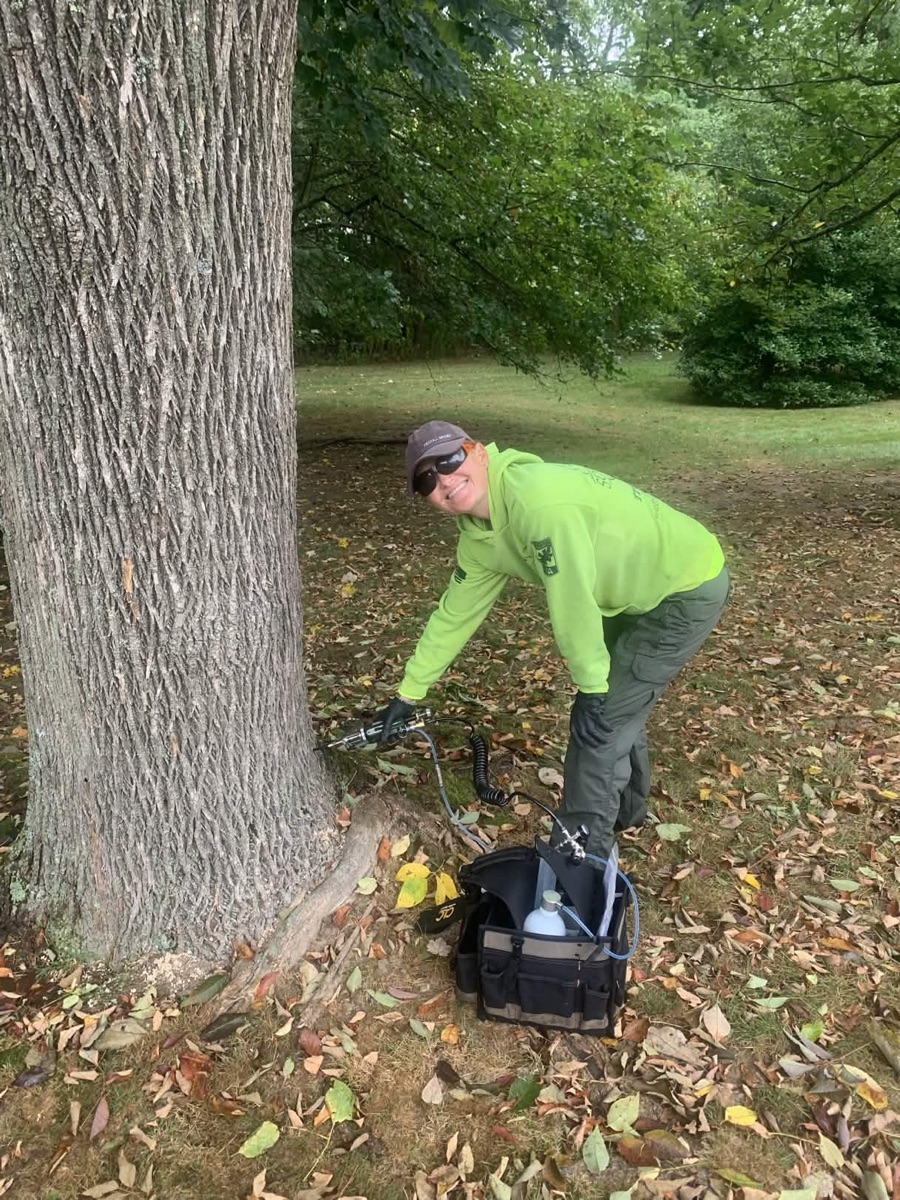
# Professional Arborist Consultation in Berkley, Massachusetts
If you own property in Berkley, Massachusetts, your trees face unique pressures from the town's dense second-growth forests, Taunton River flooding, and lingering spongy moth damage. As a homeowner in this Bristol County community of 6,800 residents, you rely on mature red oaks, white pines, and sycamores that define your wooded lots, but these same trees can pose risks when weakened or overcrowded. That's where arborist consultation in Berkley, MA, becomes essential. Southeast Arborist, LLC, your South Shore Massachusetts tree care experts based in Plymouth and Cohasset, delivers ISA Certified Arborist assessments tailored to Berkley's rural challenges.
Our consultations go beyond surface inspections. We provide detailed tree health evaluations, hazard risk analyses, and written reports compliant with ANSI A300 standards. Whether you're in Berkley Common dealing with driveway-encroaching black birches or along the Taunton River managing flood-leaning tupelos, our ISA Certified Arborists identify issues like spongy moth-killed oaks that continue to drop limbs years after the 2016-2017 outbreak. These reports support insurance claims, legal disputes, or pre-purchase decisions, giving you actionable data to protect your investment.
Berkley's forests have regrown thickly since early 20th-century farming declined, covering most of the town's 41 square miles in hardwood and pine stands. Your property likely features red maples crowding homes in North Berkley or eastern hemlocks shading Poquoy Brook Area streams. Without professional input, dense forest encroachment reduces sunlight to your house, invites pest invasions, and heightens wildfire risk in dry summers. An arborist consultation in Berkley, MA, pinpoints these problems early, recommending thinning or removals that comply with local zoning and maintain defensible space.
We prioritize safety with protocols like pre-climb inspections and personal protective equipment (PPE) per OSHA guidelines. For rural power line vulnerabilities on narrow roads like those in Myricks, our assessments flag clearance needs to prevent outages during storms. Homeowners often discover hidden decay in shagbark hickories or root damage from Taunton River floods, issues our written reports document for Eversource coordination.
Consider a typical Berkley scenario: Your South Berkley lot has white oaks dying from spongy moth defoliation, leaning toward your roof. Our consultation evaluates structural integrity using resistograph probing and visual tree risk assessment (VTA) methods, then prioritizes actions like cabling or phased removal. This prevents costly damage—FEMA notes that 60% of disaster claims in Massachusetts involve fallen trees.
Pre-purchase arborist consultations in Berkley reveal undisclosed hazards, such as American beeches with beech bark disease in wooded parcels near Bridgewater. Construction impact assessments protect roots during additions, ensuring compliance with town bylaws. Call Southeast Arborist at 508-369-5009 for arborist consultation in Berkley, MA, and safeguard your property against the town's specific tree threats. Our service area spans the South Shore, including nearby Taunton and Raynham, so schedule today to address risks before the next nor'easter hits.
Why Berkley Properties Need Arborist Consultation
Berkley's heavily wooded landscape along the Taunton River creates distinct tree management needs that demand arborist consultation. Your property in this rural Bristol County town contends with second-growth forests dominated by red oak, white oak, white pine, red maple, American beech, black birch, eastern hemlock, shagbark hickory, tupelo, and sycamore. These species thrive in the area's sandy loam soils and temperate climate—average annual rainfall of 48 inches, with humid summers reaching 85°F and winters dipping to 20°F—but face compounded stresses.
Spongy moth (formerly gypsy moth) outbreaks from 2016-2017 devastated interior forests, killing thousands of oaks and leaving hazard trees that shed dead branches today. In North Berkley, weakened red oaks topple in winds, risking homes on narrow roads like Bay Street. Dense forest encroachment on large residential lots blocks light and airflow, stressing your red maples and promoting fungal diseases like Verticillium wilt.
Taunton River flooding exacerbates issues in the Taunton River Area, where riparian sycamores and tupelos suffer root erosion. High water events, like the 2010 floods that crested at 15 feet, scour soils and destabilize trees. Your Poquoy Brook Area property may have eastern hemlocks undermined by streambank saturation, leading to leaners that threaten outbuildings.
Rural power line vulnerabilities compound risks. Overhead lines along wooded driveways in Myricks snag white pines during ice storms, causing blackouts. Limited equipment access on narrow lanes like Elm Street demands precise risk evaluations before work begins.
Berkley's regrown forests lack the diversity of old-growth, making stands vulnerable to pests. American beech succumb to beech bark disease, spread by scale insects and fungi, creating cavities that harbor carpenter ants. Black birches develop girdling roots on compacted driveway soils, while shagbark hickories crack from sunscald in exposed clearings.
Climate shifts amplify these problems. Warmer winters extend spongy moth cycles, and increased storm intensity—nor'easters with 60 mph gusts—tests tree anchors. Your white oaks on clay-loam slopes in South Berkley face drought stress in July-August dry spells, cracking bark and inviting Armillaria root rot.
Without arborist consultation in Berkley, MA, you miss early interventions. Visual signs like sparse crowns or fungal brackets signal decline, but subsurface issues like plate roots from mower damage go undetected. ISA Certified Arborists from Southeast Arborist use tools like air spades to expose roots without harm, assessing health per ANSI A300 Part 1 standards.
Practical advice: Walk your Berkley property after leaf fall, noting oaks with >30% canopy dieback or maples oozing vascular streaking. Photograph leaning sycamores near the river for our consultation. In Berkley Common, check hemlocks for woolly adelgid infestation—white egg sacs on branches indicate need for treatment.
Nearby towns like Fall River share oak mortality, but Berkley's river corridor hosts outsized sycamores up to 100 feet tall, requiring specialized risk assessment. Our consultations prioritize maintenance, such as thinning overcrowded white pines to reduce wind sail and improve vigor.
Homeowners save thousands by acting on reports. Insurance data shows proactive tree risk management cuts claims by 40%. For your Berkley lot, arborist consultation identifies priorities like removing declining tupelos before floods or cabling beeches to avert failure.
Our Arborist Consultation Process in Berkley
Southeast Arborist's arborist consultation process in Berkley, MA, follows a structured, ANSI A300-compliant approach using ISA Certified Arborists trained in TRAQ risk assessment. We start with your call to 508-369-5009, gathering site details like neighborhood (e.g., Myricks driveway constraints) and concerns (e.g., spongy moth oaks).
Step 1: On-Site Arrival and Safety Setup We arrive in a marked truck with safety gear, including hard hats, hi-vis vests, and first-aid kits per OSHA 1910.269. In Berkley's narrow roads, we scout access, noting power lines via pole tags for Eversource notification if clearances <10 feet. Your Taunton River Area property gets flood zone checks using FEMA maps.
Step 2: Visual Tree Risk Assessment (VTA) Our arborist circles each target tree, scoring targets (your home, driveway), likelihood of failure, and impact potential on a 1-10 scale. For red oaks in North Berkley, we inspect for spongy moth scars—callus tissue over larval tunnels indicates weakness. White pines get needle retention checks; >50% browning signals pine tip moth or white pine weevil.
Step 3: Health Diagnostics We employ non-invasive tools: resistographs drill increment cores to measure decay density in white oak trunks, while sonic tomographs map internal rot in sycamores without full cuts. Soil probes test pH (Berkley's 5.5-6.5 ideal for maples) and compaction around black birch bases. Drones survey dense canopies over Poquoy Brook, spotting beech bark disease from aerial chlorosis patterns.
Step 4: Structural Analysis Climbing with rescue-certified gear, we assess codominant stems on American beeches, common in Berkley Common. Pull tests with dynamometers quantify anchorage on leaning tupelos. Root exposure via air spades reveals circling roots on shagbark hickories from past grading.
Step 5: Written Report Generation Back at our Plymouth office, we compile a PDF report with photos, diagrams, and prioritized recommendations. Legal sections detail ANSI A300 pruning specs, like 25% max crown removal for red maples. Insurance-ready summaries quantify risks, e.g., "80% failure likelihood for hemlock #3 impacting garage."
Step 6: Consultation Review and Follow-Up We email the report within 48 hours, scheduling a free review call. For construction impacts in South Berkley, we specify protection zones (1 foot radius per inch DBH). Maintenance plans include species-specific advice: fertilize white pines with slow-release nitrogen post-thinning.
Equipment includes laser rangefinders for lean angles (>15° flags hazards), soil corers for nutrient analysis (Berkley's low phosphorus stresses hickories), and infrared thermography for detecting girdling roots via heat anomalies.
Safety protocols cover all steps: two-person teams for climbs, spotters for ground ops, and exclusion zones under working trees. In power line zones near Raynham borders, we halt if voltages exceed 50kV without utility sign-off.
This process adapts to Berkley specifics. Long driveways in Myricks require ATV transport of gear; river properties need waders for tupelo access. Pre-purchase inspections scan 5+ acres, flagging invasive emerald ash borer risks (though ash is rare, neighbors in Taunton report it).
Results empower you: Reports guide woodland thinning, removing 20-30% basal area to favor healthy red oaks. Track progress with annual re-assessments. Our ISA certification ensures credibility—clients use reports for town permits on large lots.
Practical tip: Prepare by mapping trees with Google Earth, noting species and issues. This speeds our Berkley consultation, delivering value faster.
Common Arborist Consultation Projects in Berkley Neighborhoods
Arborist consultations in Berkley neighborhoods address location-specific needs, from woodland management to storm prep.
In **Berkley Common**, consultations focus on overcrowded hardwoods around historic homes. Red oaks and American beeches crowd foundations; we recommend selective thinning to restore 50-foot defensible space, reducing tick habitats and improving airflow against powdery mildew.
**Myricks** properties feature long, wooded driveways lined with white pines and black birches. Our assessments clear 15-foot verticals for plows, identifying pines with basal sweep hazards. Hazard removals prioritize declining trees post-spongy moth.
**North Berkley** lots contend with dense pine-hardwood mixes encroaching on septic fields. Consultations evaluate eastern hemlocks for hemlock woolly adelgid, prescribing imidacloprid injections, and thin red maples to prevent root competition.
**South Berkley**, near Bridgewater, sees shagbark hickories with included bark unions. We cable stems and prune epicormic sprouts, while assessing white oaks for oak wilt vectors like sap beetles attracted to fresh wounds.
**Taunton River Area** demands flood-risk evaluations. Sycamores and tupelos lean from scour; sonic tomography detects heartwood decay, with reports justifying phased removals before March high water. River birches get buttress root inspections.
**Poquoy Brook Area** streams host mature hemlocks and tupelos. Consultations map buffer zones per MassDEP wetlands rules, recommending riparian thinning to stabilize banks eroded by 50-inch annual rains.
Common projects include pre-purchase scans revealing spongy moth legacies—e.g., 40% oak mortality in interior stands—and construction assessments for driveway widenings, protecting oak roots with mulch basins.
Storm response consultations post-nor'easters triage power line conflicts, like pines draping wires on rural lanes. Woodland management thins 1-acre lots, favoring mast producers like oaks over invasives.
Our ISA Arborists reference local landmarks: Trees near Dighton Rock (Taunton River) need erosion checks; Myricks Depot lots prioritize clearance for events. Every project yields written plans with species-tailored care, like copper fungicide for beech disease.
Arborist Consultation Costs in Berkley, MA
Arborist consultation costs in Berkley, MA, range from $250-$750 per site, depending on factors like lot size, tree count, and complexity. A standard 1-acre residential lot with 10-15 trees averages $350-$450, including on-site assessment and written report.
Key pricing factors:
- **Property Size and Access**: Berkley Common's open lots cost less ($250 base). Myricks' 1/4-mile driveways add $100 for ATV use. Taunton River sites incur $50 flood prep fees.
- **Tree Numbers and Species**: Up to 10 trees: $300. 20+ in dense North Berkley stands: $500+. Complex sycamores or hemlocks require tools like resistographs (+$100).
- **Report Scope**: Basic health check: $250. Full VTA with legal/insurance sections: $450. Pre-purchase or construction plans: $600+.
- **Travel and Urgency**: Free from Plymouth/Cohasset base (20-30 minutes). Same-day storm response: +20%.
Value proposition: Our consultations prevent $5,000+ removal costs. A $400 report averting one oak failure saves insurance deductibles (average $1,500/tree). Written ANSI A300 plans boost resale value—buyers in Bridgewater pay premiums for documented tree health.
ROI examples: South Berkley thinning per consultation cuts wildfire risk 50%, per NFPA data. Poquoy Brook riparian plans comply with conservation commissions, avoiding $2,000 fines.
Compared to Taunton ($300 average) or Fall River ($400), Berkley's rural premiums reflect access challenges. Bundles save: $500 for consultation + follow-up pruning quote.
No hidden fees—quotes detail inclusions like drone surveys. Payment post-report via card/check. Financing via local banks for linked projects.
Investing in arborist consultation in Berkley, MA, yields long-term savings. One client avoided $10,000 roof repair via early tupelo cabling. Call 508-369-5009 for a customized quote.
When to Schedule Arborist Consultation in Berkley
Schedule arborist consultation in Berkley, MA, in late winter (February-March) when bare trees reveal structure, ideal for VTA on oaks. Avoid spring leaf-out, as foliage hides dieback.
Urgency signs demand immediate calls to 508-369-5009:
- **Structural Red Flags**: >20° lean in sycamores, codominant stems cracking on beeches, or fresh splits post-wind.
- **Health Decline**: >25% canopy loss in white pines, fungal conks on maple trunks, or spongy moth webbing remnants.
- **Environmental Stress**: Taunton River flood debris around tupelo bases or drought-split hickory bark.
Seasonal timing: Summer (June-August) for pest scouting—woolly adelgid on hemlocks. Fall (September-November) post-spongy moth for hazard ID. Pre-nor'easter (November) clears risks.
Pre-purchase: Align with home inspections (spring market). Construction: 4 weeks pre-work.
Act now if power lines contact branches or storms loom—our rapid response minimizes downtime.
Frequently Asked Questions About Arborist Consultation in Berkley
What does an arborist consultation in Berkley, MA, involve? It includes on-site ISA Certified assessment of tree health, risk, and maintenance needs, plus a written ANSI A300 report. We inspect species like red oaks for spongy moth damage and provide Berkley-specific advice.
How long does a Berkley arborist consultation take? 1-3 hours on-site, depending on lot size. Reports deliver in 48 hours. Myricks driveways or Taunton River access may extend to 4 hours.
Do you provide written reports for insurance in Berkley? Yes, our detailed PDFs document hazards like leaning white pines, with photos and risk scores, accepted by MAPFRE and others.
Can arborist consultations help with pre-purchase inspections near Taunton? Absolutely. We flag issues like beech bark disease in North Berkley parcels, saving you from surprise removals.
What if my trees overhang power lines in South Berkley? We assess clearances and coordinate with Eversource, recommending prunes to prevent outages.
Are your arborists certified for Berkley woodland management? Yes, ISA Certified with TRAQ training. We thin overcrowded red maples per local firewise standards.
How much notice for emergency consultations after storms? 24 hours. Post-nor'easter, we prioritize rural roads like Poquoy Brook.
Do consultations cover construction near Berkley trees? Yes, root protection plans for driveways, specifying zones for oaks and hemlocks.
Arborist Consultation Throughout Berkley
Southeast Arborist provides arborist consultation across all Berkley neighborhoods: Berkley Common, Myricks, North Berkley, South Berkley, Taunton River Area, and Poquoy Brook Area. Our Plymouth/Cohasset base serves efficiently, extending to nearby Taunton, Raynham, Bridgewater, and Fall River.
From thinning hazard oaks in interior forests to stabilizing river sycamores, we cover your needs. Call 508-369-5009 today for ISA Certified service—protect your Berkley property now.