Our Plant Health Care process begins with a comprehensive property assessment. Our ISA Certified Arborist walks your property and evaluates every significant tree and shrub: species identification, size, condition, structural integrity, signs of pest activity, disease symptoms, soil conditions, and site factors like drainage, compaction, and sun exposure. We also collect soil samples for laboratory analysis when conditions warrant — measuring pH, nutrient levels, organic matter content, and microbial activity.
From this assessment, we develop a custom PHC plan that addresses your property's specific needs. The plan identifies which trees need treatment, what threats are present or likely, which treatments are recommended, and when they should be applied. We prioritize treatments based on urgency and value — a century-old oak with early signs of decline gets immediate attention, while a young birch with minor aphid activity may only need monitoring.
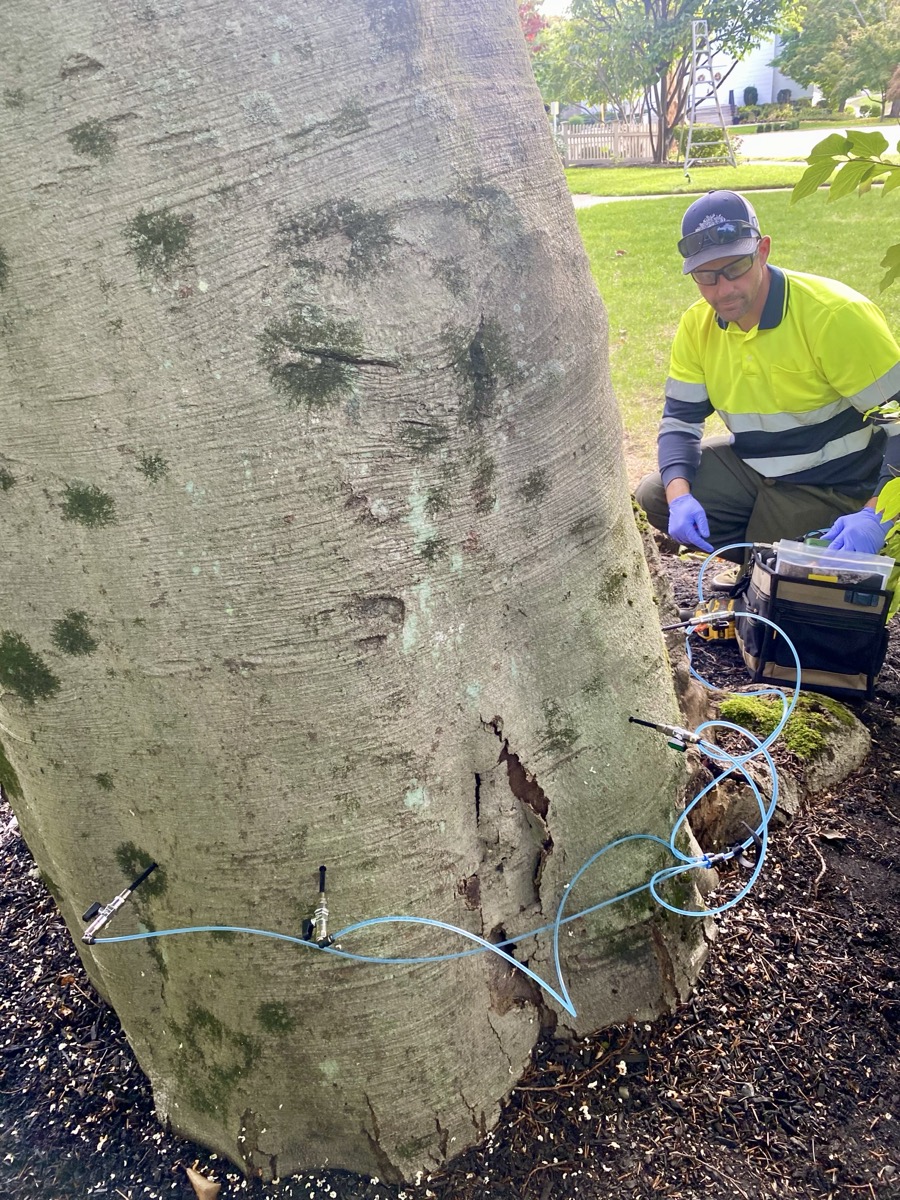
Our treatment methods are selected for effectiveness and environmental responsibility. Dormant oil sprays in late March target overwintering scale insects, mites, and winter moth eggs without affecting beneficial insects that are not yet active. Btk (Bacillus thuringiensis) — a naturally occurring bacterium — controls spongy moth and winter moth caterpillars without harming birds, bees, or other wildlife. Trunk injections deliver emerald ash borer protection and nutrient supplements directly into the tree's vascular system, bypassing the soil entirely and eliminating spray drift. Deep root fertilization injects custom-blended nutrients under pressure 8 to 12 inches below the soil surface, feeding roots directly and aerating compacted soil simultaneously.
We monitor between scheduled visits and adjust the plan as conditions change. A wet spring may increase fungal disease pressure. A drought summer may stress trees and make them vulnerable to opportunistic pests. An early warm spell may advance insect emergence by weeks. Our arborists track these conditions and respond proactively.