
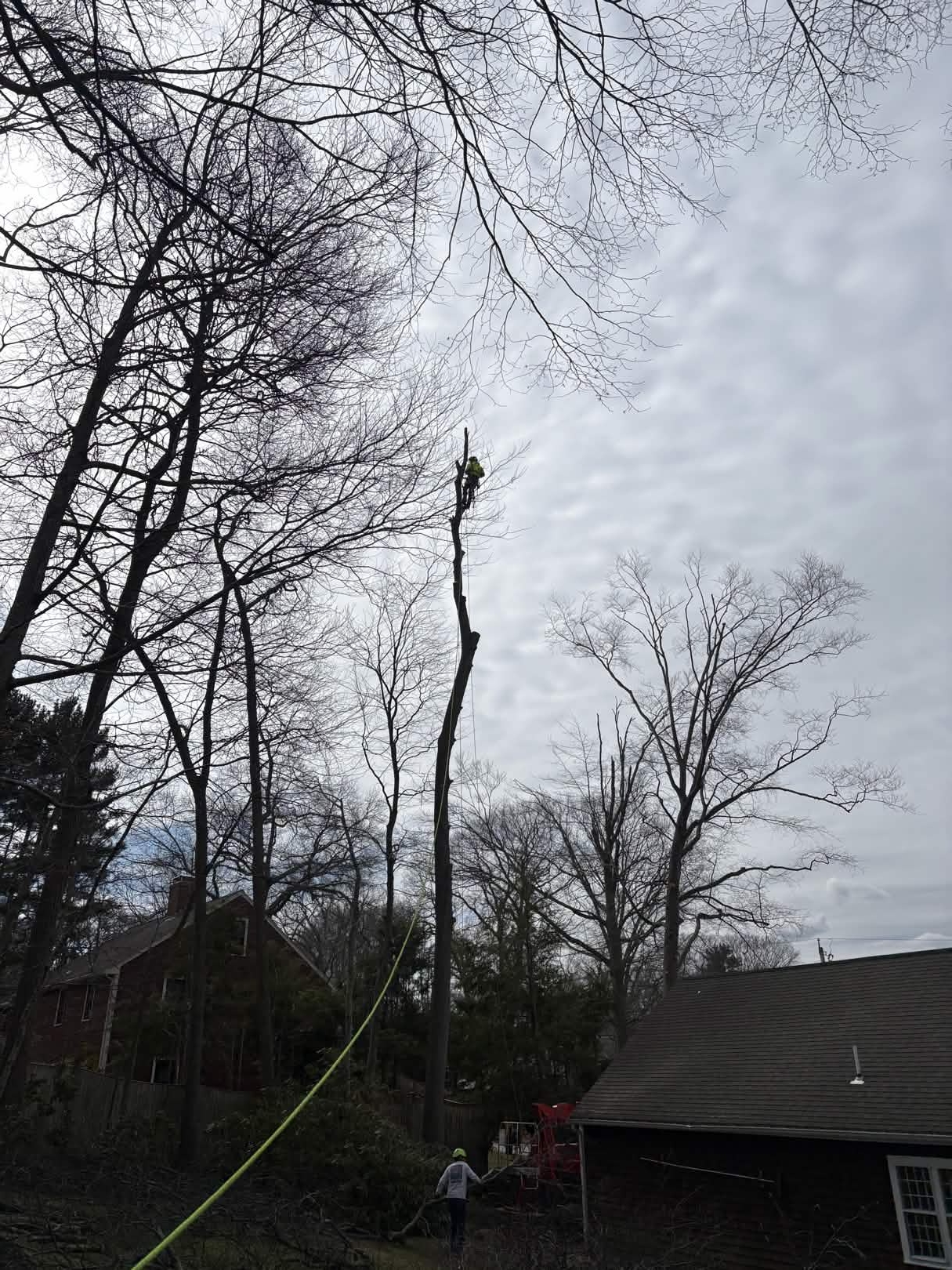
# Professional Tree Removal in Walpole, Massachusetts
If you own property in Walpole, MA 02032, your trees face unique pressures from the town's historic river corridors, conservation lands, and ongoing residential development. Southeast Arborist, LLC, based in Plymouth and Cohasset, delivers safe tree removal services across South Shore Massachusetts, including Walpole in Norfolk County. Our ISA Certified Arborists handle everything from hazardous silver maples along the Neponset River to declining green ash trees infested by emerald ash borer in neighborhoods like Walpole Center and East Walpole.
Tree removal in Walpole MA requires precision due to the area's mature canopy of red oak, white oak, sugar maple, white pine, American beech, tulip tree, and dawn redwood. These species thrive in Norfolk County's loamy soils and temperate climate—Zone 6b with average lows of -5°F and 45 inches of annual precipitation—but they develop issues like root instability in floodplain zones or storm damage from Nor'easters. Homeowners in Plimptonville or the Stone Street Area often discover leaning white pines threatening structures after heavy winds, while those in Neponset Valley contend with sycamore limbs overhanging the river.
Southeast Arborist follows ANSI A300 standards for tree care, ensuring every tree removal in Walpole prioritizes safety, property protection, and environmental stewardship. Our fully insured team uses crane-assisted removals for tall red oaks near rooftops in Fisher Street Area homes and advanced rigging for sectional dismantling in tight Common Street Area lots. We provide free estimates—call 508-369-5009 to assess your sycamore or sugar maple today.
Walpole's history as a 1659 settlement and 19th-century paper mill hub shaped its forests. Bird & Son mills in East Walpole harvested surrounding timber, leaving a legacy of second-growth woods now maturing into hazards. Francis William Bird Park, designed by the Olmsted firm in 1925, features preserved plantings of native oaks and beeches that demand expert pruning to avoid full removal. Along the Neponset River, some of Norfolk County's largest sycamores and silver maples grow in riparian zones, but flood events and erosion make them prone to failure.
For your Walpole property, tree removal isn't just about cutting down trees—it's about mitigating risks from emerald ash borer, which has decimated green ash populations since 2012, and construction pressures on wooded parcels in South Walpole. Our crane mats prevent lawn damage during removals, and we offer stump grinding add-ons to clear sites fully. Whether you're in Walpole Center preparing for a home addition or Neponset Valley clearing storm-fallen tulip trees, Southeast Arborist ensures compliance with local zoning and protects your investment.
Practical tip: Inspect your trees annually for codominant stems on red oaks, a common defect in Walpole's mature stands that leads to splitting. If you spot vertical cracks or soil heaving around white pine bases—signs exacerbated by the town's clay-loam soils—schedule a professional evaluation. Our ISA certification guarantees assessments based on science, not guesswork. With 26,000 residents relying on stable landscapes amid growth near Norwood, Medfield, Foxborough, Sharon, and Dedham, professional tree removal in Walpole MA keeps your neighborhood safe and visually appealing.
Why Walpole Properties Need Tree Removal
Walpole's combination of historic development, riverine geography, and suburban expansion creates specific tree removal needs unmatched in other Norfolk County towns. Your property in Walpole Center might host century-old sugar maples planted during the paper mill era, now suffering from girdling roots that destabilize them in the area's frost-heaving soils. Silver maples along the Neponset River in East Walpole grow aggressively with shallow roots, prone to uprooting during spring floods that swell the river to 10 feet above base flow.
Emerald ash borer has ravaged green ash trees since infesting Norfolk County in the early 2010s, leaving dead hulks in South Walpole yards that attract pests and drop limbs on power lines. In Plimptonville, white pines—reaching 80 feet in Walpole's humid, acidic soils—lean toward homes after ice storms, their heavy crowns amplifying wind sway. Red oaks and white oaks dominate Stone Street Area woodlots, but construction for new subdivisions compels lot clearing, where our sectional dismantling preserves adjacent American beeches.
Neponset Valley residents face floodplain tree instability, with sycamores developing included bark unions that fail under saturated conditions. Fisher Street Area properties near conservation lands deal with tulip trees whose brittle wood snaps in 40 mph gusts common during fall hurricanes. Common Street Area's dawn redwoods, ornamental holdovers from Bird Park influences, suffer needle scorch from road salt, necessitating removal when they encroach on driveways.
Walpole's Zone 6b climate—200 frost-free days, summer highs of 85°F, and winter Nor'easters—accelerates tree decline. Loamy soils with pH 5.5-6.5 support vigorous growth but retain moisture, fostering Armillaria root rot in sugar maples stressed by drought cycles. Preservation of Olmsted-era plantings at Bird Park highlights the need for proactive removal: overmature beeches there require cabling, but failed specimens demand full extraction to protect visitors.
River corridor management stands out in Walpole. Homeowners along the Neponset need removal of storm-damaged floodplain trees whose debris clogs culverts, exacerbating floods in low-lying East Walpole. In residential zones, crown reduction often precedes removal for large shade trees like red oaks, whose 50-foot spreads threaten foundations during the town's 15% canopy cover expansion from development.
Construction pressure hits wooded parcels hard. As Walpole grows toward nearby Norwood and Foxborough, parcels in South Walpole yield to homes, requiring stump grinding after oak removals to prevent regrowth. Practical advice: Map your trees using the town's GIS portal at walpole-ma.gov, noting species and proximity to structures. If a white pine shows 30% crown dieback or a sycamore leans 15 degrees toward your roof, prioritize removal—delays risk $10,000+ in property damage.
Our ISA Certified Arborists identify these issues during free consultations, using resistograph tools to detect internal decay in tulip trees invisible from the ground. Southeast Arborist addresses Walpole's distinct challenges, from emerald ash borer quarantines to riverbank erosion, ensuring your trees don't become liabilities.
Our Tree Removal Process in Walpole
Southeast Arborist executes tree removal in Walpole MA with a meticulous, safety-first process tailored to Norfolk County's dense neighborhoods and riverfront properties. We start with a free on-site assessment by ISA Certified Arborists, evaluating your red oak or silver maple for hazards like lean angle, trunk defects, or root plate lift—critical in Walpole's flood-prone Neponset Valley.
Step 1: Hazard Assessment (30-60 minutes). Using ANSI A300 Part 1 standards, we measure tree height, diameter at breast height (DBH), and target risk zones. For a 60-foot white pine in Plimptonville threatening a garage, we calculate drop zones and wind exposure. You'll receive a digital report with photos, decay maps from sonic tomography, and removal rationale.
Step 2: Permitting and Planning (1-3 days). We handle Walpole Conservation Commission filings for river corridor trees within 100 feet of the Neponset, ensuring compliance with Chapter 197 wetland bylaws. Crane-assisted plans include mat layouts to protect Stone Street Area lawns from 20-ton rig tracks.
Step 3: Site Preparation (Day of Service). Our crew arrives in marked trucks with traffic control signs, establishing a 1.5x tree height exclusion zone. We tarp sensitive areas like Common Street Area flower beds and notify neighbors in dense Walpole Center.
Step 4: Rigging and Sectional Dismantling. For complex jobs near Bird Park-inspired beeches, climbers ascend with bow saws and throw lines, cutting 4-6 foot sections lowered via arborist friction devices or lowering balls. This prevents sugar maple branches from impacting Olmsted plantings or historic homes.
Step 5: Crane Operations (For Heights Over 40 Feet). Deploying Grove or National Crane models with 100-foot booms, we lift entire tops from sycamores in East Walpole, swinging them over fences without ground disturbance. Operators certified by NCCCO follow OSHA 1926.1400 protocols, with spotters using two-way radios.
Step 6: Stump and Base Removal. Chainsaw the butt section flush, then grind stumps to 12 inches below grade using 36-inch Vermeer cutters—ideal for lot clearing in South Walpole developments. We backfill with native loam to match Walpole's soil profile.
Step 7: Debris Cleanup and Hauling. Chip branches on-site for mulch (offered free to residents), load trunks into 20-yard dump trailers, and magnet-sweep nails. Foundation protection uses plywood ramps during felling of leaning white oaks.
Safety protocols define us: All team members wear PFAS harnesses, hard hats with chinstraps, and carry trauma kits. We monitor weather via NOAA radar, postponing if gusts exceed 25 mph. Equipment undergoes daily ANSI inspections, with liability insurance exceeding $2 million.
For your tulip tree in Fisher Street Area, this process minimizes downtime—most jobs finish in 4-8 hours. Advanced techniques like German short rigging handle dawn redwoods in tight spaces, distributing loads below 500 pounds per line. Post-job walkthroughs confirm zero damage, with stump grinding preventing tripping hazards.
Practical tip: Clear 20-foot radii around target trees beforehand, moving patio furniture from under silver maple canopies. Call 508-369-5009 for your free estimate—our Walpole-specific process turns risky trees into reclaimed space.
Common Tree Removal Projects in Walpole Neighborhoods
Walpole's neighborhoods each present distinct tree removal scenarios tied to local geography and history. In Walpole Center, crown reduction precedes full removal of mature red oaks shading historic homes—our sectional dismantling avoids impacts on nearby Common Street Area structures.
East Walpole homeowners along the Neponset River frequently request sycamore and silver maple extractions after floods topple floodplain trees. A recent project there involved crane-lifting a 70-foot sycamore with 40-inch DBH, whose roots had eroded into the bank, threatening a dock.
South Walpole sees lot clearing for residential growth, where white oaks and white pines on developing parcels require stump grinding to prepare pads. We dismantled a 50-foot pine grove last spring, recycling chips for erosion control.
Plimptonville properties deal with sugar maples declining from verticillium wilt in the area's compacted soils—removals focus on preventing limb drop on rail-adjacent lots. Neponset Valley calls spike post-storm for unstable American beeches, their shallow roots failing in saturated riparian zones.
Fisher Street Area features green ash removals amid emerald ash borer outbreaks; we treat prophylactically with emamectin injections before extraction. Stone Street Area woodlots yield tulip trees for construction, with rigging preserving adjacent dawn redwoods.
Common Street Area prioritizes hazardous pruning turning to removals on overmature beeches near power lines. Bird Park periphery projects preserve Olmsted plantings by removing failed specimens, like a codominant tulip tree we sectioned last fall.
These projects highlight Walpole's needs: river management in East Walpole/Neponset Valley, pest control in Fisher Street, and development clearing in South Walpole/Plimptonville.
Tree Removal Costs in Walpole, MA
Tree removal costs in Walpole MA vary by species, size, location, and complexity, but Southeast Arborist provides transparent pricing for South Shore homeowners. Base rates start at $500 for a 30-foot silver maple in open Walpole Center space, climbing to $3,500+ for crane-assisted 80-foot red oaks in tight Fisher Street Area lots.
Key factors: DBH drives 40% of cost—a 24-inch white oak stump-grind included hits $1,200, while 48-inch sycamores along Neponset Valley reach $4,000 due to floodplain access. Height and lean add 20-30%; Plimptonville white pines over 60 feet require cranes at $1,500 extra.
Accessibility influences 25%: Stone Street Area drive-up jobs save $300 versus East Walpole riverbank hauls needing all-terrain gear. Species matters—brittle tulip trees demand rigging premiums, while soft green ash from emerald ash borer falls easier.
Add-ons: Stump grinding ($150-400 per stump) clears South Walpole lots fully; debris hauling ($200+) complies with town ordinances. Crane minimums ($1,000 half-day) apply to Common Street beeches near homes.
Our value: ISA Certified work prevents $20,000 foundation claims from fallen sugar maples. Free estimates detail breakdowns—no surprises. Compared to Norwood or Medfield independents, our insurance and ANSI compliance save on liability.
Practical tip: Bundle multiple trees—three East Walpole silver maples drop per-tree costs 25%. Finance via 0% promo or save with off-season scheduling. Investment returns via safer properties and higher appraisals in growing Walpole.
Call 508-369-5009 for your quote—affordable, expert tree removal in Walpole MA.
When to Schedule Tree Removal in Walpole
Schedule tree removal in Walpole during late fall (October-November) or winter (December-March), when bare canopies ease access and frozen ground supports cranes on wet Neponset Valley soils. Avoid spring mud season (March-April), as thaws compact lawns in Plimptonville.
Urgency signs demand immediate action: 20-degree leans on white pines after Nor'easters, 25% crown thinning on red oaks signaling decay, or heaving soil around silver maple bases in East Walpole floods. Emerald ash borer-infested green ashes showing D-shaped exit holes require quarantine-compliant removal year-round.
Post-storm surges hit Walpole hard—monitor forecasts and call post-event. Summer heat stresses sugar maples, making July dormant removals ideal before leaf drop.
Tip: Act before insurance deductibles; document defects for claims.
Frequently Asked Questions About Tree Removal in Walpole
**How much does tree removal cost in Walpole MA?** Costs range $500-$5,000 based on DBH, height, and access. A 40-foot sugar maple in Walpole Center runs $1,000; crane jobs for Neponset sycamores hit $3,000. Free quotes from Southeast Arborist include stump grinding options.
**Do I need a permit for tree removal in Walpole?** Yes, for river corridor trees within 100 feet of Neponset or over 10-inch DBH on conservation land. We file with Walpole Conservation Commission, expediting East Walpole approvals.
**How do I know if my tree needs removal?** Look for leans >15 degrees, deadwood >20%, fungal conks on white oaks, or emerald ash borer signs on green ash. Our ISA Arborists use decay detection for Plimptonville pines.
**Is crane removal necessary for my Walpole property?** Essential for trees over 50 feet or near structures in Fisher Street—prevents Stone Street damage. We assess free.
**What happens to the debris after tree removal?** We chip branches for mulch, haul logs, grind stumps. Recycle per Walpole bylaws.
**How long does tree removal take in Walpole neighborhoods?** 4-8 hours for most; multi-day for South Walpole groves. Weather-dependent.
**Are you insured for tree removal in Walpole MA?** Fully, with $5M coverage. Workers' comp and equipment policies protect your Common Street property.
**Can you remove trees near the Neponset River?** Yes, with erosion controls and permits for floodplain silver maples.
Tree Removal Throughout Walpole
Southeast Arborist serves all Walpole neighborhoods—Walpole Center, East Walpole, South Walpole, Plimptonville, Stone Street Area, Neponset Valley, Fisher Street Area, Common Street Area—plus nearby Norwood, Medfield, Foxborough, Sharon, and Dedham. From Bird Park preservations to riverbank cleanups, our ISA Certified team handles it.
Call 508-369-5009 for free estimates. Protect your Walpole property today.