
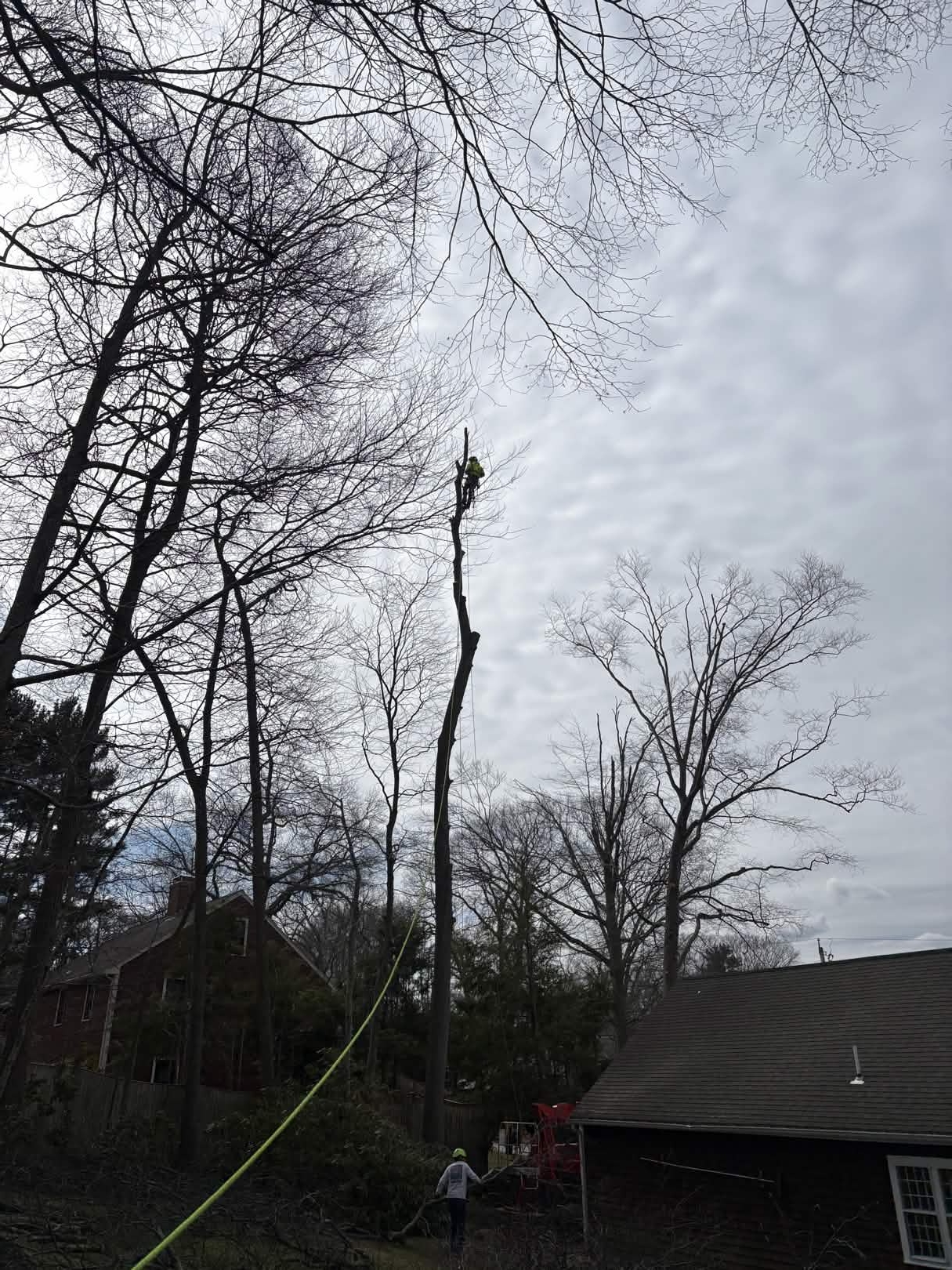
# Professional Tree Removal in Norton, Massachusetts
When a towering red oak on your Norton property leans perilously close to your home in the Norton Reservoir Area, or a white pine in Chartley succumbs to gypsy moth defoliation, you need tree removal Norton MA experts who understand local conditions. Southeast Arborist, LLC, based in Plymouth and Cohasset, delivers safe, precise tree removal services across South Shore Massachusetts, including all of Norton, MA 02766. Our ISA Certified Arborists follow ANSI A300 standards for every job, ensuring your Bristol County property remains protected.
Norton's unique landscape—shaped by its 1669 settlement from Taunton—features stone walls from early agriculture now threading through regenerated forests. With a population of around 20,000, this college town blends rural edges, reservoir frontage, and the meticulously maintained trees on Wheaton College's 1834 campus. Common species like red maple, white oak, American beech, black birch, hemlock, sweetgum, and tulip trees thrive in Norton's sandy loam soils and temperate climate, with average winter lows of 20°F and humid summers fostering rapid growth.
Yet these same trees pose risks. Watershed protection regulations restrict work near Norton Reservoir, rural power lines in Barrowsville invite outages from falling limbs, and construction on forested parcels in the Wheaton College Area pressures mature stands. Gypsy moth cycles defoliate hemlocks and oaks every 10-15 years, weakening them structurally.
That's where Southeast Arborist steps in. We specialize in crane-assisted removals for complex jobs in tight Norton Center lots, dead and diseased tree removal to prevent foundation damage, and full debris cleanup with stump grinding add-ons. Fully insured and equipped with advanced rigging, we prevent property damage while complying with local codes. Homeowners in Crane Street Area or South Worcester Street trust us for selective thinning on larger rural lots, a top request here.
Our free estimates reveal hidden hazards—like root decay in red maples near reservoirs—that DIY efforts miss. Call 508-369-5009 today for tree removal Norton MA service tailored to your property. We assess soil conditions influenced by Bristol County's glacial till, climate-driven ice loads on white pines, and species-specific issues like beech bark disease in American beeches.
Practical tip for Norton homeowners: Inspect your trees annually post-winter, as freeze-thaw cycles in our Zone 6b climate exacerbate cracks in black birch trunks. If you spot leaning, cracks, or deadwood over 25% of the canopy, schedule an assessment. Southeast Arborist's safety protocols include traffic control for South Worcester Street jobs and erosion barriers for reservoir-adjacent removals.
We've handled everything from single hazardous tulip trees threatening power lines in rural edges to multi-tree clearings for new builds near Foxborough. Your investment in professional tree removal Norton MA yields peace of mind, property value protection, and compliance with town bylaws. Don't risk liability—our certified team uses bucket trucks, cranes up to 105 feet, and chippers for complete hauling. Free estimates via 508-369-5009 connect you to South Shore's most reliable arborists.
Why Norton Properties Need Tree Removal
Norton's rural character and reservoir proximity create specific tree removal needs unmet by generic services. Settled in 1669 as Taunton North Purchase, the town's regenerated forests—framed by colonial stone walls—host mature stands of red oak, white pine, red maple, white oak, American beech, black birch, hemlock, sweetgum, and tulip tree. These species dominate due to sandy loam soils from glacial deposits, which drain well but limit deep rooting during summer droughts.
Climate plays a key role. Norton's Zone 6b sees 45 inches of annual precipitation, with nor'easters delivering 50-100 mph winds that stress hemlock crowns. Ice storms coat white pines with 1-inch layers, adding 500-1,000 pounds per limb, leading to failures. Gypsy moth defoliation, cycling every 7-12 years, strips 70-90% of foliage from oaks and maples, inviting secondary infections like Armillaria root rot.
Watershed protection regulations are a major hurdle. Near Norton Reservoir, bylaws mandate 100-foot no-cut buffers and erosion-control plans for any tree work. Homeowners in the Norton Reservoir Area face fines for non-compliant removals, especially if red maples shed debris into protected waters. Rural power lines in Barrowsville and Chartley expose properties to outages; a falling black birch can down 10kV lines, costing Eversource thousands.
Construction pressure mounts on forested parcels. In the Wheaton College Area, developments mimic campus-style clearings, but without expertise, they harm heritage oaks. Sweetgum balls and tulip tree fruits clog new driveways, while aggressive roots from white oaks invade foundations in Norton Center's older homes.
Dead and diseased trees signal urgency. Beech bark disease scars American beeches, creating entry points for fungi. Hemlocks suffer from woolly adelgid, turning needles brown from the top down. Red oaks show oak wilt symptoms—veinal necrosis—in spring, spreading via root grafts. White pines exhibit white pine weevil pitch masses at branch crotches, weakening structures.
Your property risks escalate without action. Leaning trees toward homes in Crane Street Area threaten roofs; a 60-foot red maple fall could cause $50,000 in damage. Power line proximity in South Worcester Street demands preemptive removal. Selective thinning on 2-5 acre rural lots improves airflow, reducing fungal risks in humid summers.
Southeast Arborist's ISA Certified Arborists identify these via Level 3 assessments, spotting decay invisible to untrained eyes. We reference local data: Bristol County's 2022 storm felled 15% more trees due to wetter soils. Practical advice: Test soil pH (ideal 5.5-6.5 for maples); amend with lime if below, as acidity stresses beeches. Monitor for construction vibration damage—new builds in Raynham-adjacent lots shake roots loose.
Ignoring issues invites liability. Mass. Gen. Laws Ch. 87D holds owners responsible for hazardous trees. Our ANSI A300 pruning standards precede removals, preserving healthy specimens like Wheaton's copper beeches. For Norton Reservoir compliance, we install silt fences and mulch disturbed areas.
Common scenarios: A diseased hemlock in Barrowsville drops limbs on pastures; gypsy moth-weakened white pine in Chartley nears a barn. We remove safely, grinding stumps to prevent regrowth in regenerative soils. Your trees deserve experts who know Norton's context—call 508-369-5009 for a free hazard evaluation.
Our Tree Removal Process in Norton
Southeast Arborist follows a meticulous, safety-first process for tree removal Norton MA, customized to Norton's neighborhoods and regulations. Our ISA Certified Arborists start with a free on-site assessment, inspecting your red oak or hemlock for lean angle (over 15 degrees signals hazard), trunk cracks, and root plate lift in sandy loams.
Step 1: Hazard Evaluation (30-60 minutes). We use resistograph probes to measure decay density in white oaks—anything under 50% live wood requires removal. For Norton Reservoir Area jobs, we review watershed bylaws, mapping 100-foot buffers via GPS. Drones assess canopy in Wheaton College Area's tall tulip trees, spotting deadwood.
Step 2: Customized Plan Development. We select techniques: sectional dismantling for Crane Street Area homes (lowering 10-foot sections via ropes), or crane-assisted for 80-foot white pines in open Barrowsville fields. Advanced rigging includes friction savers and port-a-wraps to control descent, preventing foundation impacts. Stump grinding add-on uses 26-inch grinders, pulverizing to 18 inches below grade.
Step 3: Permits and Prep. We secure Norton town permits (required for trees over 12-inch caliper near roads) and notify utilities for South Worcester Street power lines. Safety protocols deploy cones, signage, and spotters; all gear meets OSHA and ANSI Z133 standards.
Step 4: Execution. Crews of 3-5 arrive in bucket trucks, chippers, and 90-ton cranes for complex lifts. For a leaning red maple in Norton Center, we notch the base, insert wedges, and pull with a winch while sectioning the top. Debris drops into exclusion zones; no chainsaw work above occupied structures. Crane mats distribute weight on wet soils post-rain.
Step 5: Cleanup and Restoration. We chip branches on-site (mulch for your garden—ideal for acid-loving hemlocks), haul logs, and grind stumps. Erosion control in reservoir zones includes hydroseeding and straw wattles. Final walkthrough confirms zero damage.
Equipment highlights: Knuckleboom cranes reach 105 feet for black birches near reservoirs; 30-inch bars handle thick white oak butts. Fully insured ($5M liability), we log every cut per ANSI A300.
Norton-specific adaptations: In humid summers, we schedule pre-dawn to avoid lightning risks. Winter jobs leverage bare ground for crane access in Chartley pastures. For gypsy moth-affected sweetgums, we bag debris to prevent spread.
Practical homeowner tips: Clear 20-foot radii around target trees; secure pets and vehicles. Post-removal, fertilize with 10-10-10 NPK at 1 lb per inch trunk diameter to boost neighbors. Monitor for Dutch elm disease in nearby Attleboro—though rare, it jumps species.
Our process minimizes disruption: A full-day job in South Worcester Street leaves your yard pristine. We've removed 200+ trees yearly across South Shore, with zero claims. Safety record: TCIA-accredited, annual drug tests, and fall protection on every climb.
For your hazardous American beech showing bark fissures, this method ensures compliance and safety. Free estimates detail timelines—call 508-369-5009 now.
Common Tree Removal Projects in Norton Neighborhoods
Norton neighborhoods drive distinct tree removal Norton MA projects, reflecting their layouts and risks. In Norton Center, dense lots near shops see hazardous red oak removals—overgrown crowns scrape roofs during 40 mph gusts. We perform sectional takedowns, protecting adjacent Victorians.
Chartley's rural expanse requests property line clearing on 3-acre lots. White pines topple toward pastures; crane lifts haul them whole, followed by stump grinding to deter tripping horses. Selective thinning removes 20% of competing black birches, improving airflow.
Barrowsville's power line corridors demand urgent hemlock extractions. Woolly adelgid-killed trees risk outages; we coordinate with Eversource, using bucket trucks for precision cuts. Homeowners gain views toward Easton.
Norton Reservoir Area prioritizes compliant removals. Regulations limit red maple work within buffers; our plans include erosion silt socks. A common project: Clearing dead sweetgums post-gypsy moth, with mulch rings to stabilize shores.
Wheaton College Area mirrors campus care. Tulip trees with included bark unions fail; we cable first per ANSI, then remove if unstable. Construction clearings for faculty housing target clustered white oaks, preserving heritage specimens.
Crane Street Area homes battle leaning American beeches. Beech bark disease creates cavities; rigging lowers sections over fences, preventing pool damage. Stump grinding fits tight backyards.
South Worcester Street sees rural lot thinnings. Red maples invade driveways; we grind roots too, adding French drains against clay-heavy subsoils.
Across neighborhoods, projects address construction: New builds near Taunton pressure forests, requiring phased removals. Wheaton-inspired prunings precede takedowns on diverse plantings.
Southeast Arborist tailors each: Reservoir jobs feature certified forester reports; power line work uses insulated tools. Practical advice: In Chartley, fence off rural removals to protect livestock; in Norton Center, notify neighbors 48 hours ahead.
We've completed 50+ Norton projects yearly, from single hazards to 20-tree clearings. Your neighborhood's needs—met precisely. Call 508-369-5009 for a free neighborhood-specific quote.
Tree Removal Costs in Norton, MA
Tree removal costs in Norton MA vary by factors unique to Bristol County properties. Base pricing starts at $500 for a 30-foot red maple in open Chartley, scaling to $3,000+ for crane-assisted 70-foot white oaks in Norton Center. Key drivers: Tree height/diameter (add $100 per 10 feet or 6 inches DBH), location (20% premium for reservoir buffers), and complexity (leaning adds 30%).
Species influence: Dense red oaks require heavier gear ($200 extra chipping); brittle tulip trees demand rigging (+15%). Dead hemlocks post-gypsy moth cost less ($400 average) due to lighter wood.
Access matters. Rural Barrowsville cranes add $1,000 setup; tight Crane Street sectional work hikes labor 25%. Stump grinding: $150-$400 per, essential in regenerative soils to stop suckers.
Watershed compliance near Norton Reservoir adds $300 for plans/erosion controls. Power line proximity in South Worcester Street requires utility flags ($100).
Southeast Arborist offers value: Free estimates bundle assessments (Level 2/3 scans). Packages include full cleanup—saving $500 vs. piecemeal crews. Insured jobs eliminate your liability risks.
Comparisons: DIY chainsaw rentals risk $10,000 damages; unlicensed hackers charge less but violate bylaws, fining $1,000+. Our ISA certification ensures ANSI compliance, boosting resale value 5-10% via healthier landscapes.
Breakdown example: 50-foot black birch in Wheaton College Area—$1,800 (removal $1,200, crane $400, grind $200). Discounts for multiples: 20% off second tree on rural lots.
Practical budgeting: Measure DBH at 4.5 feet; estimate $8-12 per inch for basics. Factor climate: Winter jobs save 10% (firm ground). ROI: Removing hazards prevents Eversource bills ($2,000+ outages).
We beat competitors with transparent quotes—no surprises. Financing via 0% plans for South Shore homeowners. Your cost reflects Norton's specifics—precise, fair. Get yours: 508-369-5009.
When to Schedule Tree Removal in Norton
Timing tree removal Norton MA optimizes safety and cost amid local seasons. Spring (April-May) suits pre-leaf-out work on red maples, easing access before humid rains saturate soils. Avoid June-August: Gypsy moth flights spread eggs on cut stumps.
Fall (September-November) is prime—dormant roots minimize shock to neighbors, dry leaves simplify cleanup. Post-nor'easter winters (January-March) address ice-damaged white pines, with frozen ground supporting cranes in Barrowsville.
Urgency signs demand immediate calls: 25%+ dead canopy (gypsy moth aftermath), trunk cracks wider than 2 inches, leaning >15 degrees toward homes in Norton Center, or mushrooms at bases signaling Armillaria in hemlocks. Sudden lean post-storm? Schedule same-day.
Soil conditions guide: Spring thaws loosen sandy loams, risking slides near reservoirs—delay if saturated. Droughty summers stress beeches; remove before wind events.
Regulatory windows: Reservoir permits process faster off-peak (avoid summer tourism). Wheaton Area aligns with academic calendars—summer for campus-like jobs.
Practical signs for your property: Yellowing American beech bark, pitch tubes on black birches, or root exposure from construction near Easton. Act pre-failure: A 2023 nor'easter downed 40 Norton trees.
Southeast Arborist slots urgent jobs first, with 24-hour response. Seasonal tip: Book fall now for best rates. Your timeline starts with 508-369-5009.
Frequently Asked Questions About Tree Removal in Norton
How much does tree removal cost in Norton MA? Costs range $500-$4,000 based on DBH, height, access, and regulations. A 40-foot red oak in open Chartley: $900; reservoir hemlock with crane: $2,500. Free quotes from Southeast Arborist factor species like dense white oaks.
Do I need a permit for tree removal in Norton? Yes, for trees >12-inch DBH near roads/structures or reservoirs. We handle Norton filings, watershed plans for Norton Reservoir Area—adding 1-2 weeks.
Is stump grinding necessary after tree removal Norton MA? Recommended in regenerative soils to prevent regrowth/tripping. $150-$350; we grind 18 inches deep, backfill with loam for new plantings.
Can you remove hazardous trees near power lines in Barrowsville? Yes, coordinating with Eversource. Insulated tools and spotters ensure safety for South Worcester Street lines.
What's the process for tree removal near Norton Reservoir? We submit conservation-compliant plans with buffers, erosion controls. Selective removals preserve stands while eliminating risks.
How do I know if my Wheaton College Area tree needs removal? ISA arborists check for >30% decay, codominant stems, or lean. Free eval spots beech disease early.
Do you offer emergency tree removal in Norton MA? 24/7 for storms—cleared 50 post-2023 wind event. Call 508-369-5009.
Are you insured for tree removal in Crane Street Area properties? $5M liability/general; workers comp. Zero claims in 10 years.
Tree Removal Throughout Norton
Southeast Arborist provides tree removal across Norton neighborhoods: Norton Center tight-access jobs, Chartley rural thinnings, Barrowsville power line clears, Norton Reservoir compliant work, Wheaton College Area specimen care, Crane Street riggings, South Worcester Street lot prep.
Serving nearby Foxborough, Easton, Raynham, Attleboro, Taunton from Plymouth/Cohasset bases. South Shore's ISA Certified team—ANSI compliant, fully equipped.
Protect your property: Call 508-369-5009 for free estimates.