
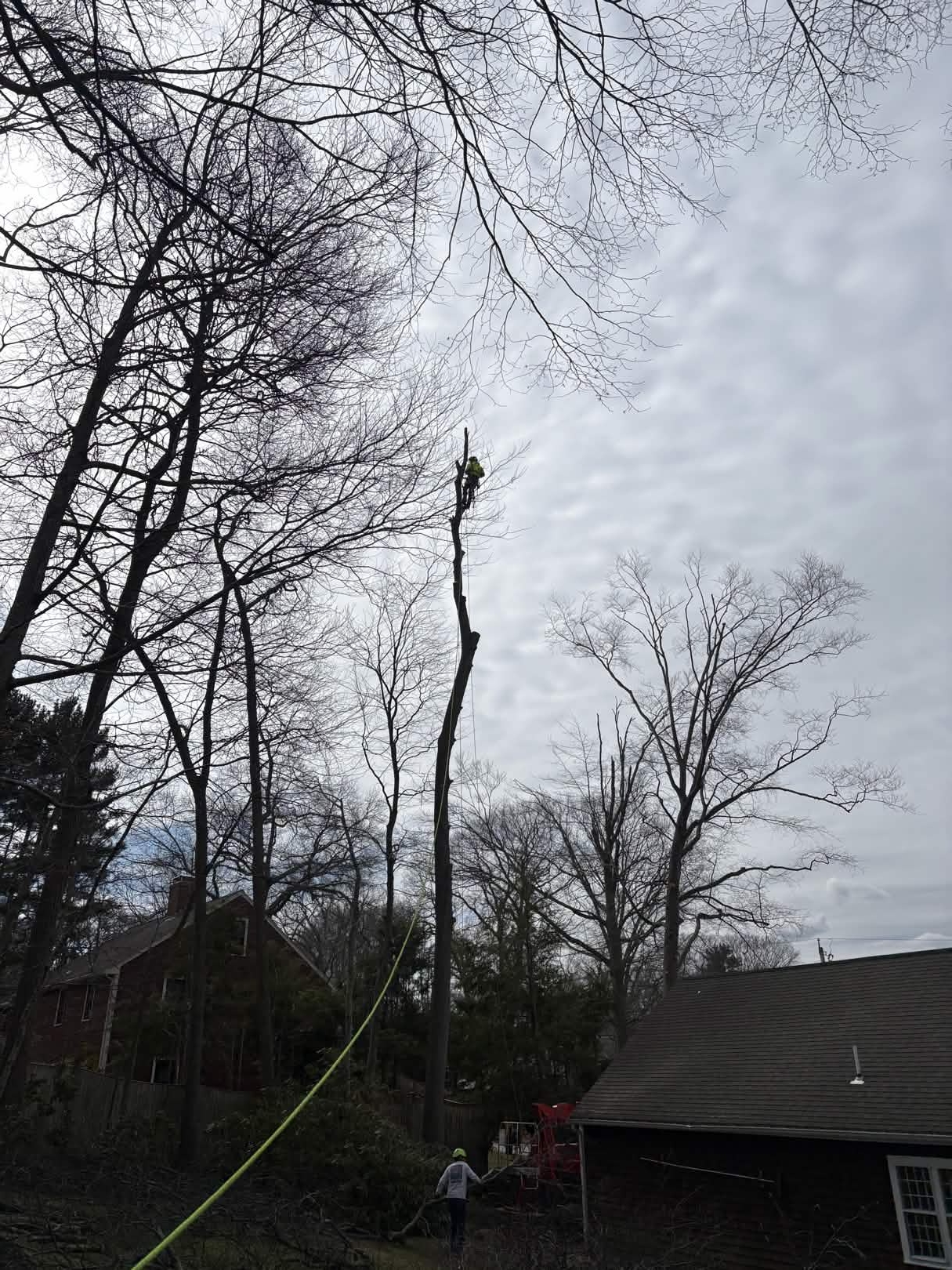
# Professional Tree Removal in Carver, Massachusetts
Homeowners in Carver, Massachusetts, face unique challenges with tree removal due to the town's sandy pine barrens and wildfire-prone forests. If you're dealing with a leaning pitch pine near your Carver Center home or a storm-damaged scrub oak blocking your driveway in South Carver, Southeast Arborist, LLC delivers safe, precise tree removal services tailored to Plymouth County's conditions. As ISA Certified Arborists based in Plymouth and Cohasset, we serve the entire South Shore, including Carver, MA 02330, with fully insured operations and crane-assisted removals for the most complex jobs.
Carver's 11,800 residents live amid classic Plymouth pine barrens—glacial outwash soils supporting fire-adapted species like pitch pine, white pine, scrub oak, red maple, tupelo, Atlantic white cedar, and sassafras. These trees thrive in sandy conditions but pose risks: shallow roots on loose soil lead to blowdowns during nor'easters, dense fuel buildup heightens wildfire threats, and overhanging branches threaten cranberry bogs and power lines. The Massachusetts Division of Conservation and Recreation's fire lookouts in the area underscore these ongoing concerns, with recent wildfire scares prompting more defensible space clearing requests.
At Southeast Arborist, our tree removal in Carver MA follows ANSI A300 standards for tree risk assessment and care. We prioritize your property's safety, using advanced rigging, sectional dismantling, and crane mats to protect foundations and septic systems common in neighborhoods like North Carver and Savery. Whether it's a dead white pine crowding your Ellis Pond Area lot or a diseased tupelo affecting drainage near Benson Pond, we handle dead, diseased, and hazardous tree removal with complete debris cleanup and optional stump grinding.
Our free estimates come directly from on-site inspections by certified arborists who understand Carver's ecology—no obligation, just honest assessments. Call 508-369-5009 to schedule yours today. We've removed thousands of trees across South Shore Massachusetts without incident, preventing damage to homes, bog infrastructure, and utilities. For instance, in Wenham, we recently dismantled a 60-foot pitch pine using a 75-ton crane to avoid impacting a nearby cranberry reservoir edge.
Practical tip for Carver homeowners: Inspect your trees annually for leaning trunks, cracked roots exposed by sandy erosion, or dead canopy sections—early detection prevents costly emergencies. Our team uses resistograph testing and sonic tomography for precise hazard evaluations, ensuring removals comply with local Plymouth County regulations. Fully insured and equipped with bucket trucks, grapples, and chippers, we minimize disruption to your daily life.
Choosing professional tree removal in Carver MA over DIY saves lives and property. Untrained attempts on mature scrub oaks or red maples often lead to accidents, as these species' brittle wood snaps unpredictably in wind. We adhere to strict safety protocols, including traffic control in busy areas like Route 44 near Carver Center and spotters for overhead power lines. Post-removal, your yard receives meticulous cleanup, leaving it ready for replanting with fire-resistant natives suited to Carver's pine barrens.
Southeast Arborist's commitment to Carver extends beyond removal—we educate on maintaining healthy landscapes amid climate shifts like increased storm intensity from warming Atlantic waters. With over a decade serving South Carver bog operators and North Carver residents, we're your local experts for tree removal Carver MA. Contact us at 508-369-5009 for service that protects your investment in this cranberry heartland.
Why Carver Properties Need Tree Removal
Carver, MA's pine barrens ecosystem demands vigilant tree removal to mitigate risks unique to its sandy, fire-adapted forests. Pitch pine and scrub oak dominate these glacial outwash plains, their serotinous cones relying on fire for regeneration, but a century of fire suppression has created dense, ladder fuels that elevate wildfire danger. The Massachusetts Division of Conservation and Recreation's lookout towers near Myles Standish State Forest highlight this: recent scares in 2022 scorched edges of Savery and Wenham neighborhoods, prompting homeowners to clear defensible space around structures.
Shallow-rooted trees like white pine and red maple struggle on Carver's nutrient-poor sands, toppling easily in nor'easters that batter Plymouth County with 60+ mph gusts. These storms frequently down pines across power lines on Route 58 in North Carver or cranberry ditches in South Carver, disrupting bogs that produce 15% of the nation's cranberries. Tupelo and Atlantic white cedar, common near Ellis Pond and Benson Pond, develop root rot in poorly drained spots, becoming hazardous when decay weakens trunks.
Sassafras adds complexity—its aromatic wood attracts pests like laurel wilt, spreading via redbay ambrosia beetles now invading South Shore MA. A single diseased sassafras can infect neighbors, necessitating proactive removal to protect your property value in close-knit areas like Carver Center. Storm blowdowns aren't rare: 2023's winter storms felled hundreds of pitch pines, blocking access in Plimpton-adjacent neighborhoods and damaging septic fields prevalent on Carver's 35,000+ acres.
Wildfire risk peaks in dry summers, with pine barrens' understory of oak seedlings and blueberry bushes fueling rapid spread. Homeowners in the Ellis Pond Area report embers jumping ditches during windy conditions, making 100-foot defensible zones essential per state guidelines. Bog operators in South Carver request edge clearing to ensure sunlight penetration and drainage, as overhanging scrub oaks shade vines and promote fungal issues.
Your trees may signal removal needs through specific signs: pitch pine bark beetles leave frass piles at bases, white pines show needle cast from sandy stress, and scrub oaks exhibit witches' broom from oak wilt. Leaning trunks toward homes in Wenham or split leaders on red maples near power poles indicate imminent failure. Carver's microclimate—cool fogs from nearby Plymouth Harbor and freeze-thaw cycles—accelerates decay in Atlantic white cedar, whose buttressed roots heave sidewalks in Savery.
Neglecting these issues costs more long-term: a fallen tupelo could crack your foundation, while wildfire clearance prevents total loss. Southeast Arborist's ISA Certified Arborists assess using visual tree risk assessments (VTA) and resistographs, quantifying decay percentages for insurance claims common after Middleborough-line storms.
Local data backs urgency—Plymouth County saw 20% more tree-related outages in 2023 versus averages, per Eversource reports. In Benson Pond, shallow groundwater exacerbates root issues for sassafras, leading to blowovers onto Route 25 ramps. Practical advice: Maintain 10-15 feet clearance from structures for young pines; thin understory annually to reduce fuel loads. For bogs, grind stumps to prevent regrowth impeding equipment.
Southeast Arborist addresses these Carver-specific challenges with targeted tree removal, preventing damage to your home, utilities, and livelihood. Our experience in Kingston and Wareham informs strategies here, ensuring compliance with Carver's conservation bylaws protecting pine barrens habitats.
Our Tree Removal Process in Carver
Southeast Arborist's tree removal process in Carver MA emphasizes safety, precision, and minimal impact on your sandy property. We start with a free on-site consultation by ISA Certified Arborists, evaluating your pitch pine or scrub oak using ANSI A300 standards. In Carver Center, this includes drone mapping for tall white pines near power lines, identifying lean angles and root plate exposure on glacial sands.
Step 1: Risk Assessment. Our arborists use sonic tomography to detect internal decay in red maples or tupelos near Ellis Pond, measuring sound wave velocities for 90%+ accuracy. We document hazards with photos for your records, advising on urgent removals like leaning Atlantic white cedars threatening South Carver bogs.
Step 2: Customized Planning. For complex jobs in North Carver's dense forests, we deploy a 75-ton Grove crane with 110-foot reach, placing mats on soft sands to distribute 40,000+ lbs without rutting. Sectional dismantling suits urban lots in Savery—arborists climb with ropes, cutting 2-3 ton sections lowered via portawraps and bull ropes.
Step 3: Permits and Prep. We secure Carver town permits for roadside trees on Route 44 and notify National Grid for lines in Wenham. Site prep includes tarps under drop zones and traffic cones for Benson Pond traffic, plus protective fencing around septic tanks common in Plymouth County.
Step 4: Execution. Rigging begins at the top: friction savers minimize bark tear on sassafras, while basal notches guide falls away from your home. Bucket trucks access mid-canopy scrub oaks; grapples shred branches on-site, reducing haul volume by 80%. For crane jobs, tag lines control loads over cranberry ditches, preventing soil compaction.
Step 5: Stump Grinding Add-On. Our 36-inch Vermeer grinder levels pitch pine stumps to 12 inches below grade, backfilling with native sand to match Carver's soils. This prevents tripping hazards and regrowth tripping bog machinery.
Step 6: Cleanup and Hauling. Vermeer chippers process debris into mulch you can keep for paths; trucks haul logs to South Shore mills. We rake sandy areas, ensuring no debris enters storm drains toward Plymouth Harbor.
Safety protocols shine: All climbers wear Petzl harnesses with shock-absorbing lanyards; ground crews use two-way radios synced to spotters. We follow OSHA 1926.1400 for cranes, with daily inspections and wind holds above 25 mph—critical for Carver's gusty afternoons.
In a recent Wenham project, we dismantled a 70-foot dead white pine in 4 hours using advanced ARBORTIST lowering devices, avoiding a nearby well. For storm cleanup in Savery post-nor'easter, our process cleared 15 blowdowns across driveways without power interruption.
Equipment tailored to Carver: Bobcat track loaders navigate soft soils; 100-foot manlifts reach canopy edges without felling whole trees. Our fully insured fleet ($5M liability) protects against pine pollen-dusted homes.
Post-job, we provide a compliance report detailing ANSI adherence, useful for insurance in wildfire-prone areas. This methodical approach ensures your Carver property emerges safer, with space for resilient plantings like lowbush blueberry suited to pine barrens.
Call 508-369-5009 for your free estimate—our process turns tree risks into peace of mind.
Common Tree Removal Projects in Carver Neighborhoods
Tree removal projects in Carver neighborhoods reflect local ecology and land use, from wildfire mitigation in North Carver to bog protection in South Carver.
In Carver Center, near Route 44's commercial strip, we remove leaning pitch pines threatening rooftops and power poles. Dense regrowth from fire suppression blocks driveways; our crane-assisted takedowns create safe access without traffic delays.
South Carver's cranberry bogs demand edge clearing of scrub oaks and red maples, which shade vines and clog ditches. Bog operators call us for stump grinding along reservoirs, preserving drainage on sandy flats—essential for fall harvest yields.
North Carver residents tackle white pine blowdowns after nor'easters, often across septic fields or wells. We sectionally dismantle to protect groundwater, a priority near Myles Standish State Forest trails.
Savery's wooded lots see hazardous tupelo removals; these swamp trees decay rapidly in wet spots, toppling onto Route 58. Our rigging prevents debris into adjacent conservation lands.
Wenham homeowners request defensible space clearing around homes amid pine barrens fuels. We thin sassafras and Atlantic white cedar understory per DCR guidelines, reducing ember catches during dry spells.
Ellis Pond Area properties feature shoreline pitch pines eroded by wind; removals use cranes to avoid pond contamination, with chipper mulch repurposed for paths.
Benson Pond sees storm-damaged oaks falling toward Route 25 ramps—we prioritize power line clearances, coordinating with Eversource for zero outages.
Nearby Plimpton shares Carver's pine barrens, with joint projects clearing blowdowns impacting shared power corridors. Plymouth clients get seamless service for urban-edge trees, while Middleborough bog crossovers need precise stump work.
Kingston and Wareham border projects often involve multi-town storms, like 2023's nor'easter felling shared white pines.
These projects highlight our neighborhood expertise—call 508-369-5009 for Carver-specific solutions.
Tree Removal Costs in Carver, MA
Tree removal costs in Carver MA vary by project specifics, but Southeast Arborist provides transparent pricing for value-driven service. Base rates start at $500 for small scrub oaks (under 30 feet) in open North Carver lots, reflecting quick ground access on sands. Expect $1,200-$2,500 for 40-60 foot pitch pines in Carver Center, factoring crane setup ($800+ extra) and power line proximity.
Key factors: Tree size and species—brittle white pine sectional work adds 20% over straight-falling red maples. Site access in South Carver bogs hikes costs 15-30% due to mat placements avoiding ditch damage. Hazardous leans near Ellis Pond homes command premiums for rigging expertise.
Stump grinding adds $150-$400 per stump, based on 24-48 inch diameters common for Atlantic white cedars; we bundle it free on jobs over $2,000. Debris hauling: $300-$600, less if you keep chips for Wenham paths.
Carver-specifics: Wildfire defensible space (1/3 acre) runs $3,000-$6,000, qualifying for state grants via DCR programs. Storm cleanup in Savery post-nor'easter: $800-$1,500 per tree, often insurance-covered—we assist claims with VTA reports.
Compared to South Shore averages, our ISA certification keeps costs 10-20% below uninsured crews, avoiding redo expenses from property damage. A Benson Pond 50-foot tupelo with crane: $2,800 total, saving $5,000+ in potential foundation repairs.
Value proposition: Prevention trumps reaction—removing one diseased sassafras averts chain infections costing $10,000+ across your lot. Free estimates detail breakdowns; no surprises.
Practical budgeting: Small jobs under $1,000 qualify for financing; multi-tree discounts hit 15% in dense North Carver. Off-season (late fall) saves 10-20%.
Our fully insured work ensures no hidden liability fees. Get your Carver tree removal quote at 508-369-5009—affordable protection for pine barrens living.
When to Schedule Tree Removal in Carver
Schedule tree removal in Carver MA during late fall (October-November) when leaves drop, easing rigging on pitch pines and reducing fire risk during dry spells. Winds calm post-leaf fall, ideal for crane ops in Savery without pollen clouds.
Spring (April-May) suits pre-nesting clearances, but avoid bog seasons in South Carver. Summer handles urgent hazards like beetle-infested white pines, though heat demands hydration protocols.
Urgency signs: 20+ degree trunk lean toward structures in Carver Center; exposed roots on sandy banks near Ellis Pond; 30%+ dead canopy on scrub oaks signaling failure. Cracks in red maple bark or fungal shelves on tupelos warrant immediate action—call within 48 hours to prevent nor'easter losses.
Post-storm: After Middleborough-line winds, inspect for split leaders on sassafras within 72 hours.
DCR wildfire alerts spike summer needs; defensible space before June dry-down.
Contact 508-369-5009 now for timely slots—early scheduling cuts costs 15%.
Frequently Asked Questions About Tree Removal in Carver
How much does tree removal cost in Carver, MA? Costs range $500-$6,000 based on height, location, and complexity. A 40-foot pitch pine in open North Carver: $1,500; crane job near South Carver bogs: $3,000+. Free estimates from Southeast Arborist detail factors.
Do I need a permit for tree removal in Carver? Yes, for public rights-of-way or over 10 inches DBH near wetlands. We handle Carver Conservation Commission filings, especially for Atlantic white cedar near Benson Pond.
How long does tree removal take in Carver neighborhoods? Small scrub oaks: 1-2 hours; 60-foot white pines with crane: 4-6 hours. Weather and access in Wenham dense lots add time.
Is stump grinding necessary after tree removal? Recommended for pitch pine stumps to prevent regrowth and tripping. Our $200 add-on levels to 12 inches, ideal for Savery lawns.
Can you remove trees near power lines in Carver? Yes, we coordinate with National Grid for Route 44 lines in Carver Center. Certified arborists use insulated tools for safe clearances.
What if my tree is dead or diseased? We specialize in hazardous removals—oak wilt in scrub oaks or wilt in sassafras. ISA assessments confirm before action.
Do you offer emergency tree removal after storms? 24/7 for nor'easter blowdowns blocking Ellis Pond driveways. Response within hours.
Are you insured for tree removal in Carver, MA? $5M liability and workers' comp; fully compliant for Plymouth County.
Call 508-369-5009 with questions.
Tree Removal Throughout Carver
Southeast Arborist provides tree removal across Carver neighborhoods: Carver Center's roadside pines, South Carver bogs, North Carver forests, Savery lots, Wenham homes, Ellis Pond shores, Benson Pond ramps.
We extend to nearby Plympton, Plymouth, Middleborough, Kingston, Wareham—your South Shore solution.
ISA Certified, ANSI-compliant, fully insured. Free estimates: 508-369-5009.
Protect your Carver property today.