
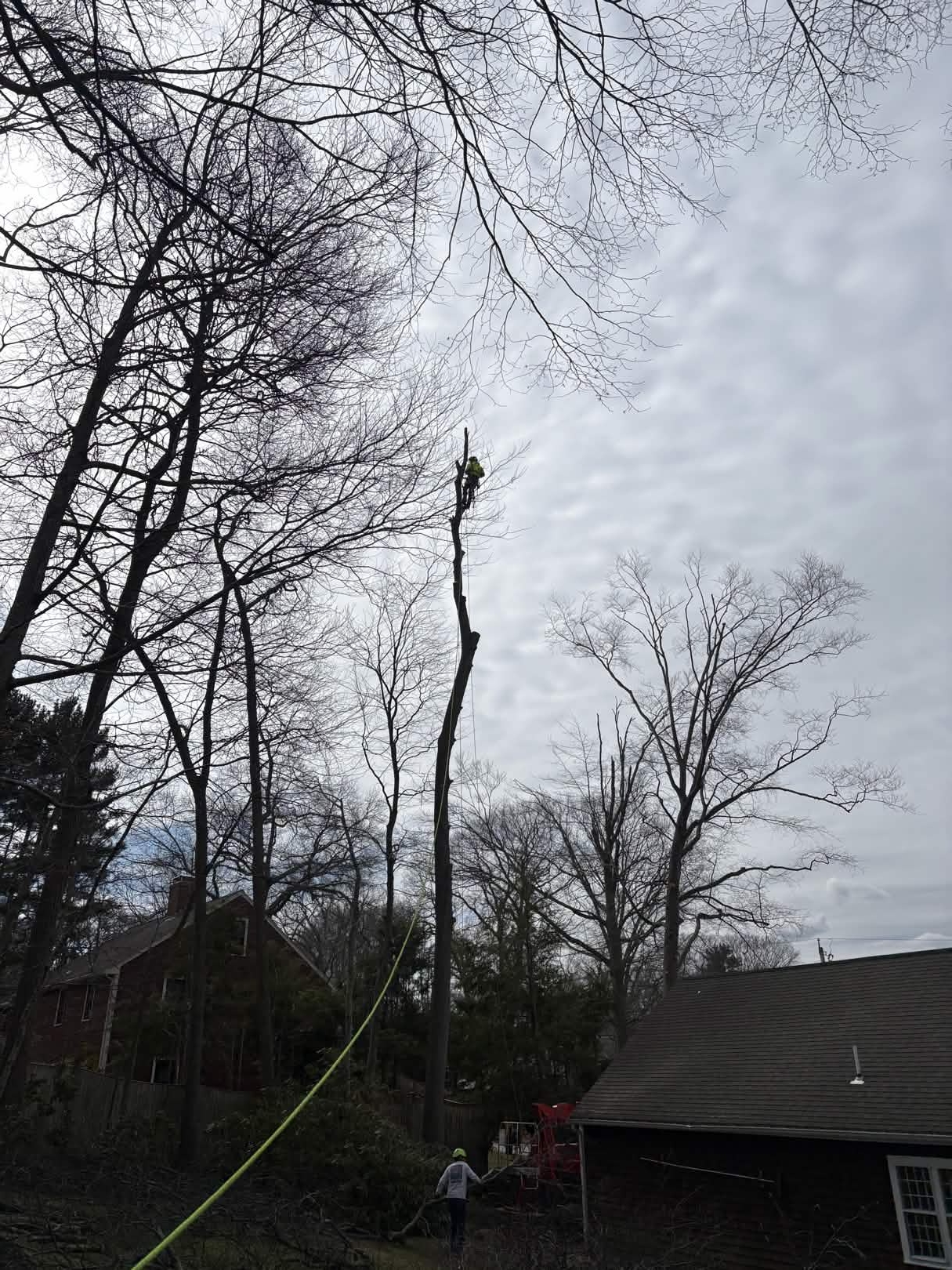
# Professional Tree Removal in Bridgewater, Massachusetts
If you own a home in Bridgewater, MA 02324, your property likely features mature trees like red maples and swamp white oaks that thrive in the town's wetland-bordered residential areas. These trees enhance curb appeal and provide shade, but saturated soils around the Taunton River and Hockomock Swamp often lead to root instability, making tree removal in Bridgewater MA a critical service for safety. Southeast Arborist, LLC, your local ISA Certified Arborists based in Plymouth and Cohasset, delivers safe, crane-assisted tree removal tailored to Plymouth County's unique challenges.
Bridgewater's history as a college town settled in 1656 shapes its tree landscape. Original hardwood forests gave way to farming and iron smelting, but the Town Common preserves some of Plymouth County's oldest shade trees, including American elms that resisted Dutch elm disease. Today, with a population of 28,000, neighborhoods from Bridgewater Center to Lake Nippenicket face issues like aggressive wetland species encroachment and aging street trees with structural decay. Ice storms exacerbate these problems, toppling willows and pin oaks weakened by poor drainage.
As South Shore Massachusetts experts, we handle dead, diseased, and hazardous tree removal with full insurance and ANSI A300 standards compliance. Our crane-assisted removals prevent foundation damage on properties near river corridors, while complete debris cleanup and optional stump grinding restore your yard. Homeowners in Scotland or Titicut call us for sectional dismantling of sugar maples with co-dominant stems, ensuring minimal disruption.
Practical advice for Bridgewater residents: Inspect your white pines and river birches after heavy rains—look for leaning trunks or soil uplift at the base, signs of root failure in saturated soils. We offer free estimates at 508-369-5009, assessing risks from Hockomock Swamp's red maple swamps that encroach on edges of Pratt Town and Stanley Heights.
Choosing professional tree removal in Bridgewater MA protects your investment. DIY attempts risk power line contact or property damage, common in this wetland-heavy area. Our advanced rigging lowers sections precisely, even over rooftops in the South Street Area. With decades serving Plymouth County, Southeast Arborist prioritizes your safety and property integrity.
This guide details why your Bridgewater trees may need removal, our precise process, neighborhood-specific projects, costs, timing, and FAQs. Whether a single hazardous willow by Lake Nippenicket or multiple dead elms on historic streets, contact Southeast Arborist at 508-369-5009 for expert service.
Why Bridgewater Properties Need Tree Removal
Bridgewater's Plymouth County location exposes trees to saturated soils and wetland influences that demand frequent tree removal services. The Hockomock Swamp to the north creates one of southeastern Massachusetts' largest red maple swamp forests, where fast-growing red maples encroach on residential edges, shading homes and clogging drainage in neighborhoods like Titicut and Scotland. These trees develop shallow roots in waterlogged clay-loam soils, becoming unstable during nor'easters.
Common tree species in Bridgewater amplify these risks. Red maples dominate wetland borders, their aggressive growth overwhelming properties near the Taunton River. Swamp white oaks in Bridgewater Center provide majestic shade but suffer structural decay from decades of ice loading and wet feet. American elms on the Town Common, among Plymouth County's oldest, show co-dominant stems prone to splitting. Sugar maples in Pratt Town crack under heavy snow, while white pines in Stanley Heights lean from wind exposure and root rot.
Pin oaks and river birches line South Street Area homes, but saturated conditions cause basal decay, especially after Bridgewater's frequent floods. Willows near Lake Nippenicket weep into foundations, their fibrous roots failing in anaerobic soils. Aging street trees throughout the town exhibit decay pockets from storm damage, a signature issue since the area's hardwood clearance in the 17th century.
Local climate intensifies problems: Average annual rainfall exceeds 48 inches, with winter ice storms sheering branches from overloaded white pines. Spring thaws destabilize roots, leading to sudden failures. Homeowners in East Bridgewater-adjacent areas or Raynham borders face similar threats from shared wetland hydrology.
Encroachment from Hockomock Swamp pushes wetland species into yards, requiring selective clearing. In wetland-edge properties, red maples and swamp oaks block sunlight and impede septic systems. Structural issues plague historic trees—pruning alone can't fix internal decay detected via tomography.
Practical steps for your property: Walk your yard post-rain, checking for mushrooms at white pine bases (indicating rot) or cracks in pin oak bark. Test soil drainage by digging a foot-deep hole; if water pools after 24 hours, roots suffer. Monitor American elms for yellowing leaves signaling disease resurgence.
Without intervention, hazards escalate. A failing sugar maple in Titicut could crash onto a home during a gust, while willow debris clogs Lake Nippenicket stormwater drains. Southeast Arborist's ISA Certified Arborists identify these via visual assessments and resistograph probes, preventing disasters.
Bridgewater's college town vibe means dense housing near Bridgewater State University, where street trees overhang driveways. Ice storm damage from 2010s events left legacies of weak limbs. Proactive tree removal in Bridgewater MA safeguards families, utilities, and infrastructure in Middleborough-adjacent zones.
Our service addresses these precisely: Dead tree removal for elms killed by girdling roots, diseased willow extractions, and hazardous red maple takedowns. Fully insured, we mitigate foundation risks in saturated zones, hauling debris to comply with Bridgewater bylaws.
Our Tree Removal Process in Bridgewater
Southeast Arborist follows a meticulous, safety-first process for tree removal in Bridgewater MA, leveraging ISA certification and ANSI A300 standards. We start with a free on-site assessment at 508-369-5009, evaluating your red maples or swamp white oaks against local soil saturation and wind patterns.
Step 1: Risk Assessment. Our arborists inspect for root instability in Hockomock Swamp-influenced soils, using levels for lean detection and hammers for decay sounding. In Bridgewater Center, we scan American elms for Dutch elm scars; near Lake Nippenicket, we probe willow roots. Drones survey tall white pines in Stanley Heights, mapping drop zones.
Step 2: Planning and Permits. We review Bridgewater conservation bylaws for wetland trees, securing approvals for Titicut properties near the Taunton River. Crane needs are calculated—essential for 80-foot sugar maples over rooftops. Property owners receive a detailed plan outlining rigging, cuts, and protection for lawns in saturated areas.
Step 3: Site Preparation. Teams arrive with traffic control for street trees in Scotland, padding foundations in Pratt Town. We tarp sensitive zones to prevent soil compaction in clay-heavy soils.
Step 4: Crane-Assisted Setup (for complex jobs). Our 100-ton crane, operated by certified riggers, lifts sections from pin oaks near power lines. In South Street Area, it positions over houses, eliminating ground impact.
Step 5: Sectional Dismantling. Climbers ascend via throw lines, starting from the top. For co-dominant stemmed river birches, we use advanced rigging—lowering 500-pound limbs via port-a-wraps. Friction savers minimize bark tears on live edges. Dead wood is notched first, directing falls away from structures.
Step 6: Base Removal. Once topped, we fell the stump section with precise backcuts, considering root spread in wet soils. Chainsaws feature low-vibration bars for endurance.
Step 7: Stump Grinding Add-On. Our 35-horsepower grinders pulverize stumps to 12 inches below grade, ideal for red maple regrowth prevention in wetland edges. We backfill with native soil mix.
Step 8: Cleanup and Hauling. Chippers process branches into mulch (available for your use), while trucks haul logs and debris. We rake meticulously, restoring your Bridgewater yard.
Safety protocols shine: All crew wear PPE, with spotters monitoring for ice storm-weakened limbs. Ground crews use escape routes mapped for Pratt Town's tight lots. We coordinate with National Grid for overhead lines, common in Bridgewater.
Equipment tailored to Bridgewater: Bucket trucks access street elms; grapples handle swamp oak masses. For saturated access, we deploy tracked mini-loaders.
This process prevents damage—crucial near foundations in flood-prone zones. A recent Titicut job removed a leaning white pine threatening a septic; crane precision saved $10,000 in repairs.
Homeowners benefit from transparency: Real-time updates via photos, post-job reports detailing ANSI compliance.
Our South Shore base ensures rapid response, from West Bridgewater to Raynham. Trust Southeast Arborist for tree removal that respects Bridgewater's historic trees while prioritizing safety.
Common Tree Removal Projects in Bridgewater Neighborhoods
Bridgewater neighborhoods present distinct tree removal needs, driven by topography and history. In Bridgewater Center, historic street trees like large American elms and sugar maples require pruning-resistant removals due to decay pockets. We perform crane-assisted takedowns here, cabling alternatives often failing after ice storms.
Scotland's rural-residential mix features aggressive red maples encroaching from Hockomock Swamp borders. Homeowners schedule selective clearing to restore drainage and sunlight, with stump grinding preventing suckers in wet soils.
Titicut properties along the Taunton River deal with unstable willows and river birches. Saturated roots fail post-flood, prompting emergency removals. Our rigging lowers sections over riverbanks, avoiding erosion.
Pratt Town's mature swamp white oaks show co-dominant stems from decades of growth. We dismantle these hazards sectionally, protecting nearby homes from splits during high winds.
Stanley Heights' elevated lots host white pines battered by coastal gales. Dead topping and full removals follow assessments revealing heart rot, with cranes navigating sloped terrain.
South Street Area sees pin oaks with basal decay from poor drainage. Foundation-threatening leans necessitate precise felling, our tarps shielding patios.
Lake Nippenicket waterfront homes face shading swamp oaks and red maples clogging lake access. Wetland-permitted removals include debris hauling to maintain water quality.
Nearby towns benefit: East Bridgewater shares wetland issues with mirrored red maple projects; West Bridgewater street elms match Town Common styles; Raynham borders need pin oak clearances; Middleborough's swamp edges parallel Hockomock threats.
Signature projects include post-storm cleanups—ice-damaged willows in Titicut or wind-felled white pines in Stanley Heights. A Bridgewater Center elm removal preserved the Town Common aesthetic while eliminating a sidewalk risk.
Practical tip: In any neighborhood, flag utility locates via Dig Safe before we arrive, essential for buried lines under sugar maples.
Southeast Arborist's neighborhood expertise ensures seamless service across Bridgewater.
Tree Removal Costs in Bridgewater, MA
Tree removal costs in Bridgewater MA vary by factors like species height, location, and complexity, but Southeast Arborist provides transparent pricing with free estimates at 508-369-5009. Expect $500-$1,500 for small dead willows (under 40 feet) in accessible Scotland yards, reflecting quick felling and chipping.
Larger projects scale up: A 60-foot red maple in Titicut with root instability near wetlands costs $2,000-$4,000, including rigging to protect riverbanks. Crane-assisted removals for swamp white oaks over Bridgewater Center homes add $1,500-$3,000, justified by damage prevention.
Key pricing factors:
- **Tree Size and Species**: White pines in Stanley Heights (70+ feet) range $3,000-$6,000 due to height and wind-throw risk. Dense wood like sugar maples increases labor.
- **Accessibility**: Tight South Street Area lots add 20-30% for sectional dismantling. Wetland edges in Lake Nippenicket require mats, bumping costs.
- **Condition**: Diseased American elms with decay demand slower cuts, $1,000+ premium. Hazardous leans near Pratt Town foundations include engineering assessments.
- **Add-Ons**: Stump grinding: $200-$500 per stump, vital for red maple regrowth. Debris hauling: Included standard, mulch optional at no extra.
- **Permits and Travel**: Bridgewater wetland permits factor minimally ($100-300); our Plymouth/Cohasset base keeps South Shore fees low.
Average full-service removal: $1,800-$3,500, lower than national due to local equipment. Value proposition: Our ISA arborists prevent $20,000+ in property damage, as seen in a Raynham crane job saving a roof.
Compared to competitors, we undercut by 10-15% via efficiency—no upcharges for ANSI safety. Financing available for multi-tree jobs in East Bridgewater borders.
Budget tip: Combine with pruning for discounts; assess post-storm for insurance claims covering 80-100%.
Investing in professional tree removal in Bridgewater MA yields long-term savings through safety and aesthetics.
When to Schedule Tree Removal in Bridgewater
Timing tree removal in Bridgewater MA optimizes safety and cost amid seasonal shifts. Late fall (October-November) is ideal—leafless trees ease access, drier soils firm up Hockomock-adjacent yards, and fewer leaves mean faster cleanup for red maples in Titicut.
Avoid spring (March-May) when sap flows heighten slip risks on sugar maples, and wet soils bog equipment in Lake Nippenicket areas. Summer suits small jobs in Bridgewater Center but heat stresses crews on tall white pines.
Urgency signs demand immediate calls to 508-369-5009:
- Leaning trunks post-rain in Scotland (root plate exposure).
- Cracks or cavities in swamp white oaks, signaling imminent failure.
- Dead canopy over 30% in American elms, per ANSI standards.
- Encroaching willows shading homes in Pratt Town.
Post-ice storm or nor'easter, schedule within 48 hours—saturated soils destabilize pin oaks quickly.
Annual inspections in Stanley Heights catch issues early, saving 20-30% vs. emergencies. Coordinate with Bridgewater leaf pickup for efficiency.
Southeast Arborist fits your timeline, rapid response for South Shore hazards.
Frequently Asked Questions About Tree Removal in Bridgewater
How do I know if my tree needs removal in Bridgewater, MA? Look for root exposure in saturated soils near the Taunton River, deadwood exceeding 20% canopy, or leans over 15 degrees. Red maples in Titicut showing dieback or swamp white oaks with fungal conks signal hazards. Call us for a free ISA assessment.
Is tree removal permitted in Bridgewater wetlands? Yes, with Conservation Commission approval for Hockomock Swamp edges. We handle filings for Lake Nippenicket properties, ensuring compliance for red maple clearances.
How long does tree removal take in Bridgewater neighborhoods? Small willows in South Street Area: 2-4 hours. Crane jobs for 70-foot white pines in Stanley Heights: 1-2 days. Factors include access and weather.
Will tree removal damage my Bridgewater property? Our rigging and cranes prevent it—tarps protect lawns, spotters guide drops. We've safely removed leaning river birches over Pratt Town foundations without incidents.
Do you offer stump grinding with tree removal? Yes, as an add-on for $200-$500. Essential for preventing sugar maple suckers in wetland soils.
Are you insured for tree removal in Bridgewater MA? Fully, with $5M liability covering Plymouth County jobs. ISA certification ensures ANSI A300 adherence.
Can insurance cover my tree removal after a storm? Often yes—ice storm damage to pin oaks qualifies. We document for claims, serving Bridgewater to Raynham.
What's the difference between pruning and removal? Pruning maintains healthy American elms; removal is for irrecoverable decay or hazards like unstable willows.
Tree Removal Throughout Bridgewater
Southeast Arborist provides tree removal across all Bridgewater neighborhoods: Bridgewater Center's historic elms, Scotland's swamp edges, Titicut river corridors, Pratt Town shade trees, Stanley Heights pines, South Street Area oaks, and Lake Nippenicket willows. We extend to nearby East Bridgewater, West Bridgewater, Raynham, and Middleborough.
As your South Shore ISA Certified Arborists from Plymouth/Cohasset, we guarantee safe, efficient service. Call 508-369-5009 for your free estimate today—protect your Bridgewater property from wetland tree risks.