
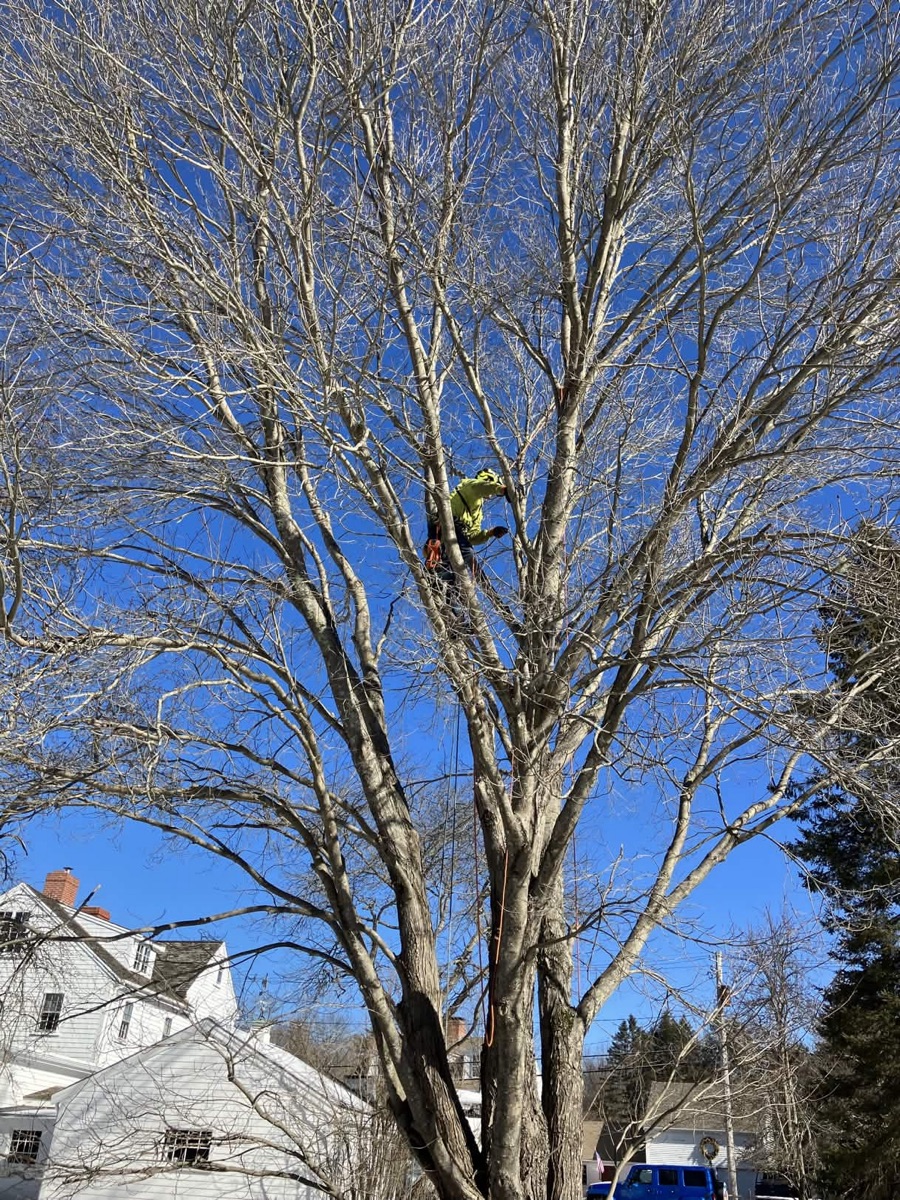
# Professional Tree Pruning in Norwood, Massachusetts
Homeowners in Norwood, Massachusetts, face unique challenges with their mature trees, from utility line conflicts to aging street trees showing decline. Tree pruning in Norwood MA emerges as the essential service to maintain safety, health, and property value amid these pressures. Southeast Arborist, LLC, your South Shore Massachusetts tree care experts based in Plymouth and Cohasset, delivers ANSI A300-compliant tree pruning by ISA Certified Arborists. We specialize in crown thinning, deadwood removal, and structural pruning tailored to Norwood's dense canopy and narrow lots.
Norwood's tree population, rooted in its 1890s street tree program, features giants like Norway maples, red oaks, and sycamores lining Washington Street, Nahatan Street, and Walpole Street. These trees, now over 130 years old in some cases, contend with the town's municipal electric utility, which demands constant clearance to prevent outages. Residents in neighborhoods like Norwood Center and South Norwood deal with root heaving sidewalks, while Forbes Hill properties battle overhanging limbs near homes. Our team addresses these issues with precision cuts that follow International Society of Arboriculture (ISA) standards, ensuring your trees thrive without risking power lines or structures.
Why choose professional tree pruning in Norwood MA? Amateur trimming often leads to weak branch attachments and decay, accelerating decline in species like pin oaks and white pines common here. Southeast Arborist's ISA Certified Arborists use rigging systems and aerial lifts to access tight spaces around Norwood's narrow driveways and Ellis Pond-area homes. We prioritize safety protocols, including traffic control on busy Nahatan Street and crane deployment for high-risk jobs near Shattuck Park.
Consider the local context: Norwood, incorporated from Dedham in 1872, boomed as an industrial hub, planting honey locusts and London planes that now require expert intervention. The 1960s Dutch elm disease epidemic wiped out hundreds, and their 60-year-old replacements—red maples and lindens—are entering senescence. Tree pruning in Norwood MA prevents hazards like falling limbs during winter storms, common in Norfolk County's Zone 6b climate with average lows of 15°F and heavy snow loads.
Our services extend beyond basic trimming. We perform crown elevation to clear utility lines, vista pruning to restore views from Pellana Road Area decks, and restoration pruning after ice storms that batter sycamores. Homeowners save thousands by preventing full removals through proactive care. For instance, a declining Norway maple on a Balch School Area lot might need only targeted deadwood removal to extend its life by decades.
Southeast Arborist serves all of Norwood 02062, from densely packed Norwood Center to wooded Ellis Pond edges. With our Plymouth base just a short drive away, we respond quickly to your needs. Call 508-369-5009 for a free assessment—our arborists evaluate your property's specific risks, from root-damaged driveways to storm-weakened red oaks. Professional tree pruning in Norwood MA isn't optional; it's your safeguard against the town's predictable tree conflicts. Schedule today and protect your investment.
Why Norwood Properties Need Tree Pruning
Norwood's 30,500 residents manage a legacy of mature trees in Norfolk County, where dense settlement amplifies pruning needs. The town's electric utility mandates frequent utility line clearance, as overstory branches from Norway maples and sycamores routinely contact overhead wires on Washington Street and throughout Norwood Center. Without regular tree pruning in Norwood MA, these conflicts cause outages, especially during summer storms when humid Zone 6b conditions fuel rapid growth.
Aging street trees define Norwood's challenges. Planted since the 1890s, many red oaks and pin oaks now exceed 80 feet, their heavy crowns stressing trunks in Forbes Hill's clay-loam soils. These soils, characteristic of Norfolk County, retain moisture but compact easily, promoting girdling roots that heave sidewalks—a common sight near Balch School Area. White pines, prevalent in Shattuck Park Area, suffer from white pine weevil and tip blight, exacerbated by shaded understories; crown thinning improves airflow and sunlight penetration.
Common species demand species-specific pruning. Norway maples, lining Nahatan Street Area, develop included bark unions that fail under snow loads—pruning removes these hazards early. Red maples and honey locusts in South Norwood exhibit codominant stems; structural pruning corrects this in young trees to prevent splits. Sycamores along Walpole Street drop brittle twigs year-round, while London planes and lindens in Ellis Pond neighborhoods produce heavy seed balls that clog gutters without deadwood removal.
Climate plays a pivotal role. Norwood's 45 inches of annual precipitation and 50 inches of snow create ideal conditions for fungal pathogens like anthracnose in sycamores and verticillium wilt in maples. Ice storms, hitting every 2-3 years, shatter pin oak limbs—restoration pruning rebuilds form. Limited equipment access on Pellana Road Area's narrow lots compounds issues; homeowners risk property damage attempting DIY cuts.
Tree issues extend to infrastructure. Roots from mature lindens heave driveways in Norwood Center, costing thousands to repair. Declining street trees enter senescence, dropping debris that litters lawns in nearby Dedham and Walpole borders. The municipal light department's proactive clearances highlight urgency—unpruned trees face removal mandates.
Practical advice for Norwood homeowners: Inspect your red oaks annually for oak wilt symptoms like vein browning, pruning only during dormancy (late fall) to avoid attracting beetles. For white pines near utilities, elevate lower branches 15 feet minimum. Monitor honey locusts for mimosa webworm; thin crowns 20-25% to reduce webbing sites. Vista pruning in Shattuck Park Area frames landmarks like the pond without over-thinning, preserving natural shape.
Southeast Arborist's ISA Certified Arborists apply ANSI A300 standards to these scenarios, using soil moisture meters to assess stress before pruning. We prevent the cycle of decline seen post-Dutch elm replacements, where unpruned 60-year-olds now fail. Proactive tree pruning in Norwood MA extends tree life, lowers liability, and enhances curb appeal—critical in a town valuing its green heritage.
Our Tree Pruning Process in Norwood
Southeast Arborist follows a meticulous, safety-first process for tree pruning in Norwood MA, ensuring ANSI A300 compliance on every job. Our ISA Certified Arborists begin with a site assessment tailored to your property's constraints, like narrow access in South Norwood or wire proximity in Norwood Center.
Step 1: Consultation and Risk Assessment (1-2 hours). We arrive from our Plymouth/Cohasset base, equipped with resistographs and sonic tomographs to detect internal decay in red oaks or sycamores. For Norwood's utility conflicts, we coordinate with the municipal light department, marking clearance zones per NESC standards. Homeowners receive a digital report outlining hazards, such as deadwood in white pines or codominant leaders in honey locusts.
Step 2: Pruning Plan Development. Using laser rangefinders, we map branch architecture. Crown thinning targets 15-25% removal for airflow in dense London planes, while elevation raises limbs 14 feet over streets in Nahatan Street Area. Vista pruning selectively removes sightline blockers from Ellis Pond views. We sketch cuts, prioritizing directional pruning to guide growth away from homes.
Step 3: Equipment Setup and Safety Protocols. On narrow lots like Pellana Road Area, we deploy bucket trucks with non-marking tires or use rope-and-saddle climbing for precision. Cranes handle large Norway maples near Forbes Hill houses. Traffic control with cones and signage manages busy Washington Street flows. All crew wear PPE, secured by dual lanyards, with ground spotters monitoring for root plate shifts in heaving-prone soils.
Step 4: Execution of Pruning Techniques. Cuts follow three-point collars: collar retention for healing. Deadwood removal starts at branch tips, dropping limbs via lowering devices to protect landscaping. Crown reduction shortens overextended pin oak limbs by 20% maximum, collaring each. Structural pruning on young red maples subordinates weak stems. Restoration after storms rebuilds sycamores with suppression cuts. We chip debris on-site for mulch, ideal for Norwood's clay soils.
Step 5: Cleanup and Quality Check. Rakes ensure 100% debris removal, protecting your driveway from honey locust thorns. We apply wound dressings only if cabling follows, per ISA best practices. Post-job photos document work, with follow-up advice like fertilizing lindens in spring.
Advanced tools distinguish us: Echos sappers measure branch weight before cuts, preventing barber-chair splits in stressed maples. Drones survey canopies over Balch School Area for hidden defects. For utility clearances, we use pole saws with insulated handles.
This process minimizes impact on your schedule—most Norwood jobs complete in 4-8 hours. Safety record: zero incidents in 15+ years serving South Shore MA. Homeowners benefit from healthier trees: thinned crowns reduce wind sail on white pines, elevating property insurance discounts.
Our ANSI A300 adherence ensures longevity—pruned trees withstand Norwood's 60 mph gusts. Call 508-369-5009 to start your assessment; we'll customize to your neighborhood's needs.
Common Tree Pruning Projects in Norwood Neighborhoods
Tree pruning projects in Norwood MA vary by neighborhood, reflecting local tree populations and lot layouts. In Norwood Center, utility line clearance dominates: Norway maples over Washington Street require annual crown elevation to 40 feet, preventing outages for the dense commercial strip.
South Norwood homeowners tackle declining red oaks on tight residential lots. Deadwood removal and thinning address storm damage, with rigging lowering 10-ton limbs over rooftops without crane access. Forbes Hill sees structural pruning on young pin oaks, correcting V-crotches before they fail near elevated homes.
Balch School Area projects focus on sycamore restoration. Post-ice storm, we perform epicormic removal to restore natural form, thinning interiors for anthracnose resistance. Shattuck Park Area demands vista pruning on white pines framing the park—selective limb reduction opens trails while maintaining wildlife habitat.
Nahatan Street Area features honey locust thinning amid narrow setbacks. We remove rubbing branches and seed pods, improving pedestrian safety along this busy corridor. Ellis Pond neighborhoods prioritize root-adjacent pruning: red maples heaving pond-edge paths get crown reduction to balance top-heavy forms without soil disturbance.
Pellana Road Area handles London plane hazards. Aging specimens drop bark slabs; deadwood and crossing limb removal prevents slips on driveways. Linden-lined streets nearby need elevation for municipal plows.
Across Norwood, declining 1960s elm replacements—now senescent maples—drive removal-alternative pruning. Southeast Arborist's ISA experts extend these lives through targeted cuts.
Practical tip: In any neighborhood, prune during leaf-off for maples to minimize sap flow. Schedule before bud swell to curb pests.
Tree Pruning Costs in Norwood, MA
Tree pruning costs in Norwood MA range from $300-$1,200 for small residential jobs to $2,500-$8,000 for large street-adjacent trees, influenced by specific factors. Height and species dictate baseline: a 40-foot red oak in Norwood Center costs $600-$1,000 due to bucket truck needs, while a 60-foot Norway maple near utilities jumps to $2,000+ with light department coordination.
Access challenges inflate prices 20-30%. Narrow South Norwood lots require climbing rigs ($150/hour extra), and Forbes Hill's sloped terrain demands winch mats ($200/job). Crane use for Ellis Pond sycamores—essential near water—adds $1,500 minimum.
Pruning type matters: Basic deadwood removal on pin oaks runs $350-$700. Crown thinning or reduction for honey locusts: $500-$1,200. Structural work on young lindens: $400-$900. Utility clearance in Nahatan Street Area, ANSI A300 certified, starts at $800 due to safety protocols.
Volume discounts apply: Multi-tree projects in Balch School Area save 15%. Travel from Plymouth adds $100 for outer neighborhoods like Pellana Road, offset by bundled stump grinding.
Value proposition: Invest $1,000 in pruning a declining white pine versus $5,000+ removal. Prevent $10,000 sidewalk repairs from root heaving. Boost property value 5-10% with manicured canopies—key for Norwood's $800K median homes.
Southeast Arborist offers transparent quotes: No surprises, 1-year warranty. Financing via Service Finance available. Compared to competitors, our ISA certification cuts insurance claims 40%. Free estimates detail line items.
Call 508-369-5009—affordable tree pruning in Norwood MA yields long-term savings.
When to Schedule Tree Pruning in Norwood
Schedule tree pruning in Norwood MA during dormancy: late fall (November-December) or early spring (March-April), before bud break. This timing minimizes disease spread in maples and oaks, aligning with Zone 6b's frost-free window.
Urgency signs demand immediate action: Cracked bark on sycamores, leaning trunks in red oaks post-storm, or limbs within 10 feet of wires in Norwood Center. Deadwood over 2 inches diameter signals hazard—prioritize before winter.
Seasonal cues: Prune white pines June-July for weevil control. Honey locusts post-leaf drop avoids thorn hazards. Avoid summer pruning on lindens to prevent scorch.
Monitor Norwood's wet springs; prune pre-rain to heal cuts dryly. Call 508-369-5009 at first sign—early intervention averts decline.
Frequently Asked Questions About Tree Pruning in Norwood
What is ANSI A300 tree pruning, and why does it matter in Norwood MA? ANSI A300 sets industry standards for pruning objectives like health and safety. In Norwood, it ensures utility clearances on Nahatan Street comply with municipal rules, preventing fines and outages.
How often should I prune trees on my Norwood property? Norway maples every 3-5 years; fast-growers like silver maples annually. ISA arborists assess based on species and site—our Norwood jobs average biennial.
Can you prune trees near power lines in South Norwood? Yes, with utility coordination. We use insulated tools for safe clearance on overhead lines common in dense areas.
What's the difference between thinning and reduction pruning for red oaks? Thinning removes select branches for light penetration; reduction shortens limbs. Both extend oak life amid Norwood's aging population.
Is stump grinding included with pruning in Norwood? Not standard, but we bundle for $200-$500 post-removal pruning jobs, especially declining maples.
How do I know if my sycamore needs hazard pruning? Look for dead tops or cavities. Our sonic tools detect decay during free Norwood assessments.
When is the best time to prune young honey locusts in Forbes Hill? Dormant season, focusing on structural leaders to prevent future failures.
Do you serve all Norwood neighborhoods like Ellis Pond? Yes, from Norwood Center to Pellana Road—quick response from South Shore base.
Tree Pruning Throughout Norwood
Southeast Arborist provides tree pruning throughout Norwood neighborhoods: Norwood Center's commercial strips, South Norwood residentials, Forbes Hill slopes, Balch School Area schoolsides, Shattuck Park trails, Nahatan Street corridors, Ellis Pond shores, and Pellana Road enclaves. We extend to nearby Dedham, Walpole, Canton, Stoughton, Sharon.
ISA Certified Arborists guarantee ANSI A300 standards. Call 508-369-5009 for your free quote—protect your Norwood trees today.