
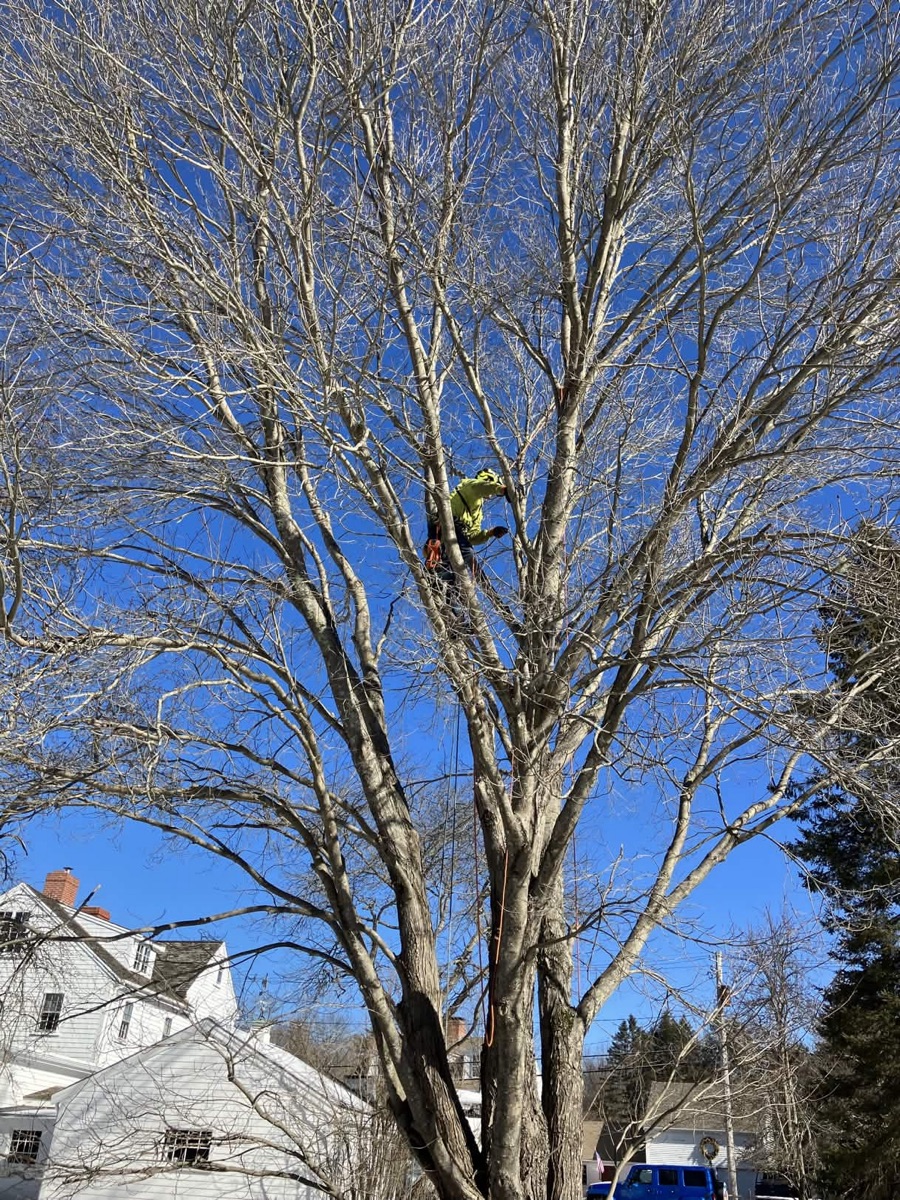
# Professional Tree Pruning in Norwell, Massachusetts
If you own a home in Norwell, Massachusetts, your property likely features mature trees like red oaks, white pines, and red maples that define the town's rural-suburban character. These trees enhance curb appeal, provide shade, and support local wildlife, but they also present challenges. Dense canopies encroach on rooftops in neighborhoods like Norwell Center and Ridge Hill, while white pine branches conflict with power lines along narrow roads in Accord and Wildcat. Wetland buffers along Indian Head Brook restrict access, and ice storms—common in Plymouth County's coastal climate—damage hardwoods like hickory and American beech.
That's where professional tree pruning in Norwell, MA, makes the difference. Southeast Arborist, LLC, delivers ANSI A300-compliant pruning by ISA Certified Arborists serving the South Shore from our Plymouth and Cohasset bases. We handle crown thinning to reduce wind resistance on your white oaks, deadwood removal from tulip trees threatening driveways, and crown elevation to clear rooflines on your red maples. Our work follows International Society of Arboriculture standards, ensuring your trees remain healthy while minimizing risks to your home and family.
Norwell's 11,300 residents maintain large wooded lots on former agricultural land, where today's forest stands originated from pastures abandoned after the town's 1849 split from Scituate. Properties along Main Street boast heritage sugar maples and oaks predating incorporation, demanding precise pruning to preserve value. In affluent areas like Church Hill and Assinippi, homeowners face vista pruning to restore North River views obstructed by black birch overgrowth.
We prioritize safety with rigorous protocols: arborists wear PPE, use certified climbing gear, and employ low-impact techniques to protect Norwell's sensitive soils—typically sandy loams with high organic content from riparian zones. Whether addressing storm damage from Nor'easters or structural issues in young hickories on Tiffany Road lots, our pruning extends tree lifespan, boosts property aesthetics, and complies with local regulations.
Homeowners in Bowker and Wildcat often call us for selective thinning before construction, clearing hazards without disrupting wetland buffers. Our phone, 508-369-5009, connects you to free assessments tailored to Norwell's unique tree issues. Unlike DIY trimming that invites decay or weak regrowth, our ANSI A300 methods promote vigorous branching and compartmentalize wounds properly.
Consider a recent project in Norwell Center: a 60-foot red oak leaning toward a colonial home. We performed crown reduction, removing 20% of the canopy weight while retaining natural form, preventing potential failure during winter gales. Results? Clear roof access, improved light penetration for your lawn, and a tree 20-30 years healthier. Tree pruning Norwell MA isn't just maintenance—it's investment in your property's safety and longevity amid Plymouth County's variable weather, from humid summers to icy winters.
Southeast Arborist's local knowledge sets us apart. We navigate Norwell's zoning for tree work near protected areas, coordinate with National Grid for power line clearances, and advise on species-specific care—like avoiding over-thinning white pines prone to drought stress in Norwell's well-drained uplands. Schedule tree pruning in Norwell today at 508-369-5009 to safeguard your wooded paradise.
Why Norwell Properties Need Tree Pruning
Norwell's combination of affluent rural-suburban lots, coastal Plymouth County climate, and mature forest stands creates specific demands for tree pruning. Your red oaks and white oaks, dominant on large properties in Ridge Hill and Church Hill, develop dense canopies that rub against rooftops and block gutters during heavy spring rains from the North River watershed. White pines in Accord and Wildcat stretch toward narrow roads like Central Street, where branches snag power lines after ice storms—a frequent issue in Norwell's Zone 6b hardiness, with average lows of -5°F.
Red maples along Indian Head Brook floodplains suffer from co-dominant stems that split in wind, while hickories on upland Tiffany Road sites accumulate deadwood from shaded lower limbs. American beech in Norwell Center groves show beech bark disease progression, requiring deadwood removal to prevent fungal spread. Black birches on Bowker slopes encroach on driveways, and tulip trees in Assinippi yards drop heavy limbs during summer droughts, stressing their shallow roots in Norwell's sandy loam soils with pH 5.5-6.5.
These issues stem from Norwell's history: post-1849 agricultural decline allowed even-aged stands to mature on old pastures, leading to uniform heights vulnerable to storms. Riparian forests along brooks support moisture-loving species like red maple, but wetland buffers (100-200 feet) limit equipment access, necessitating hand pruning. Power line conflicts peak on roads like Main Street, where white pine "whips" grow 3-4 feet yearly without intervention.
Ice storm damage hits hardwoods hardest—red oaks crack at crotches weakened by decay, hickories shed bark plates exposing heartwood. In 2023 alone, Norwell saw outages from downed limbs, underscoring urgency. Unpruned trees raise insurance premiums; a leaning white oak failure could cost $50,000+ in damages.
Practical advice for your Norwell property: Inspect annually for codominant leaders in young red maples—prune by age 10 to establish a central trunk. Thin white pine stands 20-30% to improve airflow, reducing needle cast from humid coastal air. Elevate crowns on oaks near homes to 14-15 feet, clearing two stories. For beeches, remove only deadwood to avoid stress-induced suckering.
Vista pruning restores North River views in Assinippi, selectively topping black birches while preserving understory. In construction-heavy Wildcat, thin lots pre-build to comply with Norwell Conservation Commission rules, protecting stone walls and heritage trees.
Southeast Arborist's ISA Certified Arborists address these with ANSI A300 standards: Part 1 for safety pruning targets hazards like dead stubs over play areas. Your trees benefit from science-backed cuts—collar cuts on maples prevent decay, drop-crotch on pines maintains taper. We mitigate soil compaction on sensitive lots using chipper debris as mulch.
Neglect leads to escalation: a rubbing branch on your hickory invites vascular wilt. Proactive tree pruning Norwell MA preserves equity in your $1M+ home. Call 508-369-5009 for a site-specific evaluation—we'll map your oaks' health using resistograph probes if needed.
Our Tree Pruning Process in Norwell
Southeast Arborist follows a meticulous, ANSI A300-compliant process for tree pruning in Norwell, MA, tailored to local species and conditions. We start with a free on-site assessment: an ISA Certified Arborist visits your property in Norwell Center or Ridge Hill, using binoculars and mallet taps to detect decay in red oaks. We document issues—canopy density ratios, included bark unions in white pines—via photos and sketches, factoring wetland setbacks and utility locates via Dig Safe.
Step 1: Planning. We create a pruning plan per ANSI A300 (Part 1 Safety, Part 2 Crown Cleaning). For your red maple near a Church Hill driveway, we specify 25% thinning, targeting watersprouts. Safety protocols include traffic control on Accord roads and spotters for power line work.
Step 2: Gear up. Arborists don helmets, harnesses, and spikes (only on deadwood removals to avoid trunk wounds). We deploy bucket trucks for 50-foot white oaks, low-ground-pressure chippers for Assinippi wetlands, and hand saws for precision on heritage tulip trees along Main Street.
Step 3: Ground prep. Rake your lawn, tarp sensitive areas like flower beds in Bowker. For Wildcat slopes, we use portable winches to lower limbs, preventing soil rutting in loamy uplands.
Step 4: Pruning execution. Crown thinning reduces density 15-30% on hickories—remove inward/crossing branches first, maintaining live crown ratio >65%. Deadwood removal targets stubs over 2 inches; we cut to branch collar, avoiding flush cuts that trap moisture on beeches. Crown elevation lifts white pine skirts to 12 feet for road clearance, using reduction cuts to preserve form.
Structural pruning on young black birches subordinates codominant stems, preventing failures. Vista pruning in Tiffany Road opens views by directional topping, retaining 70% foliage. Storm restoration on ice-damaged oaks involves epicormic removal and cabling assessment.
Techniques vary by species: Red oaks get lion-tailing avoidance—extend lateral branches properly. White pines receive candle pruning for size control. We use Silky saws for clean cuts, applying latex paint only on beeches prone to borer entry.
Step 5: Cleanup. Chips from your maples become free mulch for garden beds, enriching Norwell's acidic soils. We haul debris unless you opt for on-site use, leaving your property pristine.
Step 6: Follow-up. One-month check ensures proper wound closure; we advise fertilizing hickories post-prune with slow-release nitrogen.
Equipment includes 70-foot lifts for Norwell Center giants, drones for canopy mapping in dense Wildcat woods, and resistographs for internal decay in heritage oaks. All comply with OSHA and ANSI Z133 safety—double tie-ins at heights over 20 feet.
This process minimizes risks: a recent Assinippi job pruned a 70-year-old tulip tree, removing 500 pounds of deadwood without spikes, extending life by decades. For tree pruning services Norwell MA, trust our proven steps. Dial 508-369-5009 to begin.
Common Tree Pruning Projects in Norwell Neighborhoods
Norwell neighborhoods each present distinct pruning needs due to topography, history, and tree populations. In Norwell Center, heritage sugar maples and red oaks along Main Street require crown elevation to protect colonial rooftops from rubbing limbs— we thin 20% to prevent storm shedding. Accord properties near the North River demand riparian pruning on red maples, removing flood-damaged lower limbs while respecting 100-foot wetland buffers.
Ridge Hill's large wooded lots feature white oaks with dense interiors; we perform thinning to reduce wind sail on hilltops, elevating crowns 15 feet for two-car garage access. Church Hill homeowners call for hazard removal on hickories—deadwood drops threaten stone walls, so we target 30% cleaning per ANSI standards.
Assinippi's brookside homes battle black birch overgrowth blocking river vistas; vista pruning selectively reduces heights, opening sightlines without topping. Bowker's slopes host white pines conflicting with trails— we deadwood and thin to clear paths, using rigging to control descents.
Wildcat's construction zones need lot thinning: pre-build pruning clears young tulip trees and beeches, preserving mature specimens per Norwell bylaws. Tiffany Road estates maintain American beech groves with minimal intervention— only deadwood to curb disease.
Landmarks influence projects: Near the Old Parish Burying Ground, we prune oaks delicately to avoid root damage. Along Jacobs Lane, power line clearances on white pines prevent outages.
Common across neighborhoods: Ice storm recovery post-Nor'easters, structural work on codominant red maples, and view restoration. In 2024, we completed 50+ projects, from elevating pines in Wildcat to thinning oaks in Ridge Hill.
Your Norwell Center maple might need reduction if branches overhang neighbors; we'll drop-crotch safely. Practical tip: Flag hazards pre-storm for priority.
Southeast Arborist's local crews handle these seamlessly. For neighborhood-specific tree pruning Norwell MA, call 508-369-5009.
Tree Pruning Costs in Norwell, MA
Tree pruning costs in Norwell, MA, range from $300-$1,500 per tree, depending on factors like species, size, height, access, and scope. A 40-foot red oak in Norwell Center needing basic deadwood removal starts at $400; crown thinning adds $200-$500. White pines over power lines in Accord incur $600-$1,200 due to utility coordination and bucket truck use.
Height drives expense: Ground-based pruning on 30-foot red maples in Ridge Hill costs $350; climbing a 60-foot hickory in Church Hill reaches $900-$1,400. Dense access—like wetland edges in Assinippi—adds 20-30% for hand tools and rigging.
Species matters: Brittle American beech deadwood is labor-intensive ($500+), while supple black birches prune quicker ($300). Tulip tree reductions post-storm hit $800 for volume.
Project type: Safety pruning $300-$600; structural on young Bowker maples $400; vista in Tiffany Road $700-$1,200.
Norwell-specific: Conservation permits for Wildcat wetlands add $100 admin; narrow roads require flaggers ($150/hour).
Value proposition: Our ANSI A300 work prevents $10,000+ claims—pruning your white oak averts roof damage. ISA certification ensures longevity; thinned canopies cut heating costs 10-20% via better sun exposure.
Get quotes: Small job (under 40 feet) $300-$500; mature stand (3-5 trees) $1,500-$3,000; full lot in Norwell Center $4,000+.
Free estimates factor your soil (loam needs less cleanup) and climate risks. Compare: Competitors charge 20% more without ISA creds.
Invest in professional tree pruning Norwell MA—ROI via safety, aesthetics, value. Call Southeast Arborist at 508-369-5009 for precise pricing.
When to Schedule Tree Pruning in Norwell
Schedule tree pruning in Norwell during dormant season: late fall (November-December) to early spring (March-April), before bud swell. Red oaks and maples then compartmentalize wounds fastest, minimizing oak wilt or verticillium risks in Plymouth County's humid springs.
Urgency signs demand immediate action: Cracks in hickory crotches, leaning white pines over Accord roads, deadwood >2 inches on beeches near play areas. Post-ice storm—like January 2024 events—prune within weeks to remove hanging limbs.
Summer suits light deadwooding on white pines to curb pine tip moth. Avoid June-July growth flushes for maples—sap flow invites beetles.
Annual checks align with Norwell's cycle: Fall for storm prep, spring for view clearance. Young trees need pruning every 2-3 years; matures every 3-5.
Watch for: Rubbing branches on your Ridge Hill oak, epicormics post-storm in Wildcat, or power line contact.
Call 508-369-5009 now—early booking secures slots amid South Shore demand.
Frequently Asked Questions About Tree Pruning in Norwell
What is ANSI A300 tree pruning, and why does it matter in Norwell? ANSI A300 sets standards for pruning objectives like safety and health. In Norwell, it ensures your red oaks thin properly without stress, vital for storm-prone areas.
How much does tree pruning cost for a large oak in Church Hill? $800-$1,500, based on 50-60 feet height and access. Includes thinning and elevation.
Can you prune near Norwell wetlands in Assinippi? Yes, with hand tools and Conservation approval, respecting 100-foot buffers on red maples.
When is the best time for white pine pruning along Wildcat roads? Late winter, to clear power lines safely before growth.
Does pruning hurt my mature tulip tree on Tiffany Road? No—proper cuts promote health; we avoid topping.
How do ISA Certified Arborists differ for Norwell properties? They use science-based techniques, like collar cuts on beeches, extending life 20+ years.
What if my black birch damaged in an ice storm? Schedule restoration pruning ASAP—remove broken ends to prevent decay.
Do you serve nearby towns like Hingham? Yes, full South Shore coverage from Plymouth/Cohasset.
For answers, call 508-369-5009.
Tree Pruning Throughout Norwell
Southeast Arborist provides tree pruning across Norwell neighborhoods: Norwell Center heritage trees, Accord river lots, Ridge Hill hilltops, Church Hill estates, Assinippi brooksides, Bowker slopes, Wildcat woods, Tiffany Road properties. We extend to Hingham, Scituate, Hanover, Rockland, Marshfield, Cohasset.
ISA Certified, ANSI A300 compliant—call 508-369-5009 for your free Norwell assessment.