
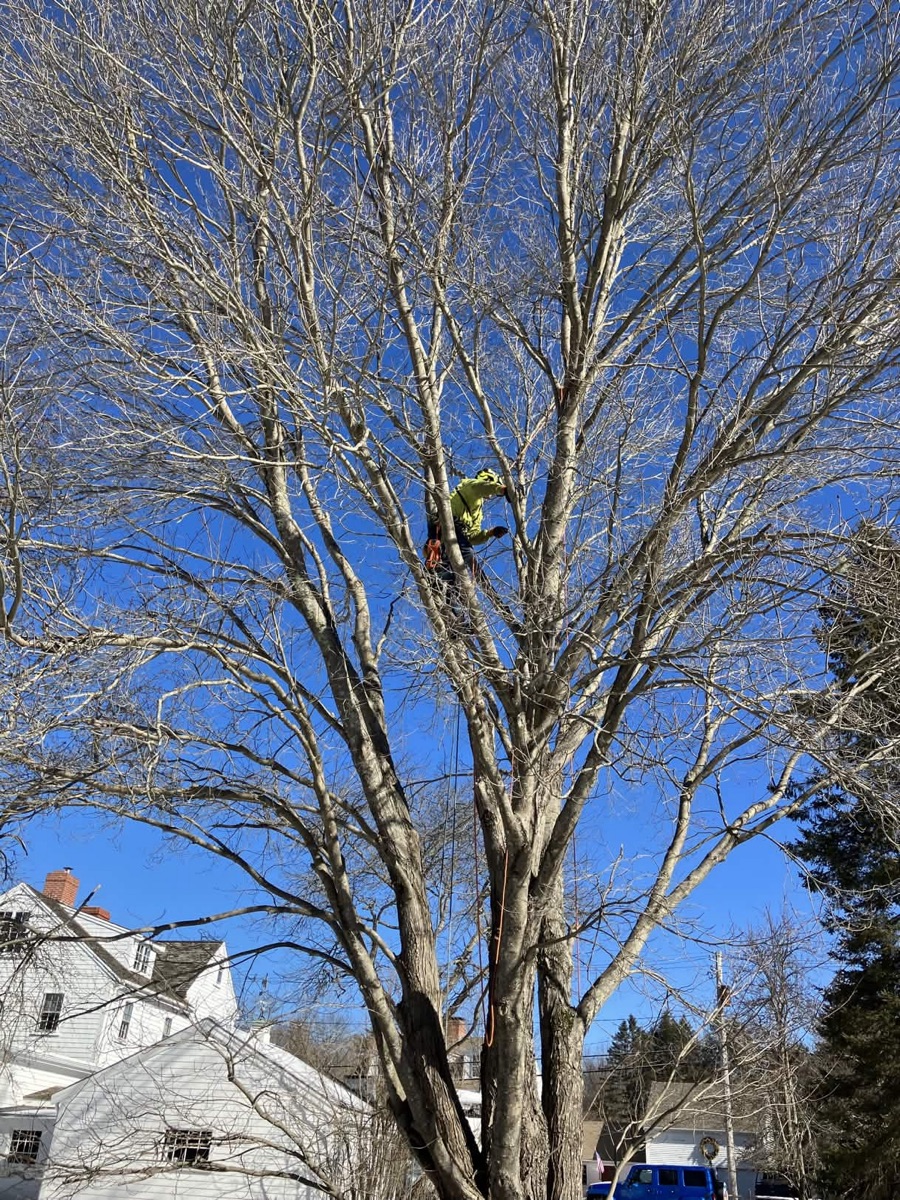
# Professional Tree Pruning in Milton, Massachusetts
Your trees in Milton, MA, stand as living legacies of the town's 19th-century heritage, where affluent Bostonians crafted landscapes with enduring species like copper beeches and Japanese maples. In neighborhoods from Milton Village to Blue Hills, these trees enhance property values, frame historic homes, and connect residential lots to the vast Blue Hills Reservation. Yet, steep terrain, shallow soils over ledge, and pests like hemlock woolly adelgid demand precise tree pruning to maintain safety and health.
Southeast Arborist, LLC, delivers ANSI A300-compliant tree pruning by ISA Certified Arborists serving South Shore Massachusetts from our Plymouth and Cohasset bases. We specialize in tree pruning Milton MA properties, addressing crown thinning for white oaks in Milton Hill, deadwood removal from red oaks along Canton Avenue, and vista pruning to preserve Blue Hills views from East Milton homes. Our phone, 508-369-5009, connects you directly to experts who navigate Milton's unique challenges—limited equipment access on Scott Hill slopes and root instability in Cunningham Park ledge soils.
Milton's 28,600 residents in Norfolk County benefit from an exceptional tree canopy, but neglect leads to hazards. A sugar maple with overloaded branches risks failure during winter ice storms common to the area's 45-inch annual rainfall. Hemlocks in the Blue Hills corridor, some over 200 years old across 7,000 acres, suffer woolly adelgid infestations that weaken crowns without targeted pruning. We follow International Society of Arboriculture (ISA) standards, using rope-and-harness techniques for hillside work where bucket trucks fail.
Homeowners in Brush Hill or Unquity face preservation of imported specimen trees planted in the 1800s—English oaks and tulip trees that require restoration pruning after nor'easters. Our services include crown elevation to clear rooftops in dense Milton Village, structural pruning for young hickories, and hazard limb removal from American beeches near Hutchinson Field's rare elms. These interventions not only prevent property damage but extend tree lifespans, protecting your investment in Milton's affluent residential character.
Tree pruning in Milton MA goes beyond aesthetics; it's essential risk mitigation. Shallow root systems over granite ledge make white pines prone to toppling in high winds gusting off the Blue Hills. We assess these during consultations, recommending thinning to reduce sail effect. For estates adjacent to the reservation, our canopy management programs balance growth with trail visibility and wildlife corridors.
Contact Southeast Arborist at 508-369-5009 for tree pruning Milton MA that honors local heritage while prioritizing safety. Our ISA Certified Arborists arrive equipped for your terrain, delivering results that enhance curb appeal and structural integrity. In a town where trees define neighborhoods, professional care from experts based nearby ensures your landscape thrives amid Milton's specific environmental pressures.
Why Milton Properties Need Tree Pruning
Milton's topography and tree heritage create distinct pruning needs unmatched in nearby Quincy or Braintree. Steep slopes in Blue Hills and Scott Hill limit root expansion, leaving red oaks and hickories with shallow anchors vulnerable to the region's frequent freeze-thaw cycles. These cycles, with average lows of 20°F in January, heave soils and destabilize trees, necessitating crown reduction to lighten top-heavy loads.
Common species like white oak dominate Milton Hill estates, their broad crowns accumulating deadwood that invites decay fungi in humid summers averaging 75°F. Without deadwood removal, branches fail, endangering homes built close to mature canopies. Hemlocks along the Blue Hills Reservation face hemlock woolly adelgid, an invasive pest decimating 200-year-old stands; pruning infested tips improves airflow and treatment efficacy.
Your property in East Milton contends with ledge outcrops under thin topsoil, starving sugar maples of nutrients and causing dieback. ANSI A300 pruning standards guide our thinning to redirect energy to healthy growth, preventing further decline. Japanese maples in Milton Village gardens, prized for fall color, develop crossing limbs that rub bark, creating entry points for pathogens—structural pruning corrects this early.
Climate plays a pivotal role: Milton's proximity to Boston Harbor moderates temperatures but delivers intense nor'easters with 50 mph gusts. Tulip trees on Brush Hill lots, with their brittle wood, snap under ice loads without prior elevation pruning. White pines in Unquity, reaching 80 feet, create shade issues for understory plants and block views; vista pruning selectively removes lower limbs.
Preservation of historic specimens sets Milton apart. Copper beeches on Canton Avenue, imported in the 19th century, require gentle restoration after storm damage to retain their copper foliage. American beeches near Cunningham Park develop epicormic sprouts from girdling roots over ledge—pruning suppresses these for natural form.
In the Blue Hills corridor, unbroken forest buffers residential edges, but overhanging limbs from reservation oaks encroach on properties, dropping debris. Hazard assessments identify these, with pruning ensuring safe clearances. Properties adjacent to the 7,000-acre reservation need canopy management to mimic natural forest dynamics, thinning dense hemlock understories prone to adelgid.
Soil conditions exacerbate issues: Milton's granite ledge supports only 12-18 inches of glacial till, limiting white pine root plates. Windthrow risks rise without reduction pruning. Local regulations in Norfolk County emphasize tree protection during renovations, making proactive pruning essential for compliance.
Homeowners gain practical benefits: Pruning boosts property values by 5-10% in affluent Milton, per real estate analyses, through improved aesthetics and reduced liability. It enhances fruit production on understory maples and supports pollinators by opening canopies. For your trees, schedule based on growth rates—oaks add 12 inches annually, demanding biannual checks.
Southeast Arborist's ISA Certified Arborists tailor pruning to these factors, using soil probes during site visits to assess ledge depth. We educate on signs like leaning trunks in hickories or adelgid crawlers on hemlocks. Ignoring these leads to costly removals; pruning preserves Milton's extraordinary canopy.
Our Tree Pruning Process in Milton
Southeast Arborist follows a meticulous, ANSI A300-compliant process for tree pruning Milton MA, adapted to local steep terrain and species. We begin with a free on-site assessment by ISA Certified Arborists, inspecting your white oaks in Milton Hill or hemlocks near Blue Hills for decay, co-dominant stems, and root flaws over ledge.
Step 1: Consultation and Planning (30-60 minutes). We walk your property, noting access challenges—like narrow paths in Cunningham Park or slopes in Scott Hill. Using resistograph tools, we measure wood density in sugar maples; laser rangefinders map crown volumes for precise thinning percentages (up to 25% per ANSI standards). You receive a digital report with photos, pruning objectives, and 3D diagrams tailored to your Japanese maple's vase shape.
Step 2: Safety Setup. On Milton's hillsides, we deploy single-rope techniques (SRT) where bucket trucks can't reach, securing anchors in sound white pine limbs. Ground crews establish 1½ tree-length exclusion zones, using electronic locating for underground utilities common in older East Milton lots. All climbers wear Petzl harnesses and wear PFAS-rated gear, complying with OSHA and ISA best practices.
Step 3: Pruning Execution. Crown thinning starts with deadwood removal—priority for red oaks harboring carpenter ants. We use Silky saws for clean cuts outside branch bark ridge, preventing decay in American beeches. For elevation, lower limbs on tulip trees clear 14-foot heights over driveways. Reduction shortens overextended hickory leaders by 20%, receding to lateral collars.
Techniques vary by species: Copper beeches in Brush Hill get selective thinning to maintain dense foliage; Japanese maples receive directional pruning for air circulation against verticillium wilt. Vista pruning in Unquity frames Blue Hills skylines by subordinating interior branches. Young trees undergo structural pruning, removing 60-70% of competing stems to promote dominant leaders.
Equipment includes Ascenders for 100-foot white pines, lowered limb platforms for controlled drops on sloped lots, and Stihl pole pruners for precision on ledge-accessible hemlocks. We chip debris on-site with Vermeer trackers, minimizing truck traffic on residential Canton Avenue.
Step 4: Restoration and Follow-Up. Storm-damaged trees get phased restoration—initial cleanup followed by shaping over two seasons. We apply cabrio fungicide to beech cuts if canker present. Post-prune, we monitor via drone imagery for regrowth, scheduling touch-ups.
For Blue Hills adjacent properties, we integrate canopy management: Thinning 15-20% to reduce fuel loads, enhancing fire resistance in dry summers. All cuts heal per ANSI A300 Part 1, promoting compartmentalization.
Practical homeowner tips: Water deeply post-prune (1 inch/week) to aid wound closure in shallow soils; mulch 3-inch rings around bases, avoiding trunks. Avoid topping—illegal under Milton bylaws and fatal to oaks.
Our process minimizes disruption: Jobs complete in 4-8 hours for most residential crowns. ISA certification ensures liability insurance covers your Milton property. Call 508-369-5009 to start—our South Shore teams arrive same-week.
This methodical approach delivers 20-30% wind resistance gains and 15-year lifespan extensions for your trees.
Common Tree Pruning Projects in Milton Neighborhoods
Milton neighborhoods present specialized tree pruning projects, with Southeast Arborist executing estate-quality work for high-value specimens.
In Milton Village, dense lots feature copper beeches shading Victorian homes—our crown elevation raises canopies 12 feet, restoring light to gardens while thinning interiors for anthracnose resistance. Deadwood removal from adjacent white oaks prevents branch drop on pedestrian paths.
East Milton's waterfront proximity brings salt spray stressing Japanese maples; we perform reduction pruning to compact forms, coupled with salt leaching via deep soaks. Vista pruning opens harbor views from elevated decks.
Milton Hill estates demand preservation pruning for 150-year-old red oaks and tulip trees, correcting storm-twisted leaders with cabling integration. Structural pruning shapes young sugar maples planted post-Hutchinson Field renovations.
Cunningham Park's family homes on ledge require hazard assessments for leaning hickories—technical removals precede root-zone mulching, followed by thinning survivors.
Scott Hill's steep 20% grades challenge access; SRT climbers thin hemlock groves infested with woolly adelgid, dropping 500-pound limbs via lowering devices to protect below slopes.
Brush Hill properties host American beeches with shallow roots—we elevate crowns to clear two-story homes, subordinating rubbing limbs.
Blue Hills edges need canopy management for white pines encroaching trails—selective thinning maintains forest buffers while vista pruning frames reservation hikes from backyards.
Unquity's wooded parcels feature historic English oaks; restoration after nor'easters rebuilds scaffolds, extending 100+ year lives.
Canton Avenue Area sees frequent sugar maple deadwood projects, addressing maple decline from ledge compaction—thinning revitalizes urban-edge trees.
Our ISA Certified Arborists log 200+ Milton projects yearly, navigating bylaws protecting specimens over 24-inch calipers. Call 508-369-5009 for neighborhood-specific plans.
Tree Pruning Costs in Milton, MA
Tree pruning costs in Milton MA reflect property specifics, species complexity, and access, averaging $450-$1,200 per mature tree—far below removal at $1,500+.
Key factors: Tree size drives 50% of price—80-foot white pine in Blue Hills demands SRT at $0.75/foot height ($600 base), versus $300 for 40-foot Japanese maple in Milton Village. Species matter: Hemlock adelgid treatment adds $150 for tip pruning; brittle hickory reduction $100 extra.
Access challenges in Scott Hill or Cunningham Park hike fees 20-30%—no-bucket SRT incurs $200 upcharge versus flat lots in East Milton. Crown volume: Thinning 25% of red oak (500 cubic feet) costs $800; simple deadwooding $350.
Project scope varies: Crown elevation for rooftop clearance $400-$700; vista pruning in Unquity $500-$900; full restoration post-storm $1,000+ for copper beech.
Southeast Arborist pricing tiers: Basic deadwood ($250+), standard ANSI prune ($450+), technical/specialty ($750+). Quotes factor ledge assessments ($75 value, free with booking).
Value proposition: Pruning averts $10,000+ removal, cuts insurance premiums 5-15% via risk reduction reports. Milton's affluent market sees ROI—enhanced appraisals add $20,000 to $100,000+ estates. Long-term: Canopy programs at $2,500/year for 10 trees yield 25% healthier growth.
Compare: DIY risks $5,000 liability; unqualified crews violate ANSI, shortening lives. Our ISA certification ensures compliance, with 2-year warranties.
Budget tips: Bundle neighborhoods—three East Milton maples save 15%; off-season (fall) discounts 10%. Transparent invoicing: No surprises, payment post-inspection.
Invest in Southeast Arborist for tree pruning Milton MA—premium service at competitive rates. Dial 508-369-5009 for instant quotes.
When to Schedule Tree Pruning in Milton
Schedule tree pruning Milton MA in late fall (October-November) or winter (December-March), when dormant trees lose leaves for clear visibility and minimal sap flow reduces disease risk. Avoid spring bud break to prevent shocking sugar maples.
Urgency signs demand immediate action: Cracked bark on white oaks signals failure; leaning hemlocks post-adelgid indicate root lift over ledge. Deadwood over 2 inches diameter in red pines risks drop—inspect after 40 mph gusts common in nor'easters.
Annual cycles: Young Japanese maples need structural prunes every 2-3 years; mature copper beeches every 5. Blue Hills adjacents prune bi-annually for canopy balance.
Post-storm: Within 48 hours for hanging limbs in tulip trees. Ice damage in February—wait for thaw, then elevate.
Seasonal cues: Summer dieback in hickories signals girdling roots—prune before fall color. Hurricane season (August-October) prep via reduction.
Contact Southeast Arborist at 508-369-5009—same-day assessments for hazards.
Frequently Asked Questions About Tree Pruning in Milton
What is ANSI A300 tree pruning, and why does it matter for Milton trees? ANSI A300 sets science-based standards for pruning cuts, removal volumes, and timing. In Milton, it ensures white oaks compartmentalize wounds properly over ledge soils, preventing decay spread unlike topping, which weakens red oaks against winds.
How do I know if my East Milton hemlock needs pruning for woolly adelgid? Look for white woolly masses on branches, needle drop, and gray foliage. Pruning removes 20-30% infested tips, improving systemic treatments. Our ISA arborists confirm via microscopy.
Can you prune large specimen trees on Scott Hill slopes? Yes, using SRT climbing—no cranes needed. We've pruned 100-foot white pines there, lowering limbs safely to avoid erosion.
What's the difference between thinning and reduction for Milton Village maples? Thinning reduces density (15-25%) for light penetration; reduction shortens limbs for height control, ideal for Japanese maples near homes.
How much does pruning improve tree safety on Blue Hills properties? Up to 30% wind resistance via reduced sail area; hazard limb removal eliminates 90% branch failure risks for overhanging tulip trees.
Is pruning regulated in Norfolk County? Milton protects trees over 10-inch DBH near streets; we file plans for compliance, preserving historic beeches.
When should I prune young hickories in Cunningham Park? Every 1-2 years for structural integrity, removing co-dominants before 15 feet height.
Do you offer follow-up for storm-damaged copper beeches in Brush Hill? Yes, phased restoration over 2 years with growth monitoring.
Call 508-369-5009 for answers.
Tree Pruning Throughout Milton
Southeast Arborist provides tree pruning Milton MA across all neighborhoods: Milton Village estates, East Milton views, Milton Hill heritage trees, Cunningham Park families, Scott Hill slopes, Brush Hill specimens, Blue Hills buffers, Unquity woods, Canton Avenue urban edges.
We extend to nearby Quincy, Braintree, Randolph, Canton, Dedham from Plymouth/Cohasset. ISA Certified Arborists guarantee ANSI A300 standards.
Reach us at 508-369-5009—schedule your consultation today.