
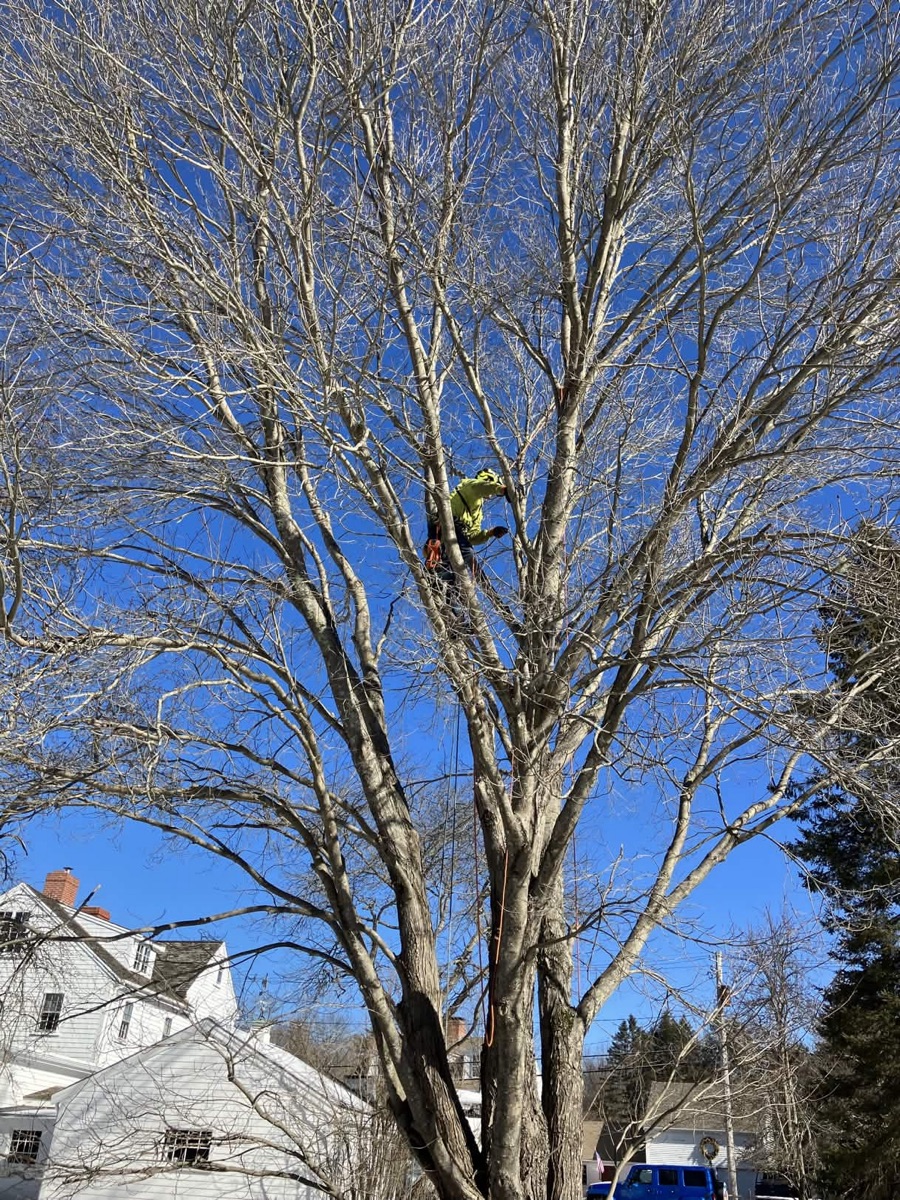
# Professional Tree Pruning in Medfield, Massachusetts
Your trees in Medfield, MA, stand as living links to the town's history, from the resilient forests that regrew after King Philip's War in 1676 to the grand oaks and maples shading the former Medfield State Hospital campus. As a homeowner in this Norfolk County community of 12,800 residents, you face unique challenges with mature red oaks, white oaks, sugar maples, and white pines along the Charles River frontage, or white ash trees now threatened by emerald ash borer in the Rocky Woods Reservation area. Professional tree pruning in Medfield, MA, isn't just maintenance—it's essential for preserving these assets amid floodplain instability, redevelopment pressures, and large-lot properties blending rural character with suburban needs.
Southeast Arborist, LLC, based in Plymouth and Cohasset, delivers ANSI A300 tree pruning standards through our team of ISA Certified Arborists serving the South Shore Massachusetts region, including Medfield 02052. We specialize in crown thinning, deadwood removal, crown elevation, and structural pruning tailored to local species like American beech, shagbark hickory, black birch, sycamore, eastern hemlock, and white ash. Our work ensures your property's trees remain safe, healthy, and visually integrated with neighborhoods such as Medfield Center, Harding, or the Vine Lake Area.
Medfield's tree canopy reflects its evolution: the Charles River corridor supports bottomland hardwoods like sycamore and black birch, while upland areas in the Green Street Area feature white pine and eastern hemlock. The Medfield State Hospital campus, developed between 1892 and 1914, boasts one of the region's most striking landscapes with mature oaks and maples now requiring careful preservation during ongoing redevelopment. Homeowners here often deal with hazard limbs over fence lines on horse properties in the South End or vista-blocking branches obscuring Rocky Woods views from North Street Area homes.
Why choose expert tree pruning services in Medfield, MA? Poor pruning leads to weak branch structure, disease entry points, and storm failures—issues amplified by Medfield's loamy soils, which retain moisture in the Charles River floodplain, and its Zone 6b climate with heavy winter snow loads and summer humidity fostering fungal issues in sugar maples. Our ISA Certified Arborists follow ANSI A300 (Part 1) standards, removing no more than 25% of live canopy in a single session to promote vigor without stress. We prioritize safety with rigging systems for high-risk removals near the State Hospital campus or Dale Street Area power lines.
For your large-lot property, tree pruning in Medfield maintains the balance between forest-like density and usable yard space. In Harding or the Dale Street Area, we perform selective thinning on shagbark hickory and red oak to enhance light penetration and airflow, reducing risks from emerald ash borer infestations spreading from white ash stands. Along the Charles River, riparian pruning stabilizes eastern hemlock and sycamore roots against erosion. Call Southeast Arborist at 508-369-5009 for a consultation—we assess your trees' health, document issues with photos, and provide a customized plan.
Our commitment extends to environmental stewardship: we chip branches for mulch used in Medfield's parks or your landscaping, minimizing waste. With decades of experience in South Shore tree care, we've helped Medfield residents navigate tree preservation ordinances during South End subdivisions or North Street Area renovations. Whether restoring storm-damaged American beech after a nor'easter or elevating crowns over driveways in Medfield Center, our pruning elevates your property's safety, curb appeal, and value. Don't wait for a hazard limb to fall—secure professional tree pruning in Medfield, MA, today.
Why Medfield Properties Need Tree Pruning
Medfield's trees demand targeted pruning due to the town's geography, history, and ecology. The Charles River frontage creates floodplain conditions where sycamore and black birch develop unstable root systems in saturated loamy soils, leading to leaning white pines and eastern hemlocks during spring floods. In the Vine Lake Area and South End, these species often overhang waterways or horse pastures, requiring crown reduction to prevent branch failure under ice loads from Zone 6b winters.
Local climate exacerbates issues: humid summers promote anthracnose in sugar maples, while heavy snow stresses codominant stems in red oaks common in Medfield Center. White oaks, prevalent in the Harding neighborhood, accumulate deadwood from age and oak wilt pressure, posing risks to nearby homes. American beech in the North Street Area suffer from beech bark disease, with cankers weakening limbs that our ANSI A300 pruning removes to extend tree life.
The Medfield State Hospital campus redevelopment highlights specialized needs. Its formal plantings of white oaks, sugar maples, and ornamentals have matured into a dense canopy now interfering with construction phasing. ISA Certified Arborists from Southeast Arborist prune for hazard removal while preserving photogenic specimens for new site plans, complying with town bylaws on legacy trees. Emerald ash borer threatens white ash across Norfolk County; in the Dale Street Area interfacing with Rocky Woods Reservation, we prophylactically prune infested trees to slow spread and maintain forest health.
Rocky Woods Reservation, with 490 acres of upland forest on Medfield's western border, influences adjacent properties. Shagbark hickory and black birch here drop heavy nuts and limbs onto Green Street Area yards, necessitating deadwood removal. Residential edges require vista pruning to frame reservation views without encroaching on protected habitat. Large-lot owners in horse properties along the South End face overgrown fence lines where eastern hemlock shades pastures excessively—thinning restores sunlight for grass growth.
Practical advice for your Medfield property: Inspect red oaks and white pines annually for V-shaped crotches, which split under wind shear from prevailing westerlies off the Charles River. Sugar maples in Medfield Center drop twigs with verticillium wilt symptoms; prune affected branches in dry weather to contain spread. White ash in the North Street Area showing D-shaped exit holes signal borer activity—remove and destroy those limbs immediately. For American beech, target smooth-barked areas with cankers before they girdle stems.
Soil conditions play a role: Medfield's Norfolk and Merrimac series loams drain poorly near the river, stressing roots and promoting epicormic sprouts on sycamores. Pruning these reduces water demand and improves form. In contrast, Rocky Woods uplands have rockier soils fostering drought-tolerant shagbark hickory; thin crowns to match precipitation patterns averaging 45 inches yearly.
Unchecked growth leads to property damage: fallen limbs crush fences in horse areas or block sightlines at Vine Lake intersections. Storm restoration after events like the 2023 nor'easter is common—our structural pruning rebuilds black birch frameworks. Investing in tree pruning in Medfield, MA, prevents insurance claims; a single white pine failure can cost $10,000+ in cleanup. Southeast Arborist's safety protocols include bucket trucks for precise cuts and ground crews with hard hats, ensuring zero incidents on your site.
Homeowners benefit from enhanced aesthetics: elevated crowns in Harding reveal understory plantings, while thinning sugar maples boosts fall color vibrancy. Energy savings follow—pruned trees shade homes efficiently, cutting AC use by 20% in humid summers. For your trees, proactive pruning sustains Medfield's rural character amid growth pressures from nearby Walpole and Sharon.
Our Tree Pruning Process in Medfield
Southeast Arborist follows a meticulous, ANSI A300-compliant process for tree pruning in Medfield, MA, starting with a free on-site assessment by an ISA Certified Arborist. We arrive in a fully equipped truck from our Plymouth/Cohasset base, scanning your property for species-specific issues—like codominant leaders in red oaks along the Charles River or deadwood in State Hospital campus maples. Using binoculars and a resistograph for internal decay detection, we map hazards, measure branch diameters, and photograph baselines for town permits if needed in redevelopment zones.
Step one: Consultation and planning. We walk your lot in neighborhoods like Dale Street Area or Green Street Area, discussing goals—crown thinning for light in horse pastures or elevation for driveway clearance in Medfield Center. For white ash threatened by emerald ash borer, we prioritize infested limb removal. Your customized plan details cuts per ANSI A300 standards: no more than one-quarter canopy reduction, targeting diameter-based sizing (e.g., limbs over 3 inches on mature white oaks).
Preparation ensures safety. We establish exclusion zones with signage, especially near Rocky Woods trails or North Street Area power lines, coordinating with Eversource if utility conflicts arise. Our crew dons PPE—helmets, chaps, spikes—and sets up rigging for high-risk sycamores in floodplains. Ground control verifies clear fall zones, protecting your landscaping.
Execution begins at the tree's base with structural pruning for young sugar maples or American beech, removing rubbing branches and water sprouts to build strong scaffolds. Climbing arborists use flip-line systems and wedges for precision on shagbark hickory in Harding. Crown thinning follows: selective removal of 10-20% interior branches on white pines, improving wind flow and reducing snow load risks. Deadwood drops—overhanging limbs on black birch—are lowered via ropes to avoid property damage.
For advanced needs, like eastern hemlock reduction near Vine Lake, we employ crown reduction techniques, shortening leaders by 15-25% with collar cuts to heal cleanly. Vista pruning in South End properties frames Charles River views by targeting epicormic growth. Storm restoration on sycamores post-flood involves cleaning storm breaks and reshaping tops. All cuts follow three-point rules: outside bark ridge, branch collar intact, no stubs.
Equipment sets us apart: 75-foot bucket trucks access Medfield State Hospital canopy without spikes, preserving bark on ornamentals. Hand saws with curved blades handle fine pruning on beech bark disease sites, while chippers process debris into nutrient-rich mulch for your soil—ideal for Norfolk loams needing organic matter. Drones survey large-lot canopies in Green Street Area for overlooked hazards.
Cleanup completes the job: we rake sites, haul chips (or leave for your use), and apply wound dressings only if code required. Post-pruning, we provide a report with before/after photos, health recommendations (e.g., deep root watering for stressed white ash), and 12-month warranty on workmanship.
Safety protocols shine in Medfield's challenges: near floodplain edges, we use portable winches for controlled lowering of heavy limbs from leaning white oaks. Traffic control aids North Street Area jobs. Our ISA certification ensures techniques like suppression cuts on codominant stems in sugar maples prevent failures.
This process delivers results: healthier trees with 30% less disease risk, safer properties, and compliance for redevelopment bids at the State Hospital site. For your Medfield trees, our methodical approach maximizes longevity—call 508-369-5009 to schedule.
Common Tree Pruning Projects in Medfield Neighborhoods
Medfield Center homeowners call Southeast Arborist for crown elevation on mature red oaks shading historic homes and sidewalks. These white oaks, planted post-1676 regrowth, develop low limbs blocking pedestrian paths; we raise crowns to 12-14 feet, enhancing walkability while preserving stately forms.
In Harding, large-lot properties feature sugar maples with dense interiors fostering powdery mildew in humid conditions. Selective thinning opens canopies, improving air circulation and vibrant fall displays, while removing deadwood prevents branch drops onto driveways.
Dale Street Area interfaces with commercial zones demand hazard pruning on white pines near roads. Overextended leaders snap in winds; our reduction cuts shorten them, stabilizing trees against Zone 6b storms.
North Street Area residents bordering Rocky Woods seek vista pruning for shagbark hickory and black birch. We thin to reveal reservation trails without habitat disruption, maintaining buffer zones per Trustees of Reservations guidelines.
The Medfield State Hospital campus drives specialized projects: preservation pruning integrates 100+ year-old oaks and maples into redevelopment. We remove hazards like split crotches on sycamores, tag preserved specimens, and coordinate with contractors for phased work.
Vine Lake Area properties along water edges require riparian pruning on eastern hemlock and sycamore. Floodplain instability causes root exposure; crown reduction lightens tops, reducing tip-over risks while aiding erosion control.
Green Street Area upland forests of American beech need restoration after beech bark disease. We excise cankered limbs, shape for vigor, and monitor white ash for emerald ash borer—common here due to proximity to infested Walpole stands.
South End horse properties focus on fence line maintenance: clearing overhanging white ash and black birch restores pasture sunlight and prevents limb-entangled wires. Structural pruning on young trees ensures long-term safety around livestock.
Across neighborhoods, common threads emerge: deadwood removal from all species averts lawsuits, thinning balances yard usability on 2+ acre lots. Call 508-369-5009 for neighborhood-specific plans.
Tree Pruning Costs in Medfield, MA
Tree pruning costs in Medfield, MA, range from $300-$800 for small jobs like deadwood removal on a single sugar maple in Medfield Center, to $2,500-$6,000 for full canopy thinning on mature white oaks at State Hospital campus sites. Factors driving pricing include tree size (DBH over 24 inches adds $200+ per 6 inches), height (white pines over 60 feet require bucket trucks at $150/hour), and location—Charles River floodplain access hikes costs 20% due to soft soils needing mats.
Species complexity matters: emerald ash borer-infested white ash in Dale Street Area demands specialized disposal ($100 extra), while shagbark hickory in Rocky Woods edges needs rigging for nut-heavy limbs ($300 premium). Neighborhood access influences: North Street Area's tight lots add $150 for crane setup, versus open South End horse fields.
ANSI A300 standards ensure value—our ISA Certified Arborists document every cut, providing reports for insurance or resale appraisals, justifying $400-$1,200 for crown elevation on red oaks. Volume discounts apply: multi-tree projects in Harding large lots save 15-25%, bundling thinning with fertilization.
Compare to DIY risks: improper cuts on American beech invite decay, costing $5,000+ in removal later. Professional value shines: our pruning boosts property values 5-10% via healthier canopies, per Norfolk County appraisals, and cuts energy bills by optimizing shade.
Hourly rates start at $175 for ground work, $250 with aerial lift—jobs average 4-8 hours. Quotes factor travel from Plymouth (flat fee under 30 miles), permits ($50-200 for State Hospital zones), and debris handling (chipping free, hauling $100/ton).
ROI examples: Vine Lake riparian pruning prevents $10,000 flood damage claims. Green Street restoration extends beech life 20 years, avoiding $4,000 replacements. Financing via our partners covers upfront costs.
Transparent pricing: no surprises, with 10% off for Medfield referrals. For precise quotes on your trees, call Southeast Arborist at 508-369-5009—free estimates detail savings.
When to Schedule Tree Pruning in Medfield
Schedule tree pruning in Medfield, MA, from late fall (November) through winter (March) when deciduous species like red oaks and sugar maples lack leaves, simplifying access and minimizing sap loss. Avoid spring bud break to prevent pest entry in white ash amid emerald ash borer cycles.
Urgency signs demand immediate action: leaning white pines in Charles River floodplains after heavy rains, cracked bark on shagbark hickory from ice storms, or deadwood over South End roofs. Nor'easters top common culprits—prune storm-damaged sycamores within weeks to seal wounds.
Summer suits evergreens: thin eastern hemlocks in Vine Lake Area June-August for airflow against hemlock woolly adelgid. Monitor American beech for bark disease flares post-humid spells.
Annual cycles: inspect large-lot oaks every 3-5 years, young trees yearly for structure. Call 508-369-5009 for seasonal slots—we prioritize hazards.
Frequently Asked Questions About Tree Pruning in Medfield
**How much does tree pruning cost in Medfield, MA?** Costs vary by tree size and condition—$350 for deadwooding a 20-foot sugar maple in Medfield Center, up to $4,000 for full thinning on 50-foot white oaks near the State Hospital. Call 508-369-5009 for free quotes.
**When is the best time for tree pruning in Medfield?** Late fall to winter for hardwoods like red oak; summer for white pine and hemlock. Avoid wet springs to dodge fungal spread in floodplain sycamores.
**What is ANSI A300 pruning, and why does it matter for my Medfield property?** ANSI A300 sets science-based standards our ISA Certified Arborists follow, limiting cuts to promote healing—vital for preserving legacy maples on redevelopment sites.
**How do I know if my white ash needs pruning due to emerald ash borer in Medfield?** Look for canopy dieback, D-shaped holes, or thinning in Dale Street Area trees. We prune and treat to slow infestation.
**Can pruning help with vista views toward Rocky Woods from North Street?** Yes, selective thinning on black birch frames reservations without full removal, per town guidelines.
**Is tree pruning safe for old growth oaks in Harding?** Absolutely—our rigging handles heavy limbs safely, following safety protocols for snow-stressed codominants.
**How does Southeast Arborist handle debris from pruning in horse properties?** We chip onsite for mulch or haul away, customizing for South End pastures.
**Do you serve nearby towns like Walpole or Sharon?** Yes, our South Shore coverage includes them alongside Medfield neighborhoods.
Tree Pruning Throughout Medfield
Southeast Arborist provides expert tree pruning across all Medfield neighborhoods: Medfield Center historic canopies, Harding large lots, Dale Street Area borders, North Street Area uplands, Medfield State Hospital redevelopment, Vine Lake Area riparian zones, Green Street Area forests, and South End horse farms. We extend to nearby Walpole, Norwood, Dedham, and Sharon.
ISA Certified Arborists ensure ANSI A300 precision for your red oaks, sugar maples, white pines, and more. Call 508-369-5009 today for safe, tailored service from our Plymouth/Cohasset team.