# Professional Tree Pruning in Mashpee, Massachusetts
Your trees in Mashpee, MA, face unique pressures from sandy soils, salt-laden coastal winds, and dense pine barrens that heighten wildfire risks. Professional tree pruning in Mashpee MA delivers targeted solutions, reducing hazards while preserving the health of species like pitch pine, scrub oak, and Atlantic white cedar that define your property. Southeast Arborist, LLC, your South Shore Massachusetts tree care experts based in Plymouth and Cohasset, provides ANSI A300-compliant pruning by ISA Certified Arborists. We serve Mashpee's 15,000 residents across neighborhoods including Mashpee Commons, New Seabury, Popponesset, South Cape Beach, Mashpee Neck, and the Johns Pond area.
Mashpee's forests, rooted in Wampanoag management practices for thousands of years, once featured open, park-like conditions under pine and oak canopies maintained by controlled burns. Colonial disruptions led to denser regrowth, increasing fire proneness and vulnerability to pests like pine bark beetles. Today, your waterfront lots along the Mashpee River or great ponds, such as Johns Pond, demand precise pruning to manage overcrowded stands, remove deadwood, and create defensible space around homes.
Our tree pruning services in Mashpee MA address these specifics: crown thinning to improve airflow in pitch pine clusters, deadwood removal from black oaks stressed by sandy soil instability, and vista pruning for New Seabury properties overlooking Popponesset Bay. We follow ANSI A300 standards, ensuring every cut promotes tree vigor without compromising structural integrity. For young sassafras or tupelo trees on your Mashpee Neck lot, structural pruning guides upright growth resistant to nor'easter winds.
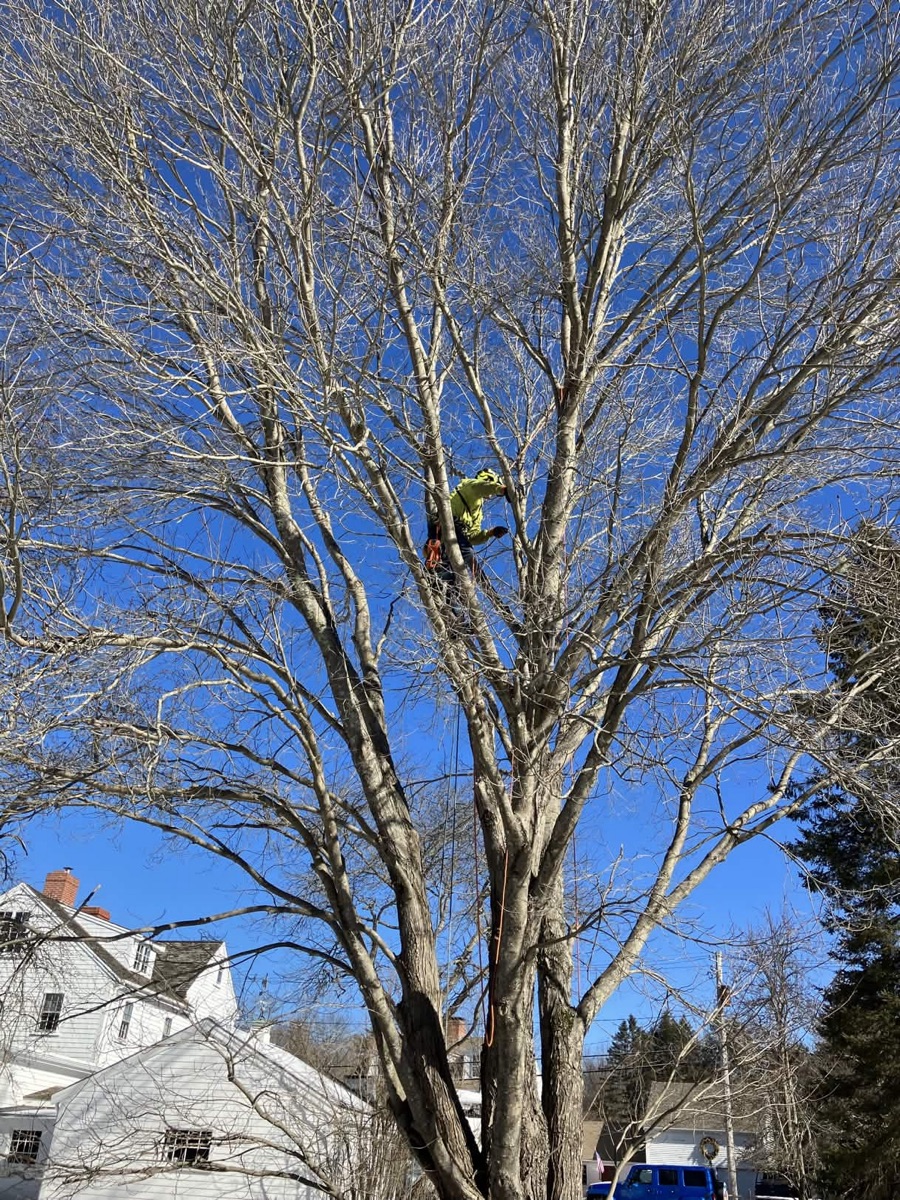
Safety drives our work. Our ISA Certified Arborists use certified climbing gear, aerial lift platforms, and rigging systems to handle hazard limbs over South Cape Beach rooftops or Mashpee Commons walkways. We minimize ground disturbance on your sensitive coastal soils, protecting roots of American holly and eastern red cedar. Homeowners in Barnstable County turn to us for storm restoration after winter gales, restoring white oak crowns battered by 50-mph gusts common in Mashpee's exposed climate.
Tree pruning in Mashpee MA isn't just maintenance—it's risk reduction. Dense pitch pine barrens around your property amplify wildfire threats during dry Cape Cod summers. Pine bark beetles target stressed trees, turning vibrant green into reddish-brown needles. Our pruning thins canopies, lowers beetle infestations, and enhances property values in resort communities like New Seabury. Contact Southeast Arborist at 508-369-5009 for a free assessment tailored to your Mashpee address.
Investing in expert pruning safeguards your home, boosts curb appeal for Mashpee Commons sales, and honors the ecological legacy of Mashpee Wampanoag lands. Our team arrives promptly, cleans up debris, and leaves your landscape enhanced. Whether you manage a single black cherry in Popponesset or a multi-acre pine stand near South Cape Beach State Park, our services scale to your needs. Schedule tree pruning in Mashpee MA today—your trees depend on it.
Why Mashpee Properties Need Tree Pruning
Mashpee's coastal location in Barnstable County exposes your trees to salt spray from the Atlantic, sandy soils with low nutrient retention, and a climate of humid summers, harsh winters, and frequent nor'easters. Pitch pines dominate pine barrens in areas like Popponesset and South Cape Beach, forming dense stands prone to wildfire due to accumulated litter and suppressed understories. Without regular pruning, these trees develop heavy crowns that block sunlight, stress lower branches, and invite pine bark beetles, which thrive in drought-weakened hosts common during Mashpee's dry spells.
Scrub oaks and black oaks, prevalent in Mashpee Neck and Johns Pond neighborhoods, suffer from co-dominant stems that split in high winds. Sandy soil instability exacerbates root rockiness, making these oaks top-heavy and hazardous over driveways or power lines. White oaks along the Mashpee River corridor grow robust but accumulate deadwood from salt exposure, creating drop zones near homes. Pruning removes these risks, following ANSI A300 standards to retain natural form while improving wind resistance.
Atlantic white cedar stands, increasingly rare in Mashpee's great ponds areas, face decline from dense shading and poor drainage. Selective thinning restores light penetration, vital for regeneration in this ecologically significant species. Eastern red cedars on coastal bluffs near New Seabury endure salt pruning but develop epicormic shoots without intervention, weakening main leaders. Sassafras, American holly, tupelo, and black cherry—scattered through Mashpee Commons and resort lots—require crown elevation to clear walkways and vistas, preventing limb failure during hurricanes.
Historical context amplifies urgency. Mashpee Wampanoag stewardship used burns to maintain open forests; today's regrowth demands modern thinning to mimic those conditions, reducing fuel loads around your property. In 2023 alone, Cape Cod saw elevated wildfire incidents in pine barrens, with Mashpee properties at risk due to proximity to South Cape Beach State Park. Pine bark beetles surged post-drought, killing unpruned pitch pines in nearby Falmouth and Sandwich.
Your Mashpee property benefits directly: pruning creates defensible space, mandated in some homeowners associations for wildfire zones. It enhances views from Mashpee Neck decks to Waquoit Bay, boosts solar gain on south-facing roofs, and supports pollinators by favoring holly and tupelo blooms. Unpruned trees lower insurance rates—providers in Barnstable County discount premiums for documented hazard reduction.
Practical advice: Inspect your pitch pines for reddish needles or pitch tubes indicating beetles; prune affected branches immediately to contain spread. For oaks, check for rubbing stems in spring before leaf-out. Avoid topping, which invites decay in Mashpee's humid climate—opt for reduction cuts that maintain branch collars. Southeast Arborist's ISA Certified Arborists assess soil pH (often 4.5-5.5 in Mashpee sands) and adjust techniques, like cabling stressed cedars.
Neglect compounds issues. Overcrowded black cherry in Johns Pond lots shades lawns, promoting moss over grass. Storm-damaged limbs post-nor'easter dangle over Mashpee Commons paths, posing liability. Proactive tree pruning in Mashpee MA preserves your investment amid rising sea levels and intensifying storms projected for Cape Cod.
Our Tree Pruning Process in Mashpee
Southeast Arborist follows a rigorous, step-by-step tree pruning process in Mashpee MA, anchored in ANSI A300 standards and executed by ISA Certified Arborists. We begin with a site assessment at your property, evaluating species like pitch pine for beetle damage or Atlantic white cedar for shading issues. Using resistograph tools, we probe for internal decay in scrub oaks common in Mashpee Neck, documenting findings in a report you receive.
Step one: Hazard identification. Our team scans crowns from ground and aerial perspectives, noting deadwood in black oaks or co-dominant leaders in white oaks. In Popponesset, we prioritize salt-stressed eastern red cedars near shorelines. Safety protocols include perimeter barricades, spotters, and personal protective equipment per OSHA standards.
Step two: Pruning plan development. Tailored to your Mashpee landscape, we specify crown thinning (removing 15-25% of interior branches for pitch pines), elevation (lifting lower limbs 14 feet over Mashpee Commons driveways), or reduction (shortening overextended tupelo branches). For young sassafras in New Seabury, structural pruning removes competing buds to foster a single leader.
Execution uses specialized equipment. Aerial bucket trucks access high-hazards over Johns Pond homes without spiking trunks, preserving cambium in American holly. Rope-and-saddle climbers handle tight South Cape Beach lots, rigging heavy limbs with pulleys to control descent onto tarps. Chainsaws feature low-vibration models; hand pruners ensure precise cuts on black cherry.
Techniques adhere to ANSI A300: We make collar cuts outside the branch bark ridge, avoiding stubs that decay in Mashpee's wet springs. Crown thinning opens pitch pine canopies, reducing wind sail and beetle habitat. Vista pruning in waterfront properties selectively removes scrub oak interior branches, framing views without altering silhouettes. Deadwooding targets greater than 2-inch diameter limbs showing dieback.
For storm restoration—common after nor'easters—we perform suppression pruning on fractured white oak limbs, bolstering remaining structure. Mulch volcano removal protects roots in sandy soils, preventing girdling on Atlantic white cedar.
Post-pruning cleanup exceeds expectations: We chip branches onsite for erosion control on your slopes, haul away debris, and grind stumps if requested. Soil tests guide fertilizer recommendations, countering Mashpee's nutrient-poor sands.
Safety integrates throughout. Daily equipment inspections, two-person minimum crews, and first-aid certified staff ensure zero incidents across our South Shore operations. We coordinate with Mashpee utilities for lines near Mashpee River trees, obtaining clearances pre-work.
Practical homeowner tip: Time inspections post-leaf drop in fall for oaks; thin pines before beetle season in May. Water deeply after pruning to aid wound closure in dry Mashpee summers. Our process yields measurable results—thinned stands show 30% less wind sway, per industry anemometer tests.
From initial call to final walkthrough, expect transparency. We photograph before/after for your records, provide ANSI compliance certification, and schedule follow-ups. Southeast Arborist's Mashpee tree pruning process turns risky overgrowth into resilient assets.
Common Tree Pruning Projects in Mashpee Neighborhoods
Mashpee Commons homeowners request crown elevation on street trees like white oaks and black cherry, clearing pedestrian paths and storefront awnings while thinning for airflow against summer humidity. Pitch pine clusters near shops need deadwood removal to prevent falling hazards during festivals.
In New Seabury, waterfront estates demand vista pruning on eastern red cedar and sassafras, selectively opening sightlines to Nantucket Sound without exposing roots to salt spray. Thinning overcrowded scrub oaks creates defensible space amid pine barrens, addressing HOA wildfire guidelines.
Popponesset properties focus on pine management: removing beetle-infested pitch pines and thinning stands to mimic Wampanoag open forests. Storm restoration prunes nor'easter-damaged tupelo along bay edges, restoring balance.
South Cape Beach lots near the state park undergo hazard limb reduction on black oaks overhanging dunes, stabilizing sandy soils. Atlantic white cedar near trails gets restoration pruning to combat rarity-driven decline.
Mashpee Neck residents prioritize structural pruning for young American holly and black cherry, guiding growth against coastal winds. Crown reduction on mature white oaks safeguards decks overlooking Waquoit Bay.
Johns Pond area sees intensive thinning of pitch pine barrens around seasonal homes, lowering fire risk near the pond's ecologically vital cedar swamps. Deadwooding addresses beetle stress from low water tables.
These projects reflect Mashpee's blend of resort and tribal lands. Our ISA Certified Arborists adapt to each: low-impact rigging in Commons, dune protection at South Cape Beach. Call 508-369-5009 for neighborhood-specific plans.
Tree Pruning Costs in Mashpee, MA
Tree pruning costs in Mashpee MA range from $300-$800 for small pitch pine or scrub oak projects to $2,000-$5,000 for multi-tree thinning in dense New Seabury pine barrens. Factors include tree height (pitch pines over 40 feet add $200+ via aerial lifts), species (Atlantic white cedar requires precision, increasing labor 20%), and access (Johns Pond waterfronts incur crane fees of $500/day).
Deadwood removal starts at $250 per tree—essential for black oaks in Mashpee Commons. Crown thinning for beetle-prone pitch pines in Popponesset averages $400-$1,200, based on branch volume. Vista pruning at South Cape Beach, targeting 15-20% canopy reduction, runs $600-$1,500, enhancing property values by 5-10% per local appraisals.
ANSI A300 standards elevate our pricing but deliver value: proper cuts extend tree life 20-30 years versus DIY damage. ISA certification ensures insurance compliance, potentially saving $200-500 annually on premiums in Barnstable County.
Hourly rates: $150-$250, with 4-8 hours typical for white oak elevation in Mashpee Neck. Travel from Plymouth adds $100 for outer neighborhoods like New Seabury. Volume discounts apply—10% off for three+ trees in Johns Pond clusters.
Compare value: Competitors skip soil assessments, risking root failure in Mashpee sands. We include them free, recommending amendments for sassafras vigor. Post-pruning health reports justify costs, preventing $10,000+ removal later.
ROI shines: Pruned tupelo boosts curb appeal for Mashpee sales, averaging $15,000 uplift. Wildfire defensible space cuts risk 50%, per Cape Cod fire data. Budget $500/tree annually for maintenance.
Get a free quote at 508-369-5009—transparent, no surprises.
When to Schedule Tree Pruning in Mashpee
Schedule tree pruning in Mashpee MA in late fall (November-December) or winter (January-March), when deciduous oaks and cherries lack leaves for clear visibility, and dormant sap reduces disease spread. Avoid spring bud break to prevent stressing pitch pines amid beetle emergence.
Urgency signs: Deadwood exceeding 10% canopy in black oaks—prune immediately. Rubbing branches on white cedars signal failure risk before nor'easters. Beetles on pitch pines? Act by May.
Post-storm: After gales topping 40mph, inspect within 48 hours for hanging limbs over Popponesset roofs.
Annual for high-risk: Thinning pine barrens in South Cape Beach yearly. Biannual for vistas in New Seabury.
Call 508-369-5009 now for seasonal slots.
Frequently Asked Questions About Tree Pruning in Mashpee
**What is ANSI A300 tree pruning, and why does it matter in Mashpee?** ANSI A300 sets science-based standards for cuts promoting health. In Mashpee's sandy soils, it prevents decay in pitch pine stubs, unlike topping that invites beetles.
**How much does tree pruning cost for a pitch pine in Mashpee Commons?** $350-$600 for a 30-foot tree, including deadwooding and thinning. Factors: access and hazard level.
**When is the best time for oak pruning in New Seabury?** Winter dormancy—reduces sap flow, ideal for salt-stressed black oaks overlooking the bay.
**Can you prune Atlantic white cedar near Johns Pond?** Yes, with selective thinning to restore rare stands. We protect swamp edges per ecological guidelines.
**What are signs my scrub oak in Popponesset needs pruning?** Co-dominant stems, deadwood, or overcrowding blocking light—common in pine barrens.
**How does Southeast Arborist handle storm damage in Mashpee Neck?** Rapid response with restoration pruning on tupelo and holly, using rigging for safe removal.
**Is tree pruning required for wildfire defensible space in South Cape Beach?** Often yes, per HOAs—thinning pitch pines 30 feet from structures.
**Do you serve Falmouth or Sandwich alongside Mashpee?** Yes, our South Shore coverage includes them. Call 508-369-5009.
Tree Pruning Throughout Mashpee
Southeast Arborist delivers tree pruning across Mashpee neighborhoods: Mashpee Commons, New Seabury, Popponesset, South Cape Beach, Mashpee Neck, Johns Pond. We extend to Falmouth, Barnstable, Sandwich.
ISA Certified Arborists ensure ANSI A300 precision for your pitch pine, oak, cedar needs. Call 508-369-5009 for service.