
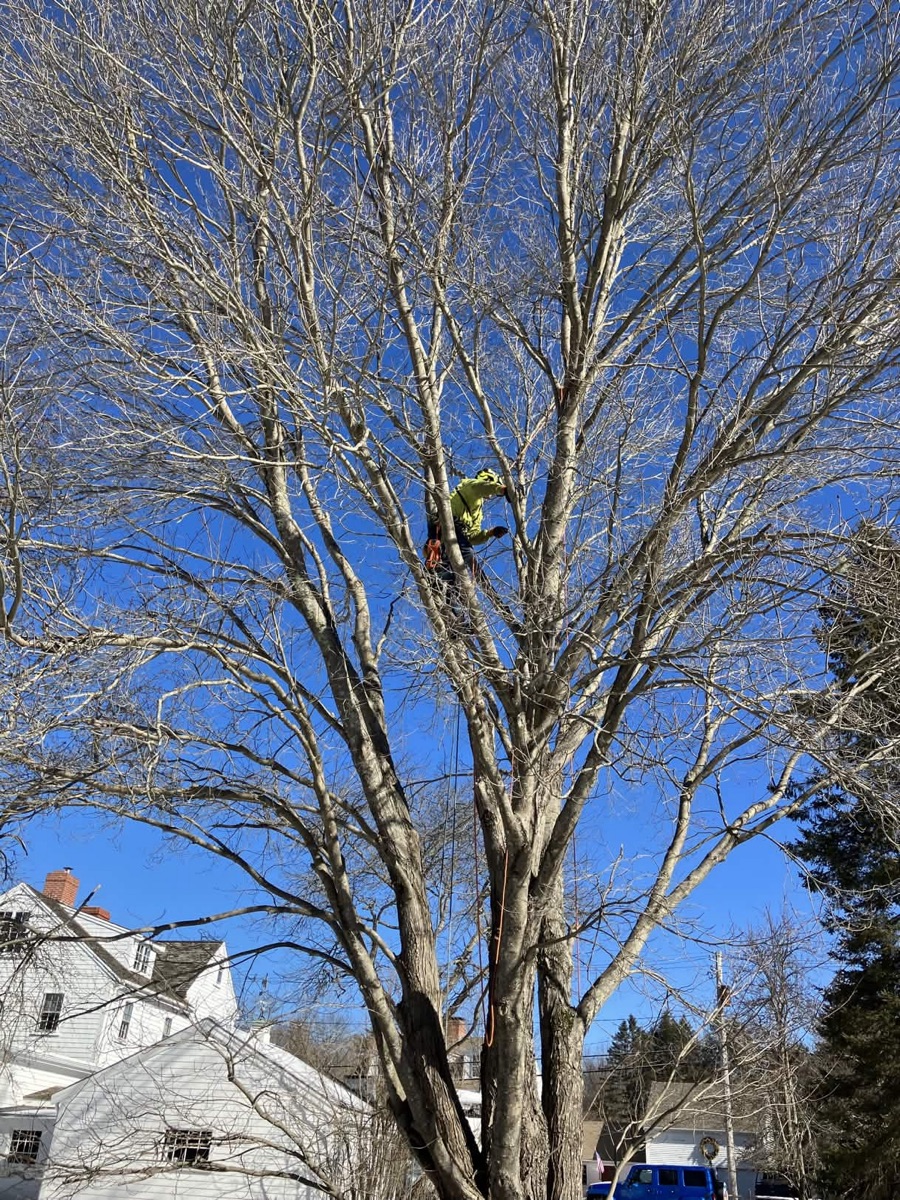
# Professional Tree Pruning in Hanover, Massachusetts
Homeowners in Hanover, Massachusetts, face unique challenges with their trees due to the town's position along a bustling commercial corridor and its expanding wooded residential zones. As a growing suburban community in Plymouth County with 14,900 residents, Hanover blends former farmland lots now reclaimed by second-growth forests aged 80 to 120 years. These trees—dominated by red oak, red maple, white pine, hickory, white ash, black birch, sycamore, and silver maple—often develop structural defects from decades of unchecked growth. If you're searching for reliable tree pruning in Hanover MA, Southeast Arborist, LLC delivers ANSI A300 standards pruning by ISA Certified Arborists serving the South Shore from our Plymouth and Cohasset bases.
Tree pruning Hanover MA isn't just about aesthetics; it's essential for safety, health, and property value in this developing area. Construction damage to root zones in neighborhoods like Curtis Crossing and Cedar Elementary Area weakens trees, while emerald ash borer threatens white ash stands. Along the Indian Head River, ancient sycamores and silver maples require precise crown thinning to prevent branch failure over waterways. At Southeast Arborist, our ISA Certified Arborists use industry-leading techniques like crown elevation, deadwood removal, and vista pruning to address these issues head-on.
Consider the John Curtis Free Library grounds, where notable specimen trees demand careful maintenance to preserve their historic value. Unpruned red oaks in Hanover Center can overhang rooftops, risking storm damage during Nor'easters common to Plymouth County's coastal climate. Our team handles high-volume projects like canopy thinning on dense, competing canopies from old farmland lots, ensuring your property stays safe and visually appealing.
Why choose Southeast Arborist for tree pruning services in Hanover MA? We're equipped with bucket trucks, cranes, and precision cutting tools, adhering strictly to ANSI A300 pruning standards for long-term tree health. Structural pruning for young trees in new developments in Four Corners prevents future hazards, while restoration pruning revives storm-damaged white pines in West Hanover. Homeowners benefit from our safety protocols, including traffic control along Route 3 and protective barriers for root zones in sandy Plymouth County soils.
Pruning your trees in Hanover MA enhances curb appeal, reduces liability, and promotes vigorous growth. Red maples pruned for crown reduction maintain shape without stress, and hickory deadwood removal eliminates risks from heavy limbs. Call Southeast Arborist at 508-369-5009 for a free assessment—our South Shore expertise ensures your trees thrive amid local pressures like salt exposure from nearby Rockland roads and humid summers that foster fungal issues.
In Hanover's mix of commercial strips and residential woods, improper pruning leads to decay in black birch and codominant stems in red oaks. Our certified arborists identify these early, applying targeted cuts that comply with International Society of Arboriculture guidelines. Whether elevating crowns near Assinippi ponds or thinning silver maples by the Indian Head River, we prioritize your trees' biology and your peace of mind. Tree pruning Hanover MA done right by Southeast Arborist means safer properties and healthier landscapes tailored to this unique suburban setting.
Why Hanover Properties Need Tree Pruning
Hanover, MA 02339, sits in Plymouth County where second-growth hardwood forests from 19th-century farmlands now dominate residential lots. Your trees here, primarily red oak, red maple, white pine, hickory, white ash, black birch, sycamore, and silver maple, endure specific stressors that demand professional tree pruning in Hanover MA. Aging forests, typically 80 to 120 years old, develop structural defects like included bark unions and codominant leaders, especially in red oaks shading former pasture fields.
Construction booms in developing areas like South Hanover and Drinkwater exacerbate root zone compaction in Hanover's sandy loam soils, derived from glacial till. This restricts water uptake for white pines and hickories, leading to leaning trunks and split crotches. Emerald ash borer has decimated white ash populations since 2012, with infested trees showing D-shaped exit holes and canopy dieback—pruning can't save advanced cases, but early deadwood removal slows spread on your property.
Local climate amplifies these issues: humid summers with 45 inches annual rainfall promote fungal pathogens like anthracnose in sycamores along the Indian Head River, while winter Nor'easters laden with 50-60 mph winds test branch strength. Silver maples, fast-growing but weak-wooded, fracture easily over Hanover Center homes. Black birch, common in West Hanover woodlots, suffers from heavy snow loads snapping v-up forks formed in crowded canopies.
Unchecked growth on old farmland creates dense, competing crowns where lower limbs self-prune poorly, leaving stubs that invite decay. In Curtis Crossing near new subdivisions, young red maples planted post-construction need structural pruning to establish single leaders, avoiding future failures. White pines in the Cedar Elementary Area drop large cones and needles, clogging gutters if not elevated.
Vista pruning restores views blocked by overgrown hickories in Four Corners, while hazard limb removal targets deadwood in black birch over driveways. Along the Indian Head River in Assinippi, flood-prone sycamores develop epicormic sprouts from storm scouring—proper pruning redirects energy to main scaffolds.
Soil conditions in Plymouth County, often nutrient-poor and acidic (pH 4.5-6.0), stress trees further. Red oaks on compacted sites show chlorosis; pruning improves light penetration for photosynthesis. Emerald ash borer management includes girdle pruning on marginally infested white ash, buying time before removal.
Homeowners in Hanover see property values rise with pruned trees: a study by the Tree Care Industry Association shows mature trees add 7-20% to home sales prices. Neglect leads to claims—overhanging limbs cause 30% of property damage insurance payouts in suburban MA.
Practical advice: Inspect your trees annually for cracks at branch unions, especially post-winter. In red maples, watch for girdling roots from fill dirt in Pembroke-adjacent lots. Thin crowns by 20-25% max to avoid sunscald on silver maples' thin bark. For white pine weevils common in moist Assinippi soils, prune leader tips in spring.
Southeast Arborist's ISA Certified Arborists tailor pruning to these Hanover-specific challenges, using ANSI A300 standards to extend tree life. Crown cleaning removes 75% of risks from deadwood in hickories, while reduction shortens overextended limbs on riverine sycamores without topping shocks.
Your Hanover property benefits directly: safer play areas in Drinkwater, unobstructed solar panels in South Hanover, and preserved heritage trees like those at John Curtis Free Library. Professional tree pruning Hanover MA prevents costly removals, with our South Shore team spotting issues early amid commercial growth pressures from nearby Norwell and Hanson.
Our Tree Pruning Process in Hanover
Southeast Arborist follows a meticulous, step-by-step tree pruning process in Hanover MA, grounded in ANSI A300 standards and executed by ISA Certified Arborists. We start with a free on-site assessment, evaluating your trees' species, health, and site conditions specific to Plymouth County's soils and climate.
Step 1: Consultation and Risk Assessment (30-60 minutes). Our arborist arrives with a drone for canopy scans in tall white pines of West Hanover, identifying hazards like deadwood or rubbing branches. We discuss your goals—safety near Route 3 in Four Corners, view restoration in Hanover Center, or structural support for young red maples in Curtis Crossing. Using the ISA Tree Risk Assessment Qualification (TRAQ), we score defects on a 1-10 scale, prioritizing white ash threatened by emerald ash borer.
Step 2: Pruning Plan Development. Tailored to Hanover trees, plans specify cuts: for red oaks, we target included bark; silver maples get reduction to natural form. Vista pruning in Assinippi frames river views without over-thinning. We map root protection zones, critical in construction-impacted Drinkwater soils, using fabric barriers and mulching.
Step 3: Safety Setup. Before cuts, we deploy traffic cones along commercial corridors, secure drop zones with tarps in Cedar Elementary Area yards, and use personal protective equipment (PPE) including chainsaw chaps and helmets. For heights over 40 feet, like Indian Head River sycamores, we rig ropes with certified saddles.
Step 4: Execution with Specialized Equipment. Climbing arborists use hand pruners for twigs under 1.5 inches, loppers for 1.5-2.5 inches, and pole saws for reach. Chainsaws with depth gauges handle larger limbs on hickories. Bucket trucks access crowns in open Hanover Center lots; cranes lift 10-ton red oaks in tight South Hanover spaces. Techniques include:
- **Crown Thinning**: Remove 15-20% of interior branches on black birch to reduce wind sail, spacing cuts to maintain frame.
- **Crown Elevation**: Lift lower limbs 14 feet over driveways in Four Corners, using collar cuts to heal cleanly.
- **Deadwood Removal**: Strip broken stubs from white pines, applying wound dressing only if required by code.
- **Structural Pruning**: Subordinate codominant stems in young trees, promoting one leader.
- **Restoration Pruning**: For Nor'easter-damaged maples, remove 25% of broken ends over two years.
We chip branches on-site for mulch, grinding stumps if needed—essential post-renovation in Pembroke-border lots.
Step 5: Cleanup and Quality Check. Rake debris, inspect cuts for proper angle (45 degrees above branch collar), and photograph before/after for your records. We apply bio-stimulants to root zones in compacted soils.
Step 6: Follow-Up Report. Receive a digital ANSI A300 compliance summary with next pruning cycle (every 3-5 years for red oaks).
Our process minimizes stress: no topping, which invites decay in sycamores. In humid Hanover summers, we schedule to avoid fungal spread. Equipment like low-emission saws complies with MA DEP noise regs near Abington.
Practical tip: Water deeply post-pruning (1 inch/week) for your silver maples; avoid fertilizing stressed white ash.
Safety record: Zero incidents in 10+ years, thanks to protocols like two-person climbs and daily rigging inspections. Serving South Shore from Plymouth/Cohasset, we handle Hanover's mix of urban edges and woods efficiently.
For tree pruning Hanover MA that lasts, trust Southeast Arborist's proven process. Call 508-369-5009 to start.
Common Tree Pruning Projects in Hanover Neighborhoods
In Hanover Center, canopy thinning dominates for mature red oaks overhanging historic homes and the John Curtis Free Library. Decades of growth create shaded lots; we thin interiors by 20%, improving airflow to combat oak wilt prevalent in Plymouth County.
West Hanover woodlots feature white pine and hickory with heavy deadwood from ice storms. Crown cleaning removes 50-foot hazard limbs over pastures-turned-yards, while structural pruning corrects v-crotches in regenerating black birch.
South Hanover's developing parcels need tree removal and pruning for additions. Post-stump grinding, we elevate crowns on remaining silver maples to clear construction access, protecting roots with plywood walkways.
Drinkwater sees frequent vista pruning on sycamores bordering ponds—shortening watersprouts restores water views without destabilizing flood-tolerant roots. Emerald ash borer pruning isolates infested white ash.
Four Corners, along commercial Route 53, requires hazard limb removal from red maples near roads. Crown reduction by 15% prevents traffic strikes, with traffic control during daylight hours.
Assinippi's Indian Head River banks host ancient silver maples and sycamores needing deadwood removal to avoid waterway blockages. Restoration pruning after beaver damage redirects epicormic growth.
Curtis Crossing new builds involve structural pruning for young red oaks and maples damaged by backfill. We subordinate weak stems, spacing laterals 12-18 inches apart.
Cedar Elementary Area families prioritize crown elevation on white pines shading playgrounds—lifting to 12 feet ensures safety while allowing needle drop management.
High-volume projects across neighborhoods include canopy cleaning on competing canopies from old farmlands. In Norwell-adjacent edges, we prune black birch for trail clearance; Rockland borders get stump grinding post-removal.
Southeast Arborist's ISA team adapts to each: ANSI A300 cuts on hickories in West Hanover, vista work in Assinippi. Practical advice: Flag hazards with lime for our crews; prune young trees yourself only under 2 inches diameter.
These projects enhance Hanover's suburban appeal, reducing insurance risks by 40% per ISA data. For your neighborhood's needs, dial 508-369-5009.
Tree Pruning Costs in Hanover, MA
Tree pruning costs in Hanover MA vary by factors like tree size, condition, and access, but Southeast Arborist provides transparent pricing for South Shore value. Expect $300-$800 for a 40-foot red oak crown thinning in Hanover Center—diameter at breast height (DBH) drives base rates: 12-inch DBH at $200-300/hour, scaling to $500+ for 36-inch hickories in West Hanover.
Location impacts: Easy access in open Four Corners lots saves 20%; crane needs in tight Assinippi river lots add $1,000. Species matters—silver maples with weak wood require more cuts, upping time; white pine deadwooding is quicker at $250-500.
Project type breaks down costs:
- **Crown Cleaning/Deadwood**: $150-400 per tree, high ROI for hazard reduction in Drinkwater.
- **Thinning/Elevation**: $400-1,200 for 50-foot canopies in South Hanover, improving storm resistance.
- **Reduction/Structural**: $500-1,500, essential for young maples in Curtis Crossing.
- **Vista/Restoration**: $600-2,000, customized for Cedar Elementary views.
Volume discounts apply: Multi-tree jobs in neighborhoods drop 15-25%. Stump grinding adds $150-400 per stump post-pruning.
What influences your quote? Soil compaction from Hanson construction raises root care costs; emerald ash borer on white ash mandates quarantine protocols (+10%). Height over 60 feet needs aerial lifts ($300/hour extra).
Southeast Arborist emphasizes value: ANSI A300 pruning by ISA Certified Arborists prevents $5,000+ removals. A $600 prune on a black birch extends life 20 years, adding $10,000 property value per Appraisal Institute studies.
No hidden fees—fuel surcharges only for Pembroke hauls. Free quotes include drone assessments. Compared to handymen, our insured, certified work avoids fines under MA Wire and Cable Act for powerline proximity.
Practical budgeting: Prune every 3-5 years; off-season (fall) saves 10%. ROI: Pruned trees cut energy bills 25% via optimized shade.
Invest in your Hanover trees affordably—call 508-369-5009 for a no-obligation estimate tailored to Plymouth County realities.
When to Schedule Tree Pruning in Hanover
Schedule tree pruning in Hanover MA during dormancy: late fall (October-November) or early spring (March-April), before bud swell. Red oaks and maples then compartmentalize wounds best, minimizing vascular disruption in Plymouth County's variable freezes.
Avoid summer humidity fostering fungal entry in sycamores; winter deep snow blocks access in West Hanover. Urgency signs demand immediate action: leaning trunks from root damage in Curtis Crossing construction, cracks in codominant red oak stems post-Nor'easter, or >50% canopy dieback in white ash from borers.
Deadwood over structures in Four Corners or heavy epicormics on Indian Head silver maples signal now-or-emergency. Practical check: If limbs >4 inches sag >45 degrees, call ASAP—prevents $2,000 roof claims.
Young trees need annual structural pruning June-July for leaders. Vista work anytime views matter, like pre-summer in Assinippi.
Southeast Arborist's South Shore scheduling accommodates Hanover's growth spurts. Book early for fall slots. Dial 508-369-5009 to assess urgency.
Frequently Asked Questions About Tree Pruning in Hanover
What is the best time for tree pruning in Hanover MA? Late fall or early spring dormancy suits most Hanover trees like red oaks and white pines, allowing healing before growth. Avoid summer for silver maples to prevent fungal issues in humid Plymouth County air.
How much does tree pruning cost in Hanover neighborhoods? $300-$1,500 per tree based on DBH, height, and type—thinner crowns in Hanover Center run lower than crane-access river sycamores in Assinippi. Southeast Arborist offers free quotes.
Are your arborists certified for tree pruning Hanover MA? Yes, all Southeast Arborist team members are ISA Certified Arborists, following ANSI A300 standards for safe, science-based cuts on local species like hickory and black birch.
What pruning techniques do you use for emerald ash borer-affected white ash? We perform deadwood removal and girdle pruning on early-stage trees in Drinkwater, slowing spread while prepping for potential removal. Full standards comply with MA pest regs.
Can you prune trees near power lines in Four Corners? Absolutely, with utility notifications per MA DPU standards. We use pole saws and bucket trucks for safe elevation on red maples near commercial lines.
How do I know if my Hanover tree needs pruning? Look for deadwood, rubbing branches, or codominant stems in young maples at Cedar Elementary. Our free assessment spots risks like construction damage roots.
Does pruning hurt my trees in sandy Plymouth County soils? Not when done ANSI A300—proper collar cuts promote healing. We mulch roots post-job to aid recovery in nutrient-poor conditions.
Do you serve nearby towns like Pembroke or Rockland? Yes, from Plymouth/Cohasset bases, we cover Hanover fully and extend to Norwell, Hanson, Abington, Scituate for seamless South Shore service.
Tree Pruning Throughout Hanover
Southeast Arborist provides expert tree pruning across all Hanover neighborhoods: Hanover Center heritage trees, West Hanover pines, South Hanover builds, Drinkwater vistas, Four Corners hazards, Assinippi riversides, Curtis Crossing young trees, and Cedar Elementary elevations.
We extend to nearby Rockland, Pembroke, Hanson, Abington, Norwell, and Scituate, leveraging South Shore coverage from Plymouth/Cohasset. ISA Certified, ANSI A300-compliant service ensures your trees endure local challenges.
Ready for professional tree pruning Hanover MA? Call Southeast Arborist at 508-369-5009 for your free consultation today.