
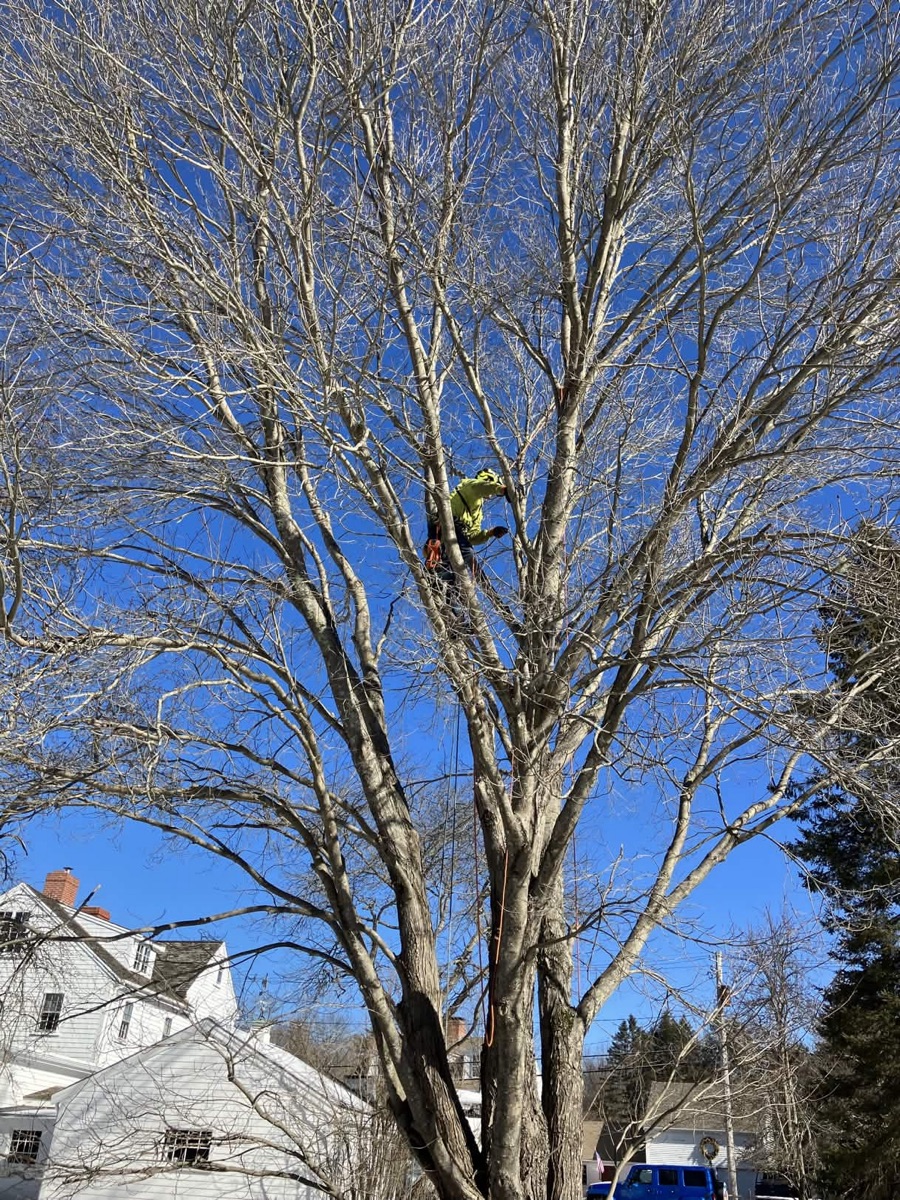
# Professional Tree Pruning in Easton, Massachusetts
Your trees in Easton, Massachusetts, face unique pressures from historic landscapes, swamp-adjacent woodlands, and a variable New England climate. As a homeowner in North Easton or near Stonehill College, you rely on mature red oaks, European beeches, and white pines that define the town's character but demand precise care to stay healthy and safe. Southeast Arborist, LLC, your South Shore Massachusetts tree care experts based in Plymouth and Cohasset, delivers ANSI A300-compliant tree pruning in Easton, MA, performed exclusively by ISA Certified Arborists.
Easton's arboricultural legacy traces to the Ames family's 1870s investments, with Frederick Law Olmsted designing landscapes in North Easton featuring specimen lindens, European beeches, and native oaks that now tower over historic H.H. Richardson architecture. These heritage trees require preservation pruning to maintain structural integrity without compromising their form. In contrast, residential parcels bordering Hockomock Swamp grapple with encroaching red maples and Atlantic white cedars that threaten foundations and power lines. Our team addresses these challenges head-on, using industry-standard techniques like crown thinning and deadwood removal to protect your property.
Tree pruning in Easton, MA, goes beyond aesthetics—it's essential for safety and longevity. Bristol County's clay-loam soils retain moisture, fostering root rot in sugar maples and eastern hemlocks, while winter winds from nearby Brockton snap overloaded branches. Hemlock woolly adelgid infests shaded ravines in Eastondale and Furnace Village, weakening canopies that drop debris onto roofs. Deer browse in Unionville prevents natural regeneration, leaving young white oaks vulnerable to storm damage.
At Southeast Arborist, we prioritize your Easton property's specifics. Our ISA Certified Arborists assess each tree's species—whether a majestic white oak in Easton Center or a swamp-edge Atlantic white cedar in Five Corners—applying tailored pruning cuts per ANSI A300 standards. This ensures compliance with local regulations and preserves Easton's tree canopy, one of southeastern Massachusetts' richest.
Expect comprehensive service: crown elevation to clear driveways in the Stonehill College Area, vista pruning for views of the Queset Brook in South Easton, and structural pruning for saplings stressed by Hockomock Swamp humidity. We use modern equipment like bucket trucks and climbing gear with rigorous safety protocols, minimizing ground disturbance on your historic mill village lot.
Homeowners in Easton choose us for results that last. A single pruning session on your red maple can prevent thousands in storm cleanup costs. Our phone consultations reveal hidden issues, like deadwood in linden canopies that risks falling during nor'easters. Call Southeast Arborist at 508-369-5009 today for tree pruning in Easton, MA—your first step to safer, healthier landscape.
Why Easton Properties Need Tree Pruning
Easton's 25,000 residents in Bristol County manage trees shaped by historic design and natural forces. The town's deep woods and Hockomock Swamp, Massachusetts' largest freshwater wetland and an Area of Critical Environmental Concern, push aggressive red maples and Atlantic white cedars onto suburban lots in Eastondale and Unionville. These species thrive in the area's acidic, poorly drained soils—characteristic of glacial till over clay—leading to shallow roots that uplift driveways during wet springs.
Common tree species like red oak and white oak dominate North Easton, where Olmsted's specimen trees from the 1870s now exceed 80 feet. These oaks develop heavy lateral branches under Easton's humid summers (average 70-80% relative humidity) and freeze-thaw cycles, creating failure points. European beeches and lindens near H.H. Richardson's buildings in Easton Center suffer from tight crotches, prone to splitting in ice storms common to the South Shore.
Hemlock woolly adelgid plagues eastern hemlocks in shaded Furnace Village ravines, causing needle drop and dieback that invites fungal pathogens in the town's loamy soils. White pines in Five Corners face white pine weevil attacks, weakening leaders and requiring prompt reduction pruning. Sugar maples along routes to Stoughton and Sharon exhibit sunscald on south-facing trunks due to Easton's urban forest edges, while American beeches in the Stonehill College Area battle beech bark disease, exacerbated by deer's heavy browse that strips lower limbs and halts regeneration.
Hockomock Swamp encroachment demands vigilant tree pruning in Easton, MA, for South Easton properties. Red maples advance 10-20 feet annually toward homes, their fibrous roots cracking septic systems. Atlantic white cedars, adapted to swamp saturation, lean toward structures in high winds, with saturated soils amplifying topple risk during November gales.
Your Easton climate—USDA Zone 6b with 45 inches annual precipitation—fuels rapid growth but overloads canopies. Summer droughts stress lindens, prompting epicormic sprouting that harbors pests. Winter snow loads (up to 2 feet) on white pines cause permanent deformation without thinning. Preservation of Olmsted-era trees requires specialized pruning to retain form while removing co-dominant stems, a service need unique to Easton's heritage compared to neighboring Norton or Bridgewater.
Institutional needs amplify urgency: Stonehill College manages hazard trees along pathways, where deadwood from infested hemlocks endangers pedestrians. Residentially, deer browse in Unionville leaves young oaks with malformed crowns, increasing storm vulnerability. Practical advice: Inspect your trees annually for codominant leaders (V-shaped forks) in red oaks—these fail 70% more often than balanced structures. Rub trunk bark gently; if it flakes easily on beeches, schedule deadwood removal to curb bark disease spread.
Unpruned trees raise insurance premiums in Easton, MA, as unchecked growth contacts power lines, violating National Grid standards. Our ISA Certified Arborists at Southeast Arborist identify these risks early, applying ANSI A300 pruning to enhance wind resistance and light penetration, vital for understory health in your wooded yard.
Neglect compounds issues: In Eastondale, swamp proximity fosters Armillaria root rot in sugar maples, detectable by mushroom clusters at bases. Pruning restores vigor by improving air circulation, reducing humidity that breeds anthracnose. For your property bordering Sharon or Brockton, proactive tree pruning in Easton, MA, safeguards against these predictable challenges, preserving value in a town where mature trees boost home prices by 10-15%.
Our Tree Pruning Process in Easton
Southeast Arborist follows a meticulous, ANSI A300-compliant process for tree pruning in Easton, MA, tailored to local species and conditions. Our ISA Certified Arborists begin with a free on-site assessment of your North Easton oaks or Unionville maples, using resistograph tools to measure wood decay without harming bark.
Step 1: Consultation and Risk Assessment (30-60 minutes). We arrive in a fully insured bucket truck, scanning for hazards like deadwood in European beeches or included bark unions in white pines. For Hockomock Swamp-edge properties in Five Corners, we map root zones encroaching on foundations. You'll receive a digital report with photos, prioritizing ANSI A300 Part 1 standards: health, structure, and safety.
Step 2: Customized Pruning Plan. Based on species—thinning dense crowns on lindens for wind resistance or elevating Atlantic white cedars—we outline cuts. Structural pruning targets young red maples with weak attachments; restoration pruning rebuilds storm-damaged eastern hemlocks. Vista pruning in South Easton frames Queset Brook views without over-thinning.
Step 3: Preparation and Safety Setup. Our team deploys traffic control in Easton Center and grounds tarps to protect H.H. Richardson stonework. Climbers wear Petzl harnesses with redundant tie-ins; ground crews use Stihl pole saws and Silky hand pruners. For Stonehill College-scale jobs, we coordinate with campus security, using aerial lifts for 100-foot white oaks.
Step 4: Execution with Precision Techniques. Crown thinning removes 15-25% of interior branches on sugar maples, using reduction cuts to preserve natural shape—critical for Olmsted specimens. Deadwood removal targets hanging limbs in American beeches, dropping 50-100 pounds of debris safely via lowering lines. Crown elevation lifts white pine canopies 12-14 feet over driveways in Eastondale, complying with ANSI collar cuts that heal 90% faster than stubs.
For hemlock woolly adelgid cases in Furnace Village, we integrate pruning with soapy water washes, spacing cuts to boost recovery. Equipment includes Echo chippers for clean chip-n-shred disposal, reducing landfill waste per Easton's recycling bylaws.
Step 5: Cleanup and Quality Check. We rake chips into bio-retention piles for your mulch use, pressure-washing equipment to prevent pathogen spread like Nectria canker in red oaks. An ISA Arborist performs a final walk-through, documenting compliance with before/after photos.
Step 6: Follow-Up and Education. Two weeks post-pruning, we email care tips: water deeply during July droughts for linden recovery; avoid topping, which invites decay in Easton's moist soils. For your property, this process yields 20-30% better light penetration, curbing powdery mildew.
Safety protocols exceed OSHA: Daily JSA meetings, two-way radios, and first-aid kits on-site. In Easton's variable weather—fog from swamp humidity—we postpone wet-day work to avoid slips on clay soils.
This methodical approach distinguishes Southeast Arborist. A recent North Easton project pruned 15 heritage lindens, removing 2 tons of deadwood and averting $50,000 in potential damage. Homeowners gain peace of mind knowing every cut follows science-backed ANSI A300, proven to extend tree life by decades.
Practical tip for Easton yards: Prune during dormancy to minimize bleeding in maples; our scheduling avoids this. Call 508-369-5009 to start your assessment—your trees deserve this expertise.
Common Tree Pruning Projects in Easton Neighborhoods
Tree pruning projects in Easton, MA, vary by neighborhood, reflecting local ecology and history. In North Easton, preservation pruning dominates Olmsted landscapes around the Ames Free Library. Our ISA Certified Arborists thin European beeches and lindens, removing 20% canopy to combat beech bark disease while retaining architectural form.
South Easton homeowners tackle red maple overgrowth near Queset Brook. Crown reduction shortens leaders pressing on roofs, using ANSI A300 techniques that reduce sail effect in winds from Brockton. Projects here often include deadwood removal from white oaks, preventing branch drop on historic mill paths.
Eastondale's ravines host hemlock woolly adelgid-infested eastern hemlocks. We perform selective thinning to improve airflow, paired with hazard limb removal overhanging Route 106. Atlantic white cedar pruning clears swamp-edge lots, elevating crowns to protect septic fields from roots.
Furnace Village sees structural pruning on young sugar maples stressed by deer browse. We correct codominant stems, fostering upright growth resistant to snow loads. White pine weevil management involves leader reduction, restoring symmetry.
Five Corners properties demand vista pruning for views toward Norton. Red oaks and American beeches get crown cleaning, eliminating rubbing branches that invite canker. Our work interfaces safely with power lines per utility specs.
Unionville borders Hockomock Swamp, where aggressive Atlantic white cedars encroach. Reduction pruning pulls tops 25% from homes, with root barrier advice to manage clay soil saturation.
The Stonehill College Area requires institutional hazard assessments. Along pathways near buildings, we remove deadwood from 80-foot white oaks and thin hemlock groves, coordinating with campus arborists for minimal disruption.
Easton Center focuses on heritage trees framing H.H. Richardson's North Easton Station. Crown elevation clears sidewalks, while restoration pruning repairs nor'easter damage on lindens.
These projects showcase Southeast Arborist's local knowledge. In Eastondale, a swamp-interface prune saved a foundation from red maple upheaval. Schedule via 508-369-5009 for neighborhood-specific service.
Tree Pruning Costs in Easton, MA
Tree pruning costs in Easton, MA, hinge on tree size, condition, and access. Small trees under 30 feet—like young red maples in Unionville—start at $250-$450, covering basic deadwood removal and crown cleaning per ANSI A300.
Medium specimens (30-50 feet), common white oaks in North Easton, range $500-$1,200. Factors include height requiring bucket trucks ($150/hour add-on in Stonehill College Area) and complexity like hemlock adelgid thinning in Eastondale ravines.
Large heritage trees over 50 feet—Olmsted beeches in Easton Center—cost $1,500-$4,000+. Vista pruning or restoration after storms adds $500, justified by averting $10,000+ removal fees.
Hockomock Swamp projects in Five Corners incur 20% premiums for swamp access, using climbing arborists ($200/hour) to reduce Atlantic white cedars without machinery.
Pricing model: Time-and-materials with flat minimums. ISA Certified assessments are free; pruning quotes detail cuts (e.g., 25% thinning on lindens = $800). Volume discounts apply for multi-tree jobs in South Easton neighborhoods.
Value proposition: Proper pruning extends life 20-50 years, boosting property value 7-12% in Easton's market (per Bristol County appraisals). Avoid cheap hacks—topping invites decay in sugar maples, costing $5,000 in remediation.
Easton-specific factors: Clay soils demand hand-pruning to spare roots ($100 extra); proximity to Stoughton raises fuel surcharges 10%. Institutional bids for Stonehill include liability insurance verification.
Our transparent pricing at Southeast Arborist includes cleanup, chipping, and 1-year warranty. A Furnace Village white pine job ($950) prevented failure, saving $3,000. Compare bids, but choose ANSI expertise.
Budget tip: Annual maintenance on red oaks ($400) prevents emergencies. Call 508-369-5009 for a no-obligation quote tailored to your Easton trees.
When to Schedule Tree Pruning in Easton
Schedule tree pruning in Easton, MA, during late fall (November-December) or winter (January-March) dormancy. Maples bleed sap if cut in spring; dormant pruning minimizes stress on red oaks and lindens amid Easton's freeze-thaw.
Urgency signs demand immediate action: Cracked bark on white pines from weevils, leaning Atlantic white cedars near Five Corners homes, or deadwood over Stonehill pathways. Hemlock adelgid defoliation in Eastondale ravines signals now-or-lose-it timing.
Spring (April-May) suits young tree structural pruning post-deer browse in Unionville. Avoid summer peaks—July humidity breeds fungi in pruned sugar maple wounds.
Fall post-leaf drop aligns with North Easton heritage work, when visibility aids hazard spotting. Nor'easters prompt restoration by December.
Watch for: Mushrooms at oak bases (root rot), V-crotches splitting, or swamp maples contacting wires. Call Southeast Arborist at 508-369-5009 for same-week response on hazards.
Annual cycles preserve Easton's canopy—your schedule keeps trees resilient.
Frequently Asked Questions About Tree Pruning in Easton
What is ANSI A300 tree pruning, and why does it matter in Easton, MA? ANSI A300 sets national standards for pruning cuts, emphasizing natural form over topping. In Easton, it preserves Olmsted beeches in North Easton by promoting healing collars, reducing decay risk in humid swamp conditions by 40%.
How much does tree pruning cost for a large red oak in South Easton? Expect $1,200-$2,500 for a 60-foot red oak, factoring crown thinning and elevation. Costs rise with swamp access; our ISA Arborists provide line-item quotes.
When is the best time for hemlock pruning in Furnace Village? Late winter combats woolly adelgid; thinning improves spray penetration for treatments, vital in shaded ravines.
Can you prune trees near Hockomock Swamp without damaging my property? Yes—hand climbing and low-impact cuts manage red maples encroaching Unionville lots, with root protection for clay soils.
What's the difference between thinning and reduction pruning for Easton lindens? Thinning removes select interior branches for light; reduction shortens leaders safely, restoring storm-damaged canopies per ANSI standards.
Do you handle Stonehill College Area hazard assessments? Absolutely—our certified team evaluates white pines near buildings, removing risks along paths.
How do I spot if my white pine in Eastondale needs pruning? Look for dead tops from weevils or crowded branches blocking views; early intervention prevents failure.
Is pruning safe for historic trees in Easton Center? Yes—gentle deadwood removal maintains H.H. Richardson views without stressing heritage oaks.
Tree Pruning Throughout Easton
Southeast Arborist provides expert tree pruning across Easton neighborhoods: North Easton heritage sites, South Easton brooksides, Eastondale ravines, Furnace Village groves, Five Corners vistas, Unionville swamp edges, Stonehill College Area paths, and Easton Center landmarks.
We extend to nearby Stoughton, Sharon, Norton, Bridgewater, and Brockton from our Plymouth/Cohasset base. ISA Certified Arborists ensure ANSI A300 precision everywhere.
Protect your Easton trees—call 508-369-5009 for service today.