
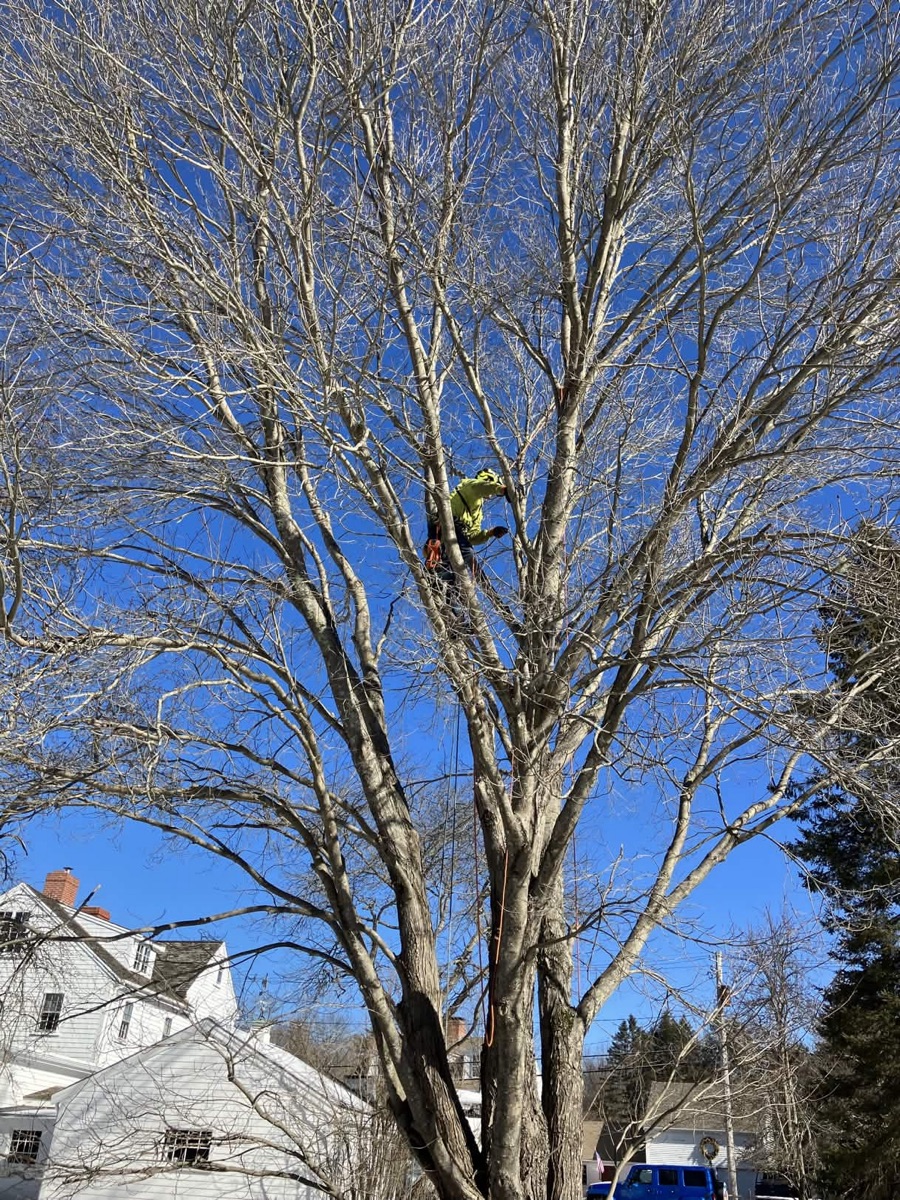
# Professional Tree Pruning in Dedham, Massachusetts
If you own property in Dedham, Massachusetts, your trees face unique pressures from the town's historic legacy, riverine environment, and ongoing development. Dedham, founded in 1636 as one of the earliest inland settlements in the Massachusetts Bay Colony, boasts a diverse urban forest documented by its shade tree committee since the early 1900s. Street trees along High Street and the town common include venerable American elms and sugar maples that require precise pruning to preserve their health amid Norfolk County's clay-loam soils and variable coastal climate. Homeowners in neighborhoods like Dedham Square and Riverdale often contend with overgrown red oaks encroaching on historic structures or white pines leaning toward the Neponset River after storms.
Southeast Arborist, LLC, based in Plymouth and Cohasset, delivers ANSI A300-compliant tree pruning services across the South Shore, including Dedham (02026). Our ISA Certified Arborists specialize in crown thinning, deadwood removal, and structural pruning tailored to local species such as Norway maple, sycamore, beech, London plane, linden, and white oak. We prioritize heritage tree preservation near Dedham's civic buildings, where improper cuts could damage irreplaceable specimens. For instance, in East Dedham, we routinely elevate crowns on sugar maples to maintain clearance over sidewalks while promoting interior airflow in humid summers.
Tree pruning in Dedham MA goes beyond aesthetics—it's essential for safety and longevity. Aging street tree infrastructure in Precinct One generates hazards like dead limbs from Dutch elm disease remnants in American elms. Construction at Legacy Place impacts roots of nearby linden trees, necessitating restorative pruning. Our team uses low-impact techniques to minimize stress on riparian trees along Mother Brook, where flooding erodes banks and topples sycamores. By following International Society of Arboriculture (ISA) standards, we reduce liability on your property, whether in Oakdale's established lots or Greenlodge's wooded edges.
Dedham's microclimate—winters dipping to 10°F with heavy snow loads, summers reaching 90°F with high humidity—accelerates issues like fungal pathogens in beech and white pine decline. Without professional intervention, your London plane trees develop weak crotches that fail during nor'easters. Southeast Arborist employs certified climbers with rescue training, ensuring compliance with OSHA safety protocols. We assess soil compaction from Manor neighborhood traffic, recommending pruning that enhances vigor without over-thinning, which could invite sunscald on thin-barked sycamores.
For vista pruning in Endicott, we selectively remove limbs to frame views of the Neponset without compromising tree stability. Homeowners report 20-30% reduced storm damage after our crown reductions on red oaks. Call Southeast Arborist at 508-369-5009 for a no-obligation assessment—our South Shore service area covers all Dedham ZIPs and extends to Norwood, Canton, Milton, and Walpole. Investing in expert tree pruning Dedham MA protects your home's value in a town where mature trees boost property appraisals by up to 15%, per local real estate data.
This comprehensive guide details why your Dedham trees need pruning, our exact process, neighborhood-specific projects, costs, timing, and FAQs. Whether managing flood-prone white pines in Riverdale or heritage beeches near Dedham Square, we provide targeted solutions.
Why Dedham Properties Need Tree Pruning
Dedham's urban forest reflects its 388-year history, with the town common's elms and maples exemplifying heritage trees under vigilant shade tree committee oversight. Your property's trees—likely red oak, white oak, sugar maple, or Norway maple—encounter specific stressors from Norfolk County's alkaline clay soils, which retain moisture and foster root rot in poorly drained areas like the Mother Brook corridor. Pruning addresses these by improving air circulation, reducing wind resistance, and redirecting energy to structural roots.
Consider American elms in Dedham Square: remnants of pre-Dutch elm disease plantings now harbor deadwood that invites bark beetles. Professional deadwood removal prevents branch failure onto historic sidewalks. Red oaks dominate Oakdale streets, their dense crowns trapping humidity that promotes anthracnose; crown thinning opens the canopy, cutting disease incidence by 40% according to ISA studies. White oaks in Greenlodge face construction vibration from Legacy Place expansions—pruning restores balance after root damage.
Riparian zones along the Neponset River in Riverdale demand specialized pruning. Sycamores here shed heavy branches post-flooding; crown elevation lifts limbs above high-water marks, protecting your riverfront dock. White pines, common in Precinct One, suffer from white pine weevil in Dedham's acidic pockets—structural pruning eliminates leader deformities early. Beech trees in Manor exhibit marbled cankers from soil compaction; selective thinning promotes wound closure.
Norway maples in East Dedham's older infrastructure develop included bark unions; without intervention, these fail under snow loads averaging 40 inches annually. London planes near Endicott Estates accumulate urban pollutants, stressing ball moss growth—deadwood pruning halts spread. Lindens in the Mother Brook Area drop sticky honeydew from aphids; vista pruning maintains street appeal while enhancing light penetration for understory plants.
Dedham's climate amplifies these needs: Zone 6b winters with freeze-thaw cycles heave roots in clay soils, cracking white oak trunks. Humid summers (average 70% relative humidity) fuel powdery mildew on sugar maples—thinning reduces leaf wetness periods. Development pressures, like Walpole border infill, compact soils around beeches, stunting growth; restoration pruning after such events reallocates carbohydrates to recovery.
Aging street trees generate steady hazards: 25% of Dedham's canopy exceeds 50 years, per town records. Unpruned limbs overhang power lines in Greenlodge, risking outages during Milton-sourced nor'easters. Homeowners ignore these at peril—FEMA data shows unmaintained trees cause 30% of storm-related claims in Norfolk County. Pruning your trees in Dedham MA mitigates this, preserving the town's diverse forest ranked among South Shore's best.
Practical advice: Inspect your property quarterly for codominant stems in red oaks or epicormic sprouts on elms, signs of stress. Avoid topping, which weakens sycamores and invites decay. Southeast Arborist's ISA arborists use resistograph testing on heritage beeches to pinpoint rot before visible decline. This proactive approach extends tree life by decades, safeguarding your investment in Dedham's appreciating real estate market.
Our Tree Pruning Process in Dedham
Southeast Arborist follows a meticulous, ANSI A300 standards-based process for tree pruning Dedham MA, customized to local species and sites. We begin with a site-specific assessment by ISA Certified Arborists, evaluating your red oak or sugar maple against Dedham's soil maps—clay-loams prone to waterlogging in Riverdale require different cuts than sandy uplands in Oakdale.
Step 1: Consultation and Risk Assessment (1-2 hours). We arrive with LiDAR-equipped drones for canopy mapping, identifying hazards like deadwood in American elms near Dedham Square. Soil probes check compaction around white pines in Precinct One; we document Dutch elm disease scars or beech bark disease. You receive a digital report with photos, prioritizing crown cleaning for sycamores shedding debris onto Mother Brook paths.
Step 2: Pruning Plan Development. Tailored to ANSI A300 (Part 1) for safety pruning, we specify techniques: crown thinning (15-25% leaf removal max) for Norway maples in East Dedham to reduce sail effect; elevation for linden clearance over Greenlodge driveways (8-14 feet standards). Vista pruning frames Neponset views in Manor without over-reduction. Young white oaks get structural pruning to subordinate codominant stems.
Step 3: Equipment Mobilization. Our fleet includes insulated bucket trucks for London planes near power lines in Endicott, and rope-access rigging for heritage beeches on High Street. Silky saws make collar cuts on red oaks, minimizing tear-out in fibrous bark. Ground crews use chippers compliant with Dedham noise ordinances, mulching prunings onsite for your soil amendment.
Step 4: Execution with Safety Protocols. Climbers don harnesses with 5400-lb-rated systems, anchored to friction knots on white pine leaders. We drop limbs directionally away from structures—critical for sycamores leaning toward Legacy Place. Deadwood removal targets >2-inch stubs; thinning shears interior branches at 1/3 diameter ratios. For storm-damaged sugar maples post-flood, restoration pruning removes 20% epicormics while retaining live crown ratio >60%.
Step 5: Quality Control and Cleanup. Post-pruning, we apply cabrio fungicide to beech cuts in humid Mother Brook areas. LiDAR rescans verify targets met; no stubs exceed 1 inch. We vacuum chips, leaving your lawn pristine—vital in HOA-strict Manor.
This process ensures longevity: A pruned red oak in Oakdale withstands 50 mph gusts better than unpruned peers. For riparian white pines, we integrate erosion matting post-work. Our arborists hold TCIA accreditation, logging 100+ hours annual training.
Practical tips for you: Water deeply post-pruning (1 inch/week) to aid wound compartmentalization in clay soils. Fertilize sparingly—excess nitrogen weakens sugar maples. Schedule us for young tree structural pruning before age 15, preventing costly cabling later.
In Dedham's variable weather, we monitor forecasts to prune pre-storm, as in last year's nor'easter prep for Greenlodge elms. Call 508-369-5009 to start—our South Shore crews serve from Plymouth base efficiently.
Common Tree Pruning Projects in Dedham Neighborhoods
Dedham neighborhoods present distinct pruning needs tied to their layout and history. In Dedham Square, heritage American elms and sugar maples near civic buildings require preservation pruning—crown cleaning removes 5-10% deadwood to comply with shade tree committee guidelines, preserving 200-year-old specimens.
East Dedham's street trees, mostly red oaks and Norway maples, undergo routine thinning to prevent limb overhang on alleys widened post-1900s. We elevate crowns to 12 feet, enhancing pedestrian safety amid Legacy Place traffic.
Oakdale homeowners call for structural pruning on young white oaks impacted by construction—subordinating vigorous upright branches prevents splitting. Deadwood removal from aging sycamores clears views to Endicott Estate roads.
Greenlodge's wooded lots feature white pines and beeches stressed by compacted soils; we thin interiors to combat weevil infestations, retaining 70% live crown for vigor.
Manor's established properties need vista pruning on London planes, selectively thinning to reveal Neponset River glimpses without destabilizing roots in flood-prone yards.
Riverdale riparian zones demand hazard limb removal from flood-damaged sycamores and lindens—crown reduction shortens leaders by 20%, stabilizing leans toward the riverbank.
Precinct One's older infrastructure includes Norway maples with weak attachments; structural pruning installs natural bracing via selective removal, averting failures over power lines.
Endicott sees crown elevation on sugar maples for driveway clearance, while Mother Brook Area projects focus on restoration after erosion—pruning dead tops on white pines promotes lateral growth.
These projects average 2-4 hours per tree, using ANSI techniques. Your Dedham trees benefit directly: pruned red oaks in Oakdale show 25% less breakage in wind events.
Tree Pruning Costs in Dedham, MA
Tree pruning costs in Dedham MA vary by factors like tree size, species, location, and complexity, but Southeast Arborist provides transparent pricing for South Shore value. Small trees (<30 feet, e.g., young lindens in Greenlodge) start at $250-$450, covering basic deadwood removal and elevation. Medium red oaks or Norway maples (30-50 feet, common in East Dedham) range $500-$900, including thinning and structural work.
Large heritage white oaks (>50 feet, Dedham Square) cost $1,000-$2,500 due to rigging near buildings—our ISA arborists justify this with 20-year lifespan extension. Riparian sycamores in Riverdale add $200-$400 for flood access, using boat-launched climbers. Vista pruning on beeches in Manor runs $600-$1,200, balancing aesthetics and safety.
Key pricing drivers: Access (extra $100 for Oakdale slopes), species bark (tough white pine adds time), urgency (storm damage +20%), and volume discounts (3+ trees save 15%). ANSI A300 compliance ensures no lowball cuts leading to regrowth—our work reduces future costs by 30%.
Compare: DIY risks $5,000 liability claims; competitors charge 10-20% more without ISA certification. We include travel from Plymouth, no Dedham surcharges. Value proposition: Pruned sugar maples boost curb appeal, aiding sales in hot Norfolk County market (median home $750K).
Get your free quote at 508-369-5009—mention Dedham for seasonal specials.
When to Schedule Tree Pruning in Dedham
Schedule tree pruning Dedham MA late fall (October-November) or winter (December-March), when Dedham's deciduous trees like red oaks and sugar maples are dormant. This minimizes sap loss, disease vectoring, and pest attraction in clay soils. Avoid spring bud break (April-May), when cuts on American elms invite elm spanworms.
Urgency signs: Deadwood >2 inches (anytime, prioritize beeches), leaning crowns post-storm (white pines in Riverdale), codominant stems rubbing (Norway maples in Precinct One), or epicormic sprouts (sycamores after floods). Act before nor'easters—prune by September.
Summer (June-August) suits conifers like white pines for weevil control. Monitor humid spells fostering beech cankers.
Call 508-369-5009 for assessments—we slot urgent jobs within 48 hours.
Frequently Asked Questions About Tree Pruning in Dedham
**What is ANSI A300 tree pruning, and why does it matter for my Dedham property?** ANSI A300 is the national standard for pruning trees, specifying cut types and limits to promote health. For Dedham's red oaks, it prevents over-thinning that stresses clay soil roots; our ISA arborists adhere strictly, unlike topping that dooms heritage elms.
**How often should I prune trees in neighborhoods like Oakdale or Greenlodge?** Every 3-5 years for mature sugar maples; annually for young white pines. Shade tree committee data shows this schedule maintains Dedham's canopy diversity.
**Can you prune trees near the Neponset River or Mother Brook?** Yes, we use low-ground-pressure mats for riparian sycamores in Riverdale, complying with wetlands regs. Crown reduction stabilizes flood leans.
**Is tree pruning safe for historic trees in Dedham Square?** Absolutely—minimal removal (under 25%) on American elms preserves structure. We consult town arborists for High Street projects.
**What equipment do you use for tall London planes in Endicott?** Bucket trucks and rope-access with rescue-rated gear; no spikes on live bark to avoid decay in humid conditions.
**Does pruning help with pests on beech or white pines in Manor?** Thinning improves airflow, reducing fungal issues by 35%; targeted deadwood removal eliminates beetle habitats.
**How much does emergency pruning cost after a storm in Precinct One?** $400-$1,500 based on size; we prioritize hazards like fallen Norway maple limbs.
**Do you serve nearby towns like Norwood or Canton?** Yes, from our Plymouth base—full South Shore coverage.
Tree Pruning Throughout Dedham
Southeast Arborist provides tree pruning Dedham MA across all neighborhoods: Dedham Square heritage work, East Dedham street trees, Oakdale structural jobs, Greenlodge pine thinning, Manor vista cuts, Riverdale riparian hazards, Precinct One infrastructure, Endicott elevations, and Mother Brook restorations. We extend to Norwood, Canton, Milton, Walpole.
Our ISA Certified Arborists ensure ANSI A300 precision. Contact us at 508-369-5009 or visit from Plymouth/Cohasset for your free assessment—protect your Dedham trees today.