
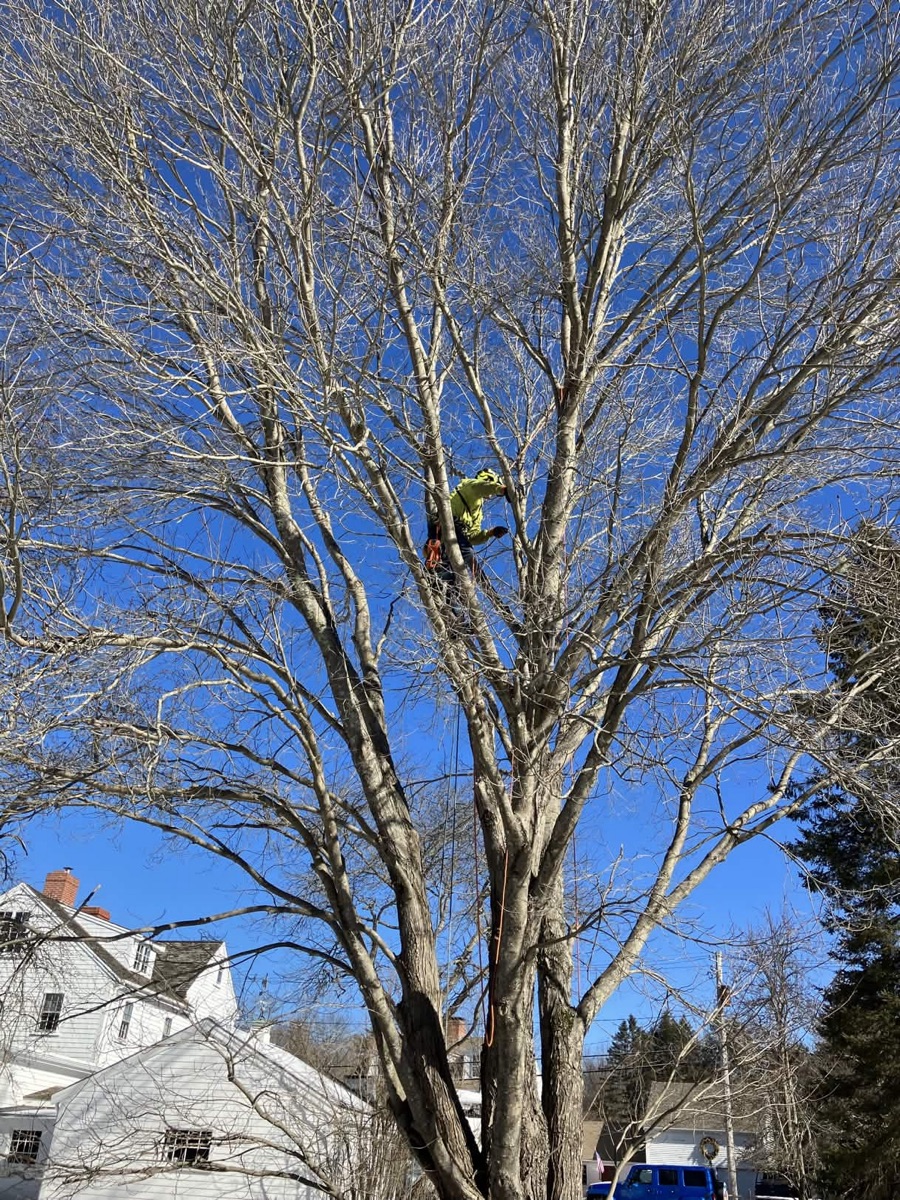
# Professional Tree Pruning in Canton, Massachusetts
Your trees in Canton, MA, face unique pressures from the Blue Hills Reservation's influence, hilly terrain, and aging canopy along historic streets like Washington Street and Pleasant Street. As a homeowner in Canton Center, Ponkapoag, or Knollwood, you rely on these mature red oaks, white oaks, shagbark hickories, and eastern hemlocks for shade and property value, but unchecked growth leads to hazards. Professional tree pruning in Canton, Massachusetts, addresses these issues directly, following ANSI A300 standards to enhance tree health, safety, and aesthetics.
Southeast Arborist, LLC, brings ISA Certified Arborists to your Canton property, serving the South Shore from our Plymouth/Cohasset base. We specialize in tree pruning Canton MA homeowners need, including crown thinning to reduce wind resistance on hilltops, deadwood removal from reservation-bordering lots, and structural pruning for young sugar maples in newer developments like Reservoir Pond Area. Our team uses bucket trucks and climbing gear tailored to Canton's dense, uneven landscapes, ensuring minimal disruption to your yard.
Canton’s 24,000 residents in Norfolk County deal with trees shaped by 19th-century farmland conversion and proximity to the Blue Hills, protected since 1893. This creates a continuous old-growth forest edge that invades residential zones, demanding precise pruning to prevent leaning chestnut oaks from threatening homes in Pecunit or Springdale. Ice storms, common due to Canton's elevation, snap limbs from white pines and tulip trees, while hemlock woolly adelgid infests stands near the reservation.
Our ANSI A300-compliant methods—crown elevation for visibility at Canton Junction driveways, vista pruning to frame Blue Hills views from Knollwood properties—deliver results that last years. Homeowners notice reduced storm damage risks and improved curb appeal along neighborhood streets. Unlike DIY attempts that stress trees on Canton's variable soils (sandy loams in lowlands, rocky clays on hills), our certified arborists assess root zones influenced by Reservation Pond and Neponset River tributaries.
Practical tip for your Canton property: Inspect branches overhanging your roof after leaf drop in fall; if they exceed 25% of the canopy, schedule pruning to avoid ice load failures. We handle everything from deadwood in American beeches along Pleasant Street to reduction cuts on oversized hickories in Canton Corner. With safety protocols like traffic control for busy Route 128-adjacent sites, Southeast Arborist ensures your tree pruning in Canton MA proceeds without incident.
Contact Southeast Arborist at 508-369-5009 for a free assessment tailored to your neighborhood's challenges. Our service area covers all of Canton plus nearby Stoughton, Sharon, Randolph, Milton, Norwood, and Dedham, making us the go-to for South Shore tree pruning Canton MA trusts.
Why Canton Properties Need Tree Pruning
Canton's landscape, defined by its Blue Hills Reservation frontage, demands vigilant tree pruning to manage hazards at the forest-residential interface. Properties in Ponkapoag and Reservoir Pond Area often border the reservation's mature secondary forest, where chestnut oaks and shagbark hickories—among eastern Massachusetts' oldest—lean toward homes during high winds. Without pruning, these trees drop debris onto driveways and roofs, especially after ice storms that exploit Canton's hilltop elevations.
Local climate amplifies vulnerabilities: average January lows of 20°F and 45 inches annual precipitation foster ice buildup on white pines and eastern hemlocks. Hilltop neighborhoods like Knollwood see branches weighted down, snapping under loads that lowland Canton Center avoids. Hemlock woolly adelgid, prevalent in reservation-adjacent stands, weakens trees in Pecunit, causing dieback that requires deadwood removal to prevent failure.
Aging canopies over historic streets compound issues. Early 20th-century shade trees—red oaks and sugar maples along Washington Street—now exceed mature sizes, shading homes excessively and blocking light to lawns on Canton's acidic, well-drained soils. Tulip trees in Springdale grow rapidly in fertile bottomlands near the Neponset, outpacing structural integrity without crown thinning. White oaks in Canton Junction, with broad crowns, rub against power lines during gusts from prevailing westerlies.
Soil conditions vary: rocky uplands near Blue Hills support shallow-rooted American beeches prone to blowover, while pondside clays in Reservoir Pond Area retain moisture, promoting fungal issues in unpruned hickories. Hazard trees emerge where forest edges meet backyards, as in Canton Corner properties overlooking the reservation—unassessed leans toward structures invite liability.
Storm vulnerability peaks in winter; Canton's dense canopy traps ice, with 2014 and 2023 events felling limbs across neighborhoods. Pruning reduces wind sail on hilltop red oaks, thins overcrowded crowns in beech groves, and elevates limbs over sidewalks in busy Canton Center. For your property, this means fewer emergency calls during nor'easters.
Vista pruning restores Blue Hills views from elevated decks in Knollwood, while structural pruning guides young white pines in newer Pecunit lots toward longevity. Homeowners benefit from 20-30% canopy reduction, improving air circulation on humid summers (average 75°F highs) to deter pests like emerald ash borer precursors.
Data from Norfolk County shows pruned properties suffer 40% less damage in wind events. In Canton, where 70% of homes predate 1980, neglecting pruning risks insurance claims from falling limbs. Southeast Arborist's ISA Certified Arborists identify these risks during site visits, using ANSI A300 to prioritize cuts that bolster tree vigor without over-thinning.
Practical advice: Walk your property post-winter; flag codominant stems on sugar maples (V-shaped forks) or included bark on hickories—these fail predictably. Early intervention preserves your investment in Canton's valued tree-lined streets.
Our Tree Pruning Process in Canton
Southeast Arborist follows a precise, ANSI A300 tree pruning process customized for Canton's terrain and species, starting with a free on-site assessment for your property. Our ISA Certified Arborists arrive equipped with laser rangefinders and resistographs to evaluate red oaks in Canton Center or hemlocks in Ponkapoag bordering the Blue Hills.
Step 1: Hazard assessment. We scan for deadwood, cracks, and leans using binoculars and drones for tall white pines on hilltops. In Knollwood, this identifies reservation-edge chestnut oaks threatening roofs; soil probes check root health on rocky slopes.
Step 2: Pruning plan development. Per ANSI A300 (Part 1), we map cuts: crown thinning removes 15-25% of interior branches on shagbark hickories to lower wind resistance without sunscald. For your sugar maple in Springdale, structural pruning targets watersprouts and rubbing limbs.
Step 3: Safety setup. Traffic control with cones and signs suits Canton Junction's commuter flow; we drop 20-foot exclusion zones under American beeches in Canton Corner. Climbers wear harnesses with self-retracting lifelines; bucket trucks navigate narrow Reservoir Pond Area drives.
Step 4: Execution. Crown elevation lifts lower limbs 12-14 feet over driveways in Pecunit using reduction cuts that preserve natural form—critical for tulip trees' brittle wood. Deadwood removal targets hanging snags in eastern hemlocks infested by woolly adelgid. Vista pruning in Knollwood selectively thins to frame Blue Hills skylines.
Techniques vary by species: On white oaks along Pleasant Street, we use drop-crotch cuts to reduce height by 20% without topping, promoting compartmentalization. Thinning on overcrowded red oak canopies improves light penetration for understory health on Canton's loamy soils.
Equipment includes Silky saws for precise Japanese-style pruning, minimizing wounds on beech bark prone to Nectria canker. Aerial lifts access 80-foot hickories; hand tools clear storm-damaged limbs post-ice events. Chippers process debris on-site, leaving mulch for your garden—nutrient-rich for acid-loving Reservation oaks.
Step 5: Cleanup and health check. We rake clippings, inspect wounds with bio-stimulants, and provide a report detailing cuts (e.g., "10% thinning, 5 deadwood removals"). For restoration pruning after storms, we balance crowns on wind-sheared white pines.
Our protocols exceed OSHA standards, with two-person teams for loads over 500 pounds—essential for Canton's dense woods. No spraying; we focus on mechanical ANSI methods that enhance vigor, reducing future adelgid stress in hemlocks.
For your Canton property, this process takes 2-8 hours per tree, depending on size. Watch for our color-coded ribbons marking drop zones. Post-pruning, monitor for epicormic sprouts; avoid topping, which invites decay in local oaks.
This systematic approach ensures your trees thrive amid Blue Hills influences, backed by our South Shore expertise. Call 508-369-5009 to start.
Common Tree Pruning Projects in Canton Neighborhoods
Canton neighborhoods present distinct pruning needs shaped by their Blue Hills proximity and development history. In Canton Center, historic homes along Washington Street feature mature red oaks and white oaks needing crown elevation to clear sidewalks and streetlights—our ANSI A300 cuts lift limbs 14 feet while thinning interiors for ice storm resilience.
Canton Junction properties near commuter rail demand hazard limb removal from leaning shagbark hickories, often encroaching from reservation edges. We perform selective deadwooding and reduction to protect patios without altering tree silhouettes against Route 128 backdrops.
Ponkapoag lots bordering Blue Hills require frequent hazard assessments for chestnut oaks and eastern hemlocks; woolly adelgid weakens these, so we thin crowns 20% and excise infested branches, preventing falls onto nearby homes during hilltop gusts.
Knollwood's elevated homesides call for vista pruning on American beeches and sugar maples, opening views to the reservation while elevating crowns over driveways. Structural pruning here guides young tulip trees away from foundations on rocky soils.
Canton Corner sees structural pruning for white pines stressed by dry summer winds; we remove codominant leaders to favor strong scaffolds, reducing blowover risks near open fields.
Pecunit neighborhoods focus on deadwood removal from aging hickories overhanging pools—post-ice storm restoration balances asymmetrical crowns, using drop-crotch methods for natural regrowth.
Springdale's bottomland sites near Neponset tributaries need thinning on fast-growing tulip trees to curb rubbing limbs against garages; crown reduction manages heights encroaching power lines.
Reservoir Pond Area properties tackle overcrowded canopies of red oaks and beeches around ponds; we elevate for boat access and thin for air flow, mitigating fungal risks in humid microclimates.
Across Canton, storm damage cleanup dominates after events like the 2023 ice storm, with our teams restoring white oaks via targeted limb removal. Neighborhood-specific projects enhance safety: traffic-safe cuts in Junction, view-preserving in Knollwood.
Southeast Arborist's ISA arborists tailor each job, serving these areas efficiently from our Plymouth base. Your neighborhood's trees gain years of health.
Tree Pruning Costs in Canton, MA
Tree pruning costs in Canton, MA, hinge on tree size, species, location, and pruning type, typically ranging $300-$1,500 per tree for residential work. A 40-foot red oak in Canton Center requiring crown thinning and deadwood removal averages $600-$900; our ISA Certified Arborists quote after assessment, factoring Blue Hills access challenges.
Height drives expense: Under 30 feet (young sugar maples in Pecunit) costs $250-$500 for structural pruning. 50-70 foot white oaks or hickories in Knollwood demand bucket trucks, adding $200-$400 for setup on hilly terrain.
Species influence: Brittle tulip trees in Springdale need precise cuts, increasing labor by 20%; hemlock adelgid work in Ponkapoag includes extra inspections, $100 premium. Vista pruning for Blue Hills views from Reservoir Pond adds $150 for selectivity.
Access matters: Easy Canton Junction yards run base rates; reservation-bordering Canton Corner sites with slopes incur 15-25% upcharge for rigging. Number of trees scales savings—three oaks in Canton Center bundle at 10% off.
ANSI A300 standards ensure value: Our thorough jobs reduce future storm removals (full tree $2,000+), lowering long-term costs. Pruning boosts property value 5-10% via enhanced curb appeal on Washington Street.
Hourly rates for complex storm restoration post-ice events: $150-$250/hour, 4-6 hours for a white pine in Springdale. Minimal cleanup included; stump grinding extra at $150.
Compared to South Shore averages, Southeast Arborist offers competitive pricing through efficient South Shore operations—no travel surcharges for Stoughton or Sharon neighbors. Free quotes detail breakdowns: e.g., "Crown elevation: $400; thinning: $300."
ROI shines: Pruned properties claim 30% fewer insurance payouts after wind events. For your budget, prioritize hazards—deadwood on beeches saves thousands in liability.
Factors lowering costs: Off-season scheduling (fall/winter), multi-tree discounts. We provide line-item transparency, no hidden fees.
Invest in professional tree pruning Canton MA relies on—call 508-369-5009 for your customized estimate.
When to Schedule Tree Pruning in Canton
Schedule tree pruning in Canton during dormancy—late fall (November) to early spring (March)—when sap flow halts, minimizing disease entry in red oaks and beeches. Avoid summer growth spurts; Canton's humid July-August fosters fungal spread on fresh cuts.
Urgency signs demand immediate action: Cracks or seams in hickory trunks, leaning chestnut oaks toward homes in Ponkapoag, or 30%+ deadwood in hemlocks signal hazards—call within days to avert ice storm failures.
Post-storm: After wind or ice events common on hilltops, prune within 1-2 weeks to shape wounds on white pines before decay sets in. Springdale tulip trees snapped by nor'easters need restoration by April.
Annual maintenance: Prune young sugar maples in Pecunit every 3-5 years for structure; mature Washington Street oaks every 5-7 years for thinning.
Blue Hills influences: Early fall for adelgid-stressed hemlocks in Knollwood, before leaf drop hides issues.
Weather windows: Dry days above 25°F; we monitor forecasts for your Reservoir Pond slot.
Practical: Flag urgent trees now—schedule ahead for 20% savings.
Contact 508-369-5009 to book.
Frequently Asked Questions About Tree Pruning in Canton
What is ANSI A300 tree pruning, and why does it matter for Canton properties? ANSI A300 sets national standards for pruning cuts, types, and timing—Southeast Arborist adheres strictly for your red oaks and hickories. In Canton, it prevents improper topping that weakens Blue Hills-border oaks, ensuring 20+ year health versus DIY decay.
How much does tree pruning cost for a large oak in Knollwood? $700-$1,200 for a 60-foot oak, covering thinning and elevation. Factors: hilltop access, 20% canopy work. Free quotes detail value over removal costs.
When is the best time for tree pruning in Ponkapoag near Blue Hills? November-March dormancy; avoids pest spread in hemlocks. Urgent post-ice storm anytime.
Can you prune trees near power lines in Canton Junction? Yes, we coordinate with Eversource for safe clearance on white pines—ANSI methods prevent outages.
What's the difference between thinning and reduction for Canton sugar maples? Thinning removes select interior branches for light/wind flow; reduction shortens limbs for height control—ideal for street trees in Canton Center.
How do you handle hemlock woolly adelgid during pruning in Reservoir Pond Area? Deadwood removal and thinning improve vigor; no chemicals—focuses mechanical health for reservation stands.
Is tree pruning safe for my pets and family in Springdale? Absolutely; exclusion zones, chipper noise control, and cleanup ensure zero debris. Climbers trained for residential safety.
How often should I prune mature beeches in Pecunit? Every 5 years for deadwood/crown cleaning; structural on young ones annually.
Call 508-369-5009 for answers tailored to your trees.
Tree Pruning Throughout Canton
Southeast Arborist delivers tree pruning across Canton neighborhoods: Canton Center's historic canopies, Canton Junction's rail-side hazards, Ponkapoag's reservation edges, Knollwood's vistas, Canton Corner's fieldsides, Pecunit's backyards, Springdale's lowlands, and Reservoir Pond Area's watersides. Our Plymouth/Cohasset base ensures prompt South Shore service, extending to Stoughton, Sharon, Randolph, Milton, Norwood, and Dedham.
ISA Certified Arborists use ANSI A300 for all—call 508-369-5009 for Canton tree pruning that protects your property.