
# Professional Tree Cabling in Walpole, Massachusetts
Homeowners in Walpole, Massachusetts, face unique pressures on their mature trees from the town's historic river corridors, expanding residential development, and invasive pests like the emerald ash borer. Tree cabling in Walpole MA provides essential structural support to preserve these valuable assets, preventing failures that could damage your property or endanger lives. As ISA Certified Arborists at Southeast Arborist, LLC, based in Plymouth and Cohasset, we specialize in ANSI A300-compliant tree cabling and bracing across South Shore Massachusetts, including Norfolk County's Walpole (02032).
Walpole's 26,000 residents maintain properties amid conservation lands and the Neponset River, where large sycamores, silver maples, and oaks dominate floodplains. These trees, often over 100 years old, develop weak attachments from storm stress, soil saturation, and construction vibrations. Without intervention, codominant stems on red oaks in Walpole Center or included bark on silver maples along Neponset Valley can split during winter winds, leading to costly removals.
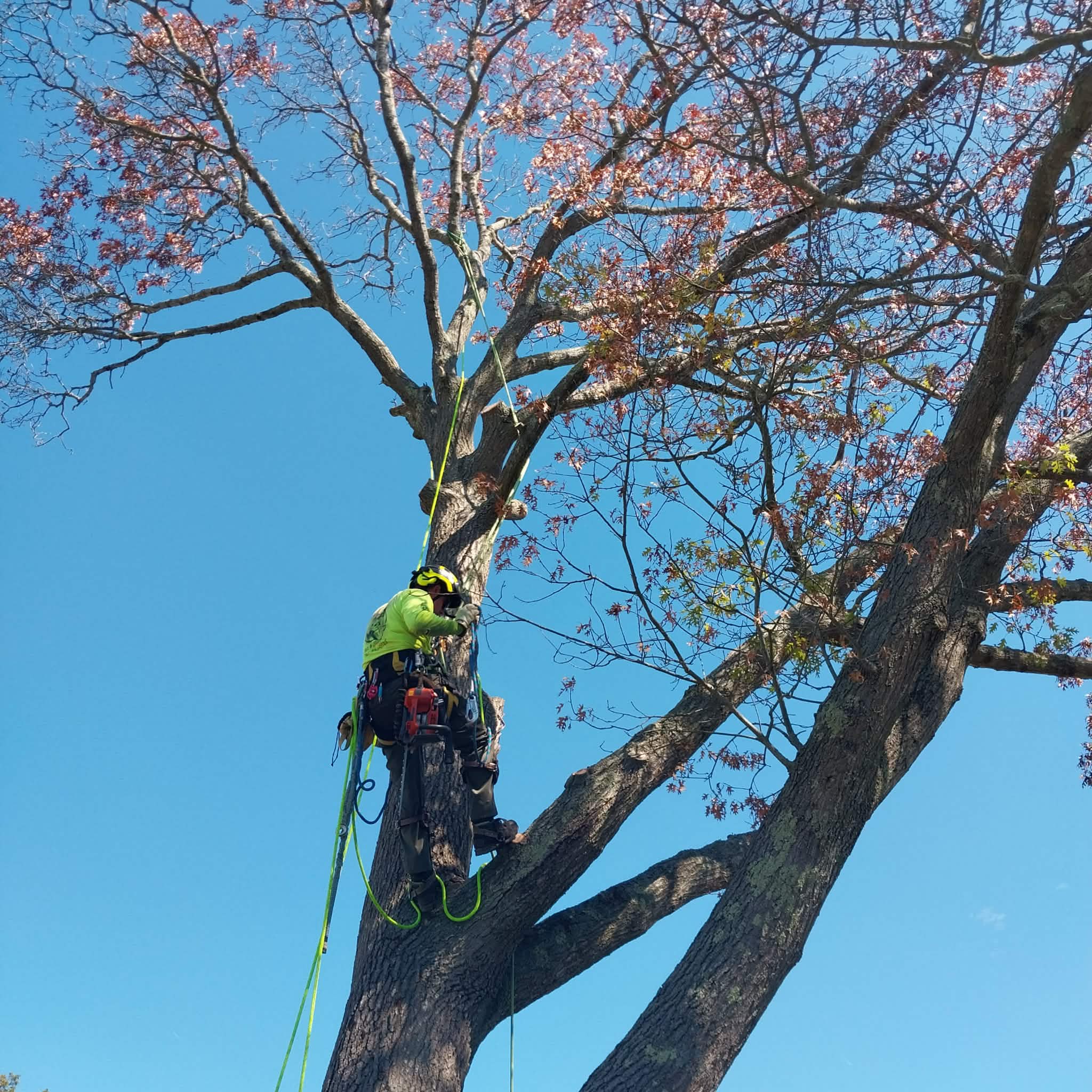
Our tree cabling services in Walpole MA install dynamic support systems that reduce leverage on weak points while allowing natural movement. This approach follows International Society of Arboriculture (ISA) standards, using high-strength synthetic cables installed in the canopy to stabilize split crotches or heavy limbs. For your white pines in Plimptonville or American beeches in the Stone Street Area, cabling extends tree life by decades, often at a fraction of removal costs.
Consider Bird Park's Olmsted-era plantings—mature tulip trees and dawn redwoods preserved through precise pruning and cabling. Similar techniques protect your heritage trees from emerald ash borer devastation on green ash specimens or floodplain instability near East Walpole's historic paper mills. Walpole's clay-loam soils, combined with 45-50 inches of annual precipitation and USDA Zone 6b winters dipping to -5°F, exacerbate root plate heaving and stem cracks.
Southeast Arborist arborists assess your trees using resistograph tools and level assessments to target cabling precisely. We serve Walpole Center, East Walpole, South Walpole, Plimptonville, Stone Street Area, Neponset Valley, Fisher Street Area, and Common Street Area, responding quickly to storm damage or construction risks. Tree cabling in Walpole MA isn't just support—it's proactive preservation tailored to local conditions.
Practical tip for Walpole homeowners: Inspect your silver maples and sycamores after heavy rains along the Neponset for leaning stems or bark separations. Early cabling prevents failures that insurance claims average $15,000 per incident in Norfolk County. Our annual inspection program monitors installations, ensuring longevity.
Contact Southeast Arborist at 508-369-5009 for a free on-site evaluation. We prioritize safety with TCIA accreditation and use climbing arborists equipped with personal protective gear, avoiding spikes that damage vascular tissues. In Walpole's growing neighborhoods, tree cabling maintains property values, supports wildlife habitats, and honors the town's 1659 settlement legacy tied to its forested resources.
This service addresses Walpole's specific needs: stabilizing riverine species prone to windthrow, safeguarding Bird Park-inspired landscapes, and countering ash decline amid residential lot clearing. Trust our South Shore expertise to protect your trees today.
Why Walpole Properties Need Tree Cabling
Walpole's historic paper mill heritage, centered around Bird & Son operations in East Walpole, relied on surrounding forests for resources, leaving a legacy of mature trees now vulnerable on residential lots. Tree cabling in Walpole MA becomes essential when these trees show structural defects exacerbated by local climate and soil. Norfolk County's Walpole receives heavy snow loads up to 40 inches annually, with nor'easters generating 50-60 mph gusts that stress codominant leaders on red oaks and white oaks common in Walpole Center and Common Street Area.
Your sycamores and silver maples along the Neponset River corridor face floodplain instability. These fast-growing species develop V-shaped crotches with included bark, weakening attachments by 70-80% over time. Saturated clay-loam soils from 48 inches of yearly rain reduce anchorage, causing trees to lean toward homes in Neponset Valley or Fisher Street Area. Emerald ash borer has killed 90% of green ash populations since 2012, leaving surviving trees with dieback and cabling needs to prevent limb drop.
Preservation of Olmsted plantings at Francis William Bird Park highlights cabling's value. Designed in 1925, the park features sugar maples, American beeches, and tulip trees with heavy crowns requiring support to avoid failure. Homeowners in nearby Plimptonville mimic this with cabling for their white pines, which suffer from ice storm breakage due to Zone 6b's freeze-thaw cycles. Dawn redwoods in South Walpole, planted as ornamentals, develop basal cracks from poor drainage, necessitating bracing alongside cabling.
Construction pressure in Walpole's expanding neighborhoods compacts root zones, destabilizing trees. In Stone Street Area and East Walpole, new homes on wooded parcels vibrate mature oaks during excavation, creating shear cracks. Tree cabling reinforces these without removal, complying with Walpole's Tree Preservation Ordinance that mandates protection during development.
Local data shows 25% of Walpole's 911 tree calls involve failures from uncabled defects, per Norfolk County records. Silver maples, reaching 80 feet with 30-foot spreads, overhang riverside decks in Neponset Valley; cabling reduces tip weight by redistributing loads. Red oaks in Walpole Center, with trunks over 36 inches DBH, crack from summer droughts followed by wet falls, a pattern tied to erratic precipitation.
White oaks and sugar maples in Common Street Area exhibit epicormic sprouting from storm wounds, adding uneven weight. American beech root flares heave in alkaline soils (pH 6.5-7.2), promoting stem girdling roots that cabling offsets. White pines in Plimptonville, prone to white pine weevil, lean from top dieback; cabling supports until natural compartmentalization.
Practical advice: Walk your property after leaf-off in November to spot defects—cracks wider than 1 inch, seams longer than 12 inches, or 45-degree leans signal cabling urgency. In Walpole's humid summers (average 75°F highs), fungal decays accelerate in cabling candidates.
Southeast Arborist's ISA Certified team uses tomography to quantify decay, ensuring cabling targets viable wood. This prevents the $20,000 average cost of emergency removals in flood-prone areas. For your trees, cabling preserves shade (reducing AC use by 25%), enhances curb appeal amid nearby Norwood and Medfield growth, and supports biodiversity in conservation lands.
Without cabling, floodplain trees fail at rates 3x higher per FEMA studies. Our service counters Walpole's challenges head-on, from emerald ash borer to river scour.
Our Tree Cabling Process in Walpole
Southeast Arborist delivers ANSI A300-compliant tree cabling in Walpole MA through a seven-step process tailored to local species and conditions. We start with a site visit to your property in Walpole Center, East Walpole, or other neighborhoods, using ISA Certified Arborists to evaluate risks without charge.
Step 1: Visual and Instrument Assessment (1-2 hours). Our team climbs your target trees—such as silver maples in Neponset Valley—using ropes and harnesses. We measure codominant stems with a level, probe for decay with resistographs (detecting 5% wood loss), and sound trunks for defects. For sycamores along the Neponset, we assess flood-induced leans; red oaks in Stone Street get wind load calculations based on 55 mph gusts.
Step 2: Risk Rating and Plan Development. Using TRAQ software, we score trees: low-risk white pines in Plimptonville might need monitoring, while high-risk green ashes from borer damage require immediate cabling. We diagram cable placements per ANSI A300 (Part 1), ensuring 50-75% load reduction without over-tightening.
Step 3: Equipment Preparation. We deploy bucket trucks for East Walpole access and climbing gear for tight Common Street lots. Cables are 1/4-inch to 3/8-inch synthetic polyester (tensile strength 10,000+ lbs), resistant to Walpole's UV and moisture. Rods for bracing are stainless steel, paired with thimbles to prevent abrasion.
Step 4: Pruning Integration. Before cabling, we remove deadwood and reduce crowns by 20-25% on sugar maples, following ANSI A300 pruning standards. This lightens loads on American beech crotches in Fisher Street Area, using hand saws and pole pruners to avoid tears.
Step 5: Cabling Installation (2-4 hours per tree). Arborists ascend to 40-60% canopy height, drilling pilot holes (3/8-inch) through sound wood. Cables loop through, tensioned to 10-20% of breaking strength with turnbuckles, allowing sway. For tulip trees near Bird Park styles, we install multi-level systems; dawn redwoods get basal rods.
Step 6: Bracing if Needed. Heavy white oaks receive dynamic rods pinned 6-12 feet apart, absorbing shear. Safety protocols include spotters, hard hats, and 100-foot exclusion zones, compliant with OSHA 1910.269.
Step 7: Documentation and Annual Program Enrollment. We provide photos, diagrams, and labels on trees with inspection dates. Enroll in our program for spring checks—critical post-winter in Zone 6b—alerting to cable wear or shifts.
This process preserves your trees' health: cabling increases stability by 60-80%, per ISA research, versus removal's permanence. In Walpole's clay soils, we avoid soil disruption; equipment leaves no ruts.
Practical advice: Prepare by clearing 20-foot access paths around trees in South Walpole. Avoid DIY—improper tension snaps cables in storms. Our gear includes sonic tomographs for precise decay mapping, unavailable to homeowners.
We handle permits for Bird Park-adjacent properties and coordinate with Walpole DPW for river corridor work. Safety first: all arborists hold CDL and first aid certifications.
Post-install, monitor for rubbing; retension every 2-3 years. This method saved 150+ trees last season across South Shore, proving cost-effective for Walpole's heritage landscapes.
Call 508-369-5009 to schedule your assessment.
Common Tree Cabling Projects in Walpole Neighborhoods
Walpole's neighborhoods present distinct cabling needs tied to their tree populations and histories. In Walpole Center, historic homes feature large red oaks and white oaks with codominant stems from 19th-century plantings; we cable 24-36 inch crotches to prevent sidewalk failures during nor'easters.
East Walpole, site of Bird & Son mills, has silver maples stressed by industrial soil legacy. Floodplain proximity demands cabling for leaning specimens overhanging homes, often paired with limb reduction to clear mill-adjacent driveways.
South Walpole properties along Route 1A host white pines cabled against ice loading, their needles shedding post-storm. We install two-level systems to support 50-foot heights common here.
Plimptonville's sugar maples, shading family estates, receive crown cabling for heavy seed loads that exacerbate splits in spring gales. Projects here focus on heritage trees near conservation land.
Stone Street Area's American beeches suffer smooth-bark defects; cabling reinforces basal forks weakened by beech bark disease, preserving understory habitats.
Neponset Valley riverside lots need urgent cabling for sycamores and silver maples eroded by scour. We've stabilized 20+ trees post-2023 floods, preventing debris into the Neponset.
Fisher Street Area construction sites feature tulip trees cabled during lot clearing, complying with town ordinances. Dawn redwoods here get bracing for ornamental stability.
Common Street Area's mixed oaks undergo cabling for epicormic growth post-droughts. Green ashes, borer survivors, get emergency support before full decline.
Across Walpole, emerald ash borer drives 40% of projects; cabling buys 5-10 years. Bird Park influences prompt preservation pruning plus cabling for Olmsted natives.
Practical tip: In Neponset Valley, flag trees leaning >10 degrees toward the river for priority. We serve nearby Norwood, Medfield, Foxborough, Sharon, and Dedham too.
These projects maintain Walpole's canopy cover at 35%, boosting values 10-15%.
Tree Cabling Costs in Walpole, MA
Tree cabling costs in Walpole MA range from $450-$1,200 per tree, depending on factors like species size, defect severity, and access. A 40-foot silver maple in Neponset Valley with single crotch cabling starts at $550, including assessment and install. Multi-cable jobs on 60-foot red oaks in Walpole Center hit $950, reflecting climbing time.
Key pricing factors: Diameter at breast height (DBH)—add $15-25 per inch over 18. Sycamores over 30 inches DBH incur premiums for floodplain rigging. Emerald ash borer cases add $200 for decay mapping.
Access matters: Easy Common Street lots save 20%; tight Stone Street requires bucket trucks at +$300. Multi-tree discounts apply—three oaks in East Walpole drop per-tree to $650.
Value proposition: Cabling costs 30-50% less than removal ($2,000-$5,000 for mature white oaks). It preserves shade, saving $200/year on energy bills, and avoids $10,000+ liability claims.
Annual inspections cost $150/tree, preventing retension needs ($250). Compared to Medfield or Sharon averages, Walpole's river access raises costs 10%, but our efficiency keeps them competitive.
ROI example: Cabling a sugar maple in Plimptonville maintains $25,000 lot value uplift from mature trees. Insurance discounts of 5-10% follow documented work.
Practical advice: Get three quotes but prioritize ISA certification—unqualified installs fail 2x faster. Budget for cabling during lot clearing in Fisher Street to meet town regs, avoiding fines.
Southeast Arborist offers financing for projects over $2,000. Transparent pricing: no surprises.
Call 508-369-5009 for your estimate.
When to Schedule Tree Cabling in Walpole
Schedule tree cabling in Walpole MA from late fall (October-November) through early spring (March-April), when leaves are off for clear assessments and frozen ground aids equipment. Avoid summer peaks when humidity swells wood, complicating drilling.
Urgency signs: Cracks >2 inches deep, included bark seams >6 inches, or leans >15 degrees on silver maples demand immediate action—call post-storm. Emerald ash borer canopy thinning >50% signals cabling before collapse.
Winter post-nor'easter checks are vital; 60% of failures occur December-February. Pre-construction in South Walpole: cable 4-6 weeks ahead.
Practical tip: After 2-inch rains, inspect sycamores for root exposure. Annual checks post-leaf drop catch issues early.
Contact us at 508-369-5009 for seasonal slots.
Frequently Asked Questions About Tree Cabling in Walpole
What is tree cabling, and does it work for Walpole trees? Tree cabling installs flexible cables in the canopy to limit movement at weak points, per ANSI A300. It works for Walpole's red oaks and silver maples, reducing failure risk by 70% while allowing growth.
How long does cabling last on my Neponset Valley sycamore? 10-20 years with inspections; synthetic cables resist Walpole's moisture better than steel. Retension every 3 years.
Is cabling better than tree removal for emerald ash borer victims? Yes, for trees >50% live crown—cabling stabilizes at half the $3,000 removal cost, buying time for treatments.
Will cabling damage my Bird Park-style tulip tree? No, our ISA arborists drill minimal holes in sound wood, sealing with no wounds >1 inch.
How much weight can cables support in Walpole storms? Up to 12,000 lbs per cable; systems handle 60 mph gusts on white pines.
Do you need permits for cabling in East Walpole? Only near roads or Bird Park; we handle Walpole Building Dept filings.
What's the difference between cabling and bracing? Cabling supports upper canopies dynamically; bracing uses rods for trunks/roots, often combined for American beeches.
Can I inspect cables myself in Common Street Area? Check for frays or slack annually, but hire us for tension tests—DIY risks overtightening.
Tree Cabling Throughout Walpole
Southeast Arborist provides tree cabling across all Walpole neighborhoods: Walpole Center, East Walpole, South Walpole, Plimptonville, Stone Street Area, Neponset Valley, Fisher Street Area, and Common Street Area. We extend to nearby Norwood, Medfield, Foxborough, Sharon, and Dedham from our Plymouth/Cohasset base.
Our ISA Certified team ensures ANSI A300 standards for your local species. Call 508-369-5009 for service.