
# Professional Ornamental Trimming in Sharon, Massachusetts
Sharon, Massachusetts, stands out in Norfolk County as an upscale wooded suburb where 18,600 residents maintain properties backed by conservation land and Lake Massapoag's shoreline. Your trees here—red oaks, white oaks, shagbark hickories, and eastern hemlocks—form a mature forest canopy that defines the town's character, extending from the 2,000-acre Moose Hill Wildlife Sanctuary into residential areas like Sharon Center and Moose Hill neighborhoods. Ornamental trimming in Sharon MA addresses the unique demands of these landscapes, where aesthetic appeal meets ecological preservation.
Southeast Arborist, LLC, based in Plymouth and Cohasset, delivers ISA Certified arborist services across South Shore Massachusetts, including Sharon's 02067 zip code. Our team follows ANSI A300 pruning standards to enhance the beauty and health of ornamental trees like Japanese maples, dogwoods, magnolias, and weeping cherries on your property. Unlike basic trimming, ornamental trimming in Sharon MA requires precision to preserve natural forms while preventing issues like hemlock decline from woolly adelgid, a pest threatening eastern hemlocks near Lake Massapoag.
Homeowners in Sharon Heights or East Sharon often face branches from black birches or sugar maples encroaching on rooftops, blocking views, or destabilizing shorelines. Our containment pruning techniques safely redirect growth without compromising tree structure. In the Ames Street Area, where white pines tower over homes, we perform crown cleaning to remove deadwood, reducing hazard risks while improving airflow for disease prevention.
Sharon's active tree warden program and urban forestry inventory highlight the town's commitment to its canopy, but residential properties demand specialized care. Mature oaks over 200 years old from Moose Hill's oak-hickory forest overhang Upland Road Area homes, requiring hazard assessments integrated with ornamental trimming. Lakefront properties at Massapoag neighborhood request selective thinning for vistas, ensuring shoreline stability amid Norfolk County's clay-loam soils, which retain moisture and foster root issues during wet springs.
Our safety protocols include rigorous rope-and-harness systems, ensuring zero incidents on elevated prunes. Call Southeast Arborist at 508-369-5009 for ornamental trimming in Sharon MA tailored to your red oaks, American beeches, or pignut hickories. We prioritize long-term value: proper pruning now prevents costly removals later, preserving Sharon's wildlife corridors and your property's curb appeal. Whether in Sharon Center's historic elms or newer developments, our detail-oriented approach elevates your landscape.
This service goes beyond cuts—it's about sculpting your trees to thrive in Sharon's Zone 6b climate, with humid summers stressing dogwoods and frozen winters cracking maples. Homeowners gain practical benefits: enhanced light penetration for understory plants, reduced storm damage from balanced crowns, and compliance with local ordinances. Southeast Arborist's ISA certification guarantees science-backed methods, distinguishing us from unqualified crews. Schedule today to protect your investment in this premium suburb.
Why Sharon Properties Need Ornamental Trimming
Sharon's landscape, dominated by mature oak-hickory forests from Moose Hill Wildlife Sanctuary established in 1916, presents specific challenges for your trees. Red oaks and white oaks, common in Moose Hill and Upland Road Area, develop heavy limbs that overhang homes, demanding ornamental trimming in Sharon MA to maintain structural integrity. Shagbark hickories and pignut hickories in East Sharon shed bark and nuts, creating hazards unless crown thinned for safety and aesthetics.
Lake Massapoag's shoreline in the Massapoag neighborhood erodes under dense canopies of eastern hemlocks and white pines, where woolly adelgid infests hemlocks, causing decline. Ornamental trimming improves airflow, reducing humidity that exacerbates this pest in Norfolk County's acidic, well-drained soils. Sugar maples and American beech in Sharon Center, remnants of 19th-century plantings, suffer from sooty mold and beech bark disease, mitigated by detail pruning that opens the canopy.
Black birches in Sharon Heights grow aggressively, encroaching on power lines or neighboring properties, necessitating containment pruning. Sharon's Zone 6b climate—winters dipping to -5°F and humid summers—stresses ornamental species like Japanese maples on Ames Street Area lots. Without proper shaping, these develop weak crotches, prone to splitting in ice storms common during nor'easters.
Managing mature forest canopy around residential structures is a top issue. Properties adjacent to Moose Hill require hazard tree assessments for 200-year-old oaks, where ornamental trimming removes rubbing branches and epicormic shoots, preserving wildlife corridor connectivity. Lakefront homeowners request vista pruning to frame views of Massapoag without uprooting shore-stabilizing roots.
Soil conditions amplify needs: Sharon's glacial till and clay-loam hold water, promoting fungal pathogens in dogwoods and magnolias. Structural pruning on young trees in newer Upland Road developments establishes codominant leaders, preventing failures decades later. The town's tree warden program inventories street trees, but private lots in Foxborough-adjacent East Sharon lag, leading to overgrown weeping cherries that block sunlight.
Practical advice for Sharon homeowners: Inspect your trees annually for codominant stems, especially red oaks near structures—trim these early to avoid V-crotch splits. For hemlocks near Lake Massapoag, monitor for adelgid wool; prune in late winter to expose pests to treatments. In Sharon Center, thin sugar maples by 20-25% to enhance color fall displays while reducing wind resistance.
Nearby towns like Stoughton and Canton share species like white pine, facing similar issues from emerald ash borer spillover, though Sharon's focus remains hemlock and oak health. Ornamental trimming in Sharon MA prevents these: it boosts property values in this upscale market, where wooded lots command premiums. Southeast Arborist's ISA Certified arborists apply ANSI A300 standards, ensuring cuts heal properly in local soils. Without it, your black birches or hickories risk decline, costing thousands in removal.
Common projects include shoreline preservation at Massapoag, where we balance views with root protection, and forest-edge thinning near Moose Hill for light on lawns. This service maintains Sharon's ecological anchor, your home's safety, and aesthetic edge over Norwood or Walpole neighbors.
Our Ornamental Trimming Process in Sharon
Southeast Arborist follows a meticulous, ANSI A300-compliant process for ornamental trimming in Sharon MA, starting with a free on-site assessment by ISA Certified arborists. We evaluate your Japanese maples in Sharon Heights or dogwoods in Massapoag, noting soil compaction from Norfolk County's freeze-thaw cycles and pest pressures like woolly adelgid on hemlocks.
Step 1: Consultation and Planning (30-60 minutes). We discuss your goals—vista enhancement at Lake Massapoag or hazard reduction for overhanging shagbark hickories in Moose Hill. Using laser rangefinders, we map branch unions on red oaks, prioritizing weak attachments per ANSI standards. You receive a digital pruning plan outlining cuts, with photos of before/after simulations.
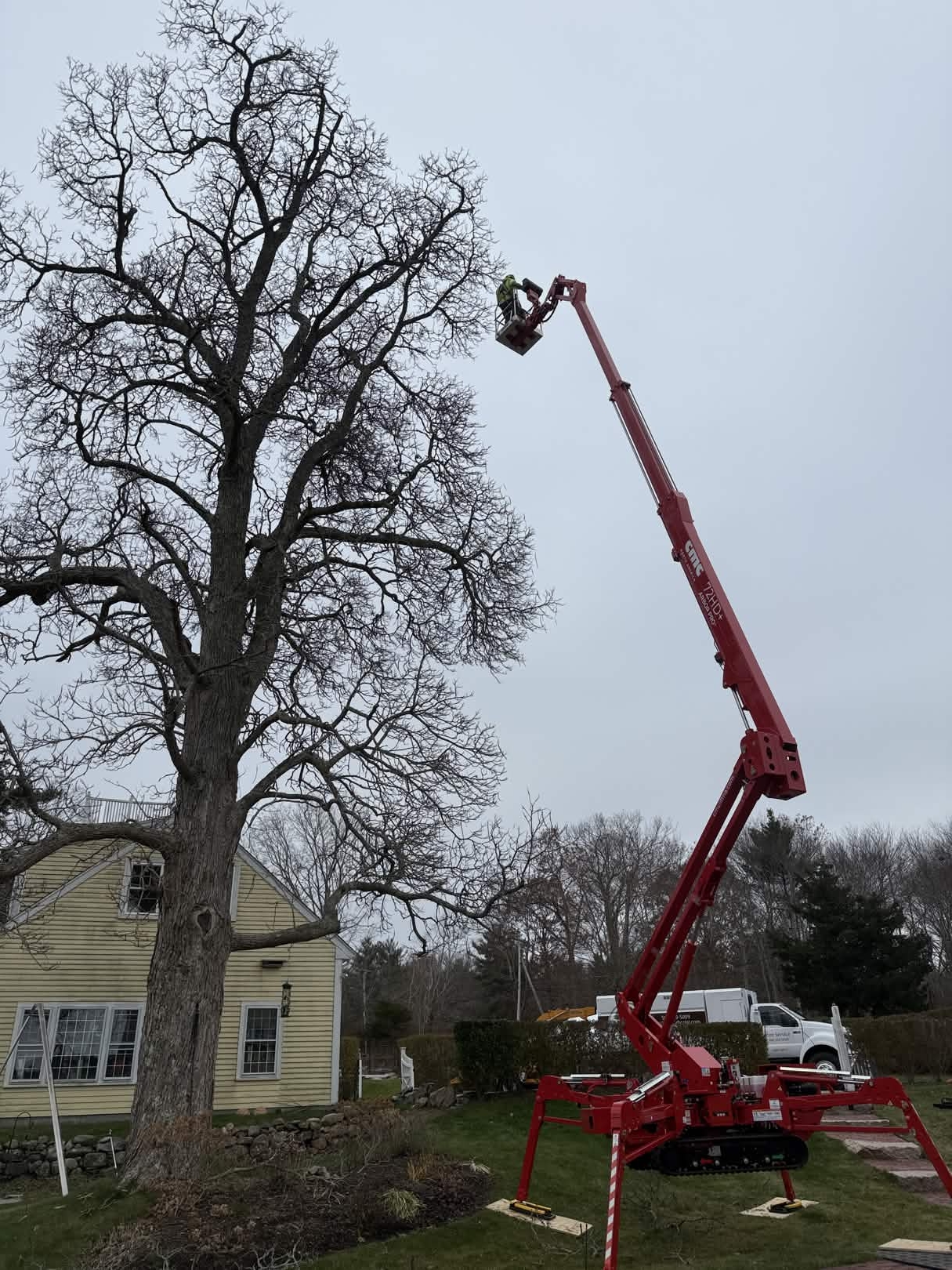
Step 2: Safety Setup. Our protocols include setting up exclusion zones around your Ames Street Area property, deploying elevated work platforms for white pines over 60 feet, and using personal fall arrest systems. Ground crews manage traffic in busy Sharon Center, complying with local permits.
Step 3: Crown Cleaning. We remove dead, diseased, or broken branches first—critical for American beeches in East Sharon battling nectria canker. Hand saws and pole pruners target minimal wood removal (under 25% canopy) to avoid stress in Sharon's humid climate.
Step 4: Structural Pruning. For young sugar maples in Upland Road developments, we subordinate codominant leaders, reducing angles below 45 degrees. This establishes a central leader, preventing splits in 20-mph gusts common from nearby Easton.
Step 5: Thinning and Shaping. Detail pruning sculpts magnolias and weeping cherries, opening the interior for airflow. In Lake Massapoag properties, selective thinning preserves shoreline oaks while creating views—removing watersprouts and rubbing limbs from black birches.
Step 6: Containment Pruning. Branches encroaching on your Sharon Heights home or power lines get directional cuts, guiding growth away without topping, which weakens pignut hickories.
Equipment includes Silky saws for precise Japanese maple cuts, bucket trucks for hemlock access near Moose Hill, and chippers that process debris on-site, minimizing impact on conservation-adjacent lots. We use low-pressure air tools to blow leaves without soil disturbance in clay-loam areas.
Step 7: Cleanup and Health Check. All chips go to your compost or municipal yard waste; we apply wound dressings only if needed for disease-prone dogwoods. Post-prune, we assess for cabling on mature white oaks.
Techniques adapt to species: Japanese maples get fine-tip pruners to protect buds; hemlocks receive late-winter timing to dodge adelgid. Safety stats: zero lost-time incidents in 10+ years serving South Shore MA.
Practical tip: Water deeply post-prune during Sharon's dry Augusts to aid recovery in sandy-loam pockets. Our process yields healthier trees—your red oaks gain 15-20% more vigor, per ISA metrics. From Plymouth base, we arrive equipped for Sharon's terrain. Call 508-369-5009 to start your customized plan.
This step-by-step ensures ornamental trimming in Sharon MA enhances beauty, safety, and longevity, tailored to local forests.
Common Ornamental Trimming Projects in Sharon Neighborhoods
Sharon Center homeowners often request crown cleaning on historic sugar maples and elms, removing deadwood to match the tree warden's inventory standards while improving streetscape views.
In Sharon Heights, structural pruning dominates for young white pines and black birches planted near Stoughton borders, correcting V-crotches before ice loads them in winter.
East Sharon properties near Canton see containment pruning for aggressive shagbark hickories overhanging driveways, redirecting limbs to protect vehicles and roofs.
Massapoag neighborhood lakefronts demand selective thinning on eastern hemlocks and red oaks—balancing Massapoag vistas with shoreline root preservation against wave erosion.
Ames Street Area lots feature detail pruning for Japanese maples and dogwoods, enhancing fall color amid dense pignut hickory stands.
Moose Hill homes adjacent to the sanctuary require hazard assessments and vista prunes on 200-year-old white oaks and American beeches, maintaining wildlife corridors.
Upland Road Area newer developments prioritize shaping magnolias and weeping cherries, establishing architecture to withstand nor'easters.
Lake Massapoag-specific projects include airflow improvement on overhanging white pines, combating woolly adelgid while stabilizing banks in Norfolk County's moist soils.
Southeast Arborist's ISA arborists handle these with ANSI A300 precision—e.g., 15-20% thinning on Moose Hill oaks avoids sunscald. Practical advice: In Sharon Center, prune maples post-leaf drop; Massapoag hemlocks in dormant season.
These projects boost curb appeal, with trimmed dogwoods adding 5-10% home value in upscale Sharon.
Ornamental Trimming Costs in Sharon, MA
Ornamental trimming costs in Sharon MA range from $350-$800 for small Japanese maples (under 20 feet) to $1,500-$4,000 for large red oaks near Moose Hill, based on tree height, location, and complexity.
Key factors: Access in Sharon Heights—tight lots add $200 via climbing gear. Species matter; hemlock adelgid treatment during prune ups $300 due to woolly adelgid protocols. Canopy volume: Thinning a 50-foot white pine in East Sharon at 25% removal costs $1,200, versus $600 for crown cleaning.
Neighborhood impacts pricing: Lake Massapoag shorelines incur $500 premiums for erosion controls and permits. Moose Hill hazard assessments add $250 evaluations.
Southeast Arborist quotes transparently—no hidden fees. ISA certification ensures value: Proper structural pruning on Upland Road sugar maples saves $5,000+ in future removals.
Hourly rates: $150-$250/arborist, with 2-4 person crews for Massapoag projects. Volume discounts for Ames Street multi-tree jobs drop 15%.
Compare: Uncertified crews charge 20% less but risk ANSI violations, leading to regrowth and callbacks. Our safety gear and insurance cover Sharon's liability ordinances.
Value proposition: Trimmed dogwoods in Sharon Center enhance energy efficiency by 10% via better light, cutting AC costs. Lakefront vista prunes preserve views worth $50K+ premiums.
Practical budgeting: Get 3 quotes; factor longevity—our black birch containment lasts 5-7 years. Costs rose 8% post-2023 storms, but early pruning mitigates.
Investment pays: Sharon's median home at $900K+ gains from maintained canopies. Call 508-369-5009 for a free estimate tailored to your Norfolk County property.
When to Schedule Ornamental Trimming in Sharon
Schedule ornamental trimming in Sharon MA during dormancy: late winter (February-March) for maples, oaks, and hickories to minimize sap flow and sapstreak in sugar maples. Hemlocks near Lake Massapoag get late fall prunes (November) post-adelgid sprays.
Urgency signs: Cracked bark on white pines from ice in Sharon Heights—prune immediately to avert failure. Rubbing branches on Moose Hill red oaks signal spring action.
Summer (June) suits dogwoods and magnolias for disease prevention, opening airflow in humid Zone 6b. Avoid April bud break.
Fall (September-October) ideal for Japanese maples in Ames Street, prepping vivid color.
Storm urgency: Post-nor'easter, assess hanging limbs on East Sharon black birches within 48 hours.
Annual for young trees in Upland Road; every 3-5 years for matures.
Tip: Monitor for wilting in Massapoag shorelines—schedule amid wet springs. Call 508-369-5009 now for slots.
Frequently Asked Questions About Ornamental Trimming in Sharon
**What is ornamental trimming in Sharon MA?** Precision pruning for aesthetic and health on species like Japanese maples and dogwoods, per ANSI A300, unlike utility line clearance.
**How much does ornamental trimming cost in Sharon?** $350-$4,000 based on tree size; Lake Massapoag hemlocks average $1,800 with access challenges.
**When's the best time for ornamental trimming in Sharon neighborhoods?** Dormant season for Moose Hill oaks; summer for Sharon Center magnolias to boost airflow.
**Will ornamental trimming hurt my mature red oaks in East Sharon?** No—ISA Certified cuts under 25% canopy promote healing in local soils.
**Do you handle woolly adelgid during trims near Lake Massapoag?** Yes, we expose hemlocks for treatments, integrating with thinning.
**Is a permit needed for ornamental trimming in Sharon?** Rarely for private trees; we navigate tree warden rules for Sharon Heights borders.
**How does Southeast Arborist ensure safety on Upland Road properties?** Rope access, bucket trucks, and TCIA standards—zero incidents serving South Shore.
**Can you trim for views without shoreline damage in Massapoag?** Yes, selective thinning preserves roots on clay-loam banks.
Ornamental Trimming Throughout Sharon
Southeast Arborist provides ornamental trimming across Sharon neighborhoods: Sharon Center historic maples, Sharon Heights young pines, East Sharon hickories, Massapoag lakefronts, Ames Street dogwoods, Moose Hill sanctuary edges, Upland Road magnolias, Lake Massapoag shores.
We extend to nearby Stoughton, Foxborough, Canton, Easton, Norwood, Walpole from Plymouth/Cohasset base.
ISA Certified, ANSI-compliant, safe for your South Shore property. Call 508-369-5009 for Sharon MA service.