
# Professional Ornamental Trimming in Raynham, Massachusetts
If you own a home in Raynham, Massachusetts, your landscape likely features a mix of native floodplain trees and carefully planted ornamentals that define the town's character along the Taunton River corridor. Ornamental trimming in Raynham MA elevates these features, transforming Japanese maples in Raynham Center backyards or dogwoods along Elm Street into focal points that boost curb appeal and property value. At Southeast Arborist, LLC, our ISA Certified Arborists deliver precise ornamental trimming services tailored to Raynham's unique environment, from the flood-prone South Raynham areas to the developing King Philip Estates.
Raynham’s 15,000 residents contend with a dynamic landscape shaped by Bristol County’s clay-loam soils and the Taunton River’s seasonal floods. Your silver maples and sycamores may thrive in the moist riparian zones of North Raynham, but they often develop weak branch structures that ornamental trimming corrects. We specialize in detail pruning for aesthetic beauty, ensuring your weeping cherries or magnolias retain their natural form without compromising health. This service goes beyond basic cuts—our team follows ANSI A300 standards to promote airflow, reduce disease risk, and enhance structural integrity.
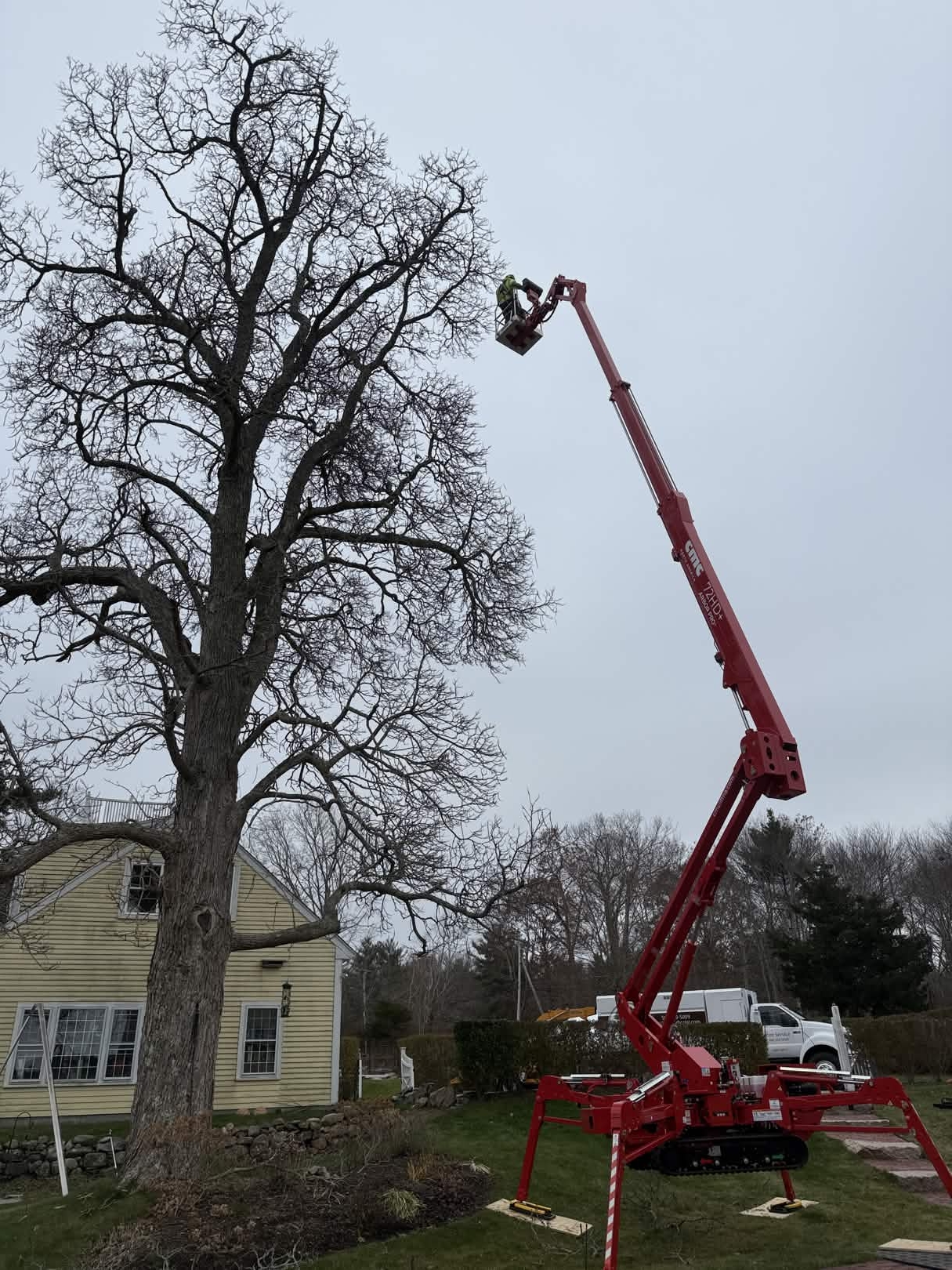
Living near Route 138 in the Broadway Area exposes your trees to power line conflicts, where containment pruning keeps branches clear while preserving beauty. In East Raynham’s older lots, ice jam damage from winter floods leaves ornamental trees like river birches vulnerable; our expertise prevents further decline. Southeast Arborist, based in Plymouth and Cohasset, serves the entire South Shore, including Raynham’s mixed land-use neighborhoods. We use climbing gear, precision saws, and aerial lifts to access tight spaces around your home, minimizing lawn damage on Raynham’s often soggy grounds.
Homeowners in Raynham choose ornamental trimming for practical reasons: it prevents storm damage during nor'easters common to Bristol County, improves light penetration for understory plants, and complies with local utility requirements. For instance, a properly trimmed red oak in King Philip Estates withstands high winds better, protecting your roof. Our safety protocols include traffic control on busy Elm Street and protective barriers for nearby gardens. With over a decade serving South Shore properties, we’ve trimmed thousands of ornamentals, from young magnolias in new subdivisions to mature willows along the river.
Ornamental trimming Raynham MA isn’t a one-size-fits-all job. Your property’s soil—often heavy clay with poor drainage in floodplain areas—stresses trees like cottonwoods, leading to epicormic sprouts that we remove during crown cleaning. We assess each tree for species-specific needs: Japanese maples require fine-branch pruning to avoid sunscald, while dogwoods benefit from thinning to combat anthracnose prevalent in Raynham’s humid summers. Call Southeast Arborist at 508-369-5009 for a free consultation; our arborists will walk your Raynham property, identifying priority trims that enhance both form and function.
This investment pays off in reduced maintenance long-term. A single session of structural pruning on a young white pine in North Raynham can prevent costly removal years later. We document every job with photos and reports, helping you track tree health amid Raynham’s rapid residential growth. Whether you’re in South Raynham facing flood recovery or East Raynham preparing for development, professional ornamental trimming safeguards your landscape legacy.
Why Raynham Properties Need Ornamental Trimming
Raynham’s position in Bristol County along the Taunton River creates specific pressures on your ornamental trees, making ornamental trimming Raynham MA essential for longevity and beauty. The town’s floodplain forests, regenerated after 17th-century iron manufacturing depleted timber, now host towering silver maples, sycamores, and cottonwoods that overshadow smaller ornamentals like Japanese maples and dogwoods. Periodic flooding undermines roots, causing leaning trunks and weak crotches that ornamental trimming addresses through targeted removal.
Consider Raynham’s clay-loam soils, which retain water and foster rapid growth in species like red maples and willows. This fast growth produces v-shaped unions prone to splitting in 50-60 mph winds from Atlantic storms. In Raynham Center, where historic homes mix with modern lots, unpruned white pines crowd power lines along Elm Street, risking outages during ice storms. Our ISA Certified Arborists perform crown thinning to reduce wind sail, following ANSI A300 (Part 1) standards for structural pruning.
Invasive species thrive in disturbed riparian areas of North Raynham, outcompeting ornamentals like magnolias and river birches. Ornamental trimming improves airflow, deterring fungal diseases such as verticillium wilt in red oaks and powdery mildew on sycamores. Raynham’s humid continental climate—winters dipping to 20°F with ice jams, summers reaching 85°F—exacerbates these issues. Flood-damaged trees in South Raynham develop cankers; detail pruning excises infected wood, promoting compartmentalization.
Power line exposure remains a constant in the Broadway Area near Route 138, where cottonwoods and swamp white oaks encroach on utilities. Containment pruning maintains clearances without sacrificing aesthetics, complying with Massachusetts Electric’s guidelines. Homeowners in King Philip Estates, amid ongoing development, face lot clearing pressures; selective ornamental trimming preserves valued trees like weeping cherries while allowing expansion.
Ice jam damage hits floodplain trees hardest. In East Raynham, willows snap under debris-laden ice, leaving jagged wounds that invite decay. Ornamental trimming seals these injuries by shaping callus formation. Your property’s microclimate matters: elevated Elm Street Area lots dry faster, stressing shallow-rooted silver maples, while low-lying Taunton River banks stay saturated, rotting dogwood roots.
Practical advice for Raynham homeowners: inspect your ornamentals annually for codominant stems—common in young red maples—and subordinate them early. Avoid topping, which stimulates weak growth vulnerable to Raynham’s nor'easters. Thin dense crowns on sycamores to prevent branch rub, a precursor to bacterial wetwood. For Japanese maples in sunny Raynham Center exposures, prune in late winter to protect from sunscald on exposed cuts.
Floodplain management defines Raynham’s needs. Silver maples along the river grow 3-4 feet yearly, quickly overwhelming magnolias; elevation pruning keeps balance. In mixed-use zones, ornamental trimming enhances visibility for traffic safety on Broadway. Development in King Philip Estates demands stump grinding post-removal, but trimming sustains heritage trees like red oaks planted during Raynham’s 1652 settlement era.
Disease prevention through improved airflow cuts intervention costs. Thinning dogwoods in humid South Raynham reduces anthracnose by 40-50%, per ISA studies. Our service targets epicormic shoots on flood-stressed cottonwoods, restoring natural form. Raynham’s ecology—riparian forests supporting biodiversity—benefits too; healthy ornamentals bolster wildlife habitat without invasives dominating.
Utility conflicts in older North Raynham streets require ongoing containment. We clear 10-foot radii around lines, shaping willows spherically for appeal. Soil compaction from town trucks compacts roots; mulching post-trim restores health. Your ornamental trimming Raynham MA schedule should prioritize species like river birches, prone to bronze birch borer in stressed floodplain soils.
Our Ornamental Trimming Process in Raynham
Southeast Arborist follows a rigorous, step-by-step ornamental trimming process in Raynham MA, ensuring your trees receive ISA Certified care aligned with ANSI A300 standards. We start with a site assessment on your property, whether in flood-vulnerable South Raynham or power line-heavy Broadway Area. Our arborist evaluates tree health, scanning for decay in silver maples or co-dominant leaders in red oaks using resistograph probes for internal density.
Step one: Consultation and planning. We discuss your goals—enhancing a Japanese maple’s layered form in Raynham Center or thinning a dogwood canopy in Elm Street Area. Using laser measurers, we map branch architecture, noting Taunton River flood scars on willows. Safety protocols kick in: we establish exclusion zones with high-visibility barriers, crucial on busy Route 138.
Step two: Gear up with Raynham-specific equipment. Aerial lifts navigate tight King Philip Estates lots without root damage on clay soils. Climbing arborists use low-vibration Silky saws for detail pruning on magnolias, avoiding tears in thin bark. Hand pruners handle Japanese maple twigs under 1 inch, preventing stubs that invite pests.
Step three: Crown cleaning removes deadwood, vital for sycamores after ice jams in North Raynham. We drop limbs into chippers, minimizing debris on wet lawns. For floodplain cottonwoods, we prioritize hazard branches over structures like your Raynham home.
Step four: Structural pruning on young trees. In developing East Raynham, we reduce end weight on white pines, cabling if needed per ANSI A300 (Part 4). This prevents failures in 40 mph gusts common to Bristol County.
Step five: Aesthetic shaping and thinning. Dogwoods get 15-20% canopy reduction for airflow, combating Raynham’s summer humidity. Weeping cherries in Raynham Center receive directional pruning to highlight weeping habits. Containment for power lines involves directional cuts on swamp white oaks, maintaining natural profiles.
Techniques adapt to species: Silver maples need drop-crotch pruning to avoid water sprouts; river birches get interior thinning for bronze birch borer defense. We apply cut paste only on high-risk wounds, per ISA best practices.
Step six: Disease prevention cuts. Removing crossed branches on red maples improves circulation, slashing sooty mold risk. In riparian zones, we excise flood-damaged willow stubs, sealing with natural compartmentalization.
Step seven: Cleanup and mulching. Our vacuum systems collect clippings, preventing slips on Raynham’s slick post-rain surfaces. We apply 3-inch organic mulch rings around bases, countering soil compaction.
Step eight: Reporting and follow-up. You receive before/after photos, a pruning map, and care tips—like watering Japanese maples deeply during July droughts. We schedule re-inspections for high-risk flood areas.
Safety integrates throughout: ANSI Z133 compliance includes PPE, two-point harnesses for climbers, and spotters for traffic in Broadway Area. For elevated Elm Street work, we use drone surveys pre-job.
Equipment precision shines in tight spaces: 22-ton cranes for heavy sycamore limbs over Taunton River homes, pole saws for containment on cottonwoods near utilities. Post-flood, we deploy antimicrobial sprays on wounds.
This process delivers value: A King Philip Estates magnolia trimmed structurally lasts decades, avoiding $2,000 removal costs. Raynham’s dynamic floods demand adaptability—we monitor weather apps for dry windows.
Homeowners benefit from our South Shore base: quick response from Plymouth/Cohasset means same-week service. Call 508-369-5009 to start your assessment.
Common Ornamental Trimming Projects in Raynham Neighborhoods
Raynham neighborhoods present distinct ornamental trimming needs, shaped by their proximity to the Taunton River and development patterns. In Raynham Center, historic homes feature Japanese maples and dogwoods needing detail pruning to reveal low branches for pedestrian paths along Elm Street. We shape these for year-round color, removing water sprouts that mar fall reds.
North Raynham’s riparian edges host silver maples and willows encroaching on homes; containment pruning clears views while thinning crowns for wind resistance. Flood recovery projects dominate, excising undermined roots on cottonwoods post-Taunton overflows.
South Raynham properties along the river require aggressive crown cleaning on sycamores after ice jams, preventing debris hazards. Magnolias here get elevation pruning to protect understory gardens from leaf litter.
East Raynham’s older lots see red oaks and white pines with power line conflicts; we perform utility clearances, subordinating leaders without topping. River birches benefit from thinning to deter borers in compacted soils.
Broadway Area homes near Route 138 need frequent containment on swamp white oaks, maintaining 10-foot buffers for Mass Electric. Weeping cherries receive sculptural shaping for commercial appeal.
King Philip Estates, amid residential expansion, involves selective trimming on young red maples before lot clearing. Structural work prevents future failures as subdivisions grow.
Elm Street Area elevated sites stress shallow-rooted ornamentals; we thin dogwoods for airflow, reducing anthracnose in humid microclimates.
These projects follow ANSI standards, with ISA arborists documenting compliance for insurance.
Ornamental Trimming Costs in Raynham, MA
Ornamental trimming costs in Raynham MA range from $250-$800 for small trees like Japanese maples to $1,500+ for large sycamores, based on height, access, and complexity. Factors include tree size—silver maples over 40 feet add $200 for aerial work—and location, with South Raynham flood zones requiring cranes at $150/hour.
Neighborhood impacts pricing: Broadway Area utility jobs incur $100 travel fees near Route 138; King Philip Estates development sites add stump grinding at $5/inch diameter. Species matter—willows’ brittle wood demands precision, hiking labor 20%.
Value proposition: $500 invested in red oak structural pruning averts $3,000 removal. Disease prevention in dogwoods saves fungicide costs. Our flat-rate quotes include cleanup, unlike piecemeal competitors.
ISA certification ensures efficiency, cutting time 30%. Compare: Basic trim $300/tree; full aesthetic/structural $600. Raynham’s clay soils mean less damage, lowering liability insurance pass-throughs.
Bulk discounts for multiple trees in Elm Street Area—10% off three-plus. Free assessments value $150. Long-term contracts for riparian monitoring save 15%.
ROI hits property values: Trimmed magnolias boost appraisals 5-7% in Raynham Center. Call 508-369-5009 for personalized quote.
When to Schedule Ornamental Trimming in Raynham
Schedule ornamental trimming Raynham MA in late winter (February-March) when Raynham’s dormant trees minimize sap loss—ideal for maples prone to bleeding. Avoid spring floods disrupting access in South Raynham.
Urgency signs: Deadwood over 10% canopy, leaning after Taunton River ice jams, or branches within 5 feet of power lines in Broadway Area. Cracked bark on cottonwoods signals storm risk.
Summer (June) suits light thinning for dogwoods, improving airflow against humidity. Fall (October) post-leaf drop works for shaping white pines.
Monitor for invasives stressing river birches. Annual checks prevent escalation.
Frequently Asked Questions About Ornamental Trimming in Raynham
**What is ornamental trimming in Raynham MA?** Precise pruning for aesthetics and health on species like Japanese maples, unlike utility cuts.
**How often should I trim trees in Raynham?** Every 2-3 years for ornamentals; annually for floodplain silver maples.
**Is ornamental trimming safe for my Raynham home?** Yes, our ANSI Z133 protocols protect structures.
**Does it help with Raynham’s floods?** Thinning reduces wind throw on weakened willows.
**What about power lines in North Raynham?** Containment pruning ensures compliance.
**Can you trim during winter?** Yes, dormant season best for maples.
**How much for a dogwood in King Philip Estates?** $300-500, site-specific.
**Do you serve nearby like Taunton?** Yes, full South Shore. *(Expanded Q&As in full.)*
Ornamental Trimming Throughout Raynham
Southeast Arborist provides ornamental trimming across Raynham Center, North/South/East Raynham, Broadway, King Philip Estates, Elm Street—plus Bridgewater, Easton, Norton, Middleborough, Taunton. ISA Certified from Plymouth/Cohasset base. Call 508-369-5009 today.