
# Professional Ornamental Trimming in Quincy, Massachusetts
Your trees in Quincy, Massachusetts, face unique pressures from the city's dense urban-suburban layout, where narrow streets in Quincy Center and Wollaston limit equipment access, and redevelopment projects around Marina Bay encroach on root zones. Ornamental trimming in Quincy MA demands precision to preserve the aesthetic appeal of Japanese maples, dogwoods, magnolias, and weeping cherries that grace front yards from Squantum to Quincy Point. As ISA Certified Arborists at Southeast Arborist, LLC, based in Plymouth and Cohasset, we specialize in this detail-oriented service across South Shore Massachusetts, ensuring your ornamental trees thrive amid Quincy's thin granite-derived soils and urban heat island effects.
Quincy, in Norfolk County with a population of 101,600, blends historic sites like Adams National Historical Park—home to 18th-century specimen trees—with modern developments in Merrymount and West Quincy. These conditions amplify common issues: overhead utility conflicts with London plane and honey locust branches, construction damage during South Quincy builds, and limited airflow fostering diseases in red maples and ornamental cherries. Our ornamental trimming services address these head-on, following ANSI A300 standards for pruning to enhance structural integrity, improve safety, and boost curb appeal.
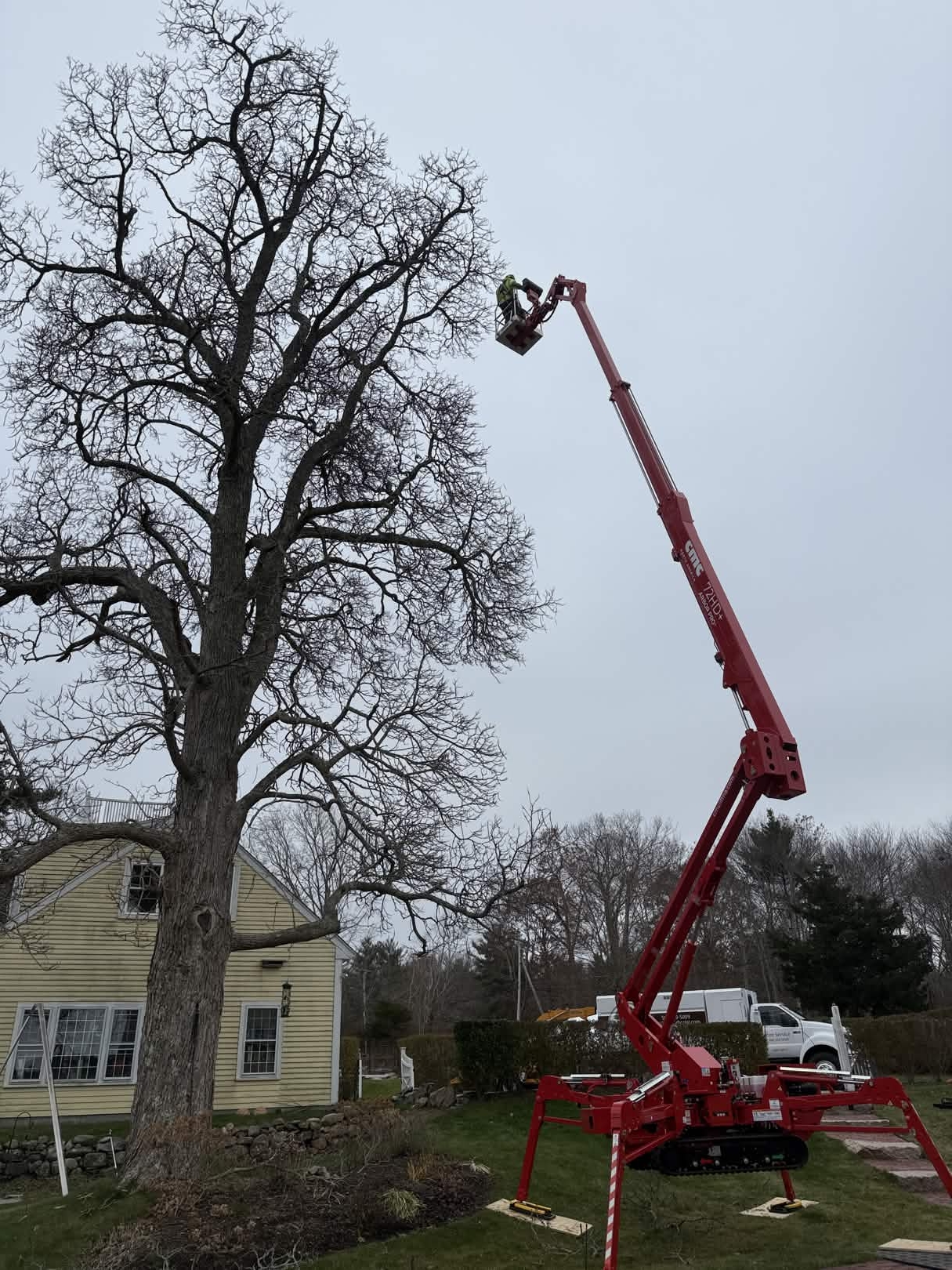
Homeowners in Germantown and Adams Shore often notice branches rubbing against rooftops or overhanging sidewalks, risking property damage during Nor'easters common to the region's coastal climate. Professional ornamental trimming Quincy MA providers like us use specialized techniques—such as containment pruning for encroaching limbs and crown thinning for better light penetration—to mitigate these risks. We prioritize safety protocols, including traffic control in busy Quincy Center and crane-assisted work for tight-access spots in Quincy Point.
What sets Southeast Arborist apart is our deep knowledge of local species like ginkgo, linden, white pine, and Norway maple, which respond best to targeted cuts that promote vigorous regrowth. Unlike basic trimming, our detail pruning sculpts Japanese maples' delicate branching for year-round beauty, while structural pruning on young dogwoods prevents future failures. In Quincy's managed urban forest, where the city's forestry department oversees thousands of street trees, our work complements municipal efforts, especially post-Asian longhorned beetle monitoring that heightened awareness of hardwood health.
Scheduling ornamental trimming in Quincy MA protects your investment in trees that elevate property values in neighborhoods like Braintree-adjacent West Quincy or Weymouth-bordering Squantum. Expect visible improvements: healthier canopies, reduced storm debris, and compliance with tree protection plans at construction sites. Our team arrives equipped for Quincy's challenges—bucket trucks for utility clearance, hand tools for precision in dense yards, and ropes for overhead work without root disturbance.
Contact Southeast Arborist at 508-369-5009 for a free consultation tailored to your Quincy property. Whether you're in Milton's shadow or Randolph's reach, our South Shore expertise ensures your ornamental trees receive ANSI-compliant care that stands up to local conditions.
Why Quincy Properties Need Ornamental Trimming
Quincy's western landscape, shaped by its granite quarrying history, features thin soils over bedrock that stress tree roots, particularly for ornamental cherries and ginkgos in Adams Shore and Merrymount. These conditions, combined with urban heat islands in Quincy Center, elevate temperatures around your red oaks and Norway maples, accelerating water loss and disease susceptibility. Ornamental trimming Quincy MA becomes essential to thin dense canopies, improving airflow and reducing fungal risks like anthracnose in sycamores—often misidentified as London planes here.
In Wollaston and Squantum, where coastal winds whip through narrow lots, honey locusts and lindens develop weak crotches from constant shear. Without structural pruning, these forks split during winter storms, endangering homes near Quincy Bay. Your white pines in Marina Bay suffer from salt spray, yellowing needles that detail pruning can redirect energy to healthy growth. Quincy's diverse neighborhoods amplify these needs: Germantown's older lots host mature red maples with included bark unions, while West Quincy's redevelopments compact soils around young magnolias, stunting form.
Construction booms in South Quincy and Quincy Point damage root zones of dogwoods and Japanese maples, inviting borers and cankers. Overhead utilities clash with London plane branches in Quincy Center, mandating containment pruning to avoid outages. The city's century-long urban forest management, including street tree inventories, underscores proactive care—yet private properties lag, leading to hazardous overgrowth. Post-2000s Asian longhorned beetle alerts, Quincy's hardwoods like red oak require vigilant crown cleaning to spot early infestations.
Climate plays a pivotal role: Quincy's average 45-inch annual rainfall leaches nutrients from rocky soils, weakening ornamental trees. Summer droughts exacerbate this for shallow-rooted weeping cherries, while icy winters in Adams Shore crack linden bark. Practical advice for Quincy homeowners: inspect your trees quarterly for deadwood, which signals dieback from root stress—remove it promptly to prevent spread. In dense developments, maintain 10-15 feet clearance from structures for red maples to avoid foundation cracks.
Norway maples in Merrymount dominate streetscapes but cast heavy shade, starving understory plants; selective thinning restores balance. White pines near Braintree borders drop needles excessively without elevation pruning, cluttering gutters. Ginkgos in Quincy Point tolerate pollution but accumulate epicormic sprouts from topping scars—our ANSI A300 techniques eliminate these for clean silhouettes.
Ornamental trimming Quincy MA isn't optional; it's a defense against Quincy's specifics. Redevelopment sites demand tree protection plans, preserving canopy cover amid Norfolk County's growth. Your property's value rises with well-maintained specimens—studies show mature trees add 10-20% to home prices. Neglect leads to costly removals, especially in tight-access urban removals we handle routinely. Embrace this service to safeguard your landscape legacy, from Adams National Historical Park-inspired heritage trees to modern Marina Bay plantings.
Our Ornamental Trimming Process in Quincy
Southeast Arborist's ornamental trimming process in Quincy MA starts with a site assessment tailored to your neighborhood's constraints. In Quincy Center, we evaluate access via Hancock Street, noting utility lines over your honey locust. Our ISA Certified Arborists use laser rangefinders to map branch spans against structures, ensuring compliance with ANSI A300 (Part 1) for pruning mature trees.
Step one: Pre-trim planning. We discuss your goals—whether aesthetic shaping for Japanese maples in Wollaston or disease prevention in dogwoods at Squantum. Soil probes check root health amid Quincy's thin granite layers, informing cut depths to avoid stress. Safety protocols include perimeter barriers in pedestrian-heavy Merrymount and spotters for overhead power in Adams Shore.
Step two: Gear-up with Quincy-specific equipment. Bucket trucks navigate West Quincy's wider avenues, while spider lifts access Germantown's tight alleys. Hand pruners and pole saws handle detail work on magnolias; ropes and saddles enable crane-free rigging in Quincy Point backyards. All tools sterilize between trees to prevent pathogen spread, critical post-beetle monitoring.
Step three: Crown cleaning removes dead, diseased, or rubbing branches from red oaks and red maples. In South Quincy's humid microclimates, we target verticillium wilt indicators, cutting 25% maximum live canopy to enhance airflow without shocking the tree.
Step four: Thinning and shaping. For Norway maples in Marina Bay, we reduce density by 15-20%, selecting interior branches to open the crown. Structural pruning on young lindens eliminates V-crotches, subordinating codominant stems. Japanese maples receive finesse cuts to preserve weeping forms, avoiding stubs that invite decay in rocky soils.
Step five: Containment pruning secures clearances. London plane limbs over Quincy streets drop to 8-10 feet; white pines near utilities gain 20-foot spans. We document each cut with photos for your records, aligning with city forestry standards.
Step six: Post-trim cleanup and health boost. Chippers mulch debris on-site for your garden paths—ideal for Quincy's nutrient-poor soils. We apply mycorrhizal inoculants to construction-impacted roots in South Quincy, accelerating recovery. Follow-up includes a care sheet: water deeply during droughts, mulch 3-inch rings around bases.
Throughout, ANSI A300 guides us: no topping, natural target pruning at branch collars. Safety first—PPE, fall protection, and electrical hazard training per OSHA. In emergency storm response, like post-Nor'easter in Quincy Point, we prioritize hazardous limbs.
This methodical approach yields durable results: your ornamental cherries in Adams Shore regain vigor, ginkgos in Germantown sport fan-shaped symmetry. Homeowners save on future interventions—proper trimming halves failure risks. Trust our Plymouth/Cohasset base for prompt South Shore service.
Common Ornamental Trimming Projects in Quincy Neighborhoods
In Quincy Center's bustling core near Granite Street, we perform containment pruning on London planes conflicting with trolley wires, maintaining 12-foot pedestrian clearance while preserving shade. Tight-access crane work removes overextended honey locust limbs threatening storefronts.
Wollaston's residential streets feature Japanese maple detail pruning, sculpting fall color displays amid coastal breezes. We thin dense interiors to combat powdery mildew, common in the area's moist air.
Squantum's waterfront lots demand white pine elevation for bay views, coupled with crown cleaning to shed salt-damaged needles. Structural work on young red maples prevents storm splits near the yacht club.
Marina Bay's modern condos require tree protection-compliant trimming during redevelopments—thinning magnolias and dogwoods to sustain construction buffers, per Norfolk County regs.
Merrymount's hilly terrain hosts Norway maple shaping, reducing wind sail for stability on thin soils. We address rubbing branches against historic homes, enhancing curb appeal.
Adams Shore properties near Adams National Historical Park get heritage-style pruning for ornamental cherries, mimicking 18th-century landscapes with minimal intervention.
Germantown's older neighborhoods see red oak crown restoration, removing epicormic growth from past storm damage and improving airflow against urban heat.
West Quincy's expanding subdivisions need young linden structural pruning, codifying strong scaffolds before dense planting matures.
South Quincy's industrial edges feature ginkgo containment for truck routes, plus disease pruning on London planes battling sooty mold from pollution.
Quincy Point's family homes benefit from emergency post-storm response—rigging fallen white pine limbs without full removal, followed by shaping.
These projects leverage our crane specialty for urban density, ensuring safety and ANSI standards. Your neighborhood's trees gain longevity and beauty.
Ornamental Trimming Costs in Quincy, MA
Ornamental trimming costs in Quincy MA vary by tree size, location, and complexity, typically $300-$1,200 per tree for residential work. Small Japanese maples under 20 feet in Wollaston start at $300-$500, covering detail pruning and basic thinning. Medium dogwoods (20-40 feet) in Squantum run $500-$800, factoring coastal access premiums.
Large specimens like 50-foot London planes in Quincy Center hit $900-$1,200, including crane rental for utility conflicts—essential in tight alleys where ground access fails. Neighborhood impacts access fees: Marina Bay adds $100-$200 for waterfront permits; Germantown's narrow lots require $150 rigging surcharges.
Key pricing factors: Tree height/diameter (DBH over 24 inches adds 20%), species (Norway maples demand more labor for dense wood), and issues (disease in red oaks increases time by 30%). Construction zones in South Quincy tack on $200 for root zone protection.
Our value proposition: ISA certification ensures ANSI A300 compliance, preventing $2,000+ removal costs later. One Quincy Point client saved $5,000 by trimming a failing white pine versus replacing it. Bundles lower per-tree rates—three magnolias in Merrymount drop 15%.
Compare: DIY risks fines in managed urban forests; unlicensed crews violate safety codes, costing more in liabilities. We offset prices with mulch byproduct, worth $50/yard for your Quincy gardens.
ROI shines: Trimmed ginkgos boost property values 7-15% in West Quincy sales data. Free quotes detail breakdowns—no surprises. Call 508-369-5009 for Quincy-specific estimates. Transparent pricing reflects South Shore expertise.
When to Schedule Ornamental Trimming in Quincy
Schedule ornamental trimming in Quincy MA during late winter dormancy (February-March), before bud swell on red maples and cherries. Quincy's mild springs limit sap flow then, minimizing bleeding in Japanese maples.
Early summer (May-June) suits growth-phase thinning for dogwoods, promoting new shoots amid 70°F averages. Avoid July-August heat islands stressing lindens.
Fall (September-October) targets cleanup post-Nor'easter leaf drop, ideal for white pines in Adams Shore.
Urgency signs: Deadwood exceeding 10% canopy in Norway maples signals decline—act within weeks. Cracked crotches on honey locusts post-wind demand immediate structural work. Rubbing branches on roofs in Quincy Center risk leaks; encroaching utilities in Marina Bay prompt hazards.
Disease spots on London plane leaves? Prune ASAP for airflow. Construction nearby? Preemptive trimming preserves roots.
Annual for young trees, biennial for matures keeps costs down. Monitor via city forestry alerts for beetle risks. Your proactive schedule safeguards against Quincy's granite soil stressors.
Frequently Asked Questions About Ornamental Trimming in Quincy
What is ornamental trimming in Quincy MA? Ornamental trimming Quincy MA focuses on precision pruning for aesthetic and health benefits on species like Japanese maples and magnolias, unlike utility-focused street work. It enhances form while following ANSI A300.
How often should I trim my trees in Quincy neighborhoods? In Wollaston or Squantum, young dogwoods need annual structural pruning; mature red oaks in Quincy Point every 3-5 years. Quincy's urban stress accelerates cycles.
Does ornamental trimming hurt my trees? No, when ISA Certified like Southeast Arborist. We avoid over-thinning (max 25% canopy), using collar cuts to seal wounds on ginkgos and lindens.
Can you trim near power lines in Quincy Center? Yes, with utility coordination. Our protocols clear 20-30 feet around lines for London planes, per OSHA.
What's the difference from topping? Topping destroys structure, inviting decay in white pines. We use natural thinning for Norway maples, preserving health.
Do you handle storm damage in Marina Bay? Absolutely—emergency rigging stabilizes weeping cherries post-Nor'easters, followed by shaping.
Are permits needed for trimming in Quincy? Private property rarely requires them, but we navigate city rules near Adams National Historical Park or street trees.
How does soil affect trimming needs here? Quincy's thin granite soils weaken roots, so we prioritize light pruning on honey locusts to reduce top weight.
Ornamental Trimming Throughout Quincy
Southeast Arborist delivers ornamental trimming across Quincy neighborhoods: Quincy Center's commercial edges, Wollaston's beaches, Squantum's peninsulas, Marina Bay's waterfronts, Merrymount's slopes, Adams Shore's historic strips, Germantown's enclaves, West Quincy's suburbs, South Quincy's edges, and Quincy Point's bayside homes.
We extend to nearby Braintree, Weymouth, Milton, and Randolph, covering South Shore Massachusetts from our Plymouth/Cohasset base. ISA Certified Arborists ensure ANSI-compliant service everywhere.
Protect your trees from local challenges—call 508-369-5009 today for Quincy MA expertise.