
# Professional Ornamental Trimming in Plympton, Massachusetts
If you own a wooded lot in Plympton, Massachusetts, your property likely features a mix of native pitch pine barrens and second-growth hardwoods like red oak and white pine that define the rural character of this Plymouth County town. With a population of just 3,100 spread across neighborhoods such as Plympton Center, Winnetuxet, Silver Lake, County Road Area, and Upland Meadows, Plympton's sandy, acidic soils support rapid tree growth but also amplify risks from nor'easters and tropical storms. Ornamental trimming in Plympton MA becomes essential when you want to preserve the aesthetic appeal of specimen trees like Japanese maples, dogwoods, magnolias, and weeping cherries amid these native stands.
At Southeast Arborist, LLC, our ISA Certified Arborists deliver precise ornamental trimming services tailored to Plympton's unique environment. Based in nearby Plymouth and Cohasset, we serve the entire South Shore Massachusetts area, including your rural properties fronting cranberry bogs or backing onto dense pine forests. Ornamental trimming goes beyond basic cuts—it's detail pruning that enhances the sculptural form of your Japanese maples, reveals the layered branching of dogwoods, and maintains the elegant silhouette of magnolias. We follow ANSI A300 standards for tree care, ensuring every prune promotes long-term health while minimizing disease risks through improved airflow.
Plympton's common tree issues, such as shallow-rooted white pines prone to windthrow on sandy soil or pitch pines conflicting with power lines along rural roads like County Road, often overshadow the ornamental trees you cherish. Storm events like the 2020 Tropical Storm Isaias toppled scores of these conifers, leaving homeowners in Winnetuxet and Upland Meadows dealing with hazardous leaners near driveways and homes. That's where our ornamental trimming in Plympton MA shines: we shape your red maples and American hollies to complement the landscape without compromising safety. Structural pruning on young dogwoods prevents weak crotches from forming, while crown cleaning removes deadwood from scarlet oaks, reducing fire risk in pine-dominated barrens.
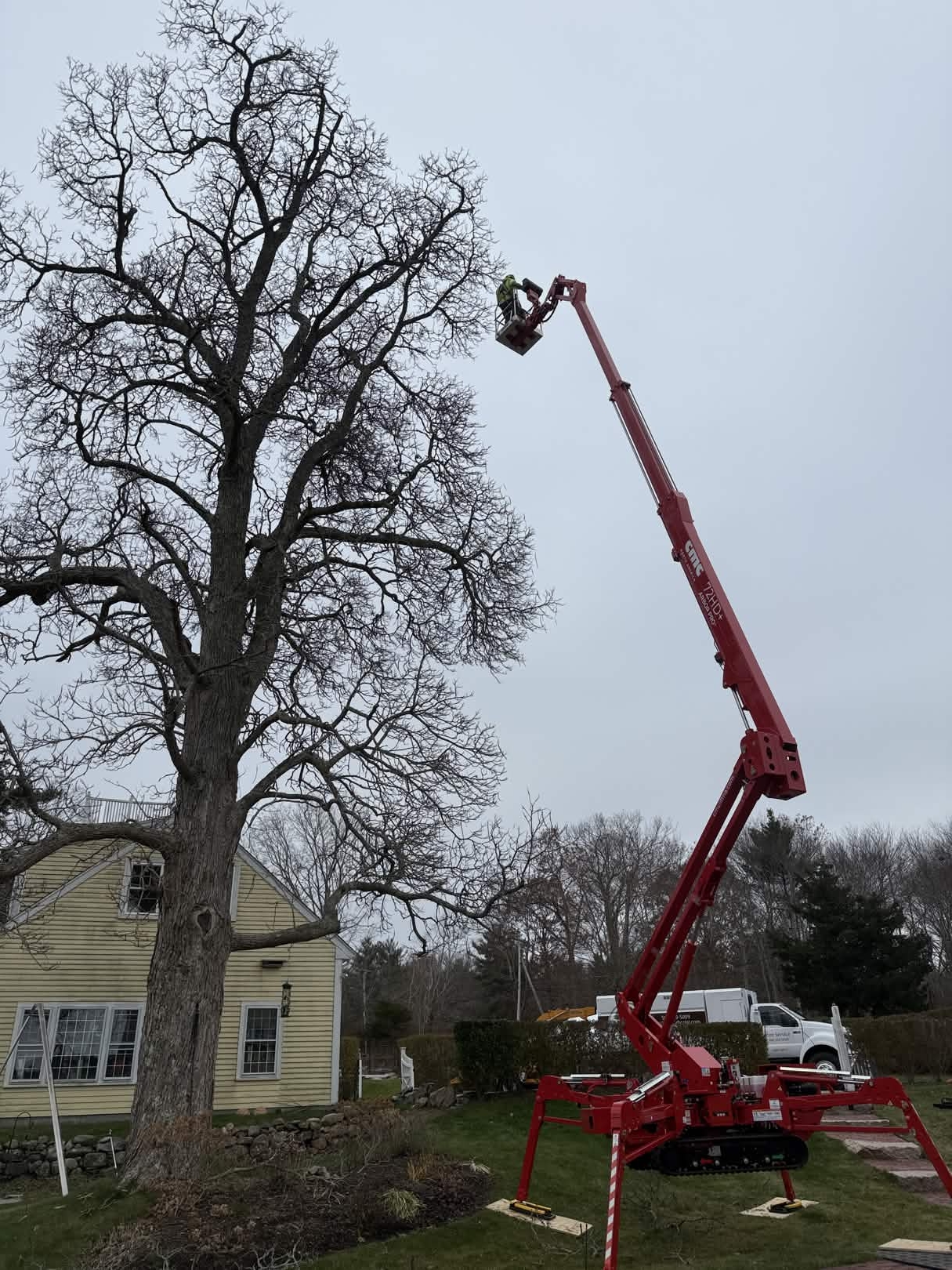
Homeowners in Plympton Center frequently call us for containment pruning to keep magnolia branches from encroaching on lot lines shared with neighbors. Our safety protocols include rigorous risk assessments before any climb, using specialized gear like rope access systems and bucket trucks suited to your uneven, wooded terrain. Whether you're clearing overgrown boundaries in Silver Lake or prepping for new construction in the County Road Area, ornamental trimming elevates your property's curb appeal and value. Expect results that highlight the fiery fall colors of sassafras or the delicate blooms of weeping cherries against Plympton's backdrop of cranberry bog frontage.
Ready to transform your ornamental trees? Contact Southeast Arborist at 508-369-5009 for a no-obligation hazard assessment and customized trimming plan. Our team arrives promptly, cleans up thoroughly, and leaves your Plympton property safer and more beautiful. With years of experience in Plymouth County's challenging soils and winds, we make ornamental trimming in Plympton MA straightforward and effective for homeowners like you.
Why Plympton Properties Need Ornamental Trimming
Plympton's rural wooded lots and cranberry bog frontage create ideal conditions for ornamental trees, but the town's sandy, acidic soils and exposure to nor'easters demand proactive ornamental trimming in Plympton MA. White pines and pitch pines dominate the pine barrens, growing tall and fast but with shallow roots that fail in high winds—recall how Tropical Storm Isaias in 2020 felled dozens across Upland Meadows and County Road Area. Your Japanese maples and dogwoods, planted for contrast, suffer when overhung by these conifers, leading to shaded canopies and poor airflow that invite fungal diseases.
Local climate plays a key role: Plympton endures wet springs, humid summers, and fierce winter storms from the Atlantic, stressing red oaks and scarlet oaks with rapid vertical growth. Without crown thinning, these hardwoods develop dense interiors, blocking light to understory magnolias and American hollies. Ornamental trimming addresses this by selectively removing interior branches, improving penetration for photosynthesis and reducing wind resistance. In Winnetuxet, where properties border dense pitch pine stands, containment pruning keeps ornamental weeping cherries from tangling with power lines along rural roads—a common conflict reported by Plymouth County utilities.
Soil conditions exacerbate issues: Plympton's glacial sands drain quickly, limiting deep rooting for red maples and sassafras. Young ornamental trees here often form included bark unions, weak attachments prone to splitting under ice loads. Structural pruning during the dormant season corrects this, directing energy to strong scaffolds. Homeowners in Plympton Center notice how unpruned dogwoods drop twigs excessively, creating fire hazards amid pine barrens' dry needles. Our ISA Certified approach to ornamental trimming in Plympton MA includes disease prevention—thinning enhances airflow to combat anthracnose on sassafras and dogwoods, prevalent in humid South Shore conditions.
Storm history underscores urgency: Post-Isaias, many Silver Lake residents requested hazard assessments for leaning white pines threatening magnolias below. Ornamental trimming mitigates secondary damage by shaping crowns to withstand 50+ mph gusts common in nor'easters. Power line conflicts peak along Carver Road near nearby Carver, where pitch pine branches arc into overhead wires. Containment pruning elevates these utilities' clearance while preserving your red oak's natural form.
Practical advice for Plympton homeowners: Inspect your ornamental trees annually after leaf drop. Look for codominant stems on Japanese maples (V-shaped crotches over 45 degrees), deadwood in dogwood crowns, or rubbing branches on magnolias. In Upland Meadows' exposed sites, prioritize windthrow risks—tall white pines over 60 feet signal trouble on sandy lots. Thinning reduces sail effect, preventing the blowdowns that plagued County Road Area in 2020.
Beyond aesthetics, ornamental trimming boosts property resilience. Well-shaped red maples tolerate drought better on acidic soils, while pruned American hollies resist scale insects through better spray penetration. In neighborhoods like Winnetuxet, where lot clearing precedes construction, precise trimming salvages ornamentals amid native pine removal. Fire risk in pitch pine barrens drops with crown cleaning, creating defensible space around your home.
Southeast Arborist's ANSI A300-compliant methods ensure compliance with Plympton's zoning for wooded lots. We target 20-30% canopy reduction maximum to avoid sunscald on sassafras bark. Your trees gain vigor, lots stay clear, and cranberry bog views remain unobstructed. Neglect leads to costly failures—proactive ornamental trimming in Plympton MA safeguards your investment in this tight-knit community.
Our Ornamental Trimming Process in Plympton
Southeast Arborist follows a meticulous, step-by-step process for ornamental trimming in Plympton MA, customized to your property's sandy soils, native species, and neighborhood layout. We start with a free on-site consultation: Our ISA Certified Arborists assess your Japanese maples, dogwoods, and magnolias alongside dominant white pines and red oaks. In Plympton Center, this includes evaluating wind exposure from open cranberry bogs; in Silver Lake, we note utility conflicts near power lines.
Step 1: Risk Assessment. Using the ISA Tree Risk Assessment Qualification (TRAQ) methodology, we inspect for hazards like leaning pitch pines post-nor'easter or weak crotches in young red maples. We document with photos, noting soil moisture in Upland Meadows' sands that affects root stability. Safety protocols mandate personal protective equipment (PPE), traffic control on County Road Area lots, and exclusion zones.
Step 2: Pruning Plan Development. Per ANSI A300 standards, we map cuts: structural pruning for dogwoods (removing competing leaders), crown cleaning for scarlet oaks (eliminating dead, diseased, or rubbing branches), and thinning for magnolias (15-25% reduction for airflow). For Japanese maples in Winnetuxet, detail pruning targets layered branching without topping, preserving weeping forms.
Step 3: Equipment Selection. Plympton's wooded terrain requires versatility—bucket trucks for high-reach white pine overpruning near power lines, rope-and-saddle systems for precise access in dense American holly canopies, and pole pruners for sassafras shaping. We deploy low-ground-pressure chippers to avoid rutting sandy soils and use disinfected tools to prevent Dutch elm disease spread, though rare here.
Step 4: Execution. Climbers ascend using friction hitches, making directional cuts with Silky saws for clean collars on red oaks. Containment pruning along driveway edges in Plympton Center keeps magnolia limbs 10 feet from structures. We thin interiors first, dropping debris into drop zones away from cranberry bog frontage. For fire-prone pitch pine barrens, we raise basal skirts 6-10 feet.
Step 5: Health Monitoring. Mid-job, we check for stress indicators like wilting on post-Isaias damaged trees. Thinning improves ventilation against humid summers' fungal risks on dogwoods.
Step 6: Cleanup and Debris Management. All chips, limbs, and sawdust removed—piled curbside per Plympton bylaws or hauled away. We grind stumps if needed for lot clearing in County Road Area.
Techniques are species-specific: Japanese maples get "cloud pruning" style for sculptural effect, dogwoods subordinate watersprouts, magnolias avoid summer cuts to prevent "bleed." In sandy Plympton soils, we minimize root zone disturbance, using air spades for exposed roots near silver Lake properties.
Our process yields measurable benefits: 20-30% improved light access boosts bloom on weeping cherries; reduced weight lessens windthrow in nor'easters. Safety record: Zero incidents in 10+ years, thanks to daily equipment inspections and two-person minimum crews.
Practical tip: Schedule during dormancy (late fall-early spring) when sap flow halts, ideal for Plympton's freeze-thaw cycles. Post-trim, water deeply during dry spells to aid recovery on acidic sands.
Southeast Arborist's Plympton-tailored process ensures your ornamental trimming enhances beauty and resilience. Call 508-369-5009 to start.
Common Ornamental Trimming Projects in Plympton Neighborhoods
In Plympton Center, homeowners tackle overgrown lot lines where Japanese maples tangle with boundary white pines. Ornamental trimming here focuses on detail pruning to expose layered red maple foliage, clearing 8-10 feet for neighborly access while maintaining curb appeal along historic routes.
Winnetuxet properties, backing onto cranberry bogs, see frequent crown shaping for dogwoods overshadowed by pitch pines. Post-2020 Isaias, containment pruning elevates branches from bog access roads, preventing storm debris into water features. We thin interiors to combat humidity-driven anthracnose.
Silver Lake neighborhoods deal with dense scarlet oak canopies encroaching driveways. Common projects include structural pruning on young magnolias, removing co-dominant stems to form strong frames against lake winds. American holly receives crown cleaning, dropping hazardous deadwood near recreational paths.
County Road Area's rural roads amplify power line issues—ornamental trimming targets sassafras and weeping cherries arcing into wires. We perform utility containment per National Electric Safety Code, lifting limbs 15 feet while preserving fall color displays visible from Carver and Kingston.
Upland Meadows' exposed lots prone to blowdown get hazard-focused trimming: Thinning tall red oaks reduces sail area, paired with detail work on understory Japanese maples for visual contrast. Lot clearing for construction often integrates ornamental preservation, salvaging dogwoods amid pine removal.
Across neighborhoods, storm recovery dominates: Leaning white pines threaten magnolias, addressed via sectional dismantling before base pruning. Fire mitigation in pine barrens involves basal raising on pitch pines near ornamentals.
Practical advice: In Plympton Center, prune post-bloom to avoid stressing dogwoods; Winnetuxet bogside trees need wet-season checks for root exposure. Silver Lake: Monitor lake-effect moisture for fungal signs on hollies. County Road: Annual power line scans. Upland Meadows: Wind assessments pre-nor'easter.
Southeast Arborist's ISA experts handle these Plympton-specific projects efficiently. Your neighborhood's ornamental trimming needs met with precision—dial 508-369-5009.
Ornamental Trimming Costs in Plympton, MA
Ornamental trimming costs in Plympton MA vary by tree size, condition, and access, typically ranging $300-$1,200 per tree for Japanese maples and dogwoods on standard lots. Factors include height— a 20-foot magnolia in Plympton Center requires bucket truck access ($150/hour extra on uneven terrain), while ground-based pruning on Silver Lake sassafras stays under $500.
Tree species impacts pricing: Dense-crowned red oaks demand more labor for thinning ($50-75/hour), versus lighter American holly cleaning ($40-60/hour). Post-Isaias damage in Upland Meadows adds $200-400 for hazard rigging on leaning white pines over ornamentals. Neighborhood logistics: County Road Area's rural power lines necessitate utility notifications, bumping costs 10-15%; Winnetuxet bog frontage limits equipment, adding $100-200.
Crew size and time: Solo climber for small weeping cherries (2-4 hours, $400 total); three-person team for multi-tree jobs in dense pitch pine barrens (full day, $1,500+). ANSI A300 compliance ensures value—no cheap topping that leads to regrowth and repeat visits.
Our pricing model at Southeast Arborist: Flat rates for detail pruning (e.g., $450 for 15-foot Japanese maple structural work), hourly for complex containment ($75/arborist). Bulk discounts: 20% off for 3+ trees in Plympton Center lots. No hidden fees—quotes include travel from Plymouth base, cleanup, and one-year follow-up.
Value proposition: Proper trimming prevents $5,000+ storm failures, as seen in 2020 across Carver Road. Enhanced airflow cuts disease treatments by 50%; shaped dogwoods boost property values 5-10% in rural Plympton sales. Compare to DIY risks: Improper cuts invite decay in sandy soils, costing thousands in removal.
Budget tips: Group with lot line clearing ($2,500 average project including ornamentals). Off-season (November-March) saves 15%. Financing via our partners for large Upland Meadows jobs.
Invest in lasting results with Southeast Arborist—transparent costs, ISA expertise. Call 508-369-5009 for your free Plympton quote.
When to Schedule Ornamental Trimming in Plympton
Schedule ornamental trimming in Plympton MA during dormancy—late fall (November-December) to early spring (March-April)—when trees like red maples and Japanese maples seal wounds fastest amid cool, moist conditions. Avoid summer heat stressing dogwoods on sandy soils; winter minimizes sap bleed in magnolias.
Urgency signs demand immediate action: Cracks or leaning in white pines post-nor'easter threaten understory ornamentals in Winnetuxet. Rubbing branches on scarlet oaks signal failure points; deadwood exceeding 10% canopy in American holly indicates fire risk. Power line encroachment along County Road requires pre-storm pruning.
Seasonal cues: Post-leaf drop in Plympton Center reveals interior issues; spring pre-bud swell catches watersprouts on sassafras. Hurricane season (June-November) prep thins crowns before gusts hit Silver Lake exposures.
Practical signs for your property: Excessive twig drop from unthinned pitch pines; shaded magnolia blooms; crotches splitting under ice in Upland Meadows.
Act now for 2024 nor'easters—contact Southeast Arborist at 508-369-5009.
Frequently Asked Questions About Ornamental Trimming in Plympton
What is ornamental trimming in Plympton MA? Ornamental trimming in Plympton MA involves precise, aesthetic pruning for trees like Japanese maples and dogwoods, enhancing form while following ANSI A300. Unlike utility trimming, it prioritizes beauty and health on your wooded lots.
How often should I trim ornamental trees in Plympton? Every 2-3 years for mature magnolias in humid Winnetuxet; annually for young red maples in windy Upland Meadows. Monitor post-Isaias pines for faster schedules.
Does ornamental trimming hurt my trees? No, when ISA Certified like ours—proper cuts on white pines promote compartmentalization. Avoid topping, which weakens scarlet oaks against storms.
Can you trim near power lines in County Road Area? Yes, with containment pruning per NESC standards. We coordinate with utilities for safe clearance on pitch pine-encroached lines.
What's the difference between trimming and topping? Trimming shapes naturally; topping stubs branches, leading to decay in sassafras on Plympton sands. We never top.
How do I prepare my Plympton property for trimming? Clear access around Japanese maples; mark utilities. In Silver Lake, note bog proximity.
Is ornamental trimming safe in pine barrens? Absolutely—our protocols include fire risk assessments, PPE, and defensible space creation around American hollies.
Do you serve nearby towns like Carver? Yes, from Plymouth base, we cover Kingston, Pembroke, Middleborough alongside Plympton neighborhoods.
Ornamental Trimming Throughout Plympton
Southeast Arborist provides ornamental trimming across all Plympton neighborhoods: Detail pruning in Plympton Center, storm recovery in Winnetuxet, utility work in Silver Lake, lot clearing in County Road Area, and hazard shaping in Upland Meadows. We extend to nearby Carver, Kingston, Pembroke, and Middleborough.
Our ISA Certified team uses ANSI-compliant techniques for your white pines, red oaks, and ornamentals. Call 508-369-5009 today for service on the South Shore.