
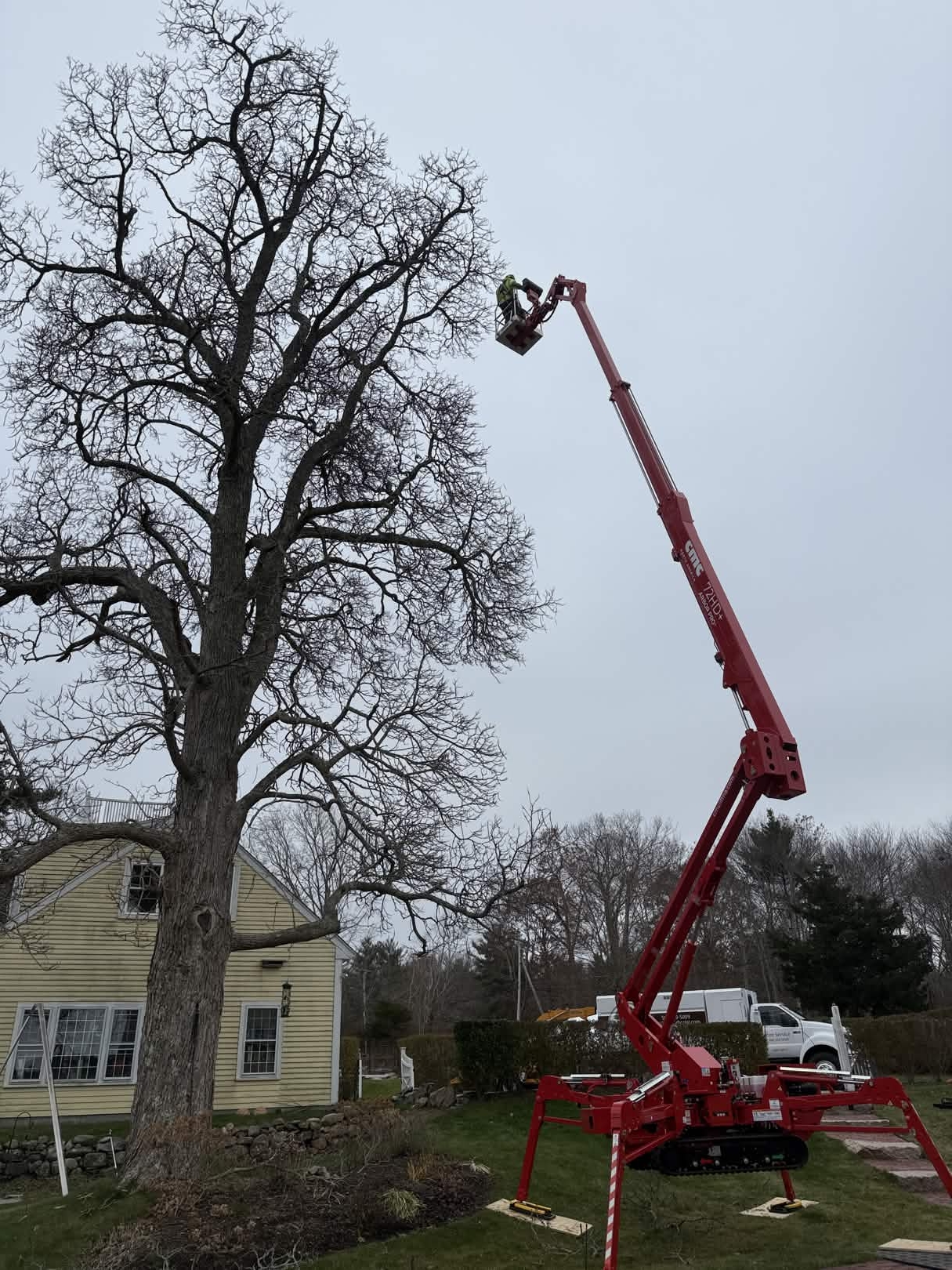
# Professional Ornamental Trimming in Plymouth, Massachusetts
If you own property in Plymouth, Massachusetts, your landscape likely features a mix of native trees like pitch pine, white pine, red oak, and American beech alongside ornamental favorites such as Japanese maples, dogwoods, magnolias, and weeping cherries. These trees enhance curb appeal in neighborhoods from Plymouth Center to Manomet, but coastal winds, salt spray, and rapid development pressures demand expert care. That's where professional ornamental trimming in Plymouth, MA, comes in—delivering precise cuts that preserve beauty, promote health, and ensure safety.
Southeast Arborist, LLC, your South Shore Massachusetts tree care specialists based in Plymouth and Cohasset, provides ISA Certified arborist services tailored to local conditions. Our team follows ANSI A300 standards for pruning, using specialized techniques like detail pruning for aesthetic enhancement and structural pruning for long-term vigor. Whether you're in Chiltonville overlooking the harbor or West Plymouth amid pine barrens, ornamental trimming Plymouth MA services address wind-damaged branches on eastern red cedars, overcrowded canopies on black oaks, and disease risks in tupelo trees.
Plymouth's unique environment—15,000 acres of pine barrens in Myles Standish State Forest, scarred by the 1957 wildfire, combined with coastal exposure—means your ornamental trees face constant stress. Onshore winds from the Atlantic shape branches toward inland forests, while salt-laden air weakens fine twigs on Japanese maples in Ellisville. Homeowners in Pinehills and Bournedale Pines often notice magnolias dropping leaves prematurely due to poor airflow, a fixable issue with crown thinning. Rapid growth from Carver to Duxbury spills into Plymouth, pressuring forested parcels where lot clearing pairs with ornamental trimming to maintain valued specimen trees.
Ornamental trimming in Plymouth MA goes beyond basic cuts. It involves containment pruning to keep dogwood branches from encroaching on rooftops in North Plymouth, crown cleaning to remove deadwood from Atlantic white cedars in Long Pond, and shaping for weeping cherries along Cedarville roads. Our safety protocols include rope access for high-risk prunes near power lines and ground protection to avoid soil compaction on Plymouth's sandy, acidic soils. These practices prevent the structural failures seen after nor'easters, common in this 63,000-resident county seat.
For your property, ornamental trimming Plymouth MA delivers immediate visual impact—elevating Japanese maples' layered branches in Manomet gardens—while preventing future issues like branch failure on red oaks during hurricanes. Insurers in pine barrens areas like Bournedale Pines increasingly require fire mitigation alongside aesthetic work, which we integrate seamlessly. With our Plymouth roots, we understand local ordinances, from Plymouth Center historic district rules to Pinehills HOA standards.
Ready to enhance your landscape? Contact Southeast Arborist at 508-369-5009 for a free consultation. Our ISA Certified arborists assess your trees' needs, from detail pruning for magnolias to thinning pitch pines, ensuring compliance and excellence. In Plymouth's dynamic coastal-inland blend, professional ornamental trimming isn't optional—it's essential for property value and safety.
Why Plymouth Properties Need Ornamental Trimming
Plymouth, MA 02360, spans coastal bluffs and inland pine barrens across Plymouth County, creating tree challenges unique to its 63,000 residents. Your trees endure persistent onshore winds averaging 15-20 mph, salt exposure from Cape Cod Bay, and sandy, nutrient-poor soils with pH levels around 4.5-5.5. These factors stress ornamental species like Japanese maples, which suffer leaf scorch in Manomet, and dogwoods prone to anthracnose in humid Cedarville summers.
Native trees dominate: pitch pine and white pine form dense stands in Myles Standish State Forest, while red oak and black oak provide shade in Chiltonville. American beech lines historic paths in Plymouth Center, eastern red cedar dots North Plymouth edges, tupelo thrives in wet Long Pond areas, and Atlantic white cedar marks swampy Bournedale Pines. Ornamental trimming Plymouth MA targets both—thinning overcrowded pitch pines to reduce wildfire risk and detailing magnolias for bloom display.
Coastal wind and salt spray deform branches, especially on young weeping cherries in Ellisville. Salt accumulates on leaves, blocking photosynthesis and causing dieback; our crown cleaning removes affected material, improving vigor. Inland, the 1957 wildfire's legacy lingers in West Plymouth, where scarred pitch pines need structural pruning to prevent windthrow. Rapid development—new homes in Pinehills and along Route 3—clears lots but leaves remnant ornamentals vulnerable to root damage from construction compaction.
Hurricanes and nor'easters, like those in 2023, snap codominant stems on red oaks in Plymouth Center. Without containment pruning, branches encroach on power lines or roofs in North Plymouth. Disease thrives in dense canopies: powdery mildew hits dogwoods in humid Manomet, while beech bark disease affects American beeches in Chiltonville. Thinning enhances airflow, reducing humidity that fosters fungal issues.
Fire risk escalates in pine barrens; insurers demand 30-foot defensible space around homes in Bournedale Pines, incorporating ornamental trimming to lower ladder fuels. Soil conditions exacerbate problems—sandy loams drain quickly but erode under heavy canopies, stressing Japanese maples. Overwatering on clay-loam pockets in Long Pond leads to root rot in magnolias.
Practical advice for Plymouth homeowners: Inspect your trees quarterly for codominant leaders, a weak point in black oaks prone to splitting in winds. Remove suckers from tupelo bases to direct energy upward. In coastal areas like Ellisville, rinse salt from leaves post-storm with fresh water. Mulch 3 inches deep around ornamentals, keeping it 6 inches from trunks to avoid rot.
Ornamental trimming Plymouth MA by Southeast Arborist follows ANSI A300, using ISA Certified techniques to build strong architecture. We prioritize your red oaks' radial growth, ensuring even light distribution for healthy Japanese maples. In a town balancing historic regrowth—post-Pilgrim clearing—with modern pressures, neglecting trimming risks property damage and value loss. Your landscape deserves precision care amid Plymouth's windswept forests.
Our Ornamental Trimming Process in Plymouth
Southeast Arborist delivers ornamental trimming in Plymouth MA through a meticulous, safety-first process tailored to local trees and conditions. We start with a site assessment by ISA Certified arborists, evaluating your Japanese maples in Manomet or dogwoods in Cedarville for structure, health, and hazards. Using the International Tree Failure Risk Assessment—factoring wind loads and salt stress—we map cuts per ANSI A300 standards.
Step 1: Pre-job planning. We review Plymouth bylaws, like setbacks in historic Plymouth Center, and utility locates via Dig Safe. For high-risk sites near power lines in North Plymouth, we coordinate with Eversource. Safety protocols include hard hats, harnesses, and traffic control; ground crews deploy air cushions for branch drops in tight Long Pond yards.
Step 2: Gear setup. Our fleet features bucket trucks for 80-foot reach in West Plymouth pines, rope-and-saddle systems for Ellisville's coastal cliffs, and chippers that process pitch pine debris on-site, minimizing haul-away in Pinehills. Hand tools—Japanese pruning saws for detail work on magnolias, loppers for weeping cherries—ensure precision without tearing bark.
Step 3: Detail pruning for aesthetics. In Chiltonville gardens, we selectively remove inward branches from Japanese maples, exposing layered scaffolding for scarlet fall color. Cuts follow the collar rule: outside the branch bark ridge, angled to shed water on Plymouth's rainy soils.
Step 4: Structural pruning for young trees. On red oaks in Bournedale Pines, we eliminate codominant stems, subordinating one to promote a central leader. This prevents failures in 40 mph nor'easters, common here.
Step 5: Crown cleaning and thinning. Dead, diseased, or rubbing wood comes out first—essential for black oaks scarred by 1957 fire remnants. Thinning reduces wind resistance by 20-30%, removing 15-25% live canopy on white pines in Manomet. We space cuts to maintain natural shape, improving airflow against dogwood anthracnose.
Step 6: Containment pruning. Branches over roofs in Cedarville or paths in Plymouth Center get tipped back, directing growth away from structures. For eastern red cedars near harbors, we drop lower limbs to deter salt-trapping debris.
Step 7: Shaping and reduction. Magnolias in Long Pond receive elevation pruning for understory access, while tupelos get rounded forms. We use drop-crotch cuts—no topping—to retain health.
Step 8: Cleanup and health report. Rake clippings, protect lawns with plywood paths on sandy soils, and provide a digital report with photos, recommendations (e.g., fertilize American beech post-prune), and warranty. Debris turns into mulch for your acidic soils.
Our techniques adapt to Plymouth's species: pitch pine needs heavy thinning for fire safety, Atlantic white cedar light touch to avoid sap bleed. Equipment complies with OSHA; we train on MA-specific hazards like ticks in pine barrens. This process yields safer, more beautiful trees—your investment protected.
For your Plymouth property, schedule with Southeast Arborist at 508-369-5009. Our process ensures compliance, longevity, and stunning results amid coastal challenges.
Common Ornamental Trimming Projects in Plymouth Neighborhoods
Plymouth's neighborhoods showcase diverse ornamental trimming needs, from coastal exposures to inland forests. In Plymouth Center, historic homes feature American beeches and weeping cherries; we perform containment pruning to clear views of Pilgrim Hall, reducing branches over cobblestone paths.
North Plymouth properties along Route 3A battle salt spray on dogwoods—our crown cleaning removes scorched twigs, restoring pink spring blooms. Manomet's bluff-top lots demand wind-resistant shaping for Japanese maples, dropping lower limbs to prevent rotor damage from gales.
Cedarville's family yards often host magnolias overshadowed by pitch pines; thinning elevates their saucer blooms. Long Pond wetlands edge tupelo stands—we detail prune for mosquito control and airflow, preventing root rot in saturated soils.
Chiltonville estates overlook Plymouth Harbor, where red oaks need structural pruning post-nor'easters; we subordinate weak stems to safeguard gazebos. West Plymouth's rural acres in Myles Standish buffer require fire mitigation on black oaks, thinning to 10-foot clearance from homes.
Ellisville's maritime forest has eastern red cedars battered by waves—containment keeps them from beach stairs. Bournedale Pines' pine barrens homes see white pine detail pruning for cabin aesthetics, paired with defensible space clearing. Pinehills golf community mandates HOA-compliant shaping of ornamentals, enhancing fairway vistas.
Common projects include: Japanese maple sculpting in Manomet (layer revelation), dogwood disease prevention in Cedarville (airflow thinning), magnolia elevation in Long Pond (underplant access), and weeping cherry rounding in Plymouth Center (historic appeal). Natives like Atlantic white cedar get light cleaning in Ellisville swamps.
Practical tip: In coastal spots like Manomet or Ellisville, combine trimming with burlap wrapping for winter salt protection. Inland, like West Plymouth, apply phosphite fungicide post-prune on beeches.
Southeast Arborist handles these with ISA expertise, serving from Plymouth Center to Pinehills and nearby Carver, Kingston, Plympton, Bourne, Wareham, Duxbury. Call 508-369-5009 for neighborhood-specific care—your trees thrive with local precision.
Ornamental Trimming Costs in Plymouth, MA
Ornamental trimming costs in Plymouth MA vary by tree size, complexity, and location, but expect $300-$800 for a mature Japanese maple detail prune, $400-$1,000 for dogwood crown thinning, and $500-$1,500 for magnolia shaping. Factors include height (under 20 feet: $250+; 40+ feet: $800+), access (bucket truck in open Plymouth Center yards adds $100; rope access in Manomet bluffs adds $200), and volume (15% canopy removal standard; heavy thinning on pitch pines ups 20%).
Plymouth-specific drivers: Coastal salt damage in Ellisville requires more cuts ($50/hour labor premium), fire risk clearance in Bournedale Pines mandates 30-foot zones ($0.50/sq ft extra), and development sites in Pinehills add travel fees from our Plymouth base. Tree species matter—softwood white pines trim faster than dense black oaks.
Our ISA Certified rates: $150-$250/hour per arborist, 2-4 person crews. Free quotes factor soil protection (plywood: $50), debris haul (full truckload: $200) or chipping (free on-site mulch for your acidic soils). Compare value: DIY risks ANSI violations and falls; competitors charge 20% more without certification.
ROI shines—proper trimming boosts property values 5-10% in growing Plymouth (median home $650K), prevents $5K+ storm damage claims, and cuts insurance premiums 10-15% via fire mitigation. A $600 red oak structural prune in Chiltonville averts $10K failure.
Practical budgeting: Small projects (weeping cherry in North Plymouth): $250-$400. Medium (tupelo thinning Long Pond): $500-$900. Large (eastern red cedar reduction Cedarville): $1,000-$2,500. Bundles save 15%—pair with lot clearing in West Plymouth.
Southeast Arborist offers transparent pricing, no surprises, serving Plymouth's 02360 zip with South Shore efficiency. Financing via GreenSky for big jobs. Invest in your landscape's future—call 508-369-5009 for a customized estimate. Precision pays dividends in Plymouth's demanding environment.
When to Schedule Ornamental Trimming in Plymouth
Schedule ornamental trimming in Plymouth MA during dormancy: late fall (October-November) or early spring (March-April), when sap flow minimizes bleeding on maples and energy stores peak for regrowth. Avoid summer heat (July-August) stressing dogwoods in humid Manomet, or winter ice (January) on wet Long Pond soils.
Urgency signs demand immediate action: Cracked bark on red oaks signals storm risk post-nor'easter; leaning pitch pines in West Plymouth indicate root failure from sandy erosion. Deadwood over 25% canopy in black oaks, rubbing branches on magnolias in Cedarville, or salt-scorched tips on weeping cherries in Ellisville warrant same-week service.
Seasonal cues: Post-hurricane (e.g., September peaks), trim before winds return. Pre-fire season (May), thin pine barrens stands in Bournedale Pines. Spring growth reveals issues—schedule by May for Japanese maples in Chiltonville.
Practical advice: Monitor for anthracnose on dogwoods (yellowing leaves May-June) or beech scale (sooty mold summer). Use the "clock face" rule—if branches occupy 1-4 o'clock over structures, prune now. Annual maintenance every 2-3 years for ornamentals; natives like Atlantic white cedar every 3-5.
Southeast Arborist prioritizes Plymouth urgencies with 24-48 hour response. Call 508-369-5009—timely trimming safeguards your property year-round.
Frequently Asked Questions About Ornamental Trimming in Plymouth
**What is ornamental trimming in Plymouth MA?** Ornamental trimming Plymouth MA involves precise pruning for aesthetic and health benefits on specimen trees like Japanese maples, dogwoods, and magnolias. Unlike utility line clearance, it follows ANSI A300 for beauty—detailing layers on maples in Manomet or shaping weeping cherries in Plymouth Center—while addressing local salt and wind stress.
**How often should I trim trees on my Plymouth property?** Trim ornamentals every 2-3 years; natives like pitch pine every 3-5. Coastal Ellisville maples need annual checks for salt damage, inland Bournedale Pines oaks post-fire thinning every 4 years. Signs like deadwood prompt sooner.
**Does ornamental trimming hurt my trees?** No, when done by ISA Certified pros like Southeast Arborist. We use collar cuts on red oaks, avoiding stubs that invite decay in Plymouth's humid climate. Dormant-season work minimizes stress on dogwoods.
**What's the difference between trimming and topping?** Topping stubs branches, weakening trees like black oaks against winds—illegal under Plymouth codes. Ornamental trimming uses drop-crotch for natural shape, sustaining magnolias in Long Pond.
**Can you trim near power lines in North Plymouth?** Yes, with utility coordination. Our safety protocols handle clearances on white pines, preventing outages common in coastal gusts.
**How does weather affect scheduling in Plymouth?** We prune in dry conditions above 40°F; postpone icy nor'easters. Post-storm urgency for wind-damaged eastern red cedars in Chiltonville gets priority.
**Is ornamental trimming required for insurance in pine barrens?** Often yes—insurers mandate thinning around homes in West Plymouth for wildfire buffers, reducing premiums.
**What about cleanup and disposal?** Full cleanup standard; chip on-site for mulch suited to Plymouth's acidic soils, or haul for $200/load.
**Do you serve nearby towns like Duxbury?** Yes, from our Plymouth/Cohasset base, covering Kingston to Wareham.
For answers tailored to your trees, call 508-369-5009.
Ornamental Trimming Throughout Plymouth
Southeast Arborist provides ornamental trimming across Plymouth neighborhoods: Plymouth Center's historic beeches, North Plymouth dogwoods, Manomet maples, Cedarville magnolias, Long Pond tupelos, Chiltonville oaks, West Plymouth pines, Ellisville cedars, Bournedale Pines white pines, and Pinehills specimens. We extend to nearby Carver, Kingston, Plympton, Bourne, Wareham, Duxbury—your South Shore solution.
Our ISA Certified team ensures ANSI-compliant care amid coastal winds and pine barrens risks. Protect your property—call 508-369-5009 today for expert ornamental trimming Plymouth MA.