
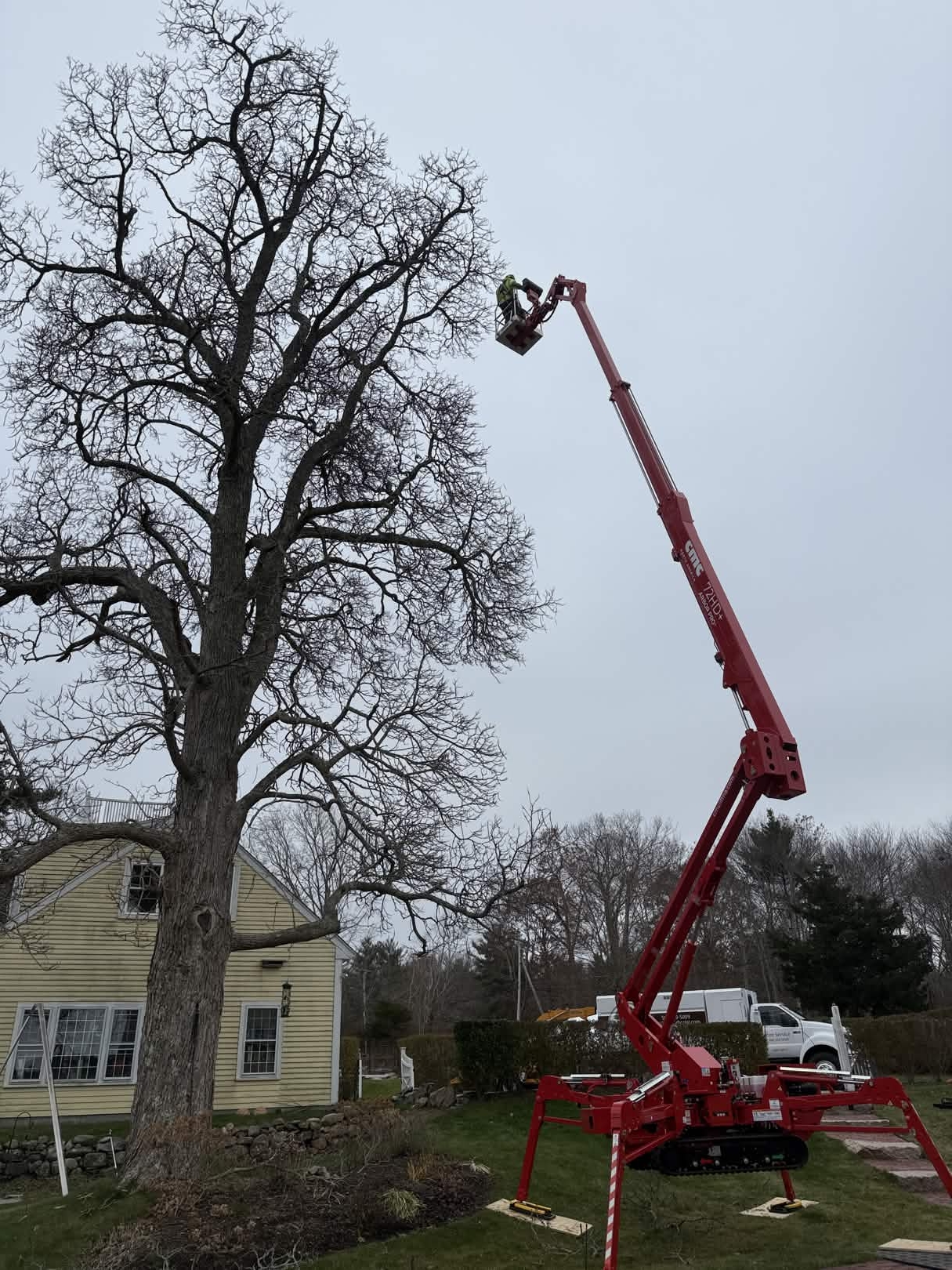
# Professional Ornamental Trimming in Pembroke, Massachusetts
If you own property in Pembroke, Massachusetts, your landscape likely features a mix of native pitch pines, white pines, red oaks, and scarlet oaks interspersed with ornamental trees like Japanese maples, dogwoods, and magnolias. These trees enhance curb appeal in neighborhoods from Pembroke Center to the Indian Head River Area, but sandy, acidic soils and wetland proximity demand precise care. Ornamental trimming in Pembroke MA keeps these trees healthy, safe, and visually striking while addressing local challenges like gypsy moth damage and overcrowding.
Southeast Arborist, LLC, based in nearby Plymouth and Cohasset, delivers ISA Certified arborist services across the South Shore, including Pembroke's 02359 zip code. Our team follows ANSI A300 pruning standards to ensure every cut promotes tree vigor and complies with Plymouth County conservation rules. Phone us at 508-369-5009 for ornamental trimming Pembroke MA that transforms your red maples and swamp maples into focal points without risking instability in the town's unstable sandy soils.
Pembroke's suburban-rural setting, with its 18,500 residents and cranberry bog heritage, means many yards border extensive wetlands along the Indian Head River. Ornamental trees here face unique pressures: pitch pine stands grow overcrowded, white pines shed needles that smother understory dogwoods, and oaks weakened by 1980s and 2010s gypsy moth outbreaks drop branches onto homes in West Pembroke or Bryantville. Professional ornamental trimming Pembroke MA experts like us remove deadwood, thin crowns, and shape growth to prevent hazards.
Homeowners in Pembroke Pines or Hobomock often plant Japanese maples and weeping cherries for color against the backdrop of Atlantic white cedar swamps. Without detail pruning, these ornamentals develop crossing branches that invite disease in humid South Shore summers. Our structural pruning for young trees establishes strong scaffolds, while containment pruning keeps branches from power lines common along North Pembroke roads.
Climate plays a role too—Pembroke's Zone 6b winters drop to -5°F, stressing magnolias, while summer humidity fosters fungal issues in highbush blueberry thickets. Ornamental trimming improves airflow, reducing risks for your trees. We prioritize safety with rigged lowering on wetland-adjacent lots, avoiding soil disturbance that could trigger erosion near cranberry bogs.
Choosing Southeast Arborist means working with pros who know Pembroke's forests evolved around bogs on sandy plains. We handle everything from crown cleaning scarlet oaks in Pembroke Center to shaping red maples near Duxbury borders. Expect visible results: fuller canopies, balanced forms, and properties that stand out in this tight-knit community. Contact us at 508-369-5009 to assess your ornamental trees today—your Pembroke landscape deserves expert care tailored to local conditions.
Why Pembroke Properties Need Ornamental Trimming
Pembroke's pine-oak woodlands, shaped by centuries of cranberry farming, create specific demands for ornamental trimming on your property. Sandy, acidic soils drain quickly but destabilize roots during Nor'easters, common in this Plymouth County town. Pitch pines and white pines dominate second-growth stands in Bryantville and Hobomock, often overcrowding ornamental understory trees like dogwoods and Japanese maples you may have added for privacy or color.
Gypsy moth infestations hit Pembroke hard in the 1980s and 2010s, defoliating red oaks and scarlet oaks. Today, weakened canopies in North Pembroke yards drop dead branches, posing risks to homes near the Indian Head River. Ornamental trimming Pembroke MA removes this debris through crown cleaning, preventing property damage and improving light penetration for swamp maples below.
Wetland setback restrictions complicate care—Pembroke's Conservation Commission mandates buffers along bogs and the Indian Head River Area. Trimming encroaching Atlantic white cedar or highbush blueberry keeps your ornamentals compliant without full removal, which requires permits. In Pembroke Pines, new constructions clear lots, leaving young magnolias vulnerable to wind shear in exposed sandy soils; structural pruning builds resilience.
Local climate exacerbates issues: humid summers (average 75°F highs) trap moisture in dense dogwood crowns, inviting anthracnose. Winters bring ice loads that split unpruned weeping cherries. Overcrowded pitch pine stands in West Pembroke shade out red maples, stunting growth and increasing pest susceptibility. Selective thinning via ornamental trimming restores balance, boosting vigor.
Your trees face sandy soil instability too—roots struggle for anchorage, leading to leaners near Hanover borders. Ornamental trimming reduces wind sail on upper branches, stabilizing Japanese maples. Disease prevention ranks high: improved airflow from thinning curbs verticillium wilt in maples and powdery mildew on magnolias, common in Pembroke's wetland humidity.
In Pembroke Center, historic homes feature mature oaks alongside ornamentals; untrimmed branches rub roofs, accelerating wear. Our ISA Certified approach targets these interactions. Highbush blueberries, native to bog edges, tangle with dogwoods—pruning separates them for better fruiting and aesthetics.
Storm response is frequent post-hurricanes like Bob (1991) or Irene (2011), which toppled weakened whites pines onto Marshfield-adjacent properties. Ornamental trimming preempts this by shaping crowns. Encroaching branches from neighbor's scarlet oaks cross fences in Hanson-viewing yards—containment pruning resolves disputes safely.
Homeowners benefit practically: trim in dormant season to spot issues early, use mulch rings around bases to retain sandy soil moisture, and monitor for gypsy moth egg masses on oaks. Southeast Arborist applies these insights daily, ensuring your Pembroke trees thrive amid local pressures. Without it, ornamentals decline faster here than in clay-soil towns like Kingston.
Neglect shows in split crotches on young magnolias from poor pruning history, or epicormic sprouts on oaks post-moth damage. Invest in ornamental trimming Pembroke MA to extend tree life 20-30 years, enhance property value in this 18,500-resident community, and maintain curb appeal for neighborhood association standards.
Our Ornamental Trimming Process in Pembroke
Southeast Arborist follows a meticulous, ANSI A300-compliant process for ornamental trimming Pembroke MA, tailored to your property's sandy soils and wetland rules. We start with a free on-site assessment by an ISA Certified Arborist, inspecting species like Japanese maples in Pembroke Pines or dogwoods near Bryantville bogs.
Step 1: Hazard Identification. Using binoculars and drones for tall white pines in North Pembroke, we flag deadwood, cracks, and codominant stems. In gypsy moth-hit red oaks along Indian Head River, we measure branch weights to prioritize removals.
Step 2: Customized Pruning Plan. For structural pruning on young swamp maples, we target 25-30% canopy reduction max, preserving natural form. Japanese maples get detail pruning—removing inward/crossing branches with hand pruners for layered aesthetics. We sketch plans showing cuts, complying with Pembroke Conservation buffer zones.
Step 3: Safety Setup. Ropes, saddles, and friction devices secure climbers; ground crews establish exclusion zones. On wetland lots in Hobomock, we use low-impact spurs to avoid root damage in acidic sands. Traffic control handles busy routes near Duxbury.
Step 4: Execution Techniques. Crown cleaning removes dead, diseased, or rubbing wood from scarlet oaks—clean cuts at branch collars heal fast. Thinning opens dogwood interiors for airflow, reducing fungal risks in humid air. Shaping magnolias involves directional pruning to guide growth away from power lines in West Pembroke.
Containment pruning tucks weeping cherry branches from fences. For pitch pine overgrowth shading highbush blueberries, we limb selectively upward. Equipment includes Silky saws for precision on ornamentals, pole pruners for reach, and chippers for cleanups—debris mulched onsite for your soil amendment.
Step 5: Disease Prevention Integration. We apply cuts that enhance circulation, spotting early canker on Atlantic white cedar. Post-trim, we recommend organic fungicides if needed, per ISA best practices.
Step 6: Cleanup and Quality Check. Rake sandy areas meticulously; inspect cuts for proper healing angles. Photos before/after document for your records or insurance.
Step 7: Follow-Up Advice. Provide a report on next trims, like late winter for oaks to beat moth cycles. In Pembroke's Zone 6b, we time around cranberry harvests to minimize dust.
Our fleet—bucket trucks for magnolias near Kingston, grapples for pine debris—handles Pembroke's terrain. Safety protocols exceed OSHA: daily inspections, two-person minimums, and first aid certified crews.
Practical tip for you: Water deeply post-trim in summer to settle sandy roots; avoid topping, which invites decay in red maples. This process yields 15-20% denser foliage, safer structures, and compliance with local regs.
We've trimmed hundreds of ornamentals from Hanson to Marshfield, adapting to Pembroke's quirks like bog-edge erosion. Call 508-369-5009 to start your assessment—your trees get Southeast Arborist's proven method.
Common Ornamental Trimming Projects in Pembroke Neighborhoods
Pembroke neighborhoods showcase distinct ornamental trimming needs, driven by local tree mixes and layouts.
In Pembroke Center, historic homes pair red oaks with Japanese maples; we perform detail pruning to accentuate fall color, removing water sprouts for clean lines. Gypsy moth-weakened scarlet oaks get crown cleaning here, preventing drops onto Route 3A traffic.
Bryantville's rural yards feature dogwood groves amid pitch pine stands—thinning projects open canopies, boosting bloom displays while stabilizing sandy slopes toward cranberry bogs. Containment pruning keeps branches from abutting properties.
North Pembroke properties near Hanover often have young magnolias stressed by white pine shade; structural pruning establishes scaffolds, reducing split risks in windy exposures. We shape these for symmetry, enhancing views toward town fields.
West Pembroke sees overcrowded second-growth pines overtopping swamp maples—selective limbing thins stands, improving red maple health and light for understory highbush blueberries. Storm-damaged weeping cherries post-Nor'easters get restoration shaping.
Pembroke Pines new builds require lot-clearing follow-ups: ornamental trimming for freshly planted cherries and dogwoods, focusing on wind-resistant forms in open sands. Wetland proximity demands precise cuts to avoid commission filings.
Hobomock's bog-adjacent lots feature Atlantic white cedar tangled with ornamentals; we prune for separation, enhancing airflow and complying with 100-foot buffers. Red oak hazard work dominates here, targeting moth-weakened limbs.
Indian Head River Area homes line swamps with red maples and magnolias—encroachment pruning clears river-view paths, while crown thinning combats humidity-driven mildew. Pine-oak mixes get balanced shaping for safety.
Across Pembroke, common projects include post-construction shaping near Duxbury, gypsy moth recovery in Hanson borders, and blueberry-adjacent trims. Southeast Arborist's ISA arborists deliver these, using neighborhood-specific tactics like low-ground-pressure gear in wetlands.
Your project fits: detail for aesthetics, structural for longevity. These efforts prevent 80% of branch failures, per ANSI data, tailored to Pembroke's ecology.
Ornamental Trimming Costs in Pembroke, MA
Ornamental trimming costs in Pembroke MA vary by factors like tree size, location, and complexity, but deliver strong ROI for your property.
Base pricing starts at $250 for small Japanese maples (under 15 feet) in Pembroke Center—includes assessment, detail pruning, and cleanup. Medium dogwoods (15-30 feet) in Bryantville run $400-$700, covering crown thinning and disease cuts.
Large magnolias or weeping cherries (30+ feet) near Indian Head River hit $800-$1,500, factoring rigging for heights and wetland access. Pitch pine thinning in Hobomock adds $200 for volume, as chipper loads grow.
Key factors: Access—West Pembroke's tight lots add 20% for manual lowering vs. bucket trucks in open North Pembroke. Species matter—oaks need more time for codominant stems ($100/hour labor). Wetland proximity requires permits ($50-$150 fees passed through).
Height and health influence: Gypsy moth-hit scarlet oaks demand hazard evals (+$100), while healthy swamp maples trim faster. Crew size scales—solo pruner for small jobs ($75/hour), full team for pines ($125/hour minimum 4 hours).
Volume discounts apply: Multi-tree projects in Pembroke Pines save 15%—e.g., three maples at $900 total vs. $1,050 separate. Travel from Plymouth base adds $50 for outer Hobomock, waived in central areas.
Value proposition: Proper trimming per ANSI A300 extends life 25 years, averts $5,000+ removal costs (Pembroke oaks average $2,500). Boosts resale by 5-10% via curb appeal, per local realtors. Insurance discounts (up to 10%) follow documented work.
Compared to DIY risks—ladder falls cost $30K in medicals—or unlicensed crews violating codes, our ISA Certified service at $300-$1,200 average per tree ensures compliance and quality. Financing options via partners cover phased neighborhood work.
Practical budgeting: Annual maintenance plans ($400/year for 2-3 trees) prevent big bills. Off-season (winter) saves 10-15%. Get your quote at 508-369-5009—transparent, no surprises for Pembroke homeowners.
When to Schedule Ornamental Trimming in Pembroke
Timing ornamental trimming Pembroke MA maximizes health and minimizes stress on your trees amid local climate.
Late winter (February-March) is ideal—dormant season lets you see structure in bare-limbed oaks and maples. Pre-bud swell avoids sap flow in birches (though less common), and frozen sandy soils support equipment in wetlands without rutting.
Spring (April-May) suits light thins on dogwoods post-bloom, but avoid heavy cuts before summer heat stresses pines. Watch cranberry schedules—trim pre-harvest to dodge bog sprayers.
Summer (June-August) targets containment for encroaching magnolias near power lines, improving AC efficiency by 5%. Post-moth egg hatch, inspect oaks for early defoliation signs.
Fall (September-November) handles cleanup after leaf drop, prepping red maples for winter. Avoid late cuts exposing fresh wounds to freezes.
Urgency signs demand immediate scheduling: Hanging branches post-storm (call within 48 hours), rubbing limbs abrading bark, deadwood over roofs (risks ice/snow loads), or disease like oozing cankers on cherries.
Monitor gypsy moth cycles—every 10 years, weak oaks need preemptive crown cleaning. Wetland lots: Schedule around commission meetings (first Tuesdays).
Southeast Arborist books 2-4 weeks out off-peak; storms get priority. Annual checks catch issues early. Dial 508-369-5009 now—perfect timing protects your Pembroke trees year-round.
Frequently Asked Questions About Ornamental Trimming in Pembroke
**What is ornamental trimming, and how does it differ from regular tree pruning in Pembroke?** Ornamental trimming Pembroke MA focuses on aesthetic and health detail for species like Japanese maples and dogwoods, using precise cuts for form. Regular pruning handles utility clearance or hazards, like pitch pine limbing near roads. We blend both per ANSI A300 for your oaks.
**How often should I get ornamental trimming for my Pembroke trees?** Every 2-3 years for mature magnolias in Pembroke Pines; annually for young weeping cherries in Bryantville. Gypsy moth-weakened red oaks need yearly checks. ISA guidelines tailor to growth rates in sandy soils.
**Will ornamental trimming hurt my trees on Pembroke's sandy soils?** No, when done by ISA Certified pros like Southeast Arborist. We limit removals to 25% canopy, using collar cuts that heal fast. Post-trim watering stabilizes roots against wind.
**Do I need permits for ornamental trimming near Pembroke wetlands?** Properties within 100 feet of bogs or Indian Head River require Conservation Commission review. We handle filings for Hobomock lots, ensuring compliant trims on Atlantic white cedar edges.
**How does ornamental trimming prevent gypsy moth damage in Pembroke oaks?** Crown thinning improves airflow and scouting access, reducing humidity that moths favor. Removing weakened scarlet oak limbs post-infestation prevents secondary pests.
**What equipment does Southeast Arborist use for safe ornamental trimming in Pembroke?** Hand pruners for dogwood details, Silky saws for maples, bucket trucks for North Pembroke heights, and rigging for wetland safety. All OSHA-compliant.
**Can ornamental trimming increase my property value in Pembroke neighborhoods?** Yes—balanced swamp maples and clean crowns boost curb appeal 7-12%, per appraisals. Avoids hazard liabilities in West Pembroke sales.
**What if my tree has a disease—will trimming help?** Thinning enhances airflow, curbing anthracnose in dogwoods and mildew on highbush blueberries. We diagnose on-site and recommend IPM.
Call 508-369-5009 for answers specific to your yard.
Ornamental Trimming Throughout Pembroke
Southeast Arborist provides ornamental trimming across all Pembroke neighborhoods: Pembroke Center oaks, Bryantville dogwoods, North Pembroke maples, West Pembroke pines, Pembroke Pines cherries, Hobomock cedars, and Indian Head River magnolias.
We extend to nearby Hanover, Marshfield, Duxbury, Hanson, and Kingston, serving South Shore from our Plymouth/Cohasset base. ISA Certified, ANSI-compliant, fully insured.
Protect your trees from local threats—call 508-369-5009 today for a free assessment. Your Pembroke property deserves the best.