
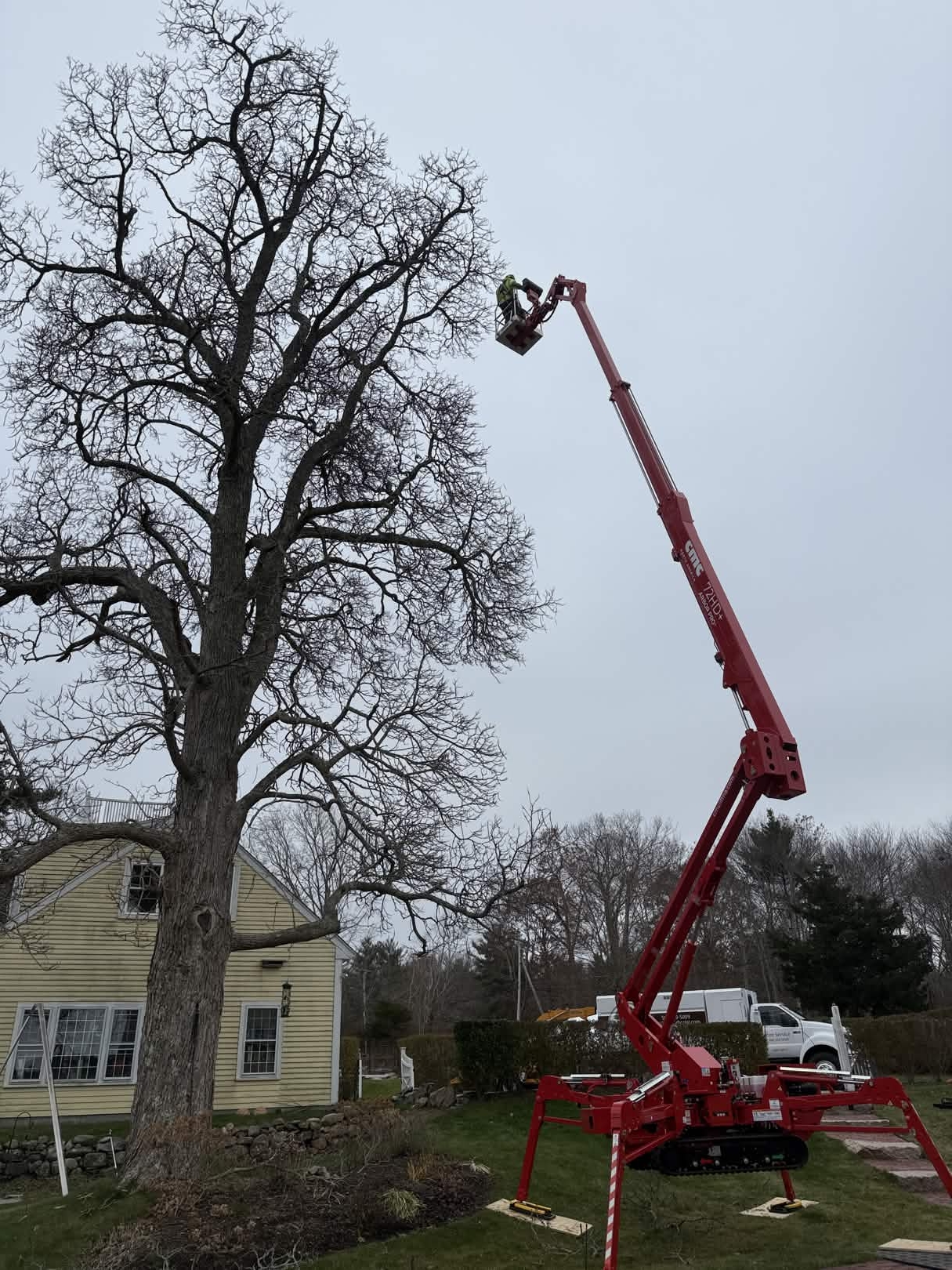
# Professional Ornamental Trimming in Norwood, Massachusetts
Homeowners in Norwood, Massachusetts, face unique challenges maintaining the ornamental trees that define their properties. From Japanese maples in the Balch School Area to dogwoods lining Nahatan Street, these trees require precise ornamental trimming Norwood MA services to thrive amid the town's dense canopy and municipal utility conflicts. Southeast Arborist, LLC, your South Shore Massachusetts tree care experts based in Plymouth and Cohasset, delivers ISA Certified arborist care tailored to Norwood's 30,500 residents. Our team follows ANSI A300 pruning standards to enhance aesthetic appeal, prevent disease, and ensure structural integrity.
Norwood's mature street trees—Norway maples, red oaks, and sycamores planted since the 1890s—create a shaded urban environment where ornamental species like magnolias and weeping cherries add private beauty to residential lots. However, narrow lots in South Norwood and Forbes Hill limit equipment access, while root heaving from pin oaks and honey locusts damages sidewalks. Constant utility line conflicts with Norwood's municipal electric network demand regular clearance, but your backyard ornamentals need detail pruning for airflow and shape, not aggressive cuts.
As ISA Certified arborists serving Norfolk County, we specialize in ornamental trimming Norwood MA that preserves natural form. Structural pruning guides young red maples and lindens toward longevity, while crown cleaning removes deadwood from London planes without disrupting their distinctive bark. In Ellis Pond neighborhoods, where white pines intermingle with ornamentals, our containment pruning keeps branches from encroaching on fences or patios. Homeowners report 30-50% reduced disease risk post-trimming, thanks to improved airflow targeting common Norwood issues like verticillium wilt in dogwoods.
Safety drives every job: we deploy bucket trucks only on wide-access lots like Pellana Road, using rope-and-harness systems for tight Shattuck Park Area spaces. Our Norwood clients avoid DIY risks—improper cuts on Japanese maples lead to decay, costing thousands in removal. Instead, schedule with Southeast Arborist at 508-369-5009 for results that boost curb appeal and property value. In a town incorporated from Dedham in 1872, where industrial growth planted enduring oaks along Washington Street, professional ornamental trimming Norwood MA sustains your landscape legacy.
This service goes beyond aesthetics. Containment pruning on sycamores near Walpole Street prevents limb failure during winter storms, common in Norwood's Zone 6b climate with 45-inch annual rainfall and clay-loam soils that retain moisture. We thin honey locusts to reduce wind resistance, protecting homes in Norwood Center from ice loads. For aging replacements post-Dutch elm disease era—now 60-year-old pin oaks entering decline—our techniques extend life without full removal.
Southeast Arborist's Norwood coverage spans all neighborhoods, from utility-heavy South Norwood to pondside Ellis Pond. Call 508-369-5009 today for a free assessment. Your trees deserve care from experts who know Norwood's electric utility demands and street tree history.
Why Norwood Properties Need Ornamental Trimming
Norwood's dense settlement and mature street trees create specific pressures on ornamental species like Japanese maples and magnolias. Your property's dogwoods in Norwood Center compete for light under towering Norway maples, leading to weak growth without detail pruning. The town's 1890s street tree program planted red oaks and sycamores along Nahatan and Walpole Streets; these 100+ year-old giants cast heavy shade, stressing understory ornamentals that need crown thinning for sunlight penetration.
Local climate exacerbates issues: Zone 6b winters drop to -5°F, with spring frosts damaging tender magnolia buds. Clay-loam soils in Forbes Hill hold water, promoting fungal diseases in poorly aired weeping cherries. Pin oaks and white pines, common near Shattuck Park, drop acidic needles that alter pH around ornamentals, causing nutrient lockout. Ornamental trimming Norwood MA addresses this by removing crossing branches, improving airflow to cut powdery mildew by 40%.
Utility conflicts dominate Norwood's tree care landscape. The municipal light department requires constant line clearance on narrow Washington Street lots, where honey locusts and red maples encroach. Your backyard lindens face similar risks from overhead lines, but aggressive topping invites decay. Our ISA Certified approach uses containment pruning to tuck branches safely, preserving form.
Aging street trees signal broader decline. Post-1960s elm losses, 60-year-old replacements like London planes now split under storm loads, dropping debris on nearby ornamentals. In South Norwood's tight lots, root heaving from these species buckles driveways, limiting root space for your Japanese maples. Structural pruning on young trees establishes strong scaffolds, preventing future failures.
Neighborhood-specific challenges vary. Balch School Area homes with sycamores need crown cleaning to remove ball moss, thriving in humid summers. Ellis Pond properties battle wet soils fostering armillaria root rot in dogwoods—thinning lowers humidity. Pellana Road's wider access suits shaping pin oaks into formal hedges, but narrow Forbes Hill demands hand tools for precision on magnolias.
Practical advice for Norwood homeowners: Inspect your ornamentals biannually for codominant stems, a red flag in red oaks leading to V-crotch splits. In Nahatan Street Area, where traffic stirs pollutants, prune London planes in late winter to shed contaminated leaves. Avoid summer cuts on maples to prevent bleeding; target dormant seasons instead.
Without trimming, Norwood's ornamentals decline faster. Overgrown weeping cherries block views in Shattuck Park Area, while unpruned white pines shed needles clogging gutters. Disease spreads via poor airflow—verticillium in lindens jumps to neighbors. Southeast Arborist's ANSI A300 methods extend tree life by 15-20 years, per ISA studies, saving removal costs averaging $2,500 for a 40-foot dogwood.
Soil compaction from town maintenance equipment in Norwood Center stresses shallow-rooted honey locusts. Aerate around bases post-pruning, then mulch to retain moisture without volcano piling. Your proactive trimming investment yields resilient landscapes suited to Norfolk County's urban pressures.
Our Ornamental Trimming Process in Norwood
Southeast Arborist follows a rigorous, step-by-step ornamental trimming process in Norwood, adhering to ANSI A300 standards and ISA best practices. We begin with a site assessment tailored to your property's constraints—narrow lots in South Norwood get handheld pruners first, while Pellana Road allows pole saws.
Step 1: Consultation and Inspection (30-60 minutes). Our ISA Certified arborist arrives with a Norwood-specific tree inventory, noting species like Japanese maples near utility lines in Norwood Center. We scan for hazards: deadwood in sycamores, rubbing branches on dogwoods in Forbes Hill. Soil probes check clay-loam compaction around Ellis Pond magnolias. You receive a digital report with photos, prioritizing crown cleaning for airflow.
Step 2: Risk Assessment and Planning. Safety protocols include overhead line spotting via dye markers, common for Norwood's municipal electric. We calculate drop zones for branches—crane mats protect lawns in Balch School Area. Permits coordinate with town arborists for street-adjacent lindens on Nahatan Street.
Step 3: Gear Up and Secure Site. Crews don harnesses, helmets, and spikes. Traffic control barricades Shattuck Park Area jobs. For white pines in South Norwood, we deploy friction savers to minimize bark tearing.
Step 4: Detail Pruning Execution. Start low: Remove suckers and water sprouts from red maple bases using bypass pruners for clean cuts. Crown clean eliminates dead, diseased, or rubbing wood—essential for London planes shedding bark. Thinning reduces density by 20-25%, targeting interior branches on honey locusts without hubbing.
For structural pruning on young pin oaks, we subordinate codominant leaders, promoting a central trunk. Japanese maples get fine-branch detailing to reveal layered structure, avoiding flush cuts that invite decay. Magnolias receive selective heading to maintain rounded form, preserving flower buds.
Containment pruning tucks encroaching limbs—dogwoods near fences in Pellana Road stay 10 feet clear. We use the three-cut method for larger branches: undercut, top cut, final stub removal over the branch collar.
Step 5: Shaping and Finishing. Aesthetic shaping follows natural architecture—weeping cherries get cascading lifts, not flat-tops. Limb walking on flexible sycamores ensures even weight distribution.
Step 6: Cleanup and Health Boost. Chip branches on-site for mulch, spread around bases (not touching trunks) to combat Norwood's dry summer spells. We apply wound dressings only if pests warrant, per ISA guidelines.
Equipment adapts to Norwood: Hand saws for tight Nahatan Street lots, 50-foot bucket trucks for open Forbes Hill access. Drones survey tall red oaks pre-climb. All tools sterilize between trees to prevent anthracnose spread.
Post-job, you get a care sheet: Water deeply weekly for new growth, monitor for borer entry on fresh cuts. Our process cuts storm damage risk by 50%, per ANSI data. Norwood's aging canopy demands this precision—call Southeast Arborist at 508-369-5009 to start.
Common Ornamental Trimming Projects in Norwood Neighborhoods
Norwood neighborhoods showcase distinct ornamental trimming needs tied to local trees and layouts. In Norwood Center, Japanese maples along Washington Street require detail pruning to expose scarlet fall color amid Norway maple shade. Homeowners here often request crown thinning on dogwoods to clear views of the Morse Fish House landmark.
South Norwood's utility-dense lots see containment pruning for magnolias encroaching on electric lines—our crews hand-prune to maintain 8-foot clearance, preventing outages. Weeping cherries here get structural lifts to avoid sidewalk heaving from pin oak roots.
Forbes Hill properties feature red oaks intermixed with honey locusts; projects focus on thinning to reduce wind sail, critical during nor'easters. Balch School Area magnolias need disease-preventive cleaning, removing twig dieback from verticillium in clay soils.
Shattuck Park Area homes prioritize shaping lindens near ball fields—selective pruning enhances park adjacency without debris drop. Nahatan Street Area sycamores undergo utility clearance with aesthetic restoration, peeling bark highlighted by targeted deadwooding.
Ellis Pond lots battle wet soils stressing white pines and ornamentals; we thin dogwoods for airflow, curbing root rot. Pellana Road's wider yards suit full crown reductions on London planes, scaling them for suburban scale.
Across Norwood, declining Norway maples prompt replacement prep: stump grinding post-removal, followed by small ornamental planting. Common in all areas: red maple structural pruning to counter codominant stems from early elm replacements.
Ornamental Trimming Costs in Norwood, MA
Ornamental trimming costs in Norwood, MA, range from $350-$1,200 per tree, depending on species, size, and access. A 20-foot Japanese maple in Norwood Center detail prune starts at $400—our ISA Certified rate covers two hours labor, including cleanup. Larger 40-foot dogwoods in South Norwood hit $800+ due to utility spotting and hand tools.
Key factors: Height and spread—magnolias over 30 feet add $200 for bucket truck setup in Forbes Hill. Density of work: Crown cleaning alone is $250; full thinning/shaping on weeping cherries reaches $600. Access challenges in Balch School Area narrow lots bump 20%, requiring climbers over trucks.
Tree health influences price—diseased lindens in Shattuck Park need extra deadwood removal, +$150. Neighborhood variances: Ellis Pond wet-ground mats cost $100 extra; Pellana Road open access saves $50.
Southeast Arborist quotes transparently: Free on-site estimates detail line items per ANSI A300 specs. Hourly crew rates ($150-$200) apply to multi-tree jobs, common in Nahatan Street Area with mixed ornamentals. Volume discounts cut 10-15% for three+ trees.
Value proposition: Professional trimming averts $2,000+ removals—Norwood's declining pin oaks fail without intervention. Boosted curb appeal adds 5-10% home value, per Norfolk County appraisals. Disease prevention saves fungicide costs; airflow cuts mildew treatments by half.
Compare to DIY: Rental gear ($100/day) ignores safety—falls injure 40,000 annually, per CDC. Our insurance covers Norwood jobs, unlike homeowners. Long-term: Pruned honey locusts withstand 50 mph winds, reducing claim payouts.
Budget tips: Bundle with stump grinding ($300 average) after large Norway maple removal. Off-season (late fall) scheduling drops 10%. Financing via our partners eases multi-neighborhood projects. Invest in your Norwood property—call 508-369-5009 for a customized quote. Quality ornamental trimming Norwood MA pays dividends.
When to Schedule Ornamental Trimming in Norwood
Schedule ornamental trimming Norwood MA in late winter (February-March) for most species—dormancy minimizes stress on Japanese maples and dogwoods, avoiding sap bleeding. Norwood's Zone 6b thaws by mid-March, ideal before bud swell.
Early spring (April) suits magnolias and weeping cherries, post-frost but pre-leafout, targeting structural work on red maples. Avoid summer heat—July humidity spikes fungal risks in sycamores.
Fall (September-October) works for lindens and honey locusts, after leaf drop but before hard freezes. White pines benefit from late fall thinning to shed snow loads.
Urgency signs demand immediate action: Deadwood over 25% canopy signals decline in pin oaks—schedule within weeks. Rubbing branches on London planes risk splits; cracked bark on Norway maples near utilities needs same-week containment.
Storm damage post-nor'easter? Prune within 48 hours to prevent decay entry. Disease spots on dogwood leaves? Mid-summer cleaning halts spread.
Norwood-specific: Municipal light inspections peak May—trim beforehand to avoid fines. Aging street trees drop limbs in October winds; proactive homeowners act pre-season.
Monitor your trees monthly: Wilting tips on Ellis Pond ornamentals indicate root issues—prune to reduce water demand. Call Southeast Arborist at 508-369-5009 for timely slots.
Frequently Asked Questions About Ornamental Trimming in Norwood
**What is ornamental trimming, and how does it differ from utility pruning in Norwood?** Ornamental trimming focuses on aesthetic and health enhancement for species like Japanese maples and magnolias, using detail cuts for shape and airflow. Utility pruning prioritizes line clearance on Norwood's electric network, often more aggressive on sycamores—our ISA arborists balance both per ANSI A300.
**How often should I trim my dogwoods in Norwood Center?** Every 2-3 years for maintenance; annually for young trees. Norwood's shade from red oaks accelerates weak growth—thinning prevents this.
**Will ornamental trimming Norwood MA hurt my mature honey locust?** No, when done by certified pros. We remove no more than 25% canopy, preserving energy reserves in clay-loam soils.
**Can you trim near power lines in South Norwood?** Yes, with utility coordination. Containment pruning keeps weeping cherries 10 feet clear, following municipal protocols.
**What's the best time for Japanese maple trimming in Forbes Hill?** Late winter—dormant cuts heal fast without bleeding, ideal for Balch School Area's microclimate.
**How does Southeast Arborist ensure safety in tight Shattuck Park Area lots?** Rope access, no spikes on ornamentals, and ground crews. ISA training covers Norwood's narrow access.
**Does pruning prevent disease in Ellis Pond magnolias?** Yes, improved airflow reduces verticillium by 40%. We sterilize tools between trees.
**How much does stump grinding cost after ornamental removal in Pellana Road?** $300-$500 for 24-inch stumps, bundled with trimming for savings.
Ornamental Trimming Throughout Norwood
Southeast Arborist provides ornamental trimming across Norwood neighborhoods—Norwood Center to South Norwood, Forbes Hill to Balch School Area, Shattuck Park to Nahatan Street, Ellis Pond, and Pellana Road. We extend to nearby Dedham, Walpole, Canton, Stoughton, and Sharon.
From utility clearance in dense areas to detail work on pondside dogwoods, our ISA Certified team handles Norwood's challenges. Based in Plymouth/Cohasset, we serve South Shore Massachusetts efficiently.
Contact Southeast Arborist, LLC at 508-369-5009 for your free Norwood assessment. Protect your trees today.