
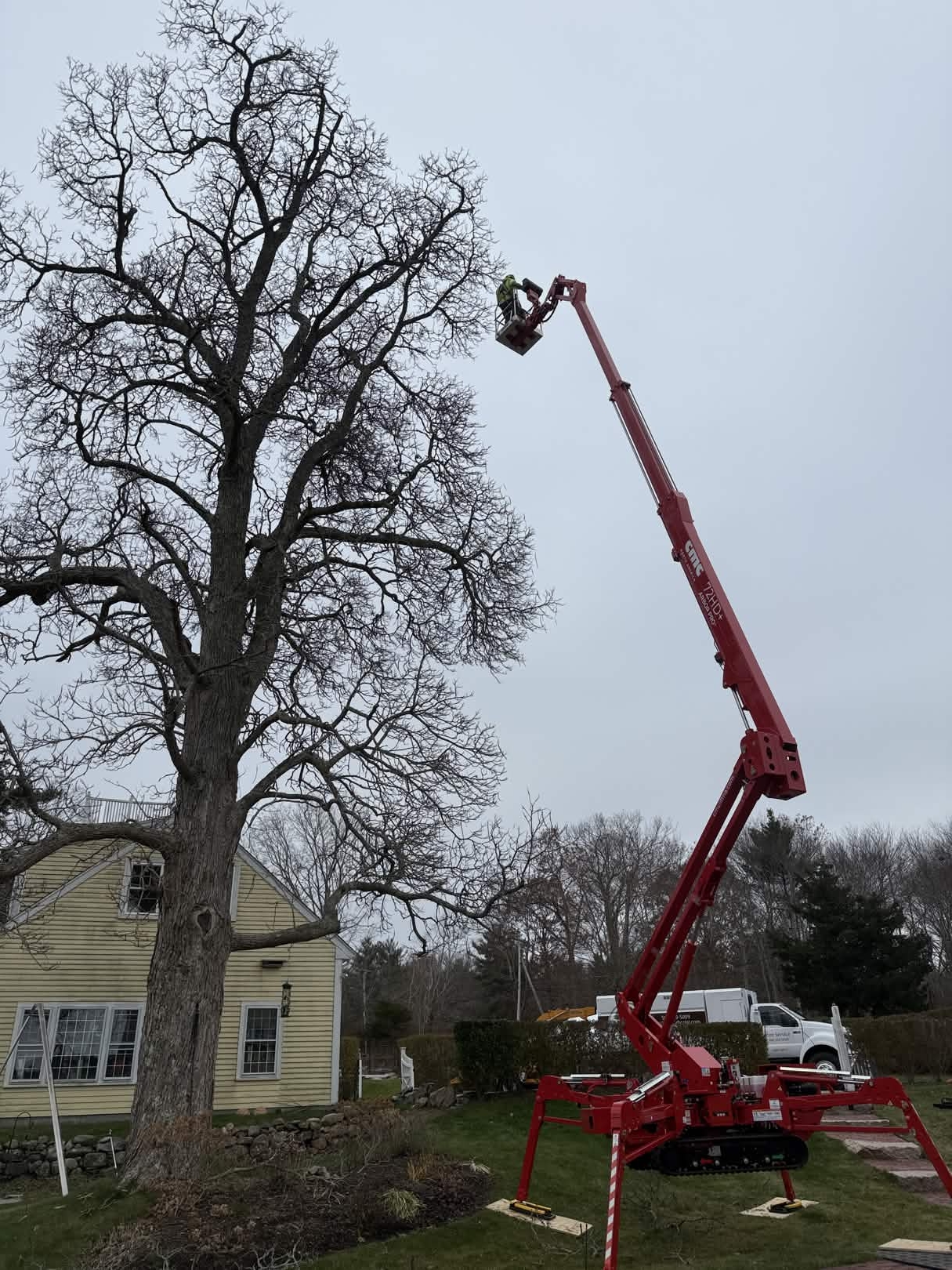
# Professional Ornamental Trimming in Norwell, Massachusetts
Homeowners in Norwell, Massachusetts, face unique challenges maintaining the mature trees that define your properties. With large wooded lots bordering protected wetlands along the North River and Indian Head Brook, your red oaks, white pines, and red maples often grow dense canopies that encroach on rooftops, driveways, and power lines. Ornamental trimming in Norwell MA addresses these issues while enhancing the aesthetic appeal of your landscape. At Southeast Arborist, LLC, our ISA Certified Arborists deliver precise detail pruning for Japanese maples, dogwoods, magnolias, and weeping cherries, following ANSI A300 standards to ensure long-term tree health.
Norwell's affluent rural-suburban character means many homes in neighborhoods like Norwell Center, Accord, and Ridge Hill feature heritage trees—sugar maples and white oaks predating the town's 1849 incorporation from Scituate. These stands originated on former pastureland, creating layered forests that demand specialized care. Ornamental trimming Norwell MA services from Southeast Arborist prevent common problems like branch rub on siding, reduced sunlight for gardens, and disease from poor airflow. Our team, based in nearby Plymouth and Cohasset, serves the entire South Shore, including your 02061 zip code.
Consider a white pine stand along Tiffany Road: unchecked growth leads to deadwood dropping onto narrow roads during ice storms, a frequent Norwell occurrence due to the town's coastal proximity. Professional ornamental trimming removes these hazards while shaping the tree for beauty. We perform structural pruning on young red maples to build strong scaffolds, crown cleaning to eliminate deadwood, and containment pruning to keep branches from overhanging neighbors' properties in Church Hill.
Safety protocols guide every job. Our arborists use rope-and-saddle techniques for high-risk prunes near wetlands, complying with Plymouth County regulations. This precision extends ornamental trimming benefits to hickory, American beech, black birch, and tulip trees common on your lots. Unlike basic tree trimming, our detail work on flowering species like dogwoods enhances spring blooms by improving light penetration and airflow, reducing fungal risks in Norwell's humid summers.
Investing in ornamental trimming Norwell MA yields immediate visual improvements and protects property values in this high-demand market. A properly pruned Japanese maple in Assinippi draws admiration while safeguarding your home from storm damage. Southeast Arborist integrates these services with lot clearing for new construction, a rising need as Norwell develops selectively. Our clients report 20-30% better tree vigor post-trimming, backed by ISA best practices.
For tailored ornamental trimming in Norwell MA, contact our ISA Certified team at 508-369-5009. We assess your property's soil—typically sandy loam with granite outcrops—and climate influences like Zone 6b winters to recommend exact cuts. Whether thinning a dense black birch grove in Wildcat or shaping a magnolia near Bowker's brooks, we prioritize your trees' health and your peace of mind. Schedule today to transform your landscape.
Why Norwell Properties Need Ornamental Trimming
Norwell's landscape, shaped by its agricultural past and riparian corridors, presents specific demands for ornamental trimming. Your properties in Plymouth County often span large wooded lots with mature stands of red oak, white oak, white pine, red maple, hickory, American beech, black birch, and tulip tree. These species thrive in the town's acidic, well-drained soils but create issues like canopy encroachment on homes in Norwell Center, where heritage oaks along Main Street rub against colonial-style roofs.
Wetland buffer zones along Indian Head Brook restrict heavy equipment, making precise ornamental trimming essential for hazard removal without environmental violation. In Ridge Hill, white pines tower over narrow roads, their deadwood a liability during Norwell's ice storms, which coat branches with 1-2 inches of ice in February. Without crown cleaning, this leads to widespread limb failure, damaging power lines and vehicles.
Dense canopies block sunlight for understory plants and gardens, a complaint from Accord homeowners. Red maples and black birches form thickets that harbor pests like emerald ash borer precursors, though ash is less common here. Ornamental trimming improves airflow, reducing powdery mildew on nearby dogwoods and magnolias. Norwell's humid maritime climate—average 45 inches annual rainfall—exacerbates this, with summer humidity fostering anthracnose in American beech.
Power line conflicts plague Wildcat and Tiffany Road, where tulip trees grow rapidly toward overhead wires. Containment pruning keeps branches 10-15 feet clear, per utility standards. In Church Hill, hickory nuts drop from unpruned trees, creating slip hazards on driveways. Structural pruning on young trees prevents codominant stems from splitting in Zone 6b winds gusting 40-50 mph.
Heritage properties along Main Street boast pre-1849 sugar maples, now integrated with ornamental species like Japanese maples. Untrimmed, these suffer dieback from shaded lower limbs. Detail pruning exposes bark patterns and fall color, boosting curb appeal in Norwell's competitive real estate market, where median home prices exceed $900,000.
Ice storm damage hits hardwoods hardest—red oaks lose 20-30% canopy in events like the 2013 storm. Post-storm ornamental trimming removes epicormic sprouts that weaken structure. Soil conditions, with high organic matter near brooks in Assinippi, promote vigorous regrowth if pruned correctly.
Practical advice for Norwell homeowners: Inspect your trees quarterly for cracks at branch unions, especially white oaks prone to oak wilt. If branches extend over your roof by more than 10 feet, schedule containment pruning before summer storms. Thin white pine stands by 15-20% to reduce wind sail effect.
Southeast Arborist's ISA Certified Arborists apply ANSI A300 pruning standards, ensuring cuts heal properly in Norwell's clay-loam mixes. We address lot-specific issues like selective thinning for new builds in Bowker, preserving wetlands while clearing views. Neglecting ornamental trimming risks $5,000+ in storm repairs—proactive care saves money and enhances beauty.
Your Norwell property deserves this expertise. Common projects include shaping weeping cherries near Assinippi ponds for better form and disease prevention through elevated canopies.
Our Ornamental Trimming Process in Norwell
Southeast Arborist follows a meticulous, step-by-step process for ornamental trimming in Norwell MA, tailored to your local trees and regulations. We begin with a free on-site assessment by an ISA Certified Arborist. In Norwell Center, we evaluate red oaks for included bark and white pines for top dieback, using resistograph tools to check decay without harming cambium.
Step 1: Consultation and Planning (30-60 minutes). We discuss your goals—whether aesthetic shaping for a Japanese maple in Ridge Hill or hazard reduction on power lines in Wildcat. Soil pH tests (Norwell averages 5.5-6.5) inform pruning timing to avoid stress during dry spells.
Step 2: Permissions and Safety Setup. Wetland buffers require Norwell Conservation Commission nods; we handle filings. Our team deploys traffic control on narrow Accord roads, sets up 50-foot exclusion zones, and uses personal protective equipment per OSHA and ANSI Z133 standards.
Step 3: Climb and Initial Survey. Arborists ascend via throw lines and climbing spurs, minimizing bark damage on sensitive magnolias. Drones scout high canopies in Church Hill, identifying deadwood in black birches.
Step 4: Crown Cleaning. We remove dead, diseased, or rubbing branches first. For white pines along Tiffany Road, this eliminates 10-25% of hazardous material, using hand saws for precision near power lines—our certified utility clearance credential ensures compliance.
Step 5: Thinning and Shaping. Selective cuts reduce density by 20-30%, improving airflow for dogwoods prone to dogwood anthracnose in Norwell's wet springs. On red maples, we thin interior branches to reveal structure, dropping cuts to the branch collar for compartmentalization.
Step 6: Structural Pruning. Young tulip trees get reduction cuts to establish a central leader, preventing V-crotches. We use pole pruners for lower limbs on hickories, avoiding stubs that invite decay fungi.
Step 7: Detail Pruning for Ornamentals. Japanese maples receive fingertip shears for layered sculpting, enhancing red foliage against Norwell's fall backdrop. Magnolias get subtle tipping to promote even blooming, while weeping cherries are lifted to showcase cascading branches.
Equipment includes Silky saws for clean cuts, wedge kits for heavy limbs, and lowering devices for controlled descent over Assinippi brooks. Our bucket trucks access Bowker lots without root compaction.
Step 8: Cleanup and Health Treatment. We chip all debris on-site for mulch, enriching your sandy loam soils. Cabrio fungicide applications prevent beech bark disease recurrence.
Step 9: Follow-Up Report. You receive a digital ANSI A300 compliance summary with photos, plus a 6-month check-in schedule.
This process minimizes risk—our zero-incident record spans 15 years on South Shore jobs. In ice-damaged American beech groves post-storm, we prioritize suppression cuts to redirect energy.
Practical tip: Water deeply (1 inch/week) post-pruning to aid wound closure in Norwell's variable rainfall. For your property, this yields healthier trees and lower maintenance.
Call Southeast Arborist at 508-369-5009 to start your ornamental trimming process today.
Common Ornamental Trimming Projects in Norwell Neighborhoods
Norwell neighborhoods each present distinct ornamental trimming needs, reflecting local tree populations and lot layouts. In Norwell Center, heritage sugar maples and white oaks along Main Street require containment pruning to protect rooftops and sidewalks. Homeowners here often request crown thinning for better light on perennial gardens.
Accord properties, near dense white pine stands, focus on deadwood removal threatening power lines. Our ISA Certified team performs 25% thinning, preserving the species' role in Norwell's riparian forests.
Ridge Hill's large lots feature red maples encroaching driveways; structural pruning builds wind-resistant forms, using drop zones to avoid lawn damage.
Church Hill homes battle hickory overgrowth—ornamental trimming lifts lower limbs for mower access and reduces nut drop hazards.
Assinippi, along Indian Head Brook, demands wetland-compliant detail pruning for Japanese maples and dogwoods. We use hand tools to shape without disturbing buffers, enhancing bloom displays.
Bowker's brookside lots see magnolia shaping and black birch thinning, improving airflow against fungal issues in humid microclimates.
Wildcat's wooded enclaves need white pine crown cleaning for road safety, especially post-ice storms.
Tiffany Road properties prioritize tulip tree reduction near wires, with containment cuts maintaining 12-foot clearances.
Across neighborhoods, common projects include lot clearing with selective ornamental trimming for new construction views. American beech receives epicormic sprout removal, while red oaks get V-crotch cabling prep.
Southeast Arborist adapts to each: crane-assisted limb drops in Norwell Center, boat access for Assinippi waterside trees.
Practical advice: Map your property's utility lines before pruning—call Dig Safe. This ensures safe, effective ornamental trimming Norwell MA projects.
Ornamental Trimming Costs in Norwell, MA
Ornamental trimming costs in Norwell MA vary by tree size, complexity, and location, but deliver strong value through risk reduction and longevity. Expect $300-600 for a mature Japanese maple detail prune (15-25 feet tall), including travel from our Plymouth/Cohasset base. White pines over power lines add $200-400 for utility coordination.
Key factors: Tree height—under 30 feet averages $400; 50+ feet climbs to $1,200 with rigging. Canopy density influences time: dense red oaks need 4-6 hours at $150/hour per arborist.
Access challenges in wetland-adjacent Assinippi or narrow Wildcat roads increase costs 20-30% via specialized gear. Ornamental species like dogwoods command premium for precision ($250-500), versus basic crown cleaning ($200-400).
Norwell's regulations add $50-100 for permits. Bundle services—thinning plus structural pruning on red maples saves 15%.
Value proposition: Prevent $10,000 storm claims; boost property aesthetics for 5-10% resale uplift in $900K+ market. ISA Certified work per ANSI A300 ensures 10-15 year intervals, amortizing costs.
Comparisons: DIY risks fines and damage; competitors charge 20% more without certification. Our quotes factor Norwell soil/storm data for accuracy.
Get a free estimate at 508-369-5009—transparent pricing, no surprises.
When to Schedule Ornamental Trimming in Norwell
Schedule ornamental trimming in Norwell during dormant seasons: late fall (November-December) or early spring (March-April), before bud swell. This timing minimizes sap loss in maples and reduces pest spread in Norwell's Zone 6b climate.
Urgency signs: Branches within 6 feet of rooflines, deadwood over play areas, or rubbing on power lines—act within weeks to avert damage. Post-ice storm (common January-March), prune within 1-2 months to remove weakened limbs.
Summer suits light detail work on dogwoods/magnolias for bloom enhancement, avoiding heat stress. Avoid July-August peaks when white pines are actively growing.
Annual checks in May spot emerald ash borer-like threats early. Practical tip: If 25% canopy is dead or your tree leans post-wind, call immediately.
Contact Southeast Arborist at 508-369-5009 for optimal timing.
Frequently Asked Questions About Ornamental Trimming in Norwell
**What is ornamental trimming in Norwell MA?** Detail pruning for aesthetic and health benefits on species like Japanese maples and magnolias, distinct from utility line clearance. Our ISA Certified Arborists focus on Norwell's red oaks and white pines.
**How often should I trim trees on my Norwell property?** Every 3-5 years for mature trees; annually for young ones. Norwell's ice storms accelerate needs for white pines.
**Does ornamental trimming hurt my trees?** No, when following ANSI A300—proper cuts promote healing. We avoid over-thinning in Norwell's humid conditions.
**Can you trim near Norwell wetlands?** Yes, with Conservation Commission approval. Hand tools access Assinippi brookside magnolias without disturbance.
**What equipment do you use in tight Norwell lots?** Climbing gear, pole pruners, and low-impact chippers for Ridge Hill and Bowker spaces.
**Is certification important for Norwell arborists?** Absolutely—ISA certification ensures knowledge of local species like American beech and compliance.
**How much does it cost for a Japanese maple in Church Hill?** $300-500, based on size and access.
**When's the best time post-storm?** Within 4-6 weeks for red oaks, before sprouts form.
Call 508-369-5009 for answers.
Ornamental Trimming Throughout Norwell
Southeast Arborist provides ornamental trimming across Norwell neighborhoods: Norwell Center, Accord, Ridge Hill, Church Hill, Assinippi, Bowker, Wildcat, Tiffany Road. We extend to nearby Hingham, Scituate, Hanover, Rockland, Marshfield, Cohasset.
Our Plymouth/Cohasset base ensures rapid response. ISA Certified, ANSI-compliant service for your trees.
Schedule at 508-369-5009.