
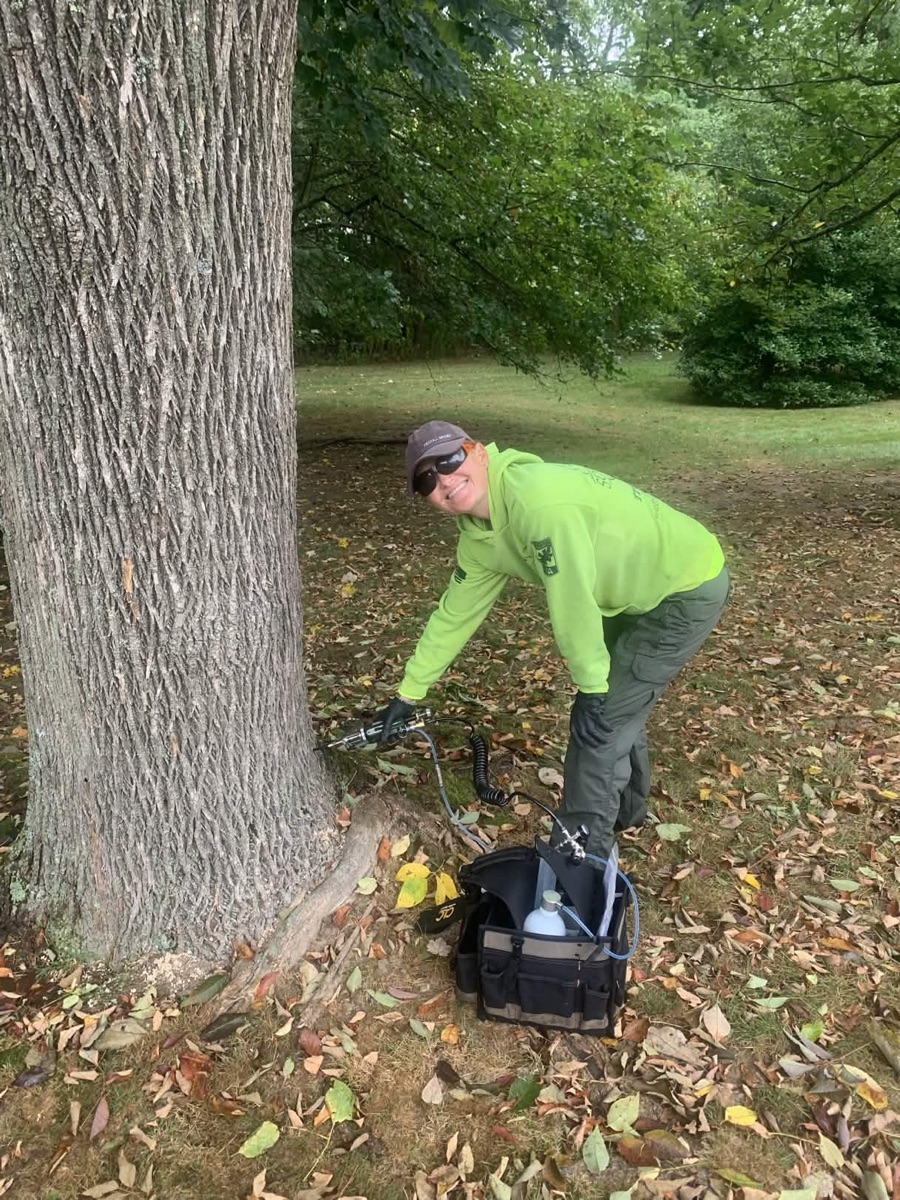
# Professional Arborist Consultation in Whitman, Massachusetts
As a homeowner in Whitman, Massachusetts, you rely on the mature street trees lining your neighborhood streets to provide shade, beauty, and property value. In a close-knit community like Whitman—home to 15,400 residents in Plymouth County—your trees face unique pressures from aging infrastructure, dense residential layouts, and post-industrial greening efforts. That's where professional arborist consultation from Southeast Arborist, LLC comes in. Our ISA Certified Arborists deliver precise tree health assessments, risk evaluations, and written reports tailored to Whitman's specific conditions.
Southeast Arborist, based in nearby Plymouth and Cohasset, serves the entire South Shore Massachusetts region, including Whitman, MA 02382. We specialize in arborist consultation Whitman MA homeowners need for informed decisions on tree care. Whether you're dealing with a Norway maple heaving your driveway in South Whitman or a red oak leaning toward power lines in East Whitman, our consultations identify issues early, preventing costly damage or safety hazards.
An arborist consultation starts with a thorough on-site evaluation by an ISA Certified Arborist who follows ANSI A300 standards for tree care. We assess tree health, structural integrity, soil conditions, and environmental factors unique to Whitman's sandy loam soils and coastal climate. Expect a detailed written report including prioritized maintenance recommendations, risk ratings, and options for pruning, removal, or preservation. These reports support insurance claims, legal disputes, pre-purchase inspections, or construction projects—essential in a town with limited space for tree replacements.
In Whitman, common scenarios driving arborist consultation requests include declining Norway maples whose aggressive roots displace sidewalks along Temple Street Area paths, or aging lindens near the famous chocolate factory site suffering from storm damage. Our safety protocols ensure every assessment minimizes disruption to your Hobart Park Area yard or Colebrook neighborhood property. Homeowners appreciate our approachable expertise: we explain findings in plain language, like how white pine needle cast thrives in Whitman's humid summers, and provide actionable steps you can take immediately.
Why choose Southeast Arborist for your arborist consultation in Whitman MA? Our certification guarantees objective, science-based advice. We've helped hundreds of South Shore properties, from Abington borders to Pembroke edges, extend tree lifespans and reduce liabilities. For instance, a recent consultation in Whitman Center revealed codominant stems on a red maple, averting a potential failure during nor'easter winds. Practical advice from our reports includes mulching techniques to combat compacted soils around ornamental pears in Auburn, or cabling options for crabapples in dense lots.
Scheduling arborist consultation Whitman MA is straightforward—call us at 508-369-5009 for prompt service. Avoid DIY guesses that overlook subtle signs like fungal fruiting bodies on green ash, which signal emerald ash borer risks in Plymouth County. Our process equips you with data-driven plans, whether for routine maintenance or emergency response. In a town where street tree pruning for utility clearance is routine, proactive consultation protects your investment. Discover how our tailored services address Whitman's tree challenges head-on, ensuring your property's canopy thrives for generations.
Why Whitman Properties Need Arborist Consultation
Whitman's history as a shoe-manufacturing town in Plymouth County left a legacy of densely built centers with few surviving large trees from pre-industrial eras. Post-World War II greening by the shade tree committee introduced extensive plantings of Norway maple, red maple, red oak, white pine, linden, ornamental pear, green ash, and crabapple along residential streets. Today, these species dominate Whitman landscapes, but they contend with the town's small-town infrastructure, sandy loam soils prone to compaction, and a coastal climate featuring humid summers (average 75°F highs), cold winters (down to 20°F), and frequent nor'easters.
Norway maples, planted heavily in the latter 20th century, now show widespread decline in Whitman. Their shallow roots heave sidewalks and driveways, especially in South Whitman where freeze-thaw cycles exacerbate upheaval. Without an arborist consultation, you risk ignoring early girdling root symptoms, leading to sudden decline and $5,000+ removal costs. Red maples, common in East Whitman, suffer anthracnose in Whitman's wet springs, defoliating early and weakening branches over power lines—a utility conflict our ISA Certified Arborists evaluate precisely.
Red oaks, prized for their longevity in Hobart Park Area, reach end-of-life stages around 60-80 years in Whitman's conditions. Aging specimens develop included bark unions, increasing failure risk during 50 mph gusts. White pines, scattered in wind-exposed Colebrook spots, battle white pine weevil and needle cast from high humidity, dropping needles that signal root rot in poorly drained soils. An arborist consultation Whitman MA provides identifies these via visual tree risk assessment (VTA), rating targets like your home or neighbor's garage.
Lindens near the chocolate factory site in Whitman Center boast impressive canopies but succumb to sooty mold from aphid honeydew, compounded by urban heat islands. Ornamental pears in Auburn lots split under ice loads due to weak crotches, while green ash faces emerald ash borer infestations spreading from nearby Hanson. Crabapples in Temple Street Area yards show fire blight, browning blossoms that homeowners mistake for drought stress.
Limited space for replacements in Whitman's neighborhoods amplifies the need for preservation. Dense builds mean street trees compete with utilities and pavement, causing conflicts our consultations map out. Soil tests during assessments reveal pH imbalances (Whitman's averages 5.5-6.5) favoring iron chlorosis in lindens, with recommendations for amendments like sulfur or chelated iron.
Climate shifts heighten urgency: Whitman's increased storm frequency (up 20% per NOAA data) stresses aging trees. Practical advice: Monitor your red oak for epicormic sprouting, a sign of decline; apply 2-4 inches of organic mulch in a 3-foot radius around bases, avoiding trunks to prevent rot. For utility issues in Abington-adjacent areas, request our line-clearance evaluation compliant with ANSI A300.
Homeowners skipping arborist consultation face inflated insurance premiums post-failure or municipal fines for hazardous trees. In Rockland borders, we've seen Norway maples topple onto Holbrook roads, underscoring regional risks. Southeast Arborist's reports quantify these, prioritizing actions like structural pruning on mid-sized oaks to extend canopy life. Your Whitman property deserves this expertise—call 508-369-5009 to safeguard against these predictable challenges.
Our Arborist Consultation Process in Whitman
Southeast Arborist's arborist consultation process in Whitman, MA follows a structured, ISA-certified protocol ensuring comprehensive coverage for your property's trees. We begin with a pre-visit questionnaire: Share photos of concerns like root heaving on your Norway maple in South Whitman or leaning red oak in East Whitman. This allows our ISA Certified Arborist to arrive prepared, typically within 48 hours of your call to 508-369-5009.
Step 1: On-site visual assessment (45-90 minutes). Using ANSI A300 Part 1 standards, we inspect from ground level—no climbing unless specified. For a white pine in Colebrook, we check for weevil pitch tubes, needle retention, and leader dieback. Tools include a resistograph for internal decay detection in red oaks, sounding mallet for hollow stems on lindens, and soil probe for compaction around ornamental pears in Auburn.
Step 2: Risk evaluation via TRAQ (Tree Risk Assessment Qualification) methodology. We score likelihood and impact of failure, targeting your home, driveway, or Temple Street Area sidewalks. A crabapple with codominant leaders gets a high rating if over power lines; green ash with D-shaped exit holes flags EAB. Safety protocols mandate hard hats, high-visibility gear, and perimeter marking to protect your Hobart Park Area family.
Step 3: Health diagnosis. We identify pests/diseases: Anthracnose on red maples (wet leaf spots), verticillium wilt in green ash (vascular streaking), or fire blight on crabapples (shepherd's crook tips). Soil samples test drainage and nutrients—Whitman's coastal sands often lack organics, stressing lindens. Aerial inspections via drone (FAA Part 107 compliant) map canopies in Whitman Center's dense lots.
Step 4: Written report delivery (24-48 hours). Your 10-20 page document includes photos, diagrams, risk matrices, and prioritized recommendations. For Norway maple decline, it might suggest root barrier installation or phased removal. Pre-purchase buyers get property-wide inventories; construction assessments detail protection zones per ANSI A300 Part 7.
Step 5: Follow-up consultation. We review findings via phone or revisit, explaining options like cabling for weak linden crotches or injections for EAB-threatened ash. All pruning specs adhere to ANSI A300 Part 11, promoting natural form.
Equipment specifics: Laue decrement core for precise decay measurement, Haglof giraffe for height/DBH without spikes, and infrared thermography for stress in white pines. Techniques draw from ISA Best Management Practices, tailored to Whitman's climate—e.g., delayed pruning for maples to avoid bleeding.
Practical homeowner tips during process: Document your trees' GPS locations via app for future tracking; note recent storms affecting your Auburn pears. Our approachable experts demystify terms: "VTA target zone" means your garage under that oak.
This process delivers value: A Whitman consultation recently saved a South Whitman family $8,000 by confirming a "hazardous" red maple was salvageable via pruning. For utility conflicts in Pembroke edges, we coordinate with Eversource. Trust Southeast Arborist's proven steps for your arborist consultation Whitman MA—dial 508-369-5009 today.
Common Arborist Consultation Projects in Whitman Neighborhoods
Whitman neighborhoods present distinct tree challenges, making arborist consultation essential for targeted solutions. In Whitman Center, near the chocolate factory site, consultations focus on legacy Norway maples and lindens. These giants, planted mid-century, now exhibit root heaving sidewalks and canker diseases. Our ISA Certified Arborists recommend crown cleaning to remove deadwood, extending life while clearing pedestrian paths.
South Whitman properties often involve declining red maples and white pines along utility-heavy streets. Consultations reveal line conflicts—branches encroaching 10-foot clearances—and needle cast from humidity. We provide reports prioritizing thinning cuts per ANSI A300, plus mulch volcano corrections to improve root health in compacted soils.
East Whitman's denser lots feature ornamental pears and crabapples stressed by narrow planting strips. Arborist consultations identify weak crotches prone to storm splits, advising cabling or removal with disease-resistant replacements like serviceberry. Pre-purchase inspections here flag EAB in green ash, critical for buyers near Abington.
Auburn sees frequent Norway maple root issues displacing driveways. Our assessments use ground-penetrating radar to map roots, recommending barriers or grindings. Red oaks here benefit from structural pruning consultations, reducing sail effect in nor'easters.
Colebrook's wind-exposed edges host white pines with weevil damage. Consultations include resistograph probes, yielding reports for systemic insecticides or hedges as buffers. Lindens in Hobart Park Area require sooty mold evaluations, linking aphids to stress from pavement proximity.
Temple Street Area yards pack crabapples and green ash into small spaces. Our projects address fire blight and borers, with reports for soil injections and spacing adjustments. Emergency consultations post-storm evaluate failures, like a red maple down in Rockland borders.
Across neighborhoods, street tree projects dominate: Pruning for clearance in Hanson-adjacent zones, removals of end-life oaks. A recent Whitman Center consultation prioritized maintenance on 15 lindens, averting $20,000 in liabilities. Practical advice: In East Whitman, space new pears 20 feet from utilities; test soil pH annually in Auburn.
Southeast Arborist handles these with safety-first protocols, serving Pembroke and Holbrook too. Your neighborhood's trees get Whitman-specific plans—schedule via 508-369-5009.
Arborist Consultation Costs in Whitman, MA
Arborist consultation costs in Whitman, MA range from $250-$750, depending on property size, tree count, and complexity. A basic single-tree assessment for your Norway maple root issue in South Whitman starts at $250, covering 45-minute site visit and 5-page report. Larger properties in Whitman Center with 10+ trees, like those near the chocolate factory, run $500-$750, including drone mapping and soil tests.
Key pricing factors: Tree inventory scale—expect $50/tree beyond five. Risk tools like resistograph add $100; written reports for insurance/legal use $150 extra. Pre-purchase or construction assessments in East Whitman, evaluating 20 lindens and oaks, hit $600 due to TRAQ depth. Travel within Plymouth County is flat; Hanson or Pembroke adds $50.
Value proposition outweighs cost: Our consultations prevent $5,000+ removals. A Colebrook white pine assessment at $350 identified salvageable decline, saving $4,000 versus replacement. Reports lower insurance by documenting mitigated risks, per ISO tree ratings.
Compared to South Shore averages ($300-$600), Southeast Arborist's ISA certification justifies premiums through ANSI-compliant detail. No hidden fees—quotes upfront via 508-369-5009.
Breakdown example: Auburn ornamental pear consultation—$300 base ($200 site/inspection, $100 report). Add $75 for EAB scan on green ash. Hobart Park red oak structural eval: $450, including cabling specs.
ROI for Whitman homeowners: Proactive advice on crabapple fire blight averts spread, preserving Temple Street Area canopies. Financing via tree care grants from Plymouth County conservation; reports support applications.
Practical budgeting: Bundle with pruning for 20% discount. Costs reflect expertise preventing utility fines ($500+) or storm claims denials. Invest in your property's future—our data-driven reports deliver lasting savings.
When to Schedule Arborist Consultation in Whitman
Schedule arborist consultation in Whitman MA during late winter (February-March), post-dormancy but pre-bud swell. Maples bleed less from inspection wounds, ideal for Norway/red varieties in South Whitman. Avoid summer peaks when heat stresses crews and trees.
Urgency signs demand immediate booking: Cracking soil from heaving roots on your East Whitman driveway (Norway maple hallmark); leaning trunks post-nor'easter; fungal shelves on red oaks in Auburn; D-shaped holes in green ash (EAB); or deadwood >25% canopy in Colebrook white pines.
Fall (September-October) suits pre-winter risk checks for lindens near chocolate factory, spotting storm vulnerabilities. Spring (April-May) catches early anthracnose on crabapples in Temple Street Area.
Seasonal climate ties in: Whitman's wet springs fuel diseases; humid summers accelerate decline. Call 508-369-5009 at first sign—delays compound issues like utility rubs in Hobart Park.
Pre-sale? Time for June listings. Construction? Before ground break. Don't wait for failure—early action saves thousands.
Frequently Asked Questions About Arborist Consultation in Whitman
What is an arborist consultation in Whitman, MA? An ISA Certified Arborist visits your Whitman property to assess tree health, risks, and needs, delivering a written report with ANSI A300 recommendations. For your South Whitman Norway maple, it details root heaving fixes.
How long does an arborist consultation take in Whitman? Site visits last 45-90 minutes; full report in 24-48 hours. Larger East Whitman lots with 15 trees extend to two hours.
Do I need an arborist consultation for insurance in Whitman? Yes—our reports document risks for claims, like a fallen red oak in Colebrook, proving pre-existing conditions or maintenance.
What's the difference between arborist consultation and tree inspection? Consultation provides actionable reports; basic inspections are visual only. Ours include tools like resistographs for Whitman lindens.
Can arborist consultations help with pre-purchase in Whitman neighborhoods? Absolutely—full inventories for Auburn buyers flag EAB in green ash or weak pears, informing negotiations.
How do I prepare for arborist consultation on my Whitman property? Clear access to trees; note concerns like utility conflicts in Temple Street Area; have photos ready.
Are Southeast Arborist consultations ANSI compliant for Whitman? Yes, all follow A300 standards for pruning, risk, and soil management, tailored to local species like white pines.
When should I call for emergency arborist consultation in Whitman? After storms damaging Hobart Park crabapples or visible cracks in red oaks—dial 508-369-5009 for same-day response.
Arborist Consultation Throughout Whitman
Southeast Arborist provides arborist consultation across all Whitman neighborhoods: Whitman Center's legacy lindens, South Whitman's maples, East Whitman's pears, Auburn's oaks, Colebrook's pines, Hobart Park's crabapples, and Temple Street Area's ash. We extend to nearby Abington, Hanson, Rockland, Pembroke, and Holbrook.
From Plymouth/Cohasset bases, we reach Whitman, MA 02382 in under 30 minutes. ISA Certified, safety-focused service for your trees.
Ready for your consultation? Call 508-369-5009 now.