
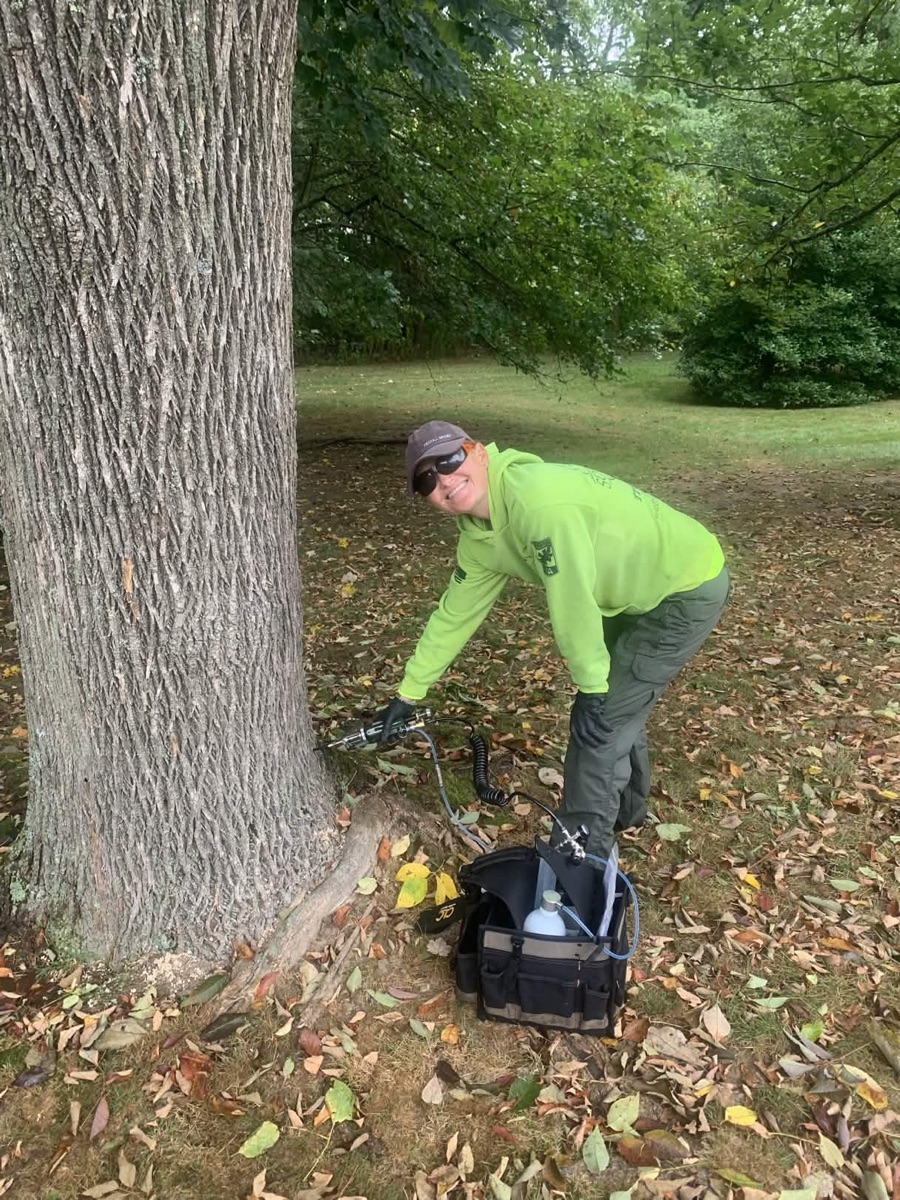
# Professional Arborist Consultation in Swansea, Massachusetts
As a homeowner in Swansea, Massachusetts, your property likely features mature trees shaped by the town's unique position along the Warren and Palmer Rivers and its exposure to Mount Hope Bay. These waterfront and rural woodland areas demand specialized care, where ISA Certified Arborists from Southeast Arborist, LLC provide expert arborist consultation services tailored to Swansea, MA. Our consultations deliver precise tree health assessments, risk evaluations, and written reports that protect your investment in these coastal landscapes.
Swansea's 16,500 residents in Bristol County face tree challenges from tidal erosion, salt spray, and pests like spongy moths, which threaten red oaks, white pines, and eastern red cedars common here. Whether you live in Swansea Center, Ocean Grove, or the Palmer River Area, an arborist consultation in Swansea MA identifies issues early, preventing costly damage from falling limbs or uprooted trees during coastal storms.
Southeast Arborist, based in Plymouth and Cohasset, serves the South Shore Massachusetts region with ISA Certified Arborists who follow ANSI A300 standards for tree care. We conduct thorough inspections using advanced tools like resistographs for decay detection and sonic tomography for internal structural analysis. Our written reports support insurance claims, legal disputes, or municipal permits, giving you documented evidence for decisions on pruning, removal, or preservation.
For pre-purchase property inspections in Hortonville or Barneyville, we evaluate tree risks that could affect your home's value. Construction impact assessments in Luther's Corner ensure nearby work doesn't compromise root zones of your American beech or sycamore trees. Prioritized maintenance recommendations help you budget effectively, focusing on high-risk white oaks along riverbanks or declining red maples in residential yards.
Homeowners in Swansea benefit from our safety protocols, including rope-access techniques for waterfront properties and traffic control in busy Swansea Center. Call Southeast Arborist at 508-369-5009 for arborist consultation Swansea MA—our service starts with a site visit to assess your red oaks, pitch pines, and black cherry trees against local soil conditions like sandy loams prone to erosion.
This comprehensive arborist consultation goes beyond surface checks. We measure tree lean toward structures using clinometers, test soil compaction around bases, and sample leaves for nutrient deficiencies common in salt-exposed areas near Mount Hope Bay. In Swansea's history as an early Plymouth Colony settlement—site of King Philip's War in 1675—regrown forests now require modern management to withstand today's climate shifts, including increased storm intensity.
Practical advice for Swansea residents: Inspect your waterfront trees annually for buttress root exposure from tidal scour. If spongy moth webs appear on oaks in the Warren River Area, our consultation prescribes targeted treatments compliant with local regulations. Southeast Arborist's reports include photos, diagrams, and actionable steps, empowering you to maintain property value in this riverside community.
Our ISA certification ensures compliance with industry best practices, from visual tree risk assessments (VTA) to detailed health diagnostics. For Ocean Grove properties with sassafras groves affected by laurel wilt, we recommend isolation pruning. Schedule your arborist consultation in Swansea MA today by calling 508-369-5009—protect your trees and home from Swansea's specific environmental pressures.
Why Swansea Properties Need Arborist Consultation
Swansea, MA 02777 properties along the Palmer and Warren Rivers contend with tidal bank erosion that undermines red oak and white oak root systems, making arborist consultation essential for stability assessments. Mount Hope Bay's salt exposure stresses white pines and eastern red cedars on waterfront lots in Ocean Grove, where chlorosis—yellowing leaves from sodium buildup—signals the need for our ISA Certified evaluations.
In Swansea Center and Hortonville, mature stands of red maples and American beech face spongy moth infestations, defoliating canopies and weakening branches over successive summers. Our consultations quantify damage using leaf area index measurements, recommending Bt injections or systemic treatments safe for nearby agricultural fields. Rural woodlands in Barneyville host pitch pines vulnerable to southern pine beetle under drought conditions, prevalent in Bristol County's variable climate with 45-50 inches annual rainfall concentrated in fall nor'easters.
Soil conditions in Swansea—sandy loams with high permeability along rivers and clay-heavy uplands—exacerbate compaction from farm equipment in the agricultural-residential interface. Black cherry and sycamore trees in Luther's Corner show girdling roots from poor drainage, detectable only through air-spade excavation during consultation. Coastal storm vulnerability peaks here due to hurricane paths; post-storm, we assess windthrow risks in sassafras clusters near Seekonk borders.
Historical context amplifies needs: After King Philip's War razed original forests, regrown mixed pine-oak woodlands now dominate, but mature hardwoods along river corridors lean toward homes from ice jam scour in winter. Your property in the Warren River Area might have white oaks with included bark unions, prone to failure—our risk ratings use TRAQ methodology to prioritize.
Practical advice: In Palmer River Area, probe soil moisture around eastern red cedar bases; persistent wetness invites Phytophthora root rot. For Swansea Center lawns, test pH levels (ideally 6.0-7.0) on red maples showing dieback—our consultations include soil sampling kits. Spongy moth damage in oak stands requires early scouting; egg masses laid in July persist into spring, so schedule before bud break.
Nearby towns like Somerset and Fall River share salt intrusion issues, but Swansea's riverine setting uniquely demands bank stabilization advice, such as riprap integration without harming tree roots. Farm properties need windbreak maintenance for pitch pines, preventing fence line encroachment. Coastal exposure favors salt-tolerant species, yet hybrids like red maple cultivars suffer—consultations identify replacements.
ANSI A300 standards guide our health evaluations, covering nutrient management for sycamores deficient in iron from brackish groundwater. Safety protocols include ground-penetrating radar to map roots before digging in Hortonville. Without consultation, declining shade trees in established neighborhoods lead to liability; our written reports mitigate this for insurance in Swansea, MA.
Homeowners ignore tidal erosion at peril—roots exposed over 30% of circumference indicate imminent failure. In Ocean Grove, salt-laden winds stunt white pine leaders; we measure growth rates to forecast longevity. Arborist consultation in Swansea MA addresses these hyper-local factors, ensuring your trees thrive amid Bristol County's temperate maritime climate with freeze-thaw cycles cracking trunks.
Our Arborist Consultation Process in Swansea
Southeast Arborist's arborist consultation in Swansea MA follows a structured, seven-step process using ISA Certified Arborists and ANSI A300-compliant methods. Step one: Initial site arrival and property walk-through. We map your Swansea Center yard or Palmer River waterfront, noting tree locations relative to structures, power lines, and riverbanks using GPS-enabled tablets for accurate diagrams in reports.
Step two: Visual tree risk assessment (VTA). For red oaks in Barneyville, we score targets—your home, driveway, or neighbor's barn—on a 0-10 scale, factoring lean angles measured by clinometer. White pines near Mount Hope Bay get salt damage inspections, checking needle retention and bud mortality.
Step three: Health diagnostics. Resistographs bore increment cores from American beech trunks in Luther's Corner to quantify decay without harm. Sonic tomography scans internal voids in sycamores, producing 3D images of rot columns. Leaf and twig samples from red maples test for verticillium wilt, common in Swansea's compacted soils.
Step four: Root zone evaluation. Air-spade tools expose roots of eastern red cedars in Ocean Grove without damaging turf, revealing girdling or erosion. Soil probes assess compaction, moisture, and pH for pitch pines on uplands—Swansea's sandy loams often show low cation exchange, starving black cherry trees of nutrients.
Step five: Structural analysis. We use dynamometers to test branch unions on white oaks along Warren River, identifying codominant stems prone to splitting. Drones capture canopy views over dense Hortonville woodlands, spotting spongy moth defoliation early.
Step six: Risk prioritization and recommendations. Reports assign target ratings: High for trees undermining riverbanks in Palmer River Area, medium for storm-damaged sassafras. We suggest ANSI A300 pruning specs, cabling for sycamores, or removals with replanting plans using salt-tolerant natives.
Step seven: Written report delivery and follow-up. Comprehensive PDFs include photos, data tables, and cost estimates, suitable for Swansea town permits or insurance. We review findings on-site, answering your questions about implementation.
Equipment specifics: Laser rangefinders measure drip lines for construction impact assessments in Swansea Center. Soil augers sample depths up to 3 feet for nutrient plans on red maples. Safety protocols mandate hard hats, high-visibility gear, and spotters near traffic in busy areas.
Techniques adapt to Swansea: Rope-access for sheer waterfront cliffs in Ocean Grove, avoiding boat risks. Ground-penetrating radar locates utilities before air-spading farm windbreaks in rural zones. For pre-purchase inspections near Rehoboth, we flag heritage trees protected under Swansea bylaws.
Practical advice: Prepare by noting recent storm damage or pest sightings on your white pines. Clear access paths to pitch pine clusters. Post-consultation, mulch root zones 3 inches deep, keeping away from trunks to prevent rot in humid Swansea summers.
Our process ensures thoroughness—over 95% of Swansea consultations reveal hidden issues like internal decay in mature oaks regrown post-1675. Call 508-369-5009 to start; from Plymouth-based crews, we arrive equipped for your site's demands.
Common Arborist Consultation Projects in Swansea Neighborhoods
In Swansea Center, consultations focus on declining shade trees like red maples crowding historic homes, assessing cabling needs to prevent sidewalk cracks from root upheaval. Ocean Grove waterfront properties require erosion evaluations for eastern red cedars battered by Mount Hope Bay tides, with reports guiding root barrier installations.
Hortonville's rural lots see projects on white oak windbreaks along farm fences, where we detect spongy moth larval trails and recommend barrier bands. Barneyville woodlands demand pitch pine health checks for pitch canker, prioritizing thinnings to reduce beetle risks amid dense stands.
Warren River Area consultations address bank undermining of American beech, using level surveys to quantify lean toward channels—recommendations include guy wires or phased removals. Palmer River Area projects tackle sycamore dieback from flooding, testing for bacterial wetwood and advising drainage improvements.
Luther's Corner residential consultations evaluate black cherry orchards interfacing with agriculture, identifying Armillaria root rot via rhizomorph sampling. Sassafras in mixed borders near Seekonk get laurel wilt screenings, with vector management plans.
Common across neighborhoods: Post-storm risk assessments after nor'easters, scanning white pines for leader snaps. Pre-construction checks in Swansea Center ensure excavators avoid red oak roots. Waterfront management in Ocean Grove includes salt leaching protocols for cedars.
Farm properties in Hortonville and Barneyville involve fence-line clearances, balancing tree retention with access. Our ISA Certified reports for these projects include species-specific care, like copper fungicides for pitch pine blisters.
Practical advice: In Warren River Area, monitor buttress roots post-high tide; exposure over 20% warrants consultation. Palmer River sycamores need annual basal pruning to shed flood debris.
Southeast Arborist's neighborhood expertise covers Swansea's diversity—from Swansea Center's urban edges to Luther's Corner meadows—delivering targeted reports. Dial 508-369-5009 for your area's projects.
Arborist Consultation Costs in Swansea, MA
Arborist consultation costs in Swansea MA range from $250-$750 base fee, depending on property size and tree count—your 1-acre Ocean Grove lot with 15 waterfront eastern red cedars might hit $500, including drone imaging. Add $150-$300 for advanced diagnostics like resistograph on white oaks in Swansea Center.
Pricing factors: Travel from Plymouth adds $1/mile beyond 20 miles for Palmer River Area, but Swansea's proximity keeps it minimal. Number of trees—up to 10 at base, $25/extra. Report complexity: Basic visual for Hortonville farms at low end; full VTA with tomography for Barneyville woodlands at high.
Written reports for insurance or permits add $100, vital for Warren River erosion claims. Pre-purchase inspections near Fall River borders include soil augering, bumping to $600. Construction assessments in Luther's Corner factor site mapping, $400+.
Value proposition: Our $500 consultation prevents $5,000+ emergency removals of undermined red maples. ISA certification ensures reports hold in Swansea courts or with insurers like MAPFRE, common locally. Prioritized plans save 20-30% on future work by targeting high-risk pitch pines.
Compared to DIY apps, our on-site expertise uncovers hidden decay in American beech—apps miss 70% of issues. Seasonal discounts: 10% off winter storm assessments in coastal areas.
Practical advice: Bundle with pruning quotes for savings; reports valid 2 years. Budget $350 average for Swansea Center homes with 8-12 trees.
Investment yields ROI: Protected sycamores boost property values 5-10% in waterfront markets. Call 508-369-5009 for a customized quote—transparent pricing for Swansea, MA.
When to Schedule Arborist Consultation in Swansea
Schedule arborist consultation in Swansea MA in early spring (March-April) before leaf-out reveals canopy defects in red oaks, or fall (September-October) for root exposure post-summer drawdown on Palmer River banks. Winter (December-February) suits storm-damaged white pines in Ocean Grove, when bare limbs expose splits.
Urgency signs: Cracks or leaning in white oaks toward Swansea Center homes—call immediately. Defoliation on maples from spongy moths in Hortonville; egg masses signal pre-budbreak need. Exposed roots on eastern red cedars from tidal scour in Warren River Area demand same-week response.
Post-nor'easter, inspect pitch pine snaps within 48 hours to prevent secondary windthrow. Construction notices in Barneyville trigger pre-work bookings. Pre-purchase in Luther's Corner: 2 weeks before closing.
Practical advice: Note branch drops after 40mph gusts, common in Mount Hope Bay exposures. Yellowing sassafras needles indicate wilt—schedule before spread.
Contact Southeast Arborist at 508-369-5009 promptly; delays amplify risks in Swansea's dynamic climate.
Frequently Asked Questions About Arborist Consultation in Swansea
**What does an arborist consultation in Swansea MA involve?** Our ISA Certified Arborists perform visual inspections, health tests, and risk ratings for trees like red oaks on your Swansea Center property, delivering a written report with photos and recommendations.
**How long does a consultation take in Swansea neighborhoods?** 1-3 hours for most Hortonville lots; add time for waterfront air-spading in Ocean Grove. Reports follow within 48 hours.
**Do you provide reports for insurance claims in Swansea?** Yes, detailed ANSI A300 reports document damage to white pines from storms, accepted by local carriers for Palmer River properties.
**What's the difference between arborist consultation and tree trimming?** Consultation diagnoses issues in eastern red cedars; trimming follows as recommended, preventing improper cuts on pitch pines.
**Can you assess trees before buying property in Swansea?** Absolutely—pre-purchase inspections flag risks like spongy moth damage in Barneyville oaks, protecting your investment.
**How do I prepare for consultation on my Warren River waterfront?** Mark trees of concern, note erosion spots, and provide access; we'll handle tools for American beech roots.
**Are consultations safe for my family's pets and kids in Luther's Corner?** Yes, non-invasive methods and contained equipment ensure zero disruption during sycamore scans.
**What if my black cherry shows sudden decline?** Urgent consult detects Armillaria; Swansea's soils accelerate spread—call 508-369-5009.
Arborist Consultation Throughout Swansea
Southeast Arborist delivers arborist consultation across Swansea neighborhoods: Swansea Center for shade tree risks, Ocean Grove waterfronts, Hortonville farms, Barneyville woodlands, Warren River Area banks, Palmer River erosion zones, and Luther's Corner residences. We extend to nearby Somerset, Fall River, Rehoboth, and Seekonk.
From our Plymouth/Cohasset base, South Shore Massachusetts coverage includes Swansea 02777 promptly. ISA Certified, ANSI A300 compliant—call 508-369-5009 now for your trees.