
# Professional Arborist Consultation in Plympton, Massachusetts
If you own property in Plympton, Massachusetts, your trees face unique pressures from sandy, acidic soils, frequent nor'easters, and dense pine stands that dominate the landscape. As a homeowner in this rural Plymouth County town of 3,100 residents, you deal with white pines towering over your driveway in Plympton Center or pitch pines crowding power lines along County Road. Southeast Arborist, LLC, based in nearby Plymouth and Cohasset, delivers ISA Certified arborist consultations tailored to these conditions. Our phone number is 508-369-5009—call us for assessments that protect your home, reduce insurance risks, and maintain property value.
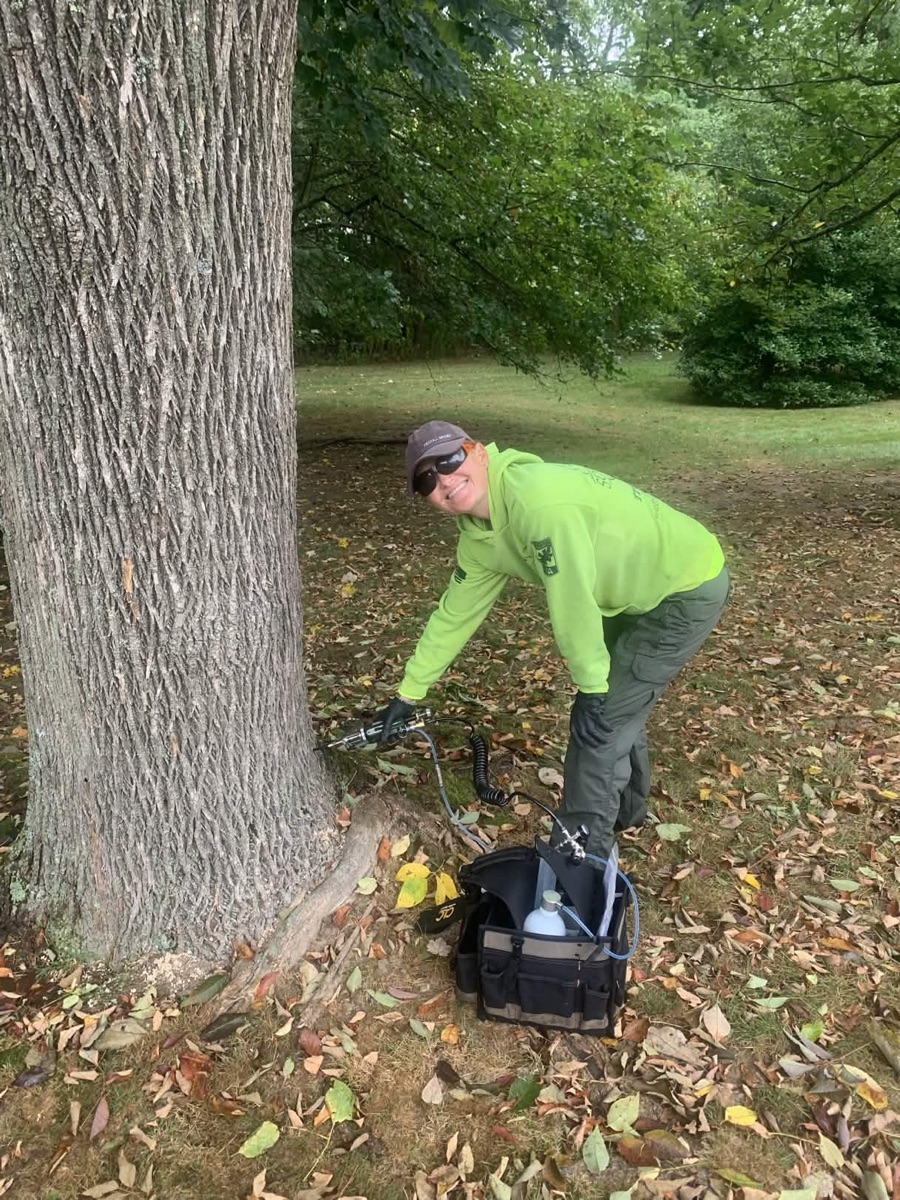
An arborist consultation in Plympton, MA, starts with a site visit by our ISA Certified Arborists, who evaluate tree health, structural risks, and environmental factors specific to your lot. We inspect shallow-rooted white pines prone to windthrow on sandy substrates, a common issue since Tropical Storm Isaias in 2020 toppled dozens across town. Our written reports comply with ANSI A300 standards, providing prioritized recommendations for pruning, removal, or cabling that homeowners and contractors rely on for legal and insurance purposes.
Plympton's mix of second-growth hardwoods like red oak and scarlet oak with native pitch pine barrens demands expert eyes. In neighborhoods like Winnetuxet or Upland Meadows, overgrown lot lines block views and encroach on cranberry bog frontage, while red maples near Silver Lake show dieback from compacted soil. We conduct risk assessments for trees leaning toward structures, power line conflicts on rural roads like Route 58, and fire hazards in pine-heavy areas. Pre-purchase inspections reveal hidden defects before you buy, and construction impact assessments guide developers clearing for new homes.
Our consultations go beyond basic checks. We use resistograph tools to detect internal decay in sassafras and American holly, sonic tomography for red oaks, and aerial inspections via drone for tall white pines. Safety protocols follow OSHA and ANSI Z133 standards, ensuring our team works securely around your Plympton property. Homeowners appreciate our detailed reports, which include photos, diagrams, and maintenance schedules—essential for town permitting or HOA compliance.
Choosing Southeast Arborist means working with South Shore experts who know Plympton's climate: humid summers fostering fungal issues in pitch pines, icy winters stressing shallow roots, and sandy soils limiting anchorage. We've helped residents in Carver, Kingston, Pembroke, and Middleborough, but our focus on Plympton addresses local challenges like driveway clearance through dense canopies and hazard evaluations for trees near power lines. Schedule your arborist consultation in Plympton, MA today at 508-369-5009. Protect your wooded lot before the next storm hits.
Why Plympton Properties Need Arborist Consultation
Plympton's rural character, with wooded lots backing onto cranberry bogs, amplifies tree risks that demand professional arborist consultation. Sandy, acidic soils in Plymouth County support rapid growth of white pines and pitch pines, but these trees develop shallow roots, making them vulnerable to blowdown during nor'easters. Tropical Storm Isaias in 2020 demonstrated this hazard, uprooting scores of tall conifers across Plympton Center and County Road areas, damaging homes and blocking roads.
White pines, the most common species, reach 80 feet with feathery needles, thriving in Plympton's glacial outwash soils but failing in high winds. Their shallow root plates—often less than 3 feet deep—shift easily on sand, especially when compacted by foot traffic or equipment near Winnetuxet homes. Pitch pines, native to the town's pine barrens, add fire risk; their thick bark resists low flames, but dense stands along Upland Meadows ignite quickly in dry spells, a concern given Massachusetts' increasing wildfire frequency.
Red oaks and scarlet oaks dominate hardwood edges, growing 60-70 feet with broad crowns that clash with power lines on rural roads like Jewell Brook Road. These trees suffer from oak wilt and gypsy moth defoliation, worsened by Plympton's humid summers (average 75°F highs) and wet springs. Red maples near Silver Lake show iron chlorosis on alkaline pockets, their shallow roots competing with turf for water during droughts. American holly and sassafras, understory species, develop cankers and borers undetected until branches fail.
Power line conflicts plague Plympton's rural infrastructure. Pitch pines and white pines encroach on utility corridors along County Road, requiring regular assessments to prevent outages—Eversource reports frequent trims here. Fire risks in pine barrens near cranberry bogs demand evaluations for thinning, as Massachusetts fire codes classify these areas as high-hazard.
Storm history underscores urgency. Nor'easters like the 2022 bomb cyclone stressed trees already weakened by emerald ash borer (though ash is rare) and bagworms on cedars. Homeowners in Plympton face leaning white pines toward roofs, a top hazard per our consultations. Without arborist consultation in Plympton, MA, you risk property damage, liability claims, and rising insurance premiums—policies often require documented risk assessments.
Practical advice: Walk your property after heavy rain, noting soil heaving around pine bases or codominant stems in oaks (V-shaped forks prone to splitting). Check for girdling roots on maples near driveways, common in sandy soils. If pines lean over power lines or homes, prioritize consultation. Our ISA Certified Arborists quantify risks using TRAQ (Tree Risk Assessment Qualification) methods, scoring defects on a 1-10 scale.
Plympton's second-growth forests rebound quickly but hide defects like heartwood decay in red oaks from past logging. Cranberry bog frontage adds moisture stress, promoting root rot in hollies. Lot clearing for construction—frequent in expanding Upland Meadows—risks damaging retained trees without impact plans. Insurance claims spike post-storm; a preemptive report proves due diligence.
Neglect leads to cascading issues: Fallen pines block access in Winnetuxet, spark fires, or crush septic systems. Arborist consultation identifies these early, recommending selective pruning per ANSI A300 to reduce wind sail. For your Plympton property, it's not optional—it's essential risk management in this windy, wooded town.
Our Arborist Consultation Process in Plympton
Southeast Arborist's arborist consultation process in Plympton, MA, follows a structured, seven-step protocol using ISA and ANSI standards, customized for local sandy soils and pine barrens. We arrive equipped with climbing gear, resistographs, sonic tomographs, and drones, adhering to ANSI Z133 safety protocols and OSHA fall protection.
**Step 1: Initial Site Assessment (30-45 minutes).** Your call to 508-369-5009 schedules a visit within 48 hours. On-site, our ISA Certified Arborist walks your Plympton lot, mapping trees via GPS. In Plympton Center, we note white pine clusters near foundations; in Silver Lake areas, red maples along shorelines. We document species, DBH (diameter at breast height), height, and lean using a clinometer—critical for windthrow risk on sandy substrates.
**Step 2: Visual Tree Inspection.** Ground-level checks target defects: included bark unions in scarlet oaks, cankers on sassafras, and fungal conks on pitch pines. We assess crown fill (healthy trees show 70%+), branch stub scars from past storms, and root flare exposure—shallow in 80% of Plympton pines. Safety first: We maintain 10-foot buffers from hazards, using traffic control for County Road properties.
**Step 3: Advanced Diagnostics.** For white pines over 50 feet, drones capture canopy images, spotting deadwood or co-dominant leaders. Resistographs bore increment cores (1/16-inch diameter) into red oaks, measuring decay density without harm. Sonic tomography scans American holly trunks, mapping internal voids via sound wave velocity—decay shows as slow zones. Soil probes test pH (Plympton averages 4.5-5.5) and compaction around roots.
**Step 4: Risk Evaluation.** Using ISA TRAQ methodology, we score targets (your home, driveway, power lines) and failure modes. A white pine leaning 15° toward a Winnetuxet roof scores high risk if root plate heaves. We factor Plympton's wind loads (gusts to 70 mph in nor'easters) and soil shear strength. Fire risk for pitch pine stands gets quantified per NFPA 1144.
**Step 5: Health Analysis.** We diagnose issues like pitch pine needle cast from Lophodermium fungus, common in humid Plympton summers, or red maple verticillium wilt. Nutrient tests reveal deficiencies—nitrogen-poor sands starve hollies. Insect scouting covers bagworms on cedars and scale on sassafras.
**Step 6: Report Preparation (24-48 hours).** You receive a 10-20 page PDF with photos, diagrams, and ANSI A300-compliant recommendations: Prune 25% of white pine canopy to reduce sail; cable codominant red oak stems; thin pitch pines for fire breaks. Prioritized lists rank actions by urgency, with cost estimates and timelines. Legal sections support insurance or town permits.
**Step 7: Follow-Up Consultation.** We review reports via phone or revisit, advising on implementation. For construction in Upland Meadows, we monitor tree protection zones (1:1 root radius fenced).
This process minimizes disruption—consultations last 1-3 hours. Our gear includes LiDAR for 3D modeling of lot lines, essential for overgrown Plympton properties. Post-Isaias, we've assessed 200+ trees town-wide, preventing repeat failures.
Practical tips for you: Prepare by noting concerns (e.g., "pine over garage"). Clear access paths. Post-consultation, mulch root zones 3 inches deep (no volcanoes) to aid anchorage. Trust our South Shore expertise for Plympton-specific insights—call 508-369-5009 now.
Common Arborist Consultation Projects in Plympton Neighborhoods
Arborist consultations in Plympton neighborhoods reveal patterns tied to local geography and history. In **Plympton Center**, around the historic Meetinghouse, homeowners request hazard assessments for 70-foot white pines leaning toward colonial homes. Post-2020 Isaias, consultations identified 40% with root exposure; we recommend guying or removal.
**Winnetuxet** properties near cranberry bogs face dense pitch pine thickets encroaching lot lines. Consultations prioritize fire risk thinning—remove 30% understory to create defensible space—and power line clearance, as pines top 40 feet here, conflicting with NSTAR poles along Brooks Road.
**Silver Lake** edges bring red maple and scarlet oak evaluations. Shallow roots on sandy shores cause leaning toward docks; our reports specify cabling and soil injection for anchorage. Dieback from wet feet prompts health plans with fungicide rotations.
**County Road Area**, along Route 58, sees power line conflicts daily. White pine and red oak crowns brush 69kV lines; consultations generate written plans for utility coordination, reducing outage risks. Storm-damaged pine removals dominate, with driveway clearances for access.
**Upland Meadows**, a growing subdivision, demands construction impact assessments. Before clearing for additions, we map retention trees, specifying protection fencing at 1.5x DBH radius. Sassafras and American holly understories get transplant feasibility reports.
Town-wide, common projects include overgrown lot line clearing—pitch pines obscure boundaries near bogs—and storm recovery. For example, a Carver-adjacent County Road property had three red oaks with codominant stems; our consultation prevented failure onto the road.
Practical advice: In Plympton Center, inspect pines for basal shake post-winter. Winnetuxet bog-front owners, thin ladder fuels annually. Silver Lake residents, prune maples before leaf-out to spot borers. Use our neighborhood insights for proactive care.
Southeast Arborist's ISA Certified team delivers reports boosting resale value—buyers demand tree disclosures. From Pembroke borders to Middleborough lines, we serve Plympton comprehensively. Dial 508-369-5009 for your project.
Arborist Consultation Costs in Plympton, MA
Arborist consultation costs in Plympton, MA, range from $250-$750, depending on property size, tree count, and diagnostics. A standard 1-acre wooded lot with 20 trees (typical in Upland Meadows) averages $350-$450, including site visit, basic inspection, and written report. Larger estates in Plympton Center with 50+ pines hit $600+, while pre-purchase checks for 0.5-acre parcels start at $275.
Key pricing factors: Tree numbers and size—each white pine over 24-inch DBH adds $15 due to drone time. Diagnostics escalate costs: Resistograph ($100 extra), tomography ($150). Travel within Plympton is free from our Plymouth base; nearby Kingston or Pembroke adds $50. Rush post-storm service (e.g., after nor'easters) premiums 20%.
Value proposition: A $400 report prevents $10,000+ in damage. Insurance discounts average 5-10% with documented assessments—our ANSI-compliant reports qualify. Legal protection covers liability; courts reference them in disputes. For construction in Winnetuxet, a $500 impact plan avoids fines from Plympton's tree ordinance (minimum 12-inch DBH retention).
Breakdown: $150 base fee covers travel/initial walk. $100/tree for visual + risk scoring. Reports ($100) include TRAQ scores, photos, and 5-year plans. Add-ons: Soil tests ($75), cabling specs ($50).
Compared to South Shore averages ($300-$600), our Plympton pricing reflects efficiency—no upcharges for sandy soil expertise. ROI example: County Road property avoided $15k pine removal via early pruning recs, saving 70%.
Practical budgeting: Small lots (10 trees) under $300; bogsides with fire risk $450+. Bundle with pruning for 15% off. Payment via card/check; no deposits.
Investing in arborist consultation in Plympton, MA, safeguards your asset. Call Southeast Arborist at 508-369-5009 for a custom quote—value exceeds cost every time.
When to Schedule Arborist Consultation in Plympton
Schedule arborist consultation in Plympton, MA, in early spring (March-April) before leaf-out hides defects in red oaks and maples, or fall (September-October) post-growing season to assess storm stress. Avoid summer peaks when fungal growth obscures issues in pitch pines.
Urgency signs demand immediate calls to 508-369-5009: Leaning white pines (over 10°) after winds, heaving soil at bases, or cracks in root flares—hallmarks of windthrow risk on sandy soils. Deadwood over 30% in crowns, especially scarlet oaks near Silver Lake homes, signals failure. Mushrooms at pine bases indicate root rot; leaning toward power lines on County Road requires same-day response.
Post-storm: After nor'easters or hurricanes like Isaias, inspect within 72 hours—hanging branches stress trunks. Winter ice storms (common January-February) split codominant stems in red oaks; schedule before thaws.
Pre-purchase: Time for due diligence 2-4 weeks before closing, revealing hidden decay in Upland Meadows lots. Construction: 4-6 weeks prior, aligning with Plympton permitting.
Seasonal tips: Spring for pest scouting (bagworms on hollies); summer for irrigation checks on sassafras; fall for fire prep in Winnetuxet barrens. Annual for high-risk properties.
Don't wait—Plympton's climate accelerates decline. Book now for proactive protection.
Frequently Asked Questions About Arborist Consultation in Plympton
**What is an arborist consultation in Plympton, MA?** An on-site evaluation by ISA Certified Arborists assessing tree health, risks, and maintenance needs. For your Plympton white pines, it includes windthrow analysis on sandy soils, with a written ANSI A300 report.
**How long does a Plympton arborist consultation take?** 1-3 hours for most lots, plus 24-48 hours for reports. Larger Winnetuxet properties with 30+ trees extend to 4 hours.
**Do I need an arborist consultation for insurance in Plympton?** Yes—carriers like MAPFRE require documented hazard trees. Our reports detail risks like leaning pitch pines, potentially lowering premiums 5-15%.
**What trees in Plympton benefit most from consultation?** White pines, pitch pines (wind/fire risks), red oaks (structural defects), and red maples (root issues) on sandy substrates.
**Can consultations prevent storm damage in Plympton?** Absolutely—post-Isaias assessments identify shallow roots; pruning reduces sail by 25%, per ANSI standards.
**How much notice for emergency consultations?** 24 hours for hazards like trees over power lines in County Road areas. Call 508-369-5009.
**Are drones used in Plympton arborist consultations?** Yes, for tall white pines in Upland Meadows—FAA Part 107 compliant, capturing canopy defects safely.
**What if I disagree with recommendations?** We explain via TRAQ scoring and evidence (e.g., resistograph data). Revisions free within 7 days.
**Does Southeast Arborist serve nearby towns?** Yes—Carver, Kingston, Pembroke, Middleborough from our Plymouth/Cohasset base.
Arborist Consultation Throughout Plympton
Southeast Arborist provides arborist consultation across all Plympton neighborhoods: Plympton Center's historic core, Winnetuxet's bog-front lots, Silver Lake shores, County Road utilities, and Upland Meadows expansions. Our South Shore service extends to Carver, Kingston, Pembroke, and Middleborough, with quick response from Plymouth/Cohasset.
From white pine hazards in the center to pitch pine fire risks on the edges, we cover your property comprehensively. Call our ISA Certified team at 508-369-5009 today—schedule your Plympton consultation and secure your trees.