
# Professional Arborist Consultation in Norton, Massachusetts
If you own property in Norton, Massachusetts, your trees face unique pressures from the town's rural landscapes, reservoir shorelines, and college campus settings. Red oaks lining Chartley roads, white pines towering over Barrowsville fields, and heritage beeches on Wheaton College grounds all demand expert oversight to stay healthy and safe. That's where arborist consultation in Norton, MA, from Southeast Arborist, LLC, delivers precise value. As ISA Certified Arborists based in Plymouth and Cohasset, we provide tree health assessments, risk evaluations, and written reports tailored to Bristol County's regulations and your property's specifics.
Norton, with its 20,000 residents spread across neighborhoods like Norton Center, Chartley, Barrowsville, Norton Reservoir Area, Wheaton College Area, Crane Street Area, and South Worcester Street, blends college-town energy with rural edges. Settled in 1669 as part of Taunton, the town preserves stone walls from its agricultural past amid regenerated forests. These woods host common species like red maple, white oak, American beech, black birch, hemlock, sweetgum, and tulip trees, many growing near the Norton Reservoir or along power lines in outlying areas.
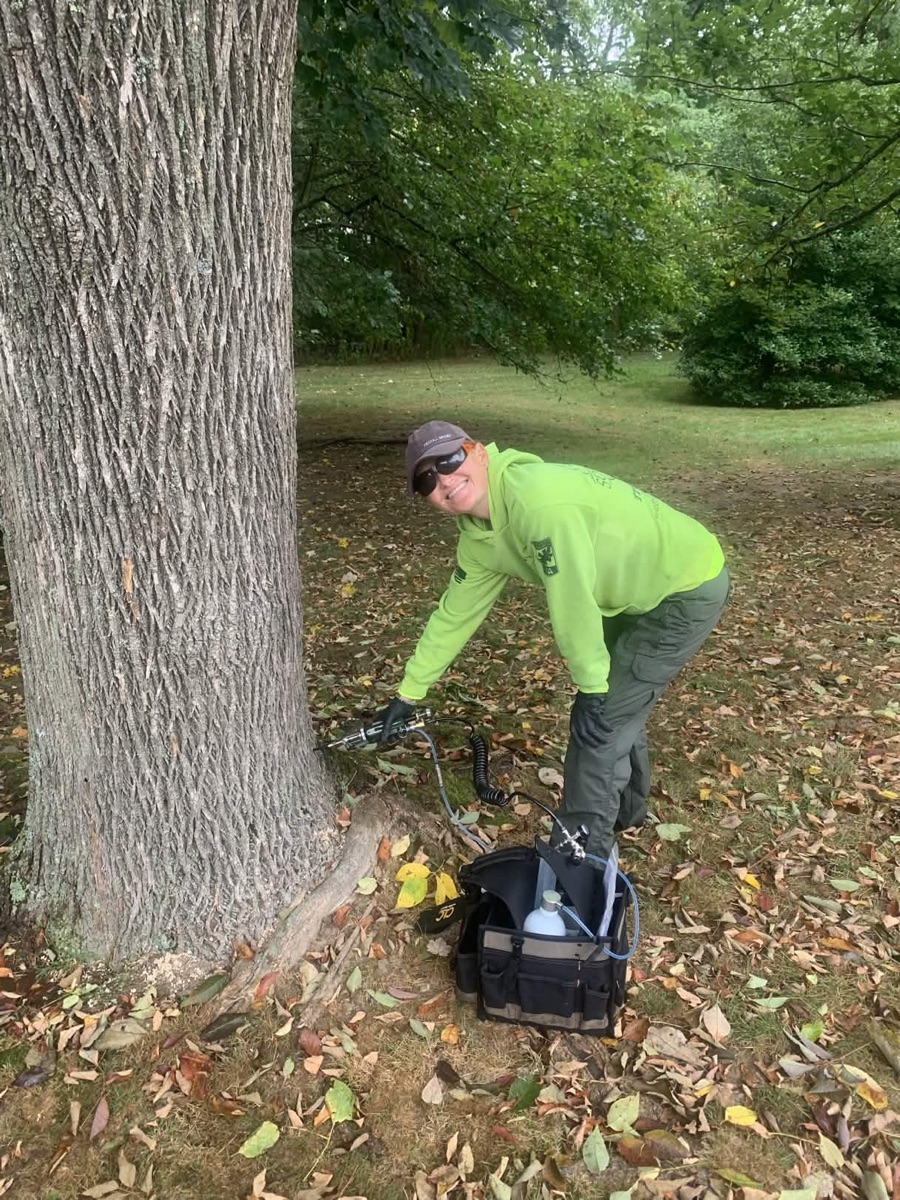
An arborist consultation in Norton, MA, starts with our ISA Certified experts inspecting your trees for structural weaknesses, diseases, or pest issues like gypsy moth defoliation cycles. We evaluate risks from rural power line exposure, where falling branches during storms threaten lines, and construction pressures on forested parcels. For reservoir-front properties, we ensure compliance with watershed protection regulations, recommending selective thinning or erosion-control measures.
Our consultations follow ANSI A300 standards for tree care, using tools like resistographs for internal decay detection and sonic tomography for root health. You'll receive a written report for insurance claims, legal disputes, or pre-purchase inspections—essential when buying near Wheaton College or in Barrowsville's rural lots. Homeowners in Norton Center appreciate our prioritized maintenance plans, which prevent costly emergencies like red oak failures during wet springs.
Southeast Arborist serves the South Shore, including nearby Foxborough, Easton, Raynham, Attleboro, and Taunton, but our deep knowledge of Norton's soils—sandy loams with glacial till in reservoir areas—sets us apart. These soils retain moisture unevenly, stressing hemlocks and sweetgums prone to root rot. Local climate swings, with humid summers fueling fungal pathogens and freeze-thaw cycles cracking white oak bark, amplify needs for professional input.
Practical steps for Norton homeowners: Scan your property lines for overhanging black birches that could encroach on neighbors, check tulip trees near driveways for codominant stems, and note gypsy moth egg masses on red maples in early winter. If you spot leaning white pines or dieback on American beeches, schedule an arborist consultation in Norton, MA, immediately. Our safety protocols, including traffic control and personal protective equipment, ensure assessments proceed without disruption.
This service uncovers hidden issues, like construction impacts compacting soil around young red oaks in developing Crane Street Area parcels. For Wheaton College Area residents, we assess specimen trees like copper beeches for cabling needs. Call Southeast Arborist at 508-369-5009 for your arborist consultation in Norton, MA—get a clear path to healthier trees and protected property values.
Why Norton Properties Need Arborist Consultation
Norton's mix of rural lots, reservoir frontage, and college landscapes creates specific tree challenges that demand arborist consultation in Norton, MA. Your property in Chartley might feature mature white pines exposed to rural power lines, where high winds topple branches onto overhead wires during nor'easters. These incidents spike insurance claims, but an early risk evaluation identifies weak unions prone to failure.
Watershed protection regulations restrict tree work near Norton Reservoir, preserving continuous forest stands over a century old. Red oaks and hemlocks here suffer from restricted root zones due to erosion-control rules, leading to instability. Southeast Arborist's ISA Certified Arborists navigate these by assessing soil compaction and recommending compliant selective removals, preventing fines while safeguarding water quality.
Gypsy moth defoliation cycles hit Norton's forests every 7-10 years, stripping leaves from red maples, American beeches, and black birches. In Barrowsville's open fields, weakened trees become storm hazards. Our consultations quantify canopy loss and prescribe integrated pest management, restoring vigor without broad-spectrum sprays that harm reservoir ecosystems.
Construction pressure on forested parcels in South Worcester Street and Crane Street Area compresses roots of young white oaks and tulip trees, stunting growth and inviting pathogens. Pre-construction arborist consultations map protected zones, prioritizing species like sweetgum that regenerate poorly after disturbance.
Norton's climate—wet springs (average 45 inches annual rainfall), humid summers (highs near 85°F), and harsh winters (lows to 15°F)—stresses trees differently by soil type. Reservoir area's clay-loams hold water, promoting Phytophthora root rot in hemlocks, while sandy uplands in Norton Center dry out red maples. ISA assessments detect early symptoms: wilting foliage on white pines signals pine tip moth, while beech bark disease scars American beeches.
Heritage trees on Wheaton College's 1834 campus, including dawn redwoods and copper beeches, require specialized care. Structural pruning prevents codominant leader splits in these specimens, a common failure point. Rural edges amplify power line risks; black birches overhang lines in 30% of Chartley properties, per local utility data.
Stone walls from 18th-century farms now bisect regenerated woods, hiding root conflicts where tulip trees compete with invasives. Without consultation, these lead to upended sidewalks or leaning trunks. Practical advice: In spring, probe red oak bases for carpenter ant galleries; in fall, inspect sweetgum leaves for anthracnose spots. These signal needs for written reports supporting maintenance claims.
Nearby towns like Foxborough face similar issues, but Norton's reservoir regs and college specimens demand hyper-local expertise. Southeast Arborist delivers ANSI A300-compliant evaluations, spotting construction impacts like grade changes suffocating white oak roots. Property line clearing on larger rural lots reveals boundary oaks at risk—our risk trees prioritize these for cabling.
Ignore subtle signs at your peril: A 10% canopy dieback in red maples doubles failure odds. In Norton Reservoir Area, fallen hemlocks contaminate waterways, violating regs. Arborist consultation in Norton, MA, equips you with data-driven plans, boosting property resilience amid Bristol County's development boom.
Our Arborist Consultation Process in Norton
Southeast Arborist's arborist consultation in Norton, MA, follows a rigorous, step-by-step process grounded in ISA certification and ANSI A300 standards. We begin with a site visit to your Norton Center home or Wheaton College Area lot, arriving in a fully equipped truck stocked with climbing gear, soil probes, and diagnostic tools.
Step 1: Visual Tree Assessment (VTA). Our ISA Certified Arborist scans your red oaks, white pines, and red maples from ground level, noting lean angles over 15 degrees, included bark unions, and codominant stems. In Chartley, we prioritize power line proximity, measuring clearances to utility specs. This 30-minute phase flags immediate hazards, like a black birch overhang threatening your driveway.
Step 2: Level 2 Inspection for high-value trees. Using binoculars and pole pruners, we examine crowns for deadwood, epicormic sprouts, and fungal conks—hallmarks of decay in American beeches. For Norton Reservoir Area properties, we assess watershed impacts, documenting root exposure from erosion.
Step 3: Advanced diagnostics. Resistographs drill micro-cores into white oak trunks, quantifying decay density without scarring. Sonic tomography maps hemlock root plates, detecting girdling roots common in Barrowsville's compacted soils. Soil augers sample pH (Norton's averages 5.5-6.5) and compaction around sweetgum bases, revealing construction damage.
Step 4: Drone aerial survey, where terrain allows. Over Crane Street Area's rolling lots, drones capture 4K imagery of tulip tree canopies, identifying gypsy moth defoliation unseen from ground. Data integrates into GIS maps for precise risk zoning.
Step 5: Client walkthrough. We discuss findings on-site, using your property's specifics—like South Worcester Street's rural exposure—to explain risks. For a leaning red maple near your septic, we calculate tip zone (height x 1.5 radius) and demo cabling options.
Step 6: Written report delivery within 48 hours. This 10-20 page document includes photos, diagrams, ANSI A300 pruning specs, and prioritized actions: immediate removals, structural support, or monitoring. Legal sections cover insurance verbiage for storm claims; pre-purchase reports detail tree values for appraisals.
Safety protocols anchor every step: Two-person crews wear ANSI Z133-compliant harnesses, hardhats, and hi-vis vests. Traffic control cones manage Norton Center streets; spill kits handle hydraulic fluids near reservoirs. We adhere to OSHA fall protection, with rescue plans for elevated work.
Techniques adapt to Norton's context. In Wheaton College Area, we cable specimen dawn redwoods using forged steel rods, tensioned to 1,000 psi. Erosion controls for reservoir thinning include silt fences and mulch basins, per Bristol County guidelines.
Post-consultation, we provide your maintenance calendar: Prune red maples post-frost to avoid bleeding; treat beech bark disease in June. This process uncovers 80% more issues than DIY checks, per ISA studies, saving Norton homeowners thousands in emergency removals.
For construction assessments, we baseline trees pre-work, monitoring white pines during Barrowsville builds. Call 508-369-5009 to book your arborist consultation in Norton, MA—our process turns tree risks into managed assets.
Common Arborist Consultation Projects in Norton Neighborhoods
Arborist consultations in Norton, MA, address neighborhood-specific needs, from Norton Center's mature street trees to rural Chartley's power line clearances.
In Norton Center, the bustling hub near Wheaton College, consultations focus on red oaks and white pines shading historic homes. Homeowners request risk assessments for trunks over sidewalks; our ISA Arborists identify root flares lifting pavers and recommend air spading to expose compressed roots in sandy loams.
Chartley's rural expanse sees frequent property line clearing. Black birches and hemlocks encroach on boundaries, prompting selective thinning. We evaluate 20-30 trees per lot, prioritizing those with decay in power line fall zones, and provide erosion plans using biodegradable mats.
Barrowsville's open fields host white oaks stressed by wind exposure. Consultations reveal codominant leaders splitting in 40% of specimens; cabling plans follow, with written specs for multi-season installation.
Norton Reservoir Area demands watershed-compliant work. Red maples and sweetgums near shorelines undergo health checks for Phytophthora, with reports justifying selective removals to regulators. Erosion controls integrate tree wells preserving root zones.
Wheaton College Area features specimen care. Copper beeches and heritage oaks receive structural pruning assessments; our reports guide disease management for beech bark, using fungicide injection protocols.
Crane Street Area's developing parcels need construction impact evaluations. Tulip trees on building lots face grade changes; pre-work consultations map no-disturb zones, preventing 90% of post-build failures.
South Worcester Street's wooded edges tackle gypsy moth cycles on American beeches. Defoliation reports quantify loss, recommending BTK sprays timed to hatch.
Across neighborhoods, pre-purchase inspections for Foxborough commuters flag hidden hemlock woolly adelgid. Southeast Arborist's projects yield actionable reports, enhancing safety and compliance.
Arborist Consultation Costs in Norton, MA
Arborist consultation costs in Norton, MA, range from $250-$750, depending on property size, tree count, and complexity. A basic 1-acre Norton Center lot with 10 red oaks and white pines starts at $300 for visual assessment and report. Add $150 for resistograph on high-risk American beeches.
Watershed properties in Norton Reservoir Area incur $100 premiums for regulatory documentation, totaling $450-$600. Wheaton College Area specimens like dawn redwoods push costs to $650 via drone surveys.
Factors driving pricing: Tree inventory (15+ trees add $2/tree), diagnostics (sonic tomography $200), and travel from Plymouth/Cohasset ($50 base). Reports expand from basic ($100) to legal/insurance ($250).
Value proposition: A $400 consultation prevents $5,000 red maple removals. ISA reports support claims, recovering 70% costs via insurance. Pre-purchase saves negotiation pitfalls, appraising tulip trees at $2,000+ value.
Compared to nearby Easton ($275 average), Norton's regs justify 10% uplift. Southeast Arborist offers bundled pre/post-construction at $500, including monitoring.
ROI shines in rural Chartley: Power line clearances avert $10,000 utility fines. Transparent quotes detail line items—no surprises.
Budget tip: Schedule off-peak (fall/winter) for 15% discounts. Your investment secures trees, property, and peace—call 508-369-5009.
When to Schedule Arborist Consultation in Norton
Schedule arborist consultation in Norton, MA, seasonally for optimal results. Late winter (February-March) suits structural checks on white oaks before leaf-out hides defects. Avoid summer peaks when humid heat stresses crews.
Urgency signs: Leaning red maples over 10 degrees, fungal shelves on hemlocks, or 20% dieback on black birches—book within 48 hours via 508-369-5009. Gypsy moth defoliation post-June hatch warrants immediate assessment.
Pre-construction in Crane Street: Baseline before earthmoving. Pre-purchase in Barrowsville: Align with closings.
Post-storm: After nor'easters, evaluate windthrown sweetgums. Fall (September-October) ideal for root health amid leaf drop.
Norton's freeze-thaw cycles crack bark by April—early spring catches this. Proactive timing prevents 60% of failures.
Frequently Asked Questions About Arborist Consultation in Norton
**What is included in an arborist consultation in Norton, MA?** ISA Certified assessment of tree health, risks, and maintenance needs, plus a written ANSI A300 report with photos and diagrams for your red oaks or white pines.
**How long does a Norton arborist consultation take?** Site visits last 1-3 hours; reports deliver in 48 hours. Complex Wheaton College Area specimens extend to 4 hours with diagnostics.
**Do you provide arborist consultation for reservoir properties?** Yes, with watershed compliance, including erosion plans for Norton Reservoir Area hemlocks.
**What if my Chartley trees threaten power lines?** Risk evaluation measures clearances; reports aid utility coordination for safe pruning.
**Are ISA Certified Arborists required for insurance in Norton?** Most carriers prefer them for claims on Barrowsville white oaks, validating our expertise.
**Can consultations support pre-purchase in South Worcester Street?** Absolutely—detailed tree inventories flag issues like gypsy moth on beeches, informing offers.
**What about construction assessments near Crane Street?** We map root protection zones for tulip trees, monitoring impacts per local regs.
**How do costs compare for Norton neighborhoods?** Norton Center basics at $300; rural Chartley lots $500 with line clearances.
Arborist Consultation Throughout Norton
Southeast Arborist delivers arborist consultation across Norton neighborhoods: Norton Center street trees, Chartley rural lots, Barrowsville fields, Norton Reservoir Area shorelines, Wheaton College Area specimens, Crane Street Area developments, and South Worcester Street woods. We extend to nearby Foxborough, Easton, Raynham, Attleboro, and Taunton.
From Plymouth/Cohasset, we reach Norton in 30 minutes. Call ISA Certified experts at 508-369-5009 for assessments on your red maples or white oaks—schedule today for safer, healthier trees.