
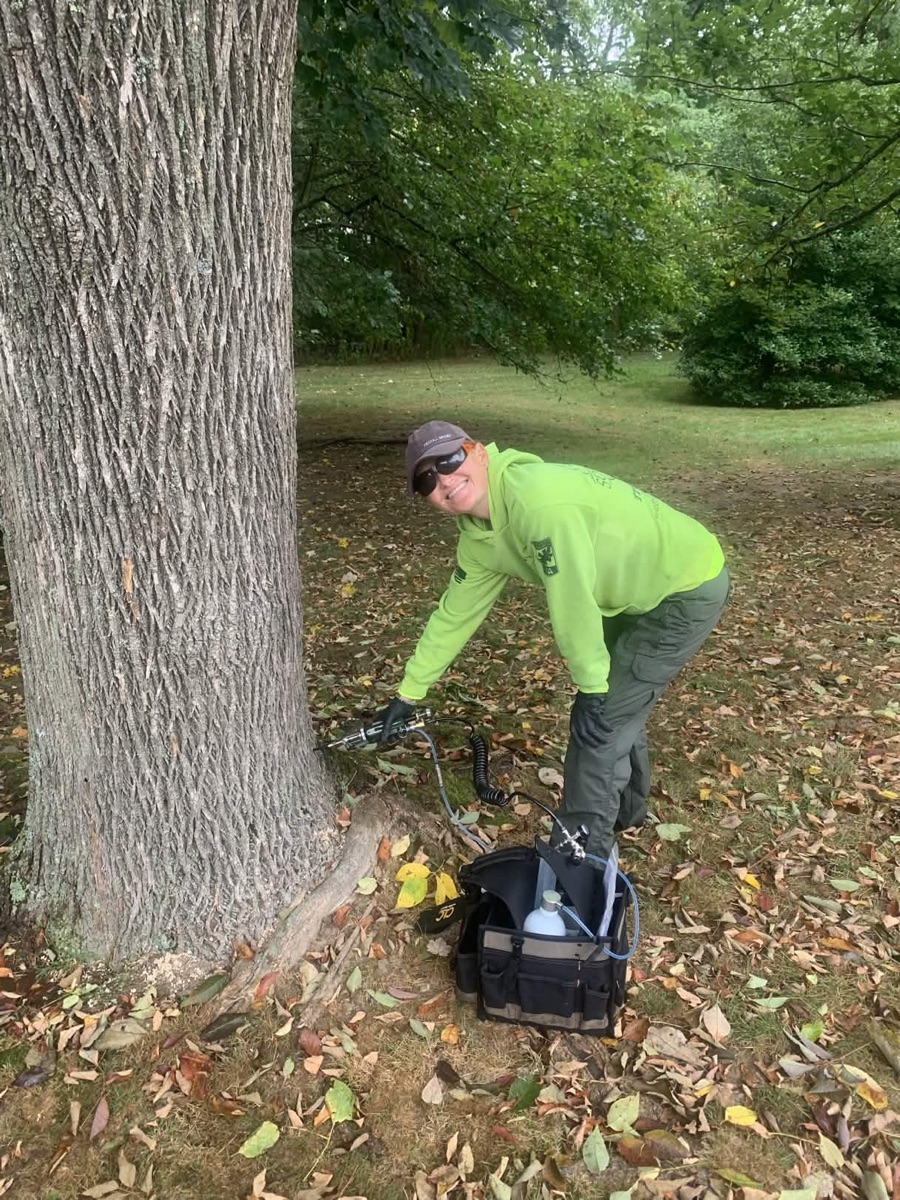
# Professional Arborist Consultation in Marshfield, Massachusetts
As a homeowner in Marshfield, Massachusetts, you face unique tree care challenges shaped by the town's coastal exposure, river corridors, and sprawling inland lots. From the beachfront properties in Brant Rock and Green Harbor to the wooded estates in Marshfield Hills, your trees endure relentless nor'easters, salty winds, and fluctuating groundwater levels. That's where professional arborist consultation in Marshfield MA becomes essential. Southeast Arborist, LLC, your South Shore Massachusetts tree care experts based in Plymouth and Cohasset, delivers ISA Certified Arborist assessments tailored to these local conditions.
Our arborist consultation services provide in-depth tree health evaluations, risk assessments, and written reports that protect your property value and safety. Whether you're dealing with storm-damaged pitch pines in Ocean Bluff or assessing heritage oaks on large lots in North Marshfield, we apply ANSI A300 standards to diagnose issues like gypsy moth defoliation or root stress from river flooding. Call us at 508-369-5009 for a consultation that identifies hidden problems before they escalate.
Marshfield's 26,000 residents spread across neighborhoods like Marshfield Center, Rexhame, Sea View, and Fieldston rely on us for pre-purchase inspections, construction impact assessments, and prioritized maintenance plans. Our ISA Certified Arborists climb your trees using rope-and-harness systems, employ resistograph tools for internal decay detection, and analyze soil compaction around white pines and red oaks common in Plymouth County. We generate detailed reports for insurance claims, legal disputes, or municipal permits—crucial after events like the 1991 Halloween Nor'easter that stripped canopies from coastal forests.
Why choose Southeast Arborist for arborist consultation Marshfield MA? Our team follows strict safety protocols, including traffic control in busy Marshfield Center and drone surveys over river birch stands along the North River. We prioritize your trees' long-term health, recommending targeted pruning over removal to preserve the ecological balance in your riparian zones. Homeowners in Duxbury, Scituate, Norwell, Pembroke, and Hanover trust us for the same expertise, but our deep knowledge of Marshfield's sandy coastal soils and clay-heavy inland areas sets us apart.
Imagine owning a property in Marshfield Hills near the Daniel Webster Estate, where pre-Revolutionary oaks demand specialized care. Our consultation reveals codominant stems prone to splitting or girdling roots from poor drainage—issues invisible to the untrained eye. We document these with photos, diagrams, and tree risk assessment qualifications (TRAQ), helping you budget for proactive care. In beach communities like Rexhame, we evaluate salt spray damage on sycamores and black cherry trees, advising on wind-resistant planting.
Southeast Arborist's arborist consultation goes beyond a quick visual check. We measure tree diameter at breast height (DBH), assess crown-to-trunk ratios, and test for vascular issues in swamp white oaks stressed by tidal influences. Your written report includes maintenance timelines, cost estimates, and species-specific advice, such as elevating mulch away from river birch trunks to prevent fungal rot. This level of detail empowers you to make informed decisions, whether selling your Green Harbor home or planning renovations in Fieldston.
Local regulations in Plymouth County require arborist reports for tree removals over 12 inches DBH, especially in protected wetlands near the South River. Our consultations ensure compliance, avoiding fines while safeguarding heritage trees. Contact Southeast Arborist at 508-369-5009 today to schedule your arborist consultation in Marshfield MA and secure your property's green assets.
Why Marshfield Properties Need Arborist Consultation
Marshfield's coastal position in Plymouth County exposes your trees to conditions unlike anywhere else on the South Shore. Saline winds from the Atlantic scour pitch pines and white pines in Brant Rock and Ocean Bluff, leading to needle scorch and dieback that mimics drought stress. Inland, North Marshfield's clay-loam soils hold water around red oak roots, fostering Armillaria root rot during wet springs. An arborist consultation Marshfield MA from Southeast Arborist uncovers these interactions early.
Common tree species here face tailored threats. Red oaks and white oaks dominate large lots in Marshfield Hills, where their shallow roots lift sidewalks after freeze-thaw cycles exacerbated by the town's 45-inch annual rainfall. Pitch pines in Green Harbor shrug off salt but succumb to pine tip moth infestations, weakening leaders that snap in 50-mph gusts. White pines in Sea View suffer from white pine weevil, creating multiple tops vulnerable to the next nor'easter—much like the 2013 blizzard that downed thousands across coastal neighborhoods.
River corridors along the North and South Rivers challenge river birch and sycamore trees on your property. Periodic flooding saturates swamp white oak root zones, causing iron chlorosis visible as yellowing leaves in summer. Sassafras in Fieldston adds aromatic beauty but attracts laurel wilt disease vectored by ambrosia beetles, spreading rapidly in humid microclimates. Black cherry trees in Rexhame produce tent caterpillars alongside gypsy moth cycles, defoliating canopies every 7-10 years and stressing trees already battered by storms.
Coastal storm damage defines beach neighborhoods. The 1991 Halloween Nor'easter felled mature oaks in Brant Rock, leaving root plates exposed in sandy soils with low cohesion. Today, your leaning sycamores in Green Harbor signal similar risks, assessed via our ground-penetrating radar during consultation. Heritage trees near the Daniel Webster Estate in Marshfield Hills, including ancient oaks predating 1776, require risk evaluations for codominant trunks or included bark—features that split without intervention.
Inland farmland edges in North Marshfield generate dense oak stands needing thinning to reduce wind sail and improve light penetration for understory health. Gypsy moth defoliation peaks in June, refoliation by August masks underlying decline in white pines, which our resistographs detect via increment cores. Soil conditions vary: coastal sands drain quickly but erode under heavy canopies, while riverine clays compact from foot traffic, starving river birch feeder roots.
Practical advice for Marshfield homeowners: Inspect your trees post-winter for frost cracks on south-facing black cherry trunks, a common issue after sub-zero nights. Check for heaving roots around red oaks in Marshfield Center, where urban soils lack organic matter. If you've noticed gypsy moth egg masses on pitch pine branches—silky, spongy clusters 1-2 inches long—schedule an arborist consultation before larval hatch in May.
Southeast Arborist's ISA Certified Arborists use TRAQ methodology to quantify failure probabilities, factoring Marshfield's 20-30 mph sustained winds. We identify construction impacts, like grade changes compacting soil around swamp white oaks during home additions in Pembroke-adjacent lots. Without consultation, you risk insurance denials after a tree falls on your Rexhame roof, as carriers demand proof of prior assessment.
Heritage preservation matters here. Plymouth County's oldest oaks demand ANSI A300 pruning specs to retain structure without historic alteration. Our reports support tax abatements for protected trees, valuable in high-value Marshfield Hills. Nearby towns like Duxbury face similar issues, but Marshfield's river flooding adds hypoxic stress to sycamores, detectable only via soil probes during our visits.
Your property's trees enhance curb appeal and ecology—river birches stabilize South River banks, preventing erosion onto Route 3A. Neglect them, and you face liability from failing limbs over playgrounds in Fieldston. Invest in arborist consultation Marshfield MA to extend their lifespan, comply with local ordinances, and boost resale value by 5-10% through documented health.
Our Arborist Consultation Process in Marshfield
Southeast Arborist's arborist consultation process in Marshfield MA follows a structured, science-based approach using ISA standards and advanced tools. We start with your call to 508-369-5009, gathering site details like neighborhood (e.g., Ocean Bluff storm history) and concerns (e.g., leaning white pine near your Green Harbor driveway).
Step 1: On-site visual assessment (30-60 minutes). Our ISA Certified Arborist arrives with binoculars, mallet, and clipboard, scanning your property from the street. In Marshfield Center, we note urban stressors like salt from plowing on red oaks. For beachfront Rexhame lots, we prioritize windthrow risks on pitch pines, tapping trunks for hollow sounds indicating decay.
Step 2: Detailed tree-by-tree evaluation. We measure DBH with calipers—essential for ANSI A300 risk ratings—and inspect crowns for dieback ratios exceeding 25%, a red flag in sycamores along North River. In Marshfield Hills, heritage oaks get close-up looks for epicormic sprouts signaling root issues. Techniques include sounding with a hammer for cavities and probing wounds with screwdrivers.
Step 3: Aerial and internal diagnostics. Certified climbers ascend using single-rope techniques and saddles, certified to OSHA standards. In Sea View, we drone-survey dense white pine stands for suppression issues. Resistographs bore micro-cores into swamp white oak trunks, quantifying decay density without scarring—critical for river birch near flood-prone South River.
Step 4: Soil and root zone analysis. We use penetrometers to measure compaction around black cherry trees in Fieldston, where lawn equipment densifies topsoil. In Brant Rock's sands, we assess drainage with percolation tests, revealing why sassafras shows wilting despite irrigation. pH probes check for chlorosis in river birches (ideal 6.0-7.0).
Step 5: Risk quantification via TRAQ. We score targets (your home, driveway) and failure modes—stem split in codominant red oaks or uprooting in saturated clays of North Marshfield. Probability ratings (low/medium/high) guide recommendations, like cabling for leaning pitch pines in Green Harbor.
Step 6: Written report delivery (48-72 hours). Your 10-20 page document includes photos, diagrams, species-specific advice (e.g., avoid topping white pines), and prioritized actions: immediate hazards first, then 1-3 year plans. Legal sections cover insurance needs post-storm, with Marshfield building department stamps for permits.
Equipment enhances accuracy: Sonic tomographs map internal rot in Daniel Webster Estate-style oaks; air spades expose roots non-destructively for construction assessments in Norwell-bordering properties. Safety protocols include hard hats, high-vis vests, and spotters—vital near Route 139 traffic in Marshfield Center.
For pre-purchase inspections in Rexhame, we flag hazards like girdling roots on sycamores, potentially costing $5,000+ in remediation. Construction projects in Pembroke-adjacent inland lots get impact plans: tree fencing at 1.5x drip line radius protects feeder roots.
Practical tips during consultation: Note fungal conks on white oak bases (Ganoderma signals butt rot); measure branch droop angles over 45 degrees as failure precursors. Our team explains findings on-site, answering questions about gypsy moth impacts on black cherry refoliation.
We adapt for Marshfield's terrain—ATVs access North Marshfield trails for remote river corridors; lightweight gear suits coastal dunes in Ocean Bluff. Post-consultation, we schedule follow-ups, integrating with canopy thinning on large Duxbury-like lots.
This process delivers actionable insights, preventing $10,000+ storm losses. Homeowners gain peace of mind knowing their trees meet Massachusetts Invasive Pest Management standards, especially for emerald ash borer threats emerging in sassafras kin.
Common Arborist Consultation Projects in Marshfield Neighborhoods
Arborist consultations in Marshfield neighborhoods address hyper-local issues, with Southeast Arborist tailoring assessments to each area's trees and history.
In Marshfield Center, urban lots feature red oaks stressed by sidewalk conflicts. Consultations reveal root barriers needed to prevent heaving, plus crown cleaning for gypsy moth residue. We prioritize risk trees overhanging Route 3A.
Brant Rock's beachfront demands post-nor'easter evaluations. Pitch pines with salt-burned needles get health scores; consultations recommend salt-tolerant replacements like bayberry near dunes. Leaning white pines from 2013 blizzard remnants trigger removal plans.
Green Harbor properties along the harbor see sycamore failures from boat wake erosion. Our assessments map root exposure, advising retaining walls while preserving riparian buffers per Marshfield wetlands bylaws.
Marshfield Hills centers on heritage oaks near Daniel Webster Estate. Consultations detect included bark in pre-Revolutionary white oaks, specifying reduction pruning to balance crowns without historic loss. Large-lot thinning opens views to the ocean.
Ocean Bluff's coastal forests host pitch pine stands ravaged by hurricanes. We evaluate suppression in understory trees, using drones for canopy gaps post-1991 storm, and recommend selective removal for wind firmness.
Fieldston's inland mix includes black cherry with tent caterpillar scars. Consultations identify vascular streaks from wilt diseases, paired with soil amendments for pH correction in clay soils.
Rexhame beach homes feature river birch hybrids stressed by salt groundwater. Assessments quantify flood tolerance, noting dieback from hypoxic roots, and suggest mulching to elevate trunks.
Sea View's white pine groves suffer weevil damage. Our climbers inspect leader forks, rating split risks and prioritizing guy wiring for 40-foot specimens near power lines.
North Marshfield's farmland edges demand oak stand management. Consultations thin dense red oaks, removing declining swamp white oaks to favor mast producers, while assessing sassafras for laurel wilt.
Across neighborhoods, storm cleanup dominates beaches, while inland focuses on view-clearing and river corridor safety—trees threatening South River navigation get fallback zones mapped.
Pre-purchase in Scituate-adjacent areas flags hazards like failing sycamores; construction in Hanover borders assesses compaction risks. Call 508-369-5009 for neighborhood-specific arborist consultation Marshfield MA.
Arborist Consultation Costs in Marshfield, MA
Arborist consultation costs in Marshfield MA range from $250-$750 per property, depending on factors like tree count, access, and diagnostics. Southeast Arborist prices transparently, basing fees on value: a single consultation often saves thousands in avoided removals or storm damage.
Tree numbers drive baseline: 1-5 trees cost $250-$400 in accessible Marshfield Center lots. 10+ trees on North Marshfield estates hit $500+, including multi-species analysis (red oaks to river birch).
Access challenges add 20-30%: Dune permits in Rexhame or ATV needs in Green Harbor increase to $400 base. Aerial climbs for 60-foot white pines in Sea View tack $150.
Advanced tools bump costs: Resistograph coring ($100/tree) detects decay in Marshfield Hills heritage oaks; drone surveys ($200) map Brant Rock canopies. Soil probes for South River sycamores add $75.
Report complexity matters: Basic health checks run $300; full TRAQ risk evals with insurance sections reach $650, essential post-nor'easter in Ocean Bluff.
Pre-purchase or construction assessments average $450-$600, including root radar in Fieldston builds. Multi-site discounts apply for nearby Duxbury properties.
Value proposition: Our $400 consultation might reveal a $2,000 cabling job preventing $15,000 roof damage from a failing pitch pine. Written reports satisfy Plymouth County permits, avoiding $1,000 fines. Insurance reimburses 50-100% for claims, as seen in 2013 blizzard payouts.
ROI example: Rexhame homeowner spends $350 on sassafras assessment, averts $8,000 removal by treating wilt early. Large-lot owners in North Marshfield justify $600 fees via 10% property value gains from documented health.
Factors lowering costs: Off-peak scheduling (fall/winter); bundling with pruning. We quote after intake—no surprises.
Compared to South Shore averages ($300-$800), our ISA expertise and local knowledge (e.g., gypsy moth cycles on black cherry) deliver superior detail. Schedule at 508-369-5009 to discuss your Marshfield property's needs and get a custom quote.
When to Schedule Arborist Consultation in Marshfield
Schedule arborist consultation in Marshfield MA promptly if you spot urgency signs: leaning trunks over 15 degrees, as in post-storm pitch pines in Green Harbor; fungal shelves on red oak bases indicating butt rot; or 30%+ crown dieback in white pines from weevil.
Spring (March-May) suits pre-growing season checks, catching gypsy moth eggs on sassafras before June hatch. Assess river birch chlorosis as leaves emerge along North River.
Summer (June-August) targets heat stress: yellowing swamp white oaks signal flooding aftermath. Post-July 4th storms prompt Ocean Bluff damage evals.
Fall (September-November) ideal for comprehensive views—bare crowns reveal defects in Marshfield Hills oaks. Gypsy moth defoliation assessments peak here.
Winter (December-February) handles storm recovery, like 2013 blizzard legacies in Brant Rock, with low foliage obscuring splits.
Annual timing for large properties: Late winter thinnings plan canopy work. Urgency anytime: Cracks from ice loads on black cherry.
Practical signs: Mushrooms at sycamore bases, soil heaving around Rexhame roots, or branches rubbing power lines in Sea View. Call 508-369-5009 immediately for hazards.
Frequently Asked Questions About Arborist Consultation in Marshfield
What is an arborist consultation in Marshfield MA? An ISA Certified Arborist visits your property for tree health, risk, and maintenance evaluations, producing a written report. In Marshfield, we focus on coastal stressors like salt damage to pitch pines in Brant Rock or flood stress on river birch near South River.
How long does an arborist consultation take? Initial site work lasts 1-2 hours for most Marshfield lots; full reports deliver in 48-72 hours. Larger North Marshfield estates with 20+ trees require half-days, including climbs for white oaks.
Do I need an arborist report for insurance in Marshfield? Yes, carriers require pre-loss documentation for claims, especially after nor'easters in Green Harbor. Our TRAQ reports detail risks like failing sycamores, aiding approvals.
Can arborist consultation help with pre-purchase inspections in Rexhame? Absolutely—we flag hazards like root decay in swamp white oaks or gypsy moth decline in black cherry, helping you negotiate or plan $1,000s in care.
What tools do Southeast Arborists use in Marshfield Hills? Resistographs for internal decay in heritage oaks, drones for canopy mapping, penetrometers for Fieldston soil compaction, following ANSI A300.
How often should I get arborist consultation for coastal trees in Ocean Bluff? Every 2-3 years for pitch pines exposed to storms; annually for high-risk river corridors in Sea View.
Does consultation include pruning recommendations? Yes, prioritized per species—thinning red oaks in Marshfield Center, reduction for wind-sail white pines in Brant Rock.
Are your arborists licensed for Marshfield permits? Our ISA certification meets Plymouth County rules; reports support removals over 12" DBH in wetlands.
Arborist Consultation Throughout Marshfield
Southeast Arborist provides arborist consultation across all Marshfield neighborhoods: Marshfield Center's urban oaks, Brant Rock's storm-damaged pines, Green Harbor's harbor sycamores, Marshfield Hills' heritage trees, Ocean Bluff's coastal stands, Fieldston's cherries, Rexhame's birches, Sea View's white pines, North Marshfield's river corridors.
We extend to nearby Scituate, Norwell, Pembroke, Duxbury, Hanover. From Plymouth/Cohasset bases, we reach your property fast.
Protect your Marshfield trees—call Southeast Arborist at 508-369-5009 for ISA Certified consultation today.